
Verwandte Artikel zu Last of the Donkey Pilgrims: A Man's Journey Through...
Inhaltsangabe
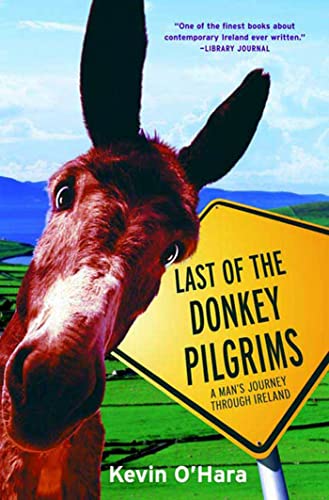
Kevin O'Hara's journey of self-discovery begins as a mad lark: who in their right mind would try to circle the entire coastline of Ireland on foot—and with a donkey and cart no less?
But Kevin had promised his homesick Irish mother that he would explore the whole of the Old Country and bring back the sights and the stories to their home in Massachusetts. Determined to reach his grandmother's village by Christmas Eve, Kevin and his stubborn but endearing donkey, Missie, set off on 1800-mile trek along the entire jagged coast of a divided Ireland.
Their rollicking adventure takes them over mountains and dales, through smoky cities and sleepy villages, and into the farmhouses and hearts of Ireland's greatest resource—its people.
Along the way, Kevin would meet incredible characters, experience Ireland in all of its glory, and explore not only his Irish past, but find his future self.
“One of the finest books about contemporary Ireland ever written...In a style evocative of Steinbeck's Travels with Charley, O'Hara writes memorably of his most unusual way of touring his ancestral home of Ireland.” —Library Journal
Die Inhaltsangabe kann sich auf eine andere Ausgabe dieses Titels beziehen.
Über die Autorin bzw. den Autor
Kevin O'Hara is the author of Last of the Donkey Pilgrims, an autobiographic telling of his travels around the coastland of Ireland with his beloved donkey Missy. He also wrote a memoir-A Lucky Irish Lad-detailing his experience growing up as an Irish-American in the shadow of the Second World War. A psychiatric nurse for more than 25 years, O'Hara still resides in Pittsfield, Massachusetts, the place to which his parents emigrated.
Auszug. © Genehmigter Nachdruck. Alle Rechte vorbehalten.
Last of the Donkey Pilgrims
By O'Hara, KevinForge Books
Copyright © 2005 O'Hara, KevinAll right reserved.
ISBN: 9780765309846
The Donkey Proposal
CHAPTER ONE
The Irish Midlands
MARCH 1979
It was at Rattigan’s Pub in Kilrooskey, County Roscommon, that I first proposed traveling the coast of Ireland with a donkey and cart. The elderly patrons, biting at pipes and smelling of turf smoke, rolled in amusement.
“Ye’re thinking of walking an ass about Ireland?” jawed Hugh Mannion from a high stool. “I have two at home that won’t cross Derrane Bog!”
“Arragh, Hughie, now, be fair to your man,” chimed Willie Cassidy from behind a hand of playing cards. “There’d only be the one ass that could circle the Ring of Ireland, and that’d be Johnny Rabbitt’s jackass who swallowed the umbrella!”
I soothed my throat with a generous swallow of the black native Guinness, and sought refuge by the potbellied stove, flashing back to my inaugural pint here when I was seventeen. That long-ago summer, my younger brother Dermot and I were unwillingly sworn into the Celtic race in a drunken stupor. Now, on this cold winter night in 1979, thirteen years later, nothing had changed in this illustrious parish pub but the Harp calendar.
My uncle Vincent, to whom I had sketchily mentioned my plans, had warned that my “donkey proposal” would be greeted with ridicule by these age-old pensioners, who gathered every Friday evening at Rattigan’s. But who else knew more about a donkey’s strengths and limitations than themselves?
I took another gulp of the milk-warm stout, thinking back on that wondrous incident days earlier. Pedaling home to my grandmother’s on the Knockcroghery Road, I was knocked off my bike like Saul from his horse when I saw a farmer smoothly tipping his donkey and cart down the road. “That’s it,” I gasped at the vision. “That’s how I’m going to travel the whole of Ireland.”
Now, taking a deep breath and another fortifying sip, I mustered the courage to speak above their merriment.
“But say, for instance, I was truly willing to go through with it. Could a donkey, a good one, travel the coast of Ireland? I’d take it easy, eight to ten miles a day, and I’d give myself eight months to travel the eighteen hundred miles.”
Rheumy eyes glinted and glanced. The Yank wasn’t having them on: he was dead serious. The house went silent. Playing cards were flattened. Miserable March rattled outside the panes. Pints were called for and collected as the old gentry of the parish circled their stools to gather their wisdom.
“A jackass, cut-jack, or a mare?” asked Mickey Owens, still eyeing me with suspicion.
“Never a jack,” voiced Jack Rattigan, lifting the cap off his brow. “A jack would be braying sonnets in June, bugling day and night in August, and downright altogether mad in the snows of December.”
“A cut-jack, then?” suggested Joe Hickey.
“A cut-jack is neither useful nor ornamental,” mused Jim Tiernan. “A cut-jack has no heart. Nipped. Dry as polished glass. ’tis a mare the Yank would need, young and well-handled.”
“The very thing,” agreed the tall and scholarly Headmaster D’Alton. “A young mare sound of wind and limb, and a fine temperament. You wouldn’t want her kicking the stars from the sky.”
“A good mouth and square feet,” added Hugh Mannion, “free of spavins, curbs, and sidebones. And she’d need to be well-shod with pony shoes and frost nails to cover those miles.”
I stood among these wizened fellows—my mother’s former schoolmates—nodding my head in agreement, but not having a blooming idea what they were on about.
“A double fistful of oats every morning would do her kindly,” continued Willie Cassidy. “But don’t go giving her a bucket of water after a good feed, or she’ll cripple up and die with the gripe.”
“Search Roscommon and Westmeath for your mare,” offered Paddy Tiernan, “and don’t go to any knackers or horse jobbers. With your Yankee accent, they’d sell you a mule without a tooth in its head.”
“Better still,” added Dan Madden, “if you’re sincere in setting out on this caper, go see the horseman, Jimmy McDermott, in Kilteevan. If there’s ever a mare that can circle Ireland, Jimmy Mac would be the one to find her.”
“And keep a safe distance from the Spanish jacks,” jabbed a smart aleck from the corner, “or your mare will be carrying extra baggage on the road home!”
The donkey seminar ended abruptly as the playing cards, itching in the hands of Willie Cassidy, were reshuffled and dealt again: the quarter-final round of “25” for an Easter turkey was at stake. Jim Tiernan, however, joined me by the stove. My grandmother’s neighbor in the village of Ballincurry, he told me how his donkey could travel twenty Irish miles—twenty-five English miles—a day on a pinch of oats.
“An ass would go forever if you gave her her time,” said old Jim, rubbing a plug of tobacco in his hands. “Pity is, too many farmers hurried and abused them. The only worry I see in you traipsing the world with a mare is that she could easily become homesick and lose heart. And when a mare loses heart, nothing will set her going again.”
“What makes a mare lose heart?” I asked the affable man.
“’Tis easy enough, I’m afraid,” he continued, packing his yellowed briar pipe with his thumb. “Mare asses worked a hard long day in Roscommon. But whether they were off to market with a sow, to the creamery with a can or two, to the bog for a cartload of turf, or to the fields to draw in the hay, they always knew they’d be home by nightfall to be fed and watered. Your mare won’t have that luxury, for she’ll be traveling the roads day after day, over mountain and bog, and at night be tethered in a different field or placed in some stinking byre. Nor will she be able to make any sense of your wanderings.
“I suppose a jack would be right for your journey if they weren’t so ornery,” he went on, lighting his pipe. “A jack is a common rogue, a rambler, but a mare likes her home. I heard a story years back of how a County Longford man sold his mare heavy in foal to a County Fermanagh man. The deal was settled over a jar of stout and the mare was boxed and carted up through Longford, Leitrim, and beyond the border town of Enniskillen. Fifty miles, if not more. Well, wouldn’t you know, three days later this same Longford farmer was walking his fields, only to spot the sold mare feeding her downy foal. The poor creature had made good her escape and traveled fifty miles in two days to give birth on the third. Now, doesn’t that give you some idea of their homing instincts?”
Of course, not everyone at Rattigan’s was as helpful as Jim Tiernan. There was a scrum of old wags who brayed and whinnied throughout the seminar, asking one another if both my oars were cleaving the sea and other opprobrious remarks better left forgotten. But, all in all, it had been a fine evening. My proposed journey, however whimsical, now seemed at least plausible.
I sat on a wooden bench by the...
CHAPTER ONE
The Irish Midlands
MARCH 1979
It was at Rattigan’s Pub in Kilrooskey, County Roscommon, that I first proposed traveling the coast of Ireland with a donkey and cart. The elderly patrons, biting at pipes and smelling of turf smoke, rolled in amusement.
“Ye’re thinking of walking an ass about Ireland?” jawed Hugh Mannion from a high stool. “I have two at home that won’t cross Derrane Bog!”
“Arragh, Hughie, now, be fair to your man,” chimed Willie Cassidy from behind a hand of playing cards. “There’d only be the one ass that could circle the Ring of Ireland, and that’d be Johnny Rabbitt’s jackass who swallowed the umbrella!”
I soothed my throat with a generous swallow of the black native Guinness, and sought refuge by the potbellied stove, flashing back to my inaugural pint here when I was seventeen. That long-ago summer, my younger brother Dermot and I were unwillingly sworn into the Celtic race in a drunken stupor. Now, on this cold winter night in 1979, thirteen years later, nothing had changed in this illustrious parish pub but the Harp calendar.
My uncle Vincent, to whom I had sketchily mentioned my plans, had warned that my “donkey proposal” would be greeted with ridicule by these age-old pensioners, who gathered every Friday evening at Rattigan’s. But who else knew more about a donkey’s strengths and limitations than themselves?
I took another gulp of the milk-warm stout, thinking back on that wondrous incident days earlier. Pedaling home to my grandmother’s on the Knockcroghery Road, I was knocked off my bike like Saul from his horse when I saw a farmer smoothly tipping his donkey and cart down the road. “That’s it,” I gasped at the vision. “That’s how I’m going to travel the whole of Ireland.”
Now, taking a deep breath and another fortifying sip, I mustered the courage to speak above their merriment.
“But say, for instance, I was truly willing to go through with it. Could a donkey, a good one, travel the coast of Ireland? I’d take it easy, eight to ten miles a day, and I’d give myself eight months to travel the eighteen hundred miles.”
Rheumy eyes glinted and glanced. The Yank wasn’t having them on: he was dead serious. The house went silent. Playing cards were flattened. Miserable March rattled outside the panes. Pints were called for and collected as the old gentry of the parish circled their stools to gather their wisdom.
“A jackass, cut-jack, or a mare?” asked Mickey Owens, still eyeing me with suspicion.
“Never a jack,” voiced Jack Rattigan, lifting the cap off his brow. “A jack would be braying sonnets in June, bugling day and night in August, and downright altogether mad in the snows of December.”
“A cut-jack, then?” suggested Joe Hickey.
“A cut-jack is neither useful nor ornamental,” mused Jim Tiernan. “A cut-jack has no heart. Nipped. Dry as polished glass. ’tis a mare the Yank would need, young and well-handled.”
“The very thing,” agreed the tall and scholarly Headmaster D’Alton. “A young mare sound of wind and limb, and a fine temperament. You wouldn’t want her kicking the stars from the sky.”
“A good mouth and square feet,” added Hugh Mannion, “free of spavins, curbs, and sidebones. And she’d need to be well-shod with pony shoes and frost nails to cover those miles.”
I stood among these wizened fellows—my mother’s former schoolmates—nodding my head in agreement, but not having a blooming idea what they were on about.
“A double fistful of oats every morning would do her kindly,” continued Willie Cassidy. “But don’t go giving her a bucket of water after a good feed, or she’ll cripple up and die with the gripe.”
“Search Roscommon and Westmeath for your mare,” offered Paddy Tiernan, “and don’t go to any knackers or horse jobbers. With your Yankee accent, they’d sell you a mule without a tooth in its head.”
“Better still,” added Dan Madden, “if you’re sincere in setting out on this caper, go see the horseman, Jimmy McDermott, in Kilteevan. If there’s ever a mare that can circle Ireland, Jimmy Mac would be the one to find her.”
“And keep a safe distance from the Spanish jacks,” jabbed a smart aleck from the corner, “or your mare will be carrying extra baggage on the road home!”
The donkey seminar ended abruptly as the playing cards, itching in the hands of Willie Cassidy, were reshuffled and dealt again: the quarter-final round of “25” for an Easter turkey was at stake. Jim Tiernan, however, joined me by the stove. My grandmother’s neighbor in the village of Ballincurry, he told me how his donkey could travel twenty Irish miles—twenty-five English miles—a day on a pinch of oats.
“An ass would go forever if you gave her her time,” said old Jim, rubbing a plug of tobacco in his hands. “Pity is, too many farmers hurried and abused them. The only worry I see in you traipsing the world with a mare is that she could easily become homesick and lose heart. And when a mare loses heart, nothing will set her going again.”
“What makes a mare lose heart?” I asked the affable man.
“’Tis easy enough, I’m afraid,” he continued, packing his yellowed briar pipe with his thumb. “Mare asses worked a hard long day in Roscommon. But whether they were off to market with a sow, to the creamery with a can or two, to the bog for a cartload of turf, or to the fields to draw in the hay, they always knew they’d be home by nightfall to be fed and watered. Your mare won’t have that luxury, for she’ll be traveling the roads day after day, over mountain and bog, and at night be tethered in a different field or placed in some stinking byre. Nor will she be able to make any sense of your wanderings.
“I suppose a jack would be right for your journey if they weren’t so ornery,” he went on, lighting his pipe. “A jack is a common rogue, a rambler, but a mare likes her home. I heard a story years back of how a County Longford man sold his mare heavy in foal to a County Fermanagh man. The deal was settled over a jar of stout and the mare was boxed and carted up through Longford, Leitrim, and beyond the border town of Enniskillen. Fifty miles, if not more. Well, wouldn’t you know, three days later this same Longford farmer was walking his fields, only to spot the sold mare feeding her downy foal. The poor creature had made good her escape and traveled fifty miles in two days to give birth on the third. Now, doesn’t that give you some idea of their homing instincts?”
Of course, not everyone at Rattigan’s was as helpful as Jim Tiernan. There was a scrum of old wags who brayed and whinnied throughout the seminar, asking one another if both my oars were cleaving the sea and other opprobrious remarks better left forgotten. But, all in all, it had been a fine evening. My proposed journey, however whimsical, now seemed at least plausible.
I sat on a wooden bench by the...
„Über diesen Titel“ kann sich auf eine andere Ausgabe dieses Titels beziehen.
Suchergebnisse für Last of the Donkey Pilgrims: A Man's Journey Through...

Beispielbild für diese ISBN
Last of the Donkey Pilgrims A
Anbieter: World of Books (was SecondSale), Montgomery, IL, USA
Verkäuferbewertung 5 von 5 Sternen

Zustand: Good. Item in good condition. Textbooks may not include supplemental items i.e. CDs, access codes etc. Bestandsnummer des Verkäufers 00095848669
Gebraucht kaufen
EUR 4,22
Versand gratis
Versand innerhalb von USA
Versand innerhalb von USA
Anzahl: 14 verfügbar
Beispielbild für diese ISBN
Last of the Donkey Pilgrims A
Anbieter: World of Books (was SecondSale), Montgomery, IL, USA
Verkäuferbewertung 5 von 5 Sternen
Zustand: Acceptable. Item in acceptable condition! Textbooks may not include supplemental items i.e. CDs, access codes etc. Bestandsnummer des Verkäufers 00109880659
Gebraucht kaufen
EUR 4,22
Versand gratis
Versand innerhalb von USA
Versand innerhalb von USA
Anzahl: 1 verfügbar
Foto des Verkäufers
Last of the Donkey Pilgrims: A Man's Journey Through Ireland
Anbieter: Zoom Books Company, Lynden, WA, USA
Verkäuferbewertung 5 von 5 Sternen
Zustand: very_good. Book is in very good condition and may include minimal underlining highlighting. The book can also include "From the library of" labels. May not contain miscellaneous items toys, dvds, etc. . We offer 100% money back guarantee and 24 7 customer service. Bestandsnummer des Verkäufers ZBV.076530984X.VG
Gebraucht kaufen
EUR 4,23
Versand gratis
Versand innerhalb von USA
Versand innerhalb von USA
Anzahl: 1 verfügbar
Foto des Verkäufers
Last of the Donkey Pilgrims: A Man's Journey Through Ireland
Anbieter: Greenworld Books, Arlington, TX, USA
Verkäuferbewertung 5 von 5 Sternen
Zustand: good. Fast Free Shipping â" Good condition. It may show normal signs of use, such as light writing, highlighting, or library markings, but all pages are intact and the book is fully readable. A solid, complete copy that's ready to enjoy. Bestandsnummer des Verkäufers GWV.076530984X.G
Gebraucht kaufen
EUR 4,62
Versand gratis
Versand innerhalb von USA
Versand innerhalb von USA
Anzahl: 1 verfügbar
Foto des Verkäufers
Last of the Donkey Pilgrims: A Man's Journey Through Ireland
Anbieter: ZBK Books, Carlstadt, NJ, USA
Verkäuferbewertung 5 von 5 Sternen
Zustand: good. Fast & Free Shipping â" Good condition. It may show normal signs of use, such as light writing, highlighting, or library markings, but all pages are intact and the book is fully readable. A solid, complete copy that's ready to enjoy. Bestandsnummer des Verkäufers ZWV.076530984X.G
Gebraucht kaufen
EUR 4,62
Versand gratis
Versand innerhalb von USA
Versand innerhalb von USA
Anzahl: 1 verfügbar
Foto des Verkäufers
Last of the Donkey Pilgrims: A Man's Journey Through Ireland
Anbieter: 2nd Life Books, Burlington, NJ, USA
Verkäuferbewertung 5 von 5 Sternen
Zustand: good. Used book in good condition. May have some wear to binding, spine, cover, and pages. Some light highlighting markings writing may be present. May have some stickers and or sticker residue present. May be Ex-lib. copy. May NOT include discs, or access code or other supplemental material. We ship Monday-Saturday and respond to inquiries within 24 hours. Bestandsnummer des Verkäufers BXM.C0UU
Gebraucht kaufen
EUR 1,27
EUR 3,52 Versand
Versand innerhalb von USA
Versand innerhalb von USA
Anzahl: 1 verfügbar
Foto des Verkäufers
Last of the Donkey Pilgrims: A Man's Journey Through Ireland
Anbieter: 2nd Life Books, Burlington, NJ, USA
Verkäuferbewertung 5 von 5 Sternen
Zustand: very_good. Used book in very good condition. May have some minor wear. May NOT include discs, or access code or other supplemental material. Ships directly from Amazon and is eligible for Prime or super saver FREE shipping. We ship Monday-Saturday and respond to inquiries within 24 hours. Bestandsnummer des Verkäufers BXM.DJ2H
Gebraucht kaufen
EUR 1,49
EUR 3,52 Versand
Versand innerhalb von USA
Versand innerhalb von USA
Anzahl: 1 verfügbar
Beispielbild für diese ISBN
Last of the Donkey Pilgrims: A Man's Journey Through Ireland
Verlag:
Forge Books (edition First Edition), 2005
ISBN 10: 076530984X
ISBN 13: 9780765309846
Gebraucht
Paperback
Erstausgabe
Anbieter: BooksRun, Philadelphia, PA, USA
Verkäuferbewertung 5 von 5 Sternen
Paperback. Zustand: Fair. First Edition. The item might be beaten up but readable. May contain markings or highlighting, as well as stains, bent corners, or any other major defect, but the text is not obscured in any way. Bestandsnummer des Verkäufers 076530984X-7-1
Gebraucht kaufen
EUR 5,21
Versand gratis
Versand innerhalb von USA
Versand innerhalb von USA
Anzahl: 1 verfügbar
Beispielbild für diese ISBN
Last of the Donkey Pilgrims
Anbieter: ThriftBooks-Reno, Reno, NV, USA
Verkäuferbewertung 5 von 5 Sternen
Paperback. Zustand: Good. No Jacket. Pages can have notes/highlighting. Spine may show signs of wear. ~ ThriftBooks: Read More, Spend Less. Bestandsnummer des Verkäufers G076530984XI3N00
Gebraucht kaufen
EUR 5,87
Versand gratis
Versand innerhalb von USA
Versand innerhalb von USA
Anzahl: 1 verfügbar
Beispielbild für diese ISBN
Last of the Donkey Pilgrims
Anbieter: ThriftBooks-Atlanta, AUSTELL, GA, USA
Verkäuferbewertung 5 von 5 Sternen
Paperback. Zustand: Good. No Jacket. Pages can have notes/highlighting. Spine may show signs of wear. ~ ThriftBooks: Read More, Spend Less. Bestandsnummer des Verkäufers G076530984XI3N00
Gebraucht kaufen
EUR 5,87
Versand gratis
Versand innerhalb von USA
Versand innerhalb von USA
Anzahl: 1 verfügbar