
Verwandte Artikel zu Lone Star Rising (Texas Rangers)
Inhaltsangabe
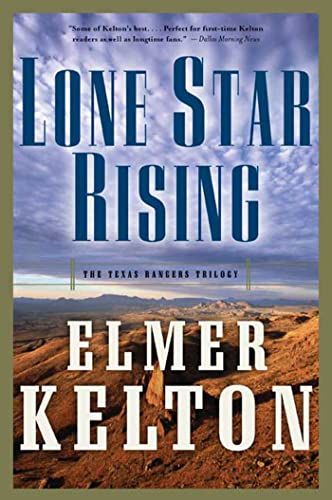
In Lone Star Rising, Elmer Kelton ("A Texas Legend," according to Texas Governor Rick Perry), brings together the first three books of his acclaimed Texas Ranger saga.
The Buckskin Line introduces Rusty Shannon, the red-haired Comanche captive rescued and adopted by Mike Shannon, who is a member of a Texas "ranging company" that protects settlers from Indian raids. In the throes of the War Between the States, Rusty joins the Rangers and searches for the renegades who killed his adoptive father.
In Badger Boy, the Rangers are disbanded and Rusty returns to his home on the Red River only to discover that the girl he loves has married another. In a time of personal turmoil as well as the post-war uphheaval in Texas, Rusty's childhood returns to haunt him as he rescues Andy Pickard, called Badger Boy by his Comanche captors.
Andy and Rusty ride together in the newly reformed Rangers in The Way of the Coyote, in a time when Texas is overrun with outlaws, Confederate raiders, Ku Klux Klansmen, and marauding Comanches.
Die Inhaltsangabe kann sich auf eine andere Ausgabe dieses Titels beziehen.
Über die Autorin bzw. den Autor
Elmer Kelton
Auszug. © Genehmigter Nachdruck. Alle Rechte vorbehalten.
Lone Star Rising
The Texas Rangers TrilogyBy Kelton, ElmerForge Books
Copyright © 2005 Kelton, ElmerAll right reserved.
ISBN: 9780765312303
CHAPTER ONE
TEXAS GULF COAST, AUGUST 1840
He was Comanche, and he was known among The People as Buffalo Caller. Once in a time of hunger, when he was a fledgling on one of his first hunts, the older and more experienced men had ridden their horses to exhaustion without scaring up so much as one lone, lame bull. But Buffalo Caller, riding alone, had heard a faint and distant bellow. He had responded in the voice of a buffalo, and the buffalo had answered him. The calls led him to a small herd in a hidden canyon.
It was not buffalo he hunted now. He scouted as a wolf for the largest assembly of raiders the Penateka band had ever put together, moving to strike the land-greedy, hair-faced American settlers of Texas. Beside him against the Texans rode Swift as the Antelope, so named for his fleetness of foot.
Buffalo Caller tingled with excitement over the sights he was about to behold. He had never seen an ocean or even a boat, so it strained his imagination to visualize what old men had described around their campfires. If the veterans had not let fanciful dreams overcome the realities of memory, those wonders lay no more than half a day’s horseback journey ahead of him. It was claimed that the great water stretched so far one could not see all the way across. None of The People had ever ventured out upon it to determine how far it extended, for they were of the land, not of the sea. It was said that white men’s boats might travel for many days without touching shore and that fish larger than horses lived in the dark and frightening depths.
Buffalo Caller doubted much of what he had heard. It sounded typical of the white teibos’ lies. He had forded many rivers, and he had visited lakes wider than the rivers, but none were so wide that he could not see the opposite side.
Where he rode now was far to the south and east of the short-grass prairie and the limestone hill hunting grounds he was accustomed to roaming. A journey of many days had brought the massive Comanche war column into a gently rolling land of sandy soil and tall, summer-cured grass much different from the higher, drier land the Penatekas claimed as home. The hot, humid wind carried a smell foreign to his experience and left a faint suggestion of salt upon his lips. Summer heat sent sweat rolling down from beneath his buffalo-horn headdress and into his paint-streaked face, burning his eyes.
The foreignness of this land made him uneasy despite the persistent gnawing of curiosity. Though he wanted to see the great water for himself, he would be relieved when they finished what they came to do so they could return to country more suited to his experience.
What they were about was vengeance, blood for blood. In the early spring many tribal leaders and warriors had met with white chiefs in San Antonio de Béjar’s council house to discuss an earlier agreement by the Comanches to free all their captives. Some had reconsidered the promise and balked, holding out for stronger terms. Talk had led to quarrel, and quarrel to the loosing of arrows and an explosion of gunfire. When the smoke drifted away, more than thirty Indians lay dead and dying in the council house and in the foul dirt of San Antonio’s narrow streets.
In retaliation The People had killed most of the remaining white captives, but those had not bled enough to wash away the stain of the San Antonio disaster. The indignant Penatekas had undertaken this huge punitive expedition, carrying them far beyond their normal range, all the way eastward to the Gulf of Mexico. He did not know how many of The People were on this grand adventure. He had attempted to count them on his fingers and thumbs, but the task overwhelmed him. They were so many that they defied his understanding of numbers. Their horses left the grass beaten down and the ground scarred in their wake like the slow passage of a large buffalo herd. Though the object was war, many women and children had come along to watch and cheer as their warriors carried calamity to the white enemy.
Mexican allies guided them, for they knew the route. They knew how to pick their way through the sparsely settled region and avoid detection until time for the great force to loose its thunder and lightning. Buffalo caller understood that the Americans had won this land from the Mexicans in a fierce war. Mexico wanted to take it back and had sent emissaries to the tribes, promising many good things in return for their aid. Buffalo Caller cared nothing for Mexico, for the first raid in which he had ridden had been against Mexicans. He had fought them often and had killed many. But he welcomed any chance to strike the Texans. A temporary alliance with a former adversary was justifiable if it promised victory over an enemy hated even more.
Antelope pulled up on his rawhide reins. “The wind brings the smell of smoke.” He raised his head, sniffing, testing.
Antelope was notoriously subject to quick judgments and quick action without considering where they might lead. Buffalo Caller smelled only dust, for the ground was so dry it had cracked open in places. The soil would all be up and moving on the wind were it not bound by a heavy stand of brittle grass, the result of last spring’s rains. He drew the skin taut at the edge of his right eye, trying to sharpen his vision. He decided Antelope was right, this time. “I think I see a house. It is beyond the timber, there.”
His companion thumped the heels of his moccasins against his mount’s ribs, putting him into a trot. “If they have horses, we shall take them.”
Buffalo Caller feared that Antelope’s zeal would make him forget their real mission. “Taking horses is not what you and I have been sent to do.”
The principal concern so far had been to avoid premature detection as the army of warriors moved along. The wolves were to overtake and kill any whites who might observe their passage before the trap was sprung. That precaution seemed less important now because scouts had reported that the town of Victoria lay only a short distance ahead. The Americans would soon know of the column’s coming. One Mexican guide had lived in Victoria until the Texans drove him out, and he itched for retribution. Victoria had been chosen as the first target.
Buffalo Caller recognized Antelope’s determination. He relented, knowing Antelope would do whatever he wanted, regardless of advice to the contrary. “If we find horses, there is no reason they should not be ours.” He set his dun horse into a trot that matched Antelope’s pace.
Antelope grunted. “If we find any teibos, we will take their scalps as well as their horses.” His taste for vengeance was strong. A brother’s blood had soaked into the floor of the San Antonio council house.
“So long as we do not leave our own.”
Emerging from a small patch of timber, they saw a man afoot in a cornfield, wielding a curved knife to cut heads from the stalks, tossing them into the bed of a wagon drawn by two horses. His back turned, he did not see the warriors’ approach.
Antelope said, “You take the horses. I will take the man.”
Not until he heard the hooves did the farmer turn. He wasted a long moment frozen in startled disbelief as the two Comanches rushed down upon him; then he ran for the rail fence....
TEXAS GULF COAST, AUGUST 1840
He was Comanche, and he was known among The People as Buffalo Caller. Once in a time of hunger, when he was a fledgling on one of his first hunts, the older and more experienced men had ridden their horses to exhaustion without scaring up so much as one lone, lame bull. But Buffalo Caller, riding alone, had heard a faint and distant bellow. He had responded in the voice of a buffalo, and the buffalo had answered him. The calls led him to a small herd in a hidden canyon.
It was not buffalo he hunted now. He scouted as a wolf for the largest assembly of raiders the Penateka band had ever put together, moving to strike the land-greedy, hair-faced American settlers of Texas. Beside him against the Texans rode Swift as the Antelope, so named for his fleetness of foot.
Buffalo Caller tingled with excitement over the sights he was about to behold. He had never seen an ocean or even a boat, so it strained his imagination to visualize what old men had described around their campfires. If the veterans had not let fanciful dreams overcome the realities of memory, those wonders lay no more than half a day’s horseback journey ahead of him. It was claimed that the great water stretched so far one could not see all the way across. None of The People had ever ventured out upon it to determine how far it extended, for they were of the land, not of the sea. It was said that white men’s boats might travel for many days without touching shore and that fish larger than horses lived in the dark and frightening depths.
Buffalo Caller doubted much of what he had heard. It sounded typical of the white teibos’ lies. He had forded many rivers, and he had visited lakes wider than the rivers, but none were so wide that he could not see the opposite side.
Where he rode now was far to the south and east of the short-grass prairie and the limestone hill hunting grounds he was accustomed to roaming. A journey of many days had brought the massive Comanche war column into a gently rolling land of sandy soil and tall, summer-cured grass much different from the higher, drier land the Penatekas claimed as home. The hot, humid wind carried a smell foreign to his experience and left a faint suggestion of salt upon his lips. Summer heat sent sweat rolling down from beneath his buffalo-horn headdress and into his paint-streaked face, burning his eyes.
The foreignness of this land made him uneasy despite the persistent gnawing of curiosity. Though he wanted to see the great water for himself, he would be relieved when they finished what they came to do so they could return to country more suited to his experience.
What they were about was vengeance, blood for blood. In the early spring many tribal leaders and warriors had met with white chiefs in San Antonio de Béjar’s council house to discuss an earlier agreement by the Comanches to free all their captives. Some had reconsidered the promise and balked, holding out for stronger terms. Talk had led to quarrel, and quarrel to the loosing of arrows and an explosion of gunfire. When the smoke drifted away, more than thirty Indians lay dead and dying in the council house and in the foul dirt of San Antonio’s narrow streets.
In retaliation The People had killed most of the remaining white captives, but those had not bled enough to wash away the stain of the San Antonio disaster. The indignant Penatekas had undertaken this huge punitive expedition, carrying them far beyond their normal range, all the way eastward to the Gulf of Mexico. He did not know how many of The People were on this grand adventure. He had attempted to count them on his fingers and thumbs, but the task overwhelmed him. They were so many that they defied his understanding of numbers. Their horses left the grass beaten down and the ground scarred in their wake like the slow passage of a large buffalo herd. Though the object was war, many women and children had come along to watch and cheer as their warriors carried calamity to the white enemy.
Mexican allies guided them, for they knew the route. They knew how to pick their way through the sparsely settled region and avoid detection until time for the great force to loose its thunder and lightning. Buffalo caller understood that the Americans had won this land from the Mexicans in a fierce war. Mexico wanted to take it back and had sent emissaries to the tribes, promising many good things in return for their aid. Buffalo Caller cared nothing for Mexico, for the first raid in which he had ridden had been against Mexicans. He had fought them often and had killed many. But he welcomed any chance to strike the Texans. A temporary alliance with a former adversary was justifiable if it promised victory over an enemy hated even more.
Antelope pulled up on his rawhide reins. “The wind brings the smell of smoke.” He raised his head, sniffing, testing.
Antelope was notoriously subject to quick judgments and quick action without considering where they might lead. Buffalo Caller smelled only dust, for the ground was so dry it had cracked open in places. The soil would all be up and moving on the wind were it not bound by a heavy stand of brittle grass, the result of last spring’s rains. He drew the skin taut at the edge of his right eye, trying to sharpen his vision. He decided Antelope was right, this time. “I think I see a house. It is beyond the timber, there.”
His companion thumped the heels of his moccasins against his mount’s ribs, putting him into a trot. “If they have horses, we shall take them.”
Buffalo Caller feared that Antelope’s zeal would make him forget their real mission. “Taking horses is not what you and I have been sent to do.”
The principal concern so far had been to avoid premature detection as the army of warriors moved along. The wolves were to overtake and kill any whites who might observe their passage before the trap was sprung. That precaution seemed less important now because scouts had reported that the town of Victoria lay only a short distance ahead. The Americans would soon know of the column’s coming. One Mexican guide had lived in Victoria until the Texans drove him out, and he itched for retribution. Victoria had been chosen as the first target.
Buffalo Caller recognized Antelope’s determination. He relented, knowing Antelope would do whatever he wanted, regardless of advice to the contrary. “If we find horses, there is no reason they should not be ours.” He set his dun horse into a trot that matched Antelope’s pace.
Antelope grunted. “If we find any teibos, we will take their scalps as well as their horses.” His taste for vengeance was strong. A brother’s blood had soaked into the floor of the San Antonio council house.
“So long as we do not leave our own.”
Emerging from a small patch of timber, they saw a man afoot in a cornfield, wielding a curved knife to cut heads from the stalks, tossing them into the bed of a wagon drawn by two horses. His back turned, he did not see the warriors’ approach.
Antelope said, “You take the horses. I will take the man.”
Not until he heard the hooves did the farmer turn. He wasted a long moment frozen in startled disbelief as the two Comanches rushed down upon him; then he ran for the rail fence....
„Über diesen Titel“ kann sich auf eine andere Ausgabe dieses Titels beziehen.
Suchergebnisse für Lone Star Rising (Texas Rangers)

Beispielbild für diese ISBN
Lone Star Rising
Anbieter: ThriftBooks-Reno, Reno, NV, USA
Verkäuferbewertung 5 von 5 Sternen

Paperback. Zustand: Good. No Jacket. Pages can have notes/highlighting. Spine may show signs of wear. ~ ThriftBooks: Read More, Spend Less. Bestandsnummer des Verkäufers G0765312301I3N00
Gebraucht kaufen
EUR 5,97
Versand gratis
Versand innerhalb von USA
Versand innerhalb von USA
Anzahl: 1 verfügbar
Beispielbild für diese ISBN
Lone Star Rising
Anbieter: ThriftBooks-Reno, Reno, NV, USA
Verkäuferbewertung 5 von 5 Sternen
Paperback. Zustand: Fair. No Jacket. Readable copy. Pages may have considerable notes/highlighting. ~ ThriftBooks: Read More, Spend Less. Bestandsnummer des Verkäufers G0765312301I5N00
Gebraucht kaufen
EUR 5,97
Versand gratis
Versand innerhalb von USA
Versand innerhalb von USA
Anzahl: 1 verfügbar
Beispielbild für diese ISBN
Lone Star Rising
Anbieter: ThriftBooks-Reno, Reno, NV, USA
Verkäuferbewertung 5 von 5 Sternen
Paperback. Zustand: Fair. No Jacket. Former library book; Readable copy. Pages may have considerable notes/highlighting. ~ ThriftBooks: Read More, Spend Less. Bestandsnummer des Verkäufers G0765312301I5N10
Gebraucht kaufen
EUR 5,97
Versand gratis
Versand innerhalb von USA
Versand innerhalb von USA
Anzahl: 1 verfügbar
Beispielbild für diese ISBN
Lone Star Rising
Anbieter: ThriftBooks-Atlanta, AUSTELL, GA, USA
Verkäuferbewertung 5 von 5 Sternen
Paperback. Zustand: Very Good. No Jacket. May have limited writing in cover pages. Pages are unmarked. ~ ThriftBooks: Read More, Spend Less. Bestandsnummer des Verkäufers G0765312301I4N00
Gebraucht kaufen
EUR 6,00
Versand gratis
Versand innerhalb von USA
Versand innerhalb von USA
Anzahl: 1 verfügbar
Beispielbild für diese ISBN
Lone Star Rising
Anbieter: ThriftBooks-Dallas, Dallas, TX, USA
Verkäuferbewertung 5 von 5 Sternen
Paperback. Zustand: Fair. No Jacket. Readable copy. Pages may have considerable notes/highlighting. ~ ThriftBooks: Read More, Spend Less. Bestandsnummer des Verkäufers G0765312301I5N00
Gebraucht kaufen
EUR 6,00
Versand gratis
Versand innerhalb von USA
Versand innerhalb von USA
Anzahl: 1 verfügbar
Beispielbild für diese ISBN
Lone Star Rising
Anbieter: ThriftBooks-Atlanta, AUSTELL, GA, USA
Verkäuferbewertung 5 von 5 Sternen
Paperback. Zustand: Good. No Jacket. Pages can have notes/highlighting. Spine may show signs of wear. ~ ThriftBooks: Read More, Spend Less. Bestandsnummer des Verkäufers G0765312301I3N00
Gebraucht kaufen
EUR 6,00
Versand gratis
Versand innerhalb von USA
Versand innerhalb von USA
Anzahl: 1 verfügbar
Beispielbild für diese ISBN
Lone Star Rising
Anbieter: ThriftBooks-Dallas, Dallas, TX, USA
Verkäuferbewertung 5 von 5 Sternen
Paperback. Zustand: Good. No Jacket. Pages can have notes/highlighting. Spine may show signs of wear. ~ ThriftBooks: Read More, Spend Less. Bestandsnummer des Verkäufers G0765312301I3N00
Gebraucht kaufen
EUR 6,00
Versand gratis
Versand innerhalb von USA
Versand innerhalb von USA
Anzahl: 1 verfügbar
Beispielbild für diese ISBN
Lone Star Rising: The Texas Rangers Trilogy
Anbieter: Duru Media, Tallahassee, FL, USA
Verkäuferbewertung 5 von 5 Sternen
paperback. Zustand: Very Good. Bestandsnummer des Verkäufers 01KY2XGS529NFHE
Gebraucht kaufen
EUR 3,37
EUR 2,64 Versand
Versand innerhalb von USA
Versand innerhalb von USA
Anzahl: 1 verfügbar
Beispielbild für diese ISBN
Lone Star Rising: The Texas Rangers Trilogy
Anbieter: Book Gurus, Tallahassee, FL, USA
Verkäuferbewertung 5 von 5 Sternen
paperback. Zustand: Good. Bestandsnummer des Verkäufers 01KY3JNBNNEXY5Q
Gebraucht kaufen
EUR 3,37
EUR 2,64 Versand
Versand innerhalb von USA
Versand innerhalb von USA
Anzahl: 1 verfügbar
Beispielbild für diese ISBN
Lone Star Rising
Anbieter: World of Books (was SecondSale), Montgomery, IL, USA
Verkäuferbewertung 5 von 5 Sternen
Paperback. Zustand: Fair. In Lone Star Rising, Elmer Kelton ("A Texas Legend," according to Texas Governor Rick Perry), brings together the first three books of his acclaimed Texas Ranger saga. The Buckskin Line introduces Rusty Shannon, the red-haired Comanche captive rescued and adopted by Mike Shannon, who is a member of a Texas "ranging company" that protects settlers from Indian raids. In the throes of the War Between the States, Rusty joins the Rangers and searches for the renegades who killed his adoptive father. In Badger Boy, the Rangers are disbanded and Rusty returns to his home on the Red River only to discover that the girl he loves has married another. In a time of personal turmoil as well as the post-war uphheaval in Texas, Rusty's childhood returns to haunt him as he rescues Andy Pickard, called Badger Boy by his Comanche captors. Andy and Rusty ride together in the newly reformed Rangers in The Way of the Coyote, in a time when Texas is overrun with outlaws, Confederate raiders, Ku Klux Klansmen, and marauding Comanches. Bestandsnummer des Verkäufers 00109539286
Gebraucht kaufen
EUR 6,01
Versand gratis
Versand innerhalb von USA
Versand innerhalb von USA
Anzahl: 2 verfügbar