
Verwandte Artikel zu Hidden
Inhaltsangabe
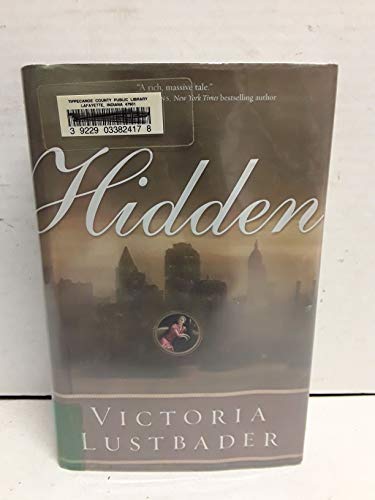
A captivating debut novel, Hidden marvelously re-creates New York City in the 1920s, from the hustle and bustle of the Lower East Side to the hushed hallways of the homes of the rich and powerful. In graceful, eloquent prose, Victoria Lustbader presents a fierce, compelling story of loyalty, forbidden desire and the end of innocence.
Both panoramic and intimate, Hidden teems with complex characters readers will embrace and remember for a long time to come. Concealing their passions and innermost thoughts even from those they love most dearly, the Warshinskys and Gateses love, lust, seize power, do battle, and strive to rule themselves and their city during a decade of turmoil at home and abroad.
The battlefield traumas of The Great War cement an improbable friendship between Jed Gates, scion of the wealthy Gates family, and David Warshinsky, first-generation American from New York's poverty-ridden lower East Side. David sacrifices his family and his Jewish heritage in pursuit of his untamable ambition, while, in eerie parallel, Jed sacrifices his private desires to assume the burdens of familial expectations.
David's young sister Sarah suffers the torments of a sweatshop and hardens her heart to the brother she once adored. Jed's rebellious sister Lucy becomes a nurse in Margaret Sanger's revolutionary birth control clinic. Sarah finds a tender love in sensitive Reuben Winokur, an immigrant tailor destined to prosper in his new country, but Lucy's path is more treacherous - she falls hard for David, who belongs to another.
David's mother Anna loses her struggle to preserve her shattered family, sundered by hatred and privation. And not even the Gateses' vast wealth can protect Jed's aunt Zoe from the violent abuses of her alcoholic husband, or his artist father Philip from the pain of his wife's rejection of his love and kindness.
Brilliantly evoking time, place, and person, Hidden draws readers deep into the past to illuminate the present. For nothing is more eternal than human feeling, and nothing more important to the human heart.
Both panoramic and intimate, Hidden teems with complex characters readers will embrace and remember for a long time to come. Concealing their passions and innermost thoughts even from those they love most dearly, the Warshinskys and Gateses love, lust, seize power, do battle, and strive to rule themselves and their city during a decade of turmoil at home and abroad.
The battlefield traumas of The Great War cement an improbable friendship between Jed Gates, scion of the wealthy Gates family, and David Warshinsky, first-generation American from New York's poverty-ridden lower East Side. David sacrifices his family and his Jewish heritage in pursuit of his untamable ambition, while, in eerie parallel, Jed sacrifices his private desires to assume the burdens of familial expectations.
David's young sister Sarah suffers the torments of a sweatshop and hardens her heart to the brother she once adored. Jed's rebellious sister Lucy becomes a nurse in Margaret Sanger's revolutionary birth control clinic. Sarah finds a tender love in sensitive Reuben Winokur, an immigrant tailor destined to prosper in his new country, but Lucy's path is more treacherous - she falls hard for David, who belongs to another.
David's mother Anna loses her struggle to preserve her shattered family, sundered by hatred and privation. And not even the Gateses' vast wealth can protect Jed's aunt Zoe from the violent abuses of her alcoholic husband, or his artist father Philip from the pain of his wife's rejection of his love and kindness.
Brilliantly evoking time, place, and person, Hidden draws readers deep into the past to illuminate the present. For nothing is more eternal than human feeling, and nothing more important to the human heart.
Die Inhaltsangabe kann sich auf eine andere Ausgabe dieses Titels beziehen.
Über die Autorin bzw. den Autor
Hidden is Victoria Lustbader's first novel. She was for many years a fiction editor at Harper & Row and The Putnam Publishing Group. Following that, she enjoyed a second career with The Nature Conservancy on Long Island and New York State. She is now a full-time writer, living in New York City and Long Island, and is married to novelist Eric Van Lustbader.
Rezensionen
Lustbader's debut novel, set in roaring '20s New York, updates the Rich Man, Poor Man plot with a Brokeback Mountain twist. David Warshinski, 18, leaves his Jewish family's Lower East Side tenement to join the army, where he meets Jed Gates, grandson of a Manhattan business mogul. When the two friends return from WWI, David cuts off family ties, abandons his religion and changes his name to Shaw, while Jed refuses to acknowledge that he is in love with David. Instead, Jed dutifully marries, fathers a son and goes to work in the family business, keeping David, a financial and marketing genius bent on getting ahead, by his side. Meanwhile, David's sister Sarah, a seamstress still mourning their sister Rose (lost in the Triangle Factory fire) stealthily keeps track of David, and Jed's sister Lucy, a Henry Street Settlement nurse, knows all about David's desires. Lustbader, long time fiction editor at Harper & Row and Putnam, and the spouse of novelist Eric, skillfully envisions history in the making during a time of economic and social change. She falls prey to a few family saga clichés (fraternal feuds, maternal manipulation), but is terrific in depicting her characters' work lives. She transcends the miniseries story line to reveal a promising talent in historical fiction. (June)
Copyright © Reed Business Information, a division of Reed Elsevier Inc. All rights reserved.
Victoria Lustbader is great at casting. Her first novel has a whole roster of convincing characters: an aging mogul, a weak heir, a brilliant outsider, a dying child, a cold mother and an abused wife. We've met most of them often, but she brings them skillfully to life in Hidden.
A veteran fiction editor with an extensive background in publishing, married to novelist Eric Van Lustbader of The Ninja fame, Lustbader more than lives up to her pedigree. She has written a novel that is hefty but always fun to read. World War I has already begun when first we meet the Gates family, firmly ensconced in upper-crust New York society. Joseph Gates, the aging founder, is a man of steel with enough businesses to rival a contemporary conglomerate. His family resides in Waspish elegance in a 16-room apartment on Fifth Avenue overlooking Central Park with multiple servants and icy codes of correct behavior.
Jed, the grandson and heir apparent to the empire, feels entrapped by lineage and expectations. Suddenly, in an unprecedented act of rebellion, he secretly decides to join the army bound for Europe "on the very day in April that war had been declared. It had come to him with the undeniability of a sign from God." Despite his family's vigorous attempts to keep him away from actual fighting, Jed pours all his energies into becoming a crack officer and ends up in the bloody battle of the Marne.
At the lower end of Manhattan Island, scraping along in abject poverty, is the Warshinsky clan. Like his uptown contemporary, son David is also desperate to escape, but his constraints are very different. He feels suffocated by his traditional Jewish family crammed into the tiny rooms of a Lower East Side tenement. He is willing to do anything to get away from their narrow and fearful lives. So, acting in secret, he too joins the army. "Every day he reminded himself that he was moving farther and father away from home. To be doing that was worth even going to war."
David and Jed, having met only once in a chance encounter at a Manhattan automat, find each other on the way to war. They become comrades in arms and devoted friends. Both men are wounded but survive. On their return to the States, David turns his back completely on his past and his family. Jed insists that his status-conscious family accept David into their inner circle. So the Gateses take him in, and he joins the business. Now he is known as David Shaw, his presence explained away as that of a rediscovered distant cousin.
The scene is set. From the moment they return to New York, both men are living lies: Jed refusing to recognize his homosexuality and David hiding the fact that he is Jewish, with the Warshinsky family still living only miles away in a world unimaginable to the affluent Gateses.
Lustbader's portraits of life in the sweatshop society are full of the voices, smells and broken spirits of immigrants searching in vain for the prosperous new lives they thought America would offer. After David walks out on his family, his 14-year-old sister Sarah is forced to support the family by working as a seamstress in a dark and stuffy loft for $6 a week. The rules are so inflexible and brutal that "she understood that if she didn't sew the lining on these sleeves perfectly and quickly, Pankin [the boss] would throw her out."
There is a touch of stereotype in the portraits of the women: Jed's mother is the rigid, dominating matron; his sister, Lucy, is the rebel who flouts all the rules, goes to college and works in Margaret Sanger's clinic offering birth control to ever-expanding families like the Warshinskys; Jed himself acquires a saintly and patient wife. But any good story needs setbacks as well as saints: Monty, a snarky villain, stages a deadly riding accident; the Spanish flu carries off a granddaughter; the Triangle Fire inflicts horrors downtown; and, finally, one of our heroes meets a tragic end.
Lustbader's skill in making us genuinely interested in these characters does make her tendency to bump them off when they get in the way of the plot sometimes aggravating. Both families seem very prone to fatal illness and accident, but then those were more fragile times.
In the end, Hidden delivers robustly on its promise to take readers into another era. Lustbader gracefully avoids some of the perils of past masters of the genre, most notably James Michener, who dropped increasingly undigested lumps of history onto the page as his novels got longer. Her characters eat, drink, read, socialize and suffer in ways that feel authentic. In this remarkable and accomplished debut, she takes us as near as most of us would care to get to the conditions and backbreaking toil of the immigrant garment workers on the Lower East Side and also lets us sit at the candlelit dining tables of the rich and famous.
Reviewed by Brigitte Weeks
Copyright 2006, The Washington Post. All Rights Reserved.
Debut novelist Lustbader serves up a luscious historical melodrama as she interweaves the stories of two very different families from the waning days of the Great War through the glittering Roaring Twenties. Poised on the brink of a brilliant career with his grandfather's Wall Street firm, blueblood Jed Gates impulsively enlists in the army to temporarily dodge the weight of familial expectations. On the other end of Manhattan, David Warshinksy, the ambitious son of impoverished Jewish immigrants, views military service as his way out of the Lower East Side and away from his family's crippling neediness. Teaming up together during training and on the battlefields of France, Jed and David form a steadfast bond. After the war, David is reluctantly assimilated into Jed's family against the wishes of domineering matriarch Sally Gates. While Jed and David embark upon a successful business partnership, each struggles with his own inner demons. Tortured by his growing attraction to David, Jed must come to terms with his latent homosexuality. Meanwhile, David falls for Jed's independent, free-spirited sister but is unable to commit himself emotionally until he acknowledges his Jewish heritage and reconciles with his estranged family. This authentically detailed period page-turner is chock-full of passion, romance, and hidden desires. Margaret Flanagan
Copyright © American Library Association. All rights reserved
Auszug. © Genehmigter Nachdruck. Alle Rechte vorbehalten.
Chapter One
Jed was fidgeting uncontrollably. After torturous hours of waiting, he was nearly to the long row of tables manned by army officials registering the endless line of men who had come to the 69th Regiment Armory to enlist. Men between the ages of twenty-one and thirty-one were required to register. Jed was only eighteen, but the decision to join up had come upon him like a thunderbolt on the very day in April that war had been declared. It had come to him with the undeniability of a sign from God. He did not question it and for two months had refused to consider the consequences of having made a major life decision on his own when all previous decisions had been made for him by his mother and grandfather. Rather, he had told no one, not even his sister, Lucy. He had kept his plan a secret so that his mother would have no chance to subvert his will and take his choice away from him. But during these past four hours amidst a restless crowd of rough and determined-looking men, Jed had grown increasingly confused as to just what he imagined he was doing. A sudden urge to turn and flee, to save himself--although he couldn't say from what--took hold of him. Now, the deed about to be done, he struggled to maintain his faith in the face of his dread of his mother's reaction. His stomach clenched into a fist as he pictured himself telling her what he had done. His equilibrium teetered and his body torqued. With one graceless lurch his elbow landed firmly in the back of the man in front of him. The fellow whirled around faster than a guard dog, jaw set with menace.
"I'm so sorry. Nerves, you know. Having trouble standing still."
Jed's apologetic blue gaze collided with a pair of feral light brown eyes shot through with golden specks. He felt as though something had slammed into his chest. The eyes bored through him, taking his measure and dismissing him in the few seconds it took to look him up and down. Without responding to Jed's apology, the other man turned away. Although Jed had been the one rudely treated, he knew that it was he who must have somehow done something inappropriate, shown himself to be dismissable. He was instantly embarrassed by his beautifully tailored silk gabardine suit, his elegant hat pushed back on his thick dark-blond hair, by the fact that he was comfortably cool in the clotted June heat. The man in front of him was sweating into his well-worn, coarse cotton clothing; his brown hair was damp and unruly, inexpertly cut. Yet despite his obvious low-class origins and the fact that he couldn't have been much older than Jed himself, once seen full-on he was impossible to ignore. He exuded a spiking, confident energy, even now, with his back turned. It washed over Jed like a balm and subdued his cowardly urge. He squared his own jaw as his confidence returned.
David turned his back on the man behind him, aware that he was being rude and not caring. There was no point in talking to someone like that, a wealthy goy, the undoubtedly pampered son of a long line of pampered sons who had gotten rich exploiting poor immigrant families like his own. People with sleek golden hair and long elegant limbs encased in suits of fine material, people who looked like they owned the world and knew they deserved it, didn't want to know people like David. What right did golden boy have to look at him with friendly eyes? He didn't mean it. David had met plenty of people like him before. If they were to speak, he'd be unfailingly polite and leave David feeling like a servant.
The last man between him and the registration table was finally finished being processed and David stepped up quickly, eager to get this ordeal over with and leave. As he held out his papers, an older, larger man rushed forward and tried to elbow him aside. The jockeying had been going on all day, as hot, weary men took advantage of the loosely monitored lines; the soldiers had broken up several fights already. David pushed back and barked, "Hey, I got here first. Wait your turn."
The man grabbed David's arm and shoved him away from the table. "Get outta my way, you little snot. I been waitin' here six hours. Go back to your mommy for a diaper change."
With the finely honed instincts of the eternally persecuted and perpetually defensive, David chopped down on the man's wrist with his free hand and kicked viciously at an exposed ankle. "Putz! Kush meer in tokhes!"
The man yelped in pain. "Fuck you, kike!" He lunged at David, his greater weight bringing them both crashing to the floor. David flailed at the man's sides and face, trying to land at least one good punch. Before either man had a chance to do any damage, they were pulled apart and yanked to their feet, voices of authority telling them to cut it out, now.
Mesmerized, Jed watched the altercation unfold in front of him. He heard every ugly word, could almost feel each increasingly violent contact. He saw rage suffuse the exotic features of the boy pinned to the ground, his dusky olive skin now redly undertinged with his racing blood. Jed's own blood rose and his heart beat wildly. Before he knew what he was doing, he had thrown a hold--perfected during years as captain of the wrestling team at Browning--around the bull neck of the older man, dragging him off his slighter prey, hissing at him, "We don't use such language in civil society."
Soldiers materialized around the tussling threesome. One of them pulled Jed off the big man and began leading him toward the tables at the far end of the hall. He patted Jed's back. "Nice work there, son. Wish more like you were signing up." But Jed wasn't interested in the soldier's approbation. He wrenched around, his eyes searching for the boy on the ground. He was on his feet now, being herded in the opposite direction. His mouth was slightly open as though he wanted to speak, and he was staring directly at Jed. Their eyes locked and Jed's head swam as he read the boy's thoughts in his piercing, distrustful gaze. Who are you? Why did you help me? What do you want? Jed didn't know the answers.
David emerged into the early-afternoon furnace of 26th Street and Lexington Avenue, the air only barely cooler on the street than it had been inside the Armory building. He knew he should catch the Second Avenue El downtown and get back to work as quickly as possible, but he needed to move, to shake out his pent-up energy. Before exiting the still-mobbed hall, he had taken a second to look for the blond boy who had pulled that miserable bigoted piece of shit off him; it wouldn't kill him to say thank you. He hadn't seen him, nor did he see him in the crowd of men milling around the Armory's entrance. It was impossible to find anyone. David gave up and began walking.
Lexington Avenue ended at 21st Street, at small, lush Gramercy Park. David stopped and leaned into the tall wrought-iron fence, breathed in the tree-cooled air. He rattled at the locked gate, meant to keep out intruders like himself; only residents of the elegant buildings around the park had keys to this private green oasis. David's gaze swept across the park's interior and then took in the brownstones, town houses, and low apartment buildings bordering it on all four sides. This was where he would live someday, he promised himself for the thousandth time. He would have a key and the right to breathe its perfumed air any time he chose.
David walked on, around the park's perimeter and down Irving Place, unaware that a blond boy, cool in ecru silk gabardine, a key to the park in his pocket, walked carefully half a block behind him.
Jed waited outside the Armory entrance until he saw the dark-haired boy come out. He saw the yellow-flecked eyes scan the crowd and he shrank back against the red stone wall. He thought the boy might be looking for him. He didn't know what he would say. He watched the mop of dark hair, long and curling against the collar of a faded blue shirt, bob down Lexington Avenue, and he followed at a safe distance. He stopped across 21st Street while the boy leaned on the park fence, then followed him again, past his own front door at 21 Gramercy Park South, down Irving Place, into the hubbub of 14th Street, west two blocks to Broadway, turning downtown again to 13th Street, where the boy disappeared into the ornate entrance of the Horn & Hardart Automat. Jed stood outside, his heart pounding. What was he doing? Why was he so intrigued by this angry, disheveled Jew in shabby clothing? Jed came from a world far above his; they couldn't possibly have anything in common. And yet Jed wanted to look into those eyes again, see the unwavering conviction in them that he'd seen this morning.
He'd never been inside an Automat. Mother said it was for the hoi polloi. But he'd heard that they had delicious coffee and he was fascinated by the idea of depositing nickels into a slot, opening a little door, and finding food waiting there for you. And today was certainly the day for disobeying his mother. He slipped into the hungry human stream and let himself be swept away.
"Mind if I join you?"
David looked up from his dish of macaroni and cheese to see the blond boy standing at the table, a cup of coffee in one hand and a small plate with two chocolate-frosted cupcakes in the other. A hopeful smile on his handsome Gentile face. David covered his surprise by waving carelessly at the chair across from him and muttering, "Suit yourself."
Jed put his coffee and cake on the table, lowered himself into the surprisingly comfortable chair. In an agitated rush that revealed a nervousness he could not control, he proceeded to lie, as he knew he must. "What a coincidence! I was coming for a cup of this great coffee when I saw you through the window. Thought I'd come over and make sure you were all right."
"I'm fine," David said, blunt and ungenerous. He stared impolitely at the smooth, pale face until the genial smile froze in confusion. He retreated, tilted his head in a gesture of acknowledgment. "I appreciate what you did. Thank you."
"Forget it," Jed said. Faint pink stains bloomed on the ivory skin of his cheeks. "That fellow was an animal. I was afraid he'd bash your head in. What did you say to him, anyway?"
"I called him a dick and told him he could kiss my ass. I doubt if he understood Yiddish, but he sure as hell knew I'd insulted him."
David stared into eyes the color of those little flowers on the climbing vine some optimist had planted in a stingy patch of earth by the back porch of the settlement house on Henry Street: not quite blue, not quite lavender, not pale, but not dark, either. He waited to see their innocent curiosity turn to revulsion now that he'd revealed himself as a Jew and paraded his crudeness and lack of self-discipline. When he saw the eyes filling with genuine amusement, he grinned despite himself, and suddenly they were both laughing, at the lunacy of what had happened, at the unlikelihood of having managed to start a conversation.
Jed wiped his eyes and held out his hand. "I'm Jed Gates. Well, Joseph Edward really, but everyone calls me Jed."
The slightest delay, just a heartbeat, before David offered his hand in return. "David Warshinsky."
Warshinsky shook hands warmly enough, but Jed had noted his hesitation. "I won't hit you in the back again; I promise," he joked.
"I wouldn't let you." David scrutinized Jed thoroughly, his gaze lingering on the expensive suit, the swell hat, the gleaming hair, the friendly face. Men like Jed rarely offered to shake David's hand. His wariness returned. Still, there was something in the clear blue eyes, something honest and ingratiating, that softened David's reflexive distrust and dislike. Softened but did not eradicate. He stretched his legs out in front of him and crossed his arms over his chest. "You don't look like someone who'd be comfortable shaking hands with a low-class Jew."
Jed was taken aback, but only momentarily. He had met Jews; he'd even recognized that David had cursed that man in Yiddish. Jews were all around Wall Street, all around Hanover Square where the Gates Building was. He worked with a few during his summers at J. Gates, his grandfather's department store, and never thought twice about what they were. His grandfather had Jewish business colleagues. His father, too, knew fellow artists who were Jews, emigrants from Eastern Europe. But Jed had never known his family to socialize with a Jew, let alone one so obviously from the lowest working class. Jed wasn't stupid; he knew that no Jew, not even a wealthy, successful one, was truly welcome in the world he inhabited. He thought it best to simply ignore David's challenge.
"That man who jumped on you, he thinks we're too young to be in the army." Jed put a swagger of unconcern into his voice to hide his fear that the man might be right.
"Yeah, well, he's just full of shit," David said unhesitatingly. "An eighteen-year-old can fight as well as anyone. Believe me, I know."
"You're eighteen? So am I. You seem older."
"Poverty has a way of aging you quickly," David said flatly. "What the hell are you staring at?"
Jed was staring at David's face, a perfectly young, imperfectly arresting eighteen-year-old face, now that Jed looked carefully. He was staring specifically at the five-inch white filament of an obviously old scar that ran from just in front of David's left ear down along his jawline and disappeared under his chin.
"Did you get that in a fight?" Jed knew he should drop his eyes, but he couldn't.
"No. I got it when someone who looked a lot like you took serious offense at my trying to kiss his sister."
He held Jed's eyes, his look bold and invasive. Jed felt himself squirm inside. He understood how someone might want to hit David. Then David smiled and his eyes warmed. Jed felt as though the sun had emerged from behind a cloud to shine just on him.
"Jed. Go on, drink your coffee before it gets cold."
Jed tore his eyes from David's face and took a cautious sip. "Oh my God! This is really good coffee!" He looked down at the heavy porcelain cup as though it had mutated to gold in his hands.
"Haven't you had it before? It's the best coffee in the city."
"Yes, well, no, well actually . . . I've never been in here before at all. My mother most definitely would not approve."
David smirked. "And do you do everything your mother tells you?"
"Oh no. She certainly didn't tell me to enlist, I can assure you." Jed didn't see David's face or catch the baiting edge in his voice. In delighted shock over the deliciousness of the coffee, Jed had turned his attention to one of his cupcakes. He took an exploratory bite and all but moaned in pleasure. "I can't believe this! These are as fabulous as anything my grandmother's cook makes! Who would think something so cheap could be so good!"
He looked up to share his discovery and found himself impaled by a hot, stony glare. He blanched. He held out the plate. "Here, please, have one. I can't possibly eat both."
"Mommy wouldn't approve?" David said sarcastically. He stared at Jed's ashen face, at the unspoken apology in his eyes. He noticed that the slim-fingered hand with its neatly clipped nails shook slightly as it held the plate in the air. David slowly reached out and took the cake.
"Thanks. So, if Mommy didn't tell you to enlist, why did you? Why would you want to join the army when you have everything you could possibly want handed to you on a silver platter at home?"
Caught off guard again by David's hostile directness, Jed blurted out the truth. "I wanted to do something that my mother didn't think of for me." A deep blush rose quickly in his paled skin. "Something she wouldn't approve of."
David let out a little grunt and coughed, pretended to choke on a cupcake crumb. Jed's reason for enlisting wasn't all that far from his own.
"What about you, David? Why are you enlisting? Does your family know? Mine doesn't. I'm supposed to be starting at Columbia in the fall, not reporting to training camp. I can't imagine what I'm going to tell my mother." Jed licked chocolate frosting off his fingers.
"No. My family doesn't know. And I'm enlisting because if I'm going to have the life sucked out of me, I at least want to get to choose who does it and why." David looked down at his macaroni and cheese, gone cold and congealed into an unappetizing yellow mass. "Also because I think it's the right thing to do."
"Yes, exactly! It is the right thing to do!"
"Well, if we get killed, it will have been a very stupid thing to do," David said wryly. "But it was the quickest and best way I could think of to get the hell out of the Lower East Side and away from the nothing life everyone wants me to be happy with."
"I didn't even think of it. It just sort of came to me," Jed said simply, and then grinned as though to show that he wasn't ashamed of his lack of initiative. "And anyway, I don't intend to get killed."
David made a little snorting sound. "Actually, neither do I. But then I don't imagine anyone does."
"No, really. I was . . . I was . . . called to enlist; it was like a vision. I can't believe God means me to die. I know He'll keep me safe."
"I thought it was a vision of your mother having a fit that called to you."
Deaf to David's taunting, Jed said earnestly, "No, I think it's God's way of leading me where I need to go. A way to show my mother that I'm a man now, that she can let go of me."
David was rendered speechless by the intimate revelation Jed had unknowingly given up. He laughed a little, busied himself with a healthy bite of cupcake. He pushed down on the tendril of affection that wanted to rise inside him.
"You think I'm a fool, don't you?" Jed said, misinterpreting David's reaction.
"No, no. I don't. It's just . . . I don't believe in God."
"How can you not believe in God?"
"It's easy. You should try it. Just look around you."
"No. I don't understand. How can you do this if you don't believe that God will protect you?" Jed had never had a conversation even remotely like this in his entire life. David was so different from anyone he had ever met. In Jed's world, reserve and decorousness were revered. It was hideously bad manners to burden others with disquieting emotion or opinion. Jed had known this even before he knew how to speak, the knowledge embedded like nourishment in the formula his nurse had fed him. No one had ever had to tell him how to behave. Grandfather and Mother were certainly intense enough. But their intensity was cold, focused and purposeful. David's was hot and unruly; it flared in his eyes like an eruption of sunspots. Without thinking, Jed started to reach across the table to touch him, to feel his heat, and immediately pulled back his hand.
David made no sign that he'd noticed Jed's motion. "I think probably we're both fools. You think God will protect you and I think I can protect myself. The truth is, we'll just have to be lucky." He pushed his plate away. "I've got to get back to work. Stay; enjoy your virgin visit to the Automat." He stood up. "Thanks for the cupcake." This time, he was first to hold out his hand. "You're a nice guy, Jed. I'm sorry if I was rude. But if you're going to survive the war, you'd better learn how to get angry and defend yourself." He was teasing. If Jed had been someone from his own world, he would have said, See you at the baths, or, How about a game of handball on Saturday? Those were not things he could say to someone like Jed.
Jed jumped to his feet, took David's hand. "Well, maybe you can teach me." If David had been a fellow met at school or during an evening at the Club, Jed would have said, Say, give me your number, or, Lunch at Delmonico's next week? But not to this person.
David laughed. "If we were together, I wouldn't have to teach you. I'm angry enough for the both of us." He let go of Jed's hand and started to walk away. "Take care of yourself."
"You, too." Jed stood stiffly by the table, his hand slowly falling back to his side. "Maybe we'll see each other again."
David turned back and shrugged. "Sure. Who knows."
Jed watched David thread his way through the big room and onto the street. He caught one last glimpse of him through the plate-glass window, working his way up Broadway, undoubtedly heading for the 14th Street El stop. Jed had planned to spend the afternoon on a shady bench in Gramercy Park with his sketch pad and charcoals. But that was before. Now he would hail a taxicab and go downtown. He could no longer keep his enlistment a secret, at least not from everyone. Nauseating as was the prospect of defending his decision to his grandfather, Jed had to convince Joseph, who had fought in the Civil War, to understand, to conspire with him, and to help him. Jed needed Joseph to dip into his vast ocean of influence and arrange for a certain David Warshinsky to be assigned to the same training camp as fellow enlistee Joseph Edward Gates II. He couldn't leave it to chance. Maybe wasn't good enough. He had to know that he would see David again.
Copyright © 2006 by Victoria Lustbader
„Über diesen Titel“ kann sich auf eine andere Ausgabe dieses Titels beziehen.
Suchergebnisse für Hidden

Beispielbild für diese ISBN
Hidden
Anbieter: HPB Inc., Dallas, TX, USA
Verkäuferbewertung 5 von 5 Sternen

hardcover. Zustand: Very Good. Connecting readers with great books since 1972! Used books may not include companion materials, and may have some shelf wear or limited writing. We ship orders daily and Customer Service is our top priority! Bestandsnummer des Verkäufers S_464280546
Gebraucht kaufen
EUR 2,59
EUR 3,34 Versand
Versand innerhalb von USA
Versand innerhalb von USA
Anzahl: 1 verfügbar
Beispielbild für diese ISBN
Hidden
Anbieter: World of Books (was SecondSale), Montgomery, IL, USA
Verkäuferbewertung 5 von 5 Sternen
Hardback. Zustand: Good. A captivating debut novel, Hidden marvelously re-creates New York City in the 1920s, from the hustle and bustle of the Lower East Side to the hushed hallways of the homes of the rich and powerful. In graceful, eloquent prose, Victoria Lustbader presents a fierce, compelling story of loyalty, forbidden desire and the end of innocence. Both panoramic and intimate, Hidden teems with complex characters readers will embrace and remember for a long time to come. Concealing their passions and innermost thoughts even from those they love most dearly, the Warshinskys and Gateses love, lust, seize power, do battle, and strive to rule themselves and their city during a decade of turmoil at home and abroad.The battlefield traumas of The Great War cement an improbable friendship between Jed Gates, scion of the wealthy Gates family, and David Warshinsky, first-generation American from New York's poverty-ridden lower East Side. David sacrifices his family and his Jewish heritage in pursuit of his untamable ambition, while, in eerie parallel, Jed sacrifices his private desires to assume the burdens of familial expectations.David's young sister Sarah suffers the torments of a sweatshop and hardens her heart to the brother she once adored. Jed's rebellious sister Lucy becomes a nurse in Margaret Sanger's revolutionary birth control clinic. Sarah finds a tender love in sensitive Reuben Winokur, an immigrant tailor destined to prosper in his new country, but Lucy's path is more treacherous - she falls hard for David, who belongs to another.David's mother Anna loses her struggle to preserve her shattered family, sundered by hatred and privation. And not even the Gateses' vast wealth can protect Jed's aunt Zoe from the violent abuses of her alcoholic husband, or his artist father Philip from the pain of his wife's rejection of his love and kindness.Brilliantly evoking time, place, and person, Hidden draws readers deep into the past to illuminate the present. For nothing is more eternal than human feeling, and nothing more important to the human heart. Bestandsnummer des Verkäufers 00076861729
Gebraucht kaufen
EUR 6,04
Versand gratis
Versand innerhalb von USA
Versand innerhalb von USA
Anzahl: 3 verfügbar
Beispielbild für diese ISBN
Hidden
Verlag:
Forge Books (edition First Edition), 2006
ISBN 10: 0765315564
ISBN 13: 9780765315564
Gebraucht
Hardcover
Erstausgabe
Anbieter: BooksRun, Philadelphia, PA, USA
Verkäuferbewertung 5 von 5 Sternen
Hardcover. Zustand: Very Good. First Edition. With dust jacket. It's a well-cared-for item that has seen limited use. The item may show minor signs of wear. All the text is legible, with all pages included. It may have slight markings and/or highlighting. Bestandsnummer des Verkäufers 0765315564-11-1-29
Gebraucht kaufen
EUR 6,22
Versand gratis
Versand innerhalb von USA
Versand innerhalb von USA
Anzahl: 1 verfügbar
Beispielbild für diese ISBN
Hidden
Anbieter: ThriftBooks-Atlanta, AUSTELL, GA, USA
Verkäuferbewertung 5 von 5 Sternen
Hardcover. Zustand: As New. No Jacket. Pages are clean and are not marred by notes or folds of any kind. ~ ThriftBooks: Read More, Spend Less. Bestandsnummer des Verkäufers G0765315564I2N00
Gebraucht kaufen
EUR 6,26
Versand gratis
Versand innerhalb von USA
Versand innerhalb von USA
Anzahl: 1 verfügbar
Beispielbild für diese ISBN
Hidden
Anbieter: ThriftBooks-Atlanta, AUSTELL, GA, USA
Verkäuferbewertung 5 von 5 Sternen
Hardcover. Zustand: Very Good. No Jacket. Former library book; May have limited writing in cover pages. Pages are unmarked. ~ ThriftBooks: Read More, Spend Less. Bestandsnummer des Verkäufers G0765315564I4N10
Gebraucht kaufen
EUR 6,26
Versand gratis
Versand innerhalb von USA
Versand innerhalb von USA
Anzahl: 1 verfügbar
Beispielbild für diese ISBN
Hidden (Tom Doherty Associates Books)
Anbieter: Wonder Book, Frederick, MD, USA
Verkäuferbewertung 5 von 5 Sternen
Zustand: As New. Like New condition. Like New dust jacket. A near perfect copy that may have very minor cosmetic defects. Bestandsnummer des Verkäufers J09O-00316
Gebraucht kaufen
EUR 7,03
Versand gratis
Versand innerhalb von USA
Versand innerhalb von USA
Anzahl: 1 verfügbar
Beispielbild für diese ISBN
Hidden
Anbieter: GoldBooks, Denver, CO, USA
Verkäuferbewertung 5 von 5 Sternen
Hardcover. Zustand: very good. Very Good Copy. Customer Service Guaranteed. Bestandsnummer des Verkäufers 13I19_12_0765315564
Gebraucht kaufen
EUR 2,30
EUR 4,90 Versand
Versand innerhalb von USA
Versand innerhalb von USA
Anzahl: 1 verfügbar
Beispielbild für diese ISBN
Hidden
Anbieter: World of Books Inc, Montgomery, IL, USA
Verkäuferbewertung 4 von 5 Sternen

Hardback. Zustand: Good. A captivating debut novel, Hidden marvelously re-creates New York City in the 1920s, from the hustle and bustle of the Lower East Side to the hushed hallways of the homes of the rich and powerful. In graceful, eloquent prose, Victoria Lustbader presents a fierce, compelling story of loyalty, forbidden desire and the end of innocence. Both panoramic and intimate, Hidden teems with complex characters readers will embrace and remember for a long time to come. Concealing their passions and innermost thoughts even from those they love most dearly, the Warshinskys and Gateses love, lust, seize power, do battle, and strive to rule themselves and their city during a decade of turmoil at home and abroad.The battlefield traumas of The Great War cement an improbable friendship between Jed Gates, scion of the wealthy Gates family, and David Warshinsky, first-generation American from New York's poverty-ridden lower East Side. David sacrifices his family and his Jewish heritage in pursuit of his untamable ambition, while, in eerie parallel, Jed sacrifices his private desires to assume the burdens of familial expectations.David's young sister Sarah suffers the torments of a sweatshop and hardens her heart to the brother she once adored. Jed's rebellious sister Lucy becomes a nurse in Margaret Sanger's revolutionary birth control clinic. Sarah finds a tender love in sensitive Reuben Winokur, an immigrant tailor destined to prosper in his new country, but Lucy's path is more treacherous - she falls hard for David, who belongs to another.David's mother Anna loses her struggle to preserve her shattered family, sundered by hatred and privation. And not even the Gateses' vast wealth can protect Jed's aunt Zoe from the violent abuses of her alcoholic husband, or his artist father Philip from the pain of his wife's rejection of his love and kindness.Brilliantly evoking time, place, and person, Hidden draws readers deep into the past to illuminate the present. For nothing is more eternal than human feeling, and nothing more important to the human heart. Bestandsnummer des Verkäufers CIN0765315564G
Gebraucht kaufen
EUR 7,88
Versand gratis
Versand innerhalb von USA
Versand innerhalb von USA
Anzahl: 3 verfügbar
Foto des Verkäufers
Hidden
Anbieter: Fort Hill International LLC, HILLSBORO, OH, USA
Verkäuferbewertung 5 von 5 Sternen
hardcover. Zustand: Good. Ex-library usual stamps and markings Good condition but not perfect, Cover has minor nicks and tears, spine shows some creases from use. Ask Questions and request photos if your buying for the cover and not the content. STOCK PHOTOS MAY VARY FROM THE ACTUAL ITEM. ACTUAL PHOTOS AVAIL. UPON REQUEST. Bestandsnummer des Verkäufers 4ZF000000QJJ
Gebraucht kaufen
EUR 3,23
EUR 5,34 Versand
Versand innerhalb von USA
Versand innerhalb von USA
Anzahl: 1 verfügbar
Beispielbild für diese ISBN
Hidden
Anbieter: Better World Books, Mishawaka, IN, USA
Verkäuferbewertung 5 von 5 Sternen
Zustand: Good. Former library copy. Pages intact with minimal writing/highlighting. The binding may be loose and creased. Dust jackets/supplements are not included. Includes library markings. Stock photo provided. Product includes identifying sticker. Better World Books: Buy Books. Do Good. Bestandsnummer des Verkäufers 3457026-75
Gebraucht kaufen
EUR 8,78
Versand gratis
Versand innerhalb von USA
Versand innerhalb von USA
Anzahl: 1 verfügbar