
Verwandte Artikel zu AC/DC: The Savage Tale of the First Standards War
Inhaltsangabe
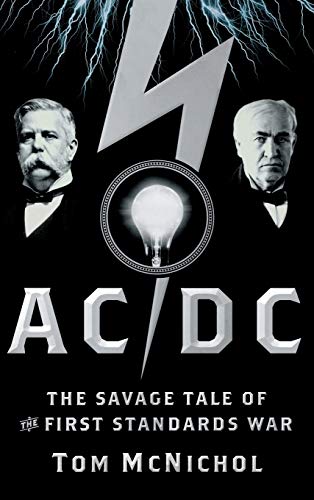
AC/DC tells the little-known story of how Thomas Edison wrongly bet in the fierce war between supporters of alternating current and direct current. The savagery of this electrical battle can hardly be imagined today. The showdown between AC and DC began as a rather straightforward conflict between technical standards, a battle of competing methods to deliver essentially the same product, electricity. But the skirmish soon metastasized into something bigger and darker. In the AC/DC battle, the worst aspects of human nature somehow got caught up in the wires; a silent, deadly flow of arrogance, vanity, and cruelty. Following the path of least resistance, the war of currents soon settled around that most primal of human emotions: fear. AC/DC serves as an object lesson in bad business strategy and poor decision making. Edison's inability to see his mistake was a key factor in his loss of control over the ?operating system? for his future inventions?not to mention the company he founded, General Electric.
Die Inhaltsangabe kann sich auf eine andere Ausgabe dieses Titels beziehen.
Über die Autorin bzw. den Autor
TOM MCNICHOL is a contributing editor for Wired magazine. His articles have appeared in the New York Times, Salon, the Washington Post, and the Guardian. His radio commentaries and satires have aired on NPR’s All Things Considered, Morning Edition, and Marketplace. He’s the author of Barking at Prozac (Crown Publishing, 1997), and his work appears in the anthology Afterwords: Stories and Reports from 9/11 and Beyond (Washington Square Press, 2002).
Von der hinteren Coverseite
Praise for AC/DC
"You'll never look at your wall socket the same again."
―Evan Ratliff, coauthor, Safe: The Race to Protect Ourselves in a Newly Dangerous World
"From the twisted copper wires of electricity's early years McNichol spins a story buzzing with genius and fraud, ambition and infamy, hilarity and humiliation. It's a joy to read: a comic operetta of American industrial history, full of great men, small minds and an alarming number of dead dogs."
―Craig Stoltz, health editor, Washington Post
"Few writers explain technology as well as Tom McNichol. No one's as good at finding the humor in it."
―Jeffrey O'Brien, senior editor, Wired magazine
"A fascinating history of the battle that decided what comes through the wires when we flick a switch. A great story of how far people will go to prove they're 'right' – and make a buck."
―J. J. Yore, executive producer, public radio's Marketplace
"A tale of astonishing genius and greed, a perfect reflection of the competing forces that built corporate America. McNichol offers us a ringside seat at the birth of a superpower, and it's a bloody, messy, and altogether fascinating spectacle."
―Brooke Gladstone, cohost, NPR's On the Media
Aus dem Klappentext
Long before there was VHS versus Betamax, Windows versus Macintosh, or Blu-Ray versus HD-DVD, the first and nastiest standards war was fought between alternating current (AC) and direct current (DC).
AC/DC tells the little-known story of how Thomas Edison bet wrong in the fierce war between supporters of alternating current and direct current. The savagery of this electrical battle can hardly be imagined today. The showdown between AC and DC began as a rather straightforward conflict between technical standards, a battle of competing methods to deliver essentially the same product, electricity. But the skirmish soon metastasized into something bigger and darker. In the AC/DC battle, the worst aspects of human nature somehow got caught up in the wires; a silent, deadly flow of arrogance, vanity, and cruelty. Following the path of least resistance, the war of currents soon settled around that most primal of human emotions: fear. AC/DC serves as an object lesson in bad business strategy and poor decision making. Edison's inability to see his mistake was a key factor in his loss of control over the "operating system" for his future inventions not to mention the company he founded, which would later become General Electric.
The battle over whether alternating or direct current would be the standard for transmitting electricity around the world changed the lives of billions of people, shaped the modern technological age, and set the stage for all standards wars to follow. Today's Digital Age wizards can take lessons from Edison's fierce battle control an invention's technical standard and you control the market.
Auszug. © Genehmigter Nachdruck. Alle Rechte vorbehalten.
AC/DC
The Savage Tale of the First Standards WarBy Tom McNicholJossey-Bass
Copyright © 2006 Tom McNicholAll right reserved.
ISBN: 978-0-7879-8267-6
Chapter One
FIRST SPARKS
The story of electricity begins with a bang, the biggest of them all. The unimaginably enormous event that created the universe nearly 14 billion years ago gave birth to matter, energy, and time itself. The Big Bang was not an explosion in space but of space itself, a cataclysm occurring everywhere at once. In the milliseconds following the Big Bang, matter was formed from elementary particles, some of which carried a positive or negative charge. Electricity was born the moment these charged particles took form.
All matter in the universe contains electricity, the opposing charges that bind atoms together. Even human beings are awash in it; the central nervous system is a vast neuroelectrical network that transmits electrical impulses across nerve endings to the body's muscles and organs.
However, electricity, like the face of the Creator, is normally hidden from view. Most matter contains a balance of positive and negative charges, a stalemated tug-of-war that prevents electricity from manifesting itself. Only when these charges are out of balance do electrons move to restore the equilibrium, allowing electricity to show its face.
Electrical current is the flow of negatively charged electrons from one place to another in order to restore the natural balance of charge. It would take untold years and thousands of lives before humans learned to harness that flow and make those unseen charged particles do their bidding. Even then, electricity remained shrouded in mystery, an eccentric, invisible force with powers that seemed to come from another world.
Electricity first showed itself on earth as lightning, and as such, may have provided the original spark for life. Cosmologists believe that lightning may have provided some of the energy that transformed simple elements such as carbon, hydrogen, oxygen, and nitrogen into amino acids, the more complex molecular chains that are the building blocks of life.
Billions of years ago, the primordial surface of the earth was subjected to almost constant lightning strikes. Lightning is discharged when charged particles in the clouds separate; the lower portion of the cloud becomes negatively charged, producing an enormous electrical difference between it and the positively charged ground. The imbalance is discharged as a spark: lightning. A lightning bolt is a bundle of heat and energy, hotter than the surface of the sun and carrying an electrical force of more than a billion volts.
Lightning may have not only sparked organic life but also preserved plant life during crucial evolutionary choke points when fuel supplies ran low. During the Archaean age two billion years ago, carbon dioxide levels fell dramatically, drying up the supply of nitrates, which are essential for plant growth. Lightning is believed to have helped produce additional nitrates in the atmosphere, allowing plants to survive through this period. When plants began to flourish again, more oxygen was produced, making the earth increasingly suitable for animals, and later, humans. In many ways, we are the products of lightning, the sons and daughters of electricity.
The first humans knew nothing of lightning's creative power, only its terrible capacity for destruction. A jagged bolt from the heavens could incinerate someone in midstride, instantly turning a human being into a charred corpse. It was not the sort of power to be taken lightly. It would take millennia for humans to learn how to shield themselves from lightning, and longer still to learn its life-giving power. Lightning strikes sparked fires, which in time were controlled and put to use to cook food, provide warmth, and ward off dangerous animals.
The first creatures to put electricity to work were Homo habilis, or "Handy Man," the Stone Age humans that inhabited Africa about 1.8 million years ago. Handy Man, it turns out, wasn't all that handy. He hadn't yet worked out how to make fire; instead he waited for lightning to strike a bush or tree, and then carefully tended the flame. When it was time for the tribe to move to another location, Handy Man took lit branches along to start a new fire, or simply waited for lightning to strike again somewhere else.
For Homo sapiens, lightning and electricity would likewise be a luminous mystery. Around 600 B.C., the Greeks discovered that amber, a soft golden gem formed from fossilized tree sap, behaved oddly when rubbed by a piece of fur: the stone attracted pieces of straw or hair. Sometimes, the amber would even emit a spark, a miniature lightning bolt. The science behind this strange effect would remain a mystery for more than two thousand years, but the Greeks had discovered static electricity. As we now know, the fur transferred negatively charged electrons to the amber, giving it an imbalanced charge, which in turn attracted the straw. The phenomenon would later give electricity its name: elecktron is the Greek word for amber.
Even as humans struggled to understand electricity, the subject continued to be clouded by superstition. Thales of Miletus, an early Greek philosopher and mathematician, interpreted the curious properties of amber as evidence that objects were alive and possessed immortal souls. Greek mythology explained electricity by associating lightning with Zeus, the supreme god, who threw bolts of lightning down from the heavens to vent his anger at enemies below. Virgil's Aeneid recounts the tale of Ajax, who, boasting of his own power, defied lightning to strike him down. Such a dare amounted to nothing less than shaking his fist in the face of the gods, and led to a predictably unhappy ending. In short order, Ajax was felled by an expertly aimed lightning bolt from the sky.
Lightning was so fearsome that many cultures sought to ascribe meaning to what seemed like a wantonly destructive power. The Etruscans and Romans believed that lightning was not simply a weapon of the gods but a message from them. The Etruscans were particularly keen observers of lightning, dividing the sky into sixteen sections in order to determine the significance of a bolt. Lightning moving from west to north was considered disastrous, while lightning to the left hand of the observer was thought to be fortunate. The Etruscans even compiled a sacred book about the art of interpreting lightning strikes, and laid out their towns in accordance with signs gleaned from the heavens.
In Roman times, objects or places struck by lightning were considered holy. Roman temples often were erected at these sites, where the gods were worshipped in an attempt to appease them. A man struck by lightning who lived to tell the tale was considered someone especially favored by the gods. In most cases, however, lightning was utterly destructive. A thunderbolt, the Roman poet Lucretius wrote, "can split towers asunder, overturn houses, tear out beams and rafters, move monuments of men, struck down and shattered, rob human beings of life, and slaughter cattle."
Lightning mythology readily spread to other cultures-the phenomenon was clearly something that demanded explanation. The Vikings believed lightning was caused by Thor striking a hammer on an anvil as he rode his chariot across the sky. In Africa, Bantu tribesmen worshipped the bird-god Umpundulo, who directed lightning. Medicine men were sent into storms to bid Umpundulo to strike far away from a...
„Über diesen Titel“ kann sich auf eine andere Ausgabe dieses Titels beziehen.
Suchergebnisse für AC/DC: The Savage Tale of the First Standards War

Beispielbild für diese ISBN
AC/DC: The Savage Tale of the First Standards War
Verlag:
Jossey-Bass (edition 1), 2013
ISBN 10: 0787982679
ISBN 13: 9780787982676
Gebraucht
Hardcover
Anbieter: BooksRun, Philadelphia, PA, USA
Verkäuferbewertung 5 von 5 Sternen

Hardcover. Zustand: Very Good. 1. It's a well-cared-for item that has seen limited use. The item may show minor signs of wear. All the text is legible, with all pages included. It may have slight markings and/or highlighting. Bestandsnummer des Verkäufers 0787982679-11-1
Gebraucht kaufen
EUR 4,72
Versand gratis
Versand innerhalb von USA
Versand innerhalb von USA
Anzahl: 1 verfügbar
Beispielbild für diese ISBN
AC/DC: The Savage Tale of the First Standards War
Anbieter: BookHolders, Towson, MD, USA
Verkäuferbewertung 5 von 5 Sternen
Zustand: Good. [ No Hassle 30 Day Returns ][ Ships Daily ] [ Underlining/Highlighting: NONE ] [ Writing: NONE ] [ Edition: first ] Publisher: Jossey-Bass Pub Date: 9/18/2006 Binding: Hardcover Pages: 208 first edition. Bestandsnummer des Verkäufers 6839729
Gebraucht kaufen
EUR 4,89
Versand gratis
Versand innerhalb von USA
Versand innerhalb von USA
Anzahl: 1 verfügbar
Beispielbild für diese ISBN
AC/DC: The Savage Tale of the First Standards War
Anbieter: World of Books (was SecondSale), Montgomery, IL, USA
Verkäuferbewertung 5 von 5 Sternen
Hardback. Zustand: Good. This is the story of how Thomas Edison bet wrong in the fierce war between supporters of alternating current (AC) and direct current (DC). The savagery of this electrical battle can be hardly imagined today. AC/DC is an object lesson in bad business strategy and poor decision making. Bestandsnummer des Verkäufers 00103615103
Gebraucht kaufen
EUR 5,51
Versand gratis
Versand innerhalb von USA
Versand innerhalb von USA
Anzahl: 1 verfügbar
Beispielbild für diese ISBN
AC/DC: The Savage Tale of the First Standards War
Anbieter: ThriftBooks-Dallas, Dallas, TX, USA
Verkäuferbewertung 5 von 5 Sternen
Hardcover. Zustand: Good. No Jacket. Former library book; Missing dust jacket; Pages can have notes/highlighting. Spine may show signs of wear. ~ ThriftBooks: Read More, Spend Less. Bestandsnummer des Verkäufers G0787982679I3N11
Gebraucht kaufen
EUR 6,01
Versand gratis
Versand innerhalb von USA
Versand innerhalb von USA
Anzahl: 1 verfügbar
Foto des Verkäufers
AC/DC: The Savage Tale of the First Standards War
Anbieter: -OnTimeBooks-, Phoenix, AZ, USA
Verkäuferbewertung 5 von 5 Sternen
Zustand: good. A copy that has been read, remains in good condition. All pages are intact, and the cover is intact. The spine and cover show signs of wear. Pages can include notes and highlighting and show signs of wear, and the copy can include "From the library of" labels or previous owner inscriptions. 100% GUARANTEE! Shipped with delivery confirmation, if you're not satisfied with purchase please return item! Ships via media mail. Bestandsnummer des Verkäufers OTV.0787982679.G
Gebraucht kaufen
EUR 6,43
Versand gratis
Versand innerhalb von USA
Versand innerhalb von USA
Anzahl: 1 verfügbar
Beispielbild für diese ISBN
AC/DC : The Savage Tale of the First Standards War
Verlag:
Wiley & Sons, Incorporated, John, 2013
ISBN 10: 0787982679
ISBN 13: 9780787982676
Gebraucht
Hardcover
Erstausgabe
Anbieter: Better World Books, Mishawaka, IN, USA
Verkäuferbewertung 5 von 5 Sternen
Zustand: Good. 1st Edition. Former library copy. Pages intact with minimal writing/highlighting. The binding may be loose and creased. Dust jackets/supplements are not included. Includes library markings. Stock photo provided. Product includes identifying sticker. Better World Books: Buy Books. Do Good. Bestandsnummer des Verkäufers 897767-6
Gebraucht kaufen
EUR 6,57
Versand gratis
Versand innerhalb von USA
Versand innerhalb von USA
Anzahl: 2 verfügbar
Beispielbild für diese ISBN
AC/DC : The Savage Tale of the First Standards War
Verlag:
Wiley & Sons, Incorporated, John, 2013
ISBN 10: 0787982679
ISBN 13: 9780787982676
Gebraucht
Hardcover
Erstausgabe
Anbieter: Better World Books: West, Reno, NV, USA
Verkäuferbewertung 5 von 5 Sternen
Zustand: Very Good. 1st Edition. Former library copy. Pages intact with possible writing/highlighting. Binding strong with minor wear. Dust jackets/supplements may not be included. Includes library markings. Stock photo provided. Product includes identifying sticker. Better World Books: Buy Books. Do Good. Bestandsnummer des Verkäufers 13916384-6
Gebraucht kaufen
EUR 6,57
Versand gratis
Versand innerhalb von USA
Versand innerhalb von USA
Anzahl: 1 verfügbar
Beispielbild für diese ISBN
AC/DC : The Savage Tale of the First Standards War
Verlag:
Wiley & Sons, Incorporated, John, 2013
ISBN 10: 0787982679
ISBN 13: 9780787982676
Gebraucht
Hardcover
Erstausgabe
Anbieter: Better World Books, Mishawaka, IN, USA
Verkäuferbewertung 5 von 5 Sternen
Zustand: Very Good. 1st Edition. Former library copy. Pages intact with possible writing/highlighting. Binding strong with minor wear. Dust jackets/supplements may not be included. Includes library markings. Stock photo provided. Product includes identifying sticker. Better World Books: Buy Books. Do Good. Bestandsnummer des Verkäufers 13916384-6
Gebraucht kaufen
EUR 6,57
Versand gratis
Versand innerhalb von USA
Versand innerhalb von USA
Anzahl: 1 verfügbar
Foto des Verkäufers
AC/DC: The Savage Tale of the First Standards War
Anbieter: Goodwill Books, Hillsboro, OR, USA
Verkäuferbewertung 5 von 5 Sternen
Zustand: acceptable. Fairly worn, but readable and intact. If applicable: Dust jacket, disc or access code may not be included. Bestandsnummer des Verkäufers 3IIZU80001X3_ns
Gebraucht kaufen
EUR 3,06
EUR 3,56 Versand
Versand innerhalb von USA
Versand innerhalb von USA
Anzahl: 1 verfügbar
Beispielbild für diese ISBN
AC/DC: The Savage Tale of the First Standards War
Anbieter: World of Books Inc, Montgomery, IL, USA
Verkäuferbewertung 4 von 5 Sternen

Hardback. Zustand: Good. This is the story of how Thomas Edison bet wrong in the fierce war between supporters of alternating current (AC) and direct current (DC). The savagery of this electrical battle can be hardly imagined today. AC/DC is an object lesson in bad business strategy and poor decision making. Bestandsnummer des Verkäufers CIN0787982679G
Gebraucht kaufen
EUR 7,35
Versand gratis
Versand innerhalb von USA
Versand innerhalb von USA
Anzahl: 1 verfügbar