
Verwandte Artikel zu The Language of Symbolism: Biblical Theology, Semantics,...
Inhaltsangabe
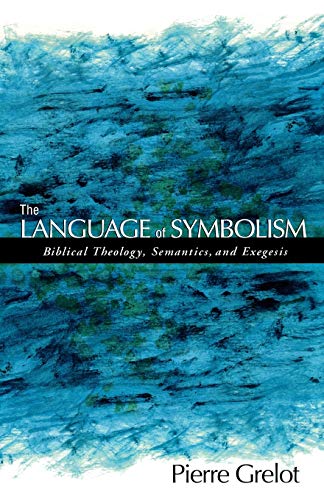
How does one describe God who is utterly "other"? Neither the concrete definitions of science nor the abstractions of philosophy can provide the words needed. Rather, the words the Bible uses to describe God spring from the mysteries of the human condition: figurative language, relationship language, even the language of imagination and mythology. Pierre Grelot examines the language of symbolism in the Bible, categorizing, explaining, and illuminating the Scriptural use of language to reveal God. The symbolic language used in the two Testaments of the Bible can suggest supernatural realities without having to define them. And the Bible is soaked in the supernatural: from the parting of the Red Sea and the guidance of God's chosen people through the wilderness, to the virgin birth, miracles, and resurrection of Jesus Christ. In order to understand the Bible, it is not enough to understand dates, places, authors, and literary genre; we must also understand its language. The Bible's symbolic language is theological, but it is very distinctive from the theological language of GrecoRoman, medieval, or modern culture. Nevertheless, it is the Bible's symbolic language that is most expressive and best able to engage the cultures where the Christian faith is growing most rapidly today, such as those in Asia and in Africa. Indeed, such symbolic language may now also be wellsuited to engaging Western societies, where a rationalist culture has dulled religious sensibilities. In proposing a way to classify the Bible's symbols, Grelot shows how its language works to make perceptible that which, in the purpose of God, cannot otherwise be explained.
Die Inhaltsangabe kann sich auf eine andere Ausgabe dieses Titels beziehen.
Über die Autorin bzw. den Autor
Fr. Pierre Grelot served as a priest in the diocese of Orleans, France, and was a professor at the Catholic Institute of Paris and a member of the Pontifical Biblical Commission. He is the author of numerous books and encyclopedia articles on exegesis and biblical theology, most recently (in French) Dialogue with a Muslim andPaul's Letter to the Romans: A Lesson for Today.
„Über diesen Titel“ kann sich auf eine andere Ausgabe dieses Titels beziehen.
Suchergebnisse für The Language of Symbolism: Biblical Theology, Semantics,...

Foto des Verkäufers
The Language of Symbolism: Biblical Theology, Semantics, and Exegesis
Anbieter: ChristianBookbag / Beans Books, Inc., Westlake, OH, USA
Verkäuferbewertung 5 von 5 Sternen

Paperback. Zustand: New. New with remainder mark. Multiple copies are available. Buy multiples from our store to save on shipping. Bestandsnummer des Verkäufers 1803050012
Foto des Verkäufers
The Language of Symbolism: Biblical Theology, Semantics, and Exegesis
Anbieter: ChristianBookbag / Beans Books, Inc., Westlake, OH, USA
Verkäuferbewertung 5 von 5 Sternen
Paperback. Zustand: As New. New with remainder mark. Multiple copies are available. Buy multiples from our store to save on shipping. Bestandsnummer des Verkäufers 1803200086
Gebraucht kaufen
EUR 7,71
EUR 3,41 Versand
Versand innerhalb von USA
Versand innerhalb von USA
Anzahl: 2 verfügbar
Beispielbild für diese ISBN
The Language of Symbolism: Biblical Theology, Semantics, and Exegesis
Anbieter: Running Numbers, Grand Rapids, MI, USA
Verkäuferbewertung 5 von 5 Sternen
paperback. Zustand: New. Bestandsnummer des Verkäufers 62842
Neu kaufen
EUR 9,44
EUR 4,32 Versand
Versand innerhalb von USA
Versand innerhalb von USA
Anzahl: Mehr als 20 verfügbar
Beispielbild für diese ISBN
The Language of Symbolism: Biblical Theology, Semantics, and Exegesis
Verlag:
Hendrickson Publishers/Baker Academic, 2006
ISBN 10: 0801046467
ISBN 13: 9780801046469
Neu
Softcover
Anbieter: Aldersgate Books Inc., Niagara Falls, NY, USA
Verkäuferbewertung 5 von 5 Sternen
Zustand: NEW. 2006. Trade paperback. 238pp. Index. NEW. Bestandsnummer des Verkäufers 2651881
Foto des Verkäufers
Language of Symbolism : Biblical Theology, Semantics, and Exegesis
Anbieter: GreatBookPrices, Columbia, MD, USA
Verkäuferbewertung 5 von 5 Sternen
Zustand: As New. Unread book in perfect condition. Bestandsnummer des Verkäufers 15610444
Gebraucht kaufen
EUR 26,21
EUR 2,28 Versand
Versand innerhalb von USA
Versand innerhalb von USA
Anzahl: Mehr als 20 verfügbar
Foto des Verkäufers
Language of Symbolism : Biblical Theology, Semantics, and Exegesis
Anbieter: GreatBookPrices, Columbia, MD, USA
Verkäuferbewertung 5 von 5 Sternen
Zustand: New. Bestandsnummer des Verkäufers 15610444-n
Neu kaufen
EUR 26,99
EUR 2,28 Versand
Versand innerhalb von USA
Versand innerhalb von USA
Anzahl: Mehr als 20 verfügbar
Beispielbild für diese ISBN
The Language of Symbolism: Biblical Theology, Semantics, and Exegesis
Anbieter: California Books, Miami, FL, USA
Verkäuferbewertung 4 von 5 Sternen

Zustand: New. Bestandsnummer des Verkäufers I-9780801046469
Neu kaufen
EUR 29,35
Versand gratis
Versand innerhalb von USA
Versand innerhalb von USA
Anzahl: Mehr als 20 verfügbar
Beispielbild für diese ISBN
The Language of Symbolism (Paperback)
Verlag:
Baker Publishing Group, Ada, MI, 2012
ISBN 10: 0801046467
ISBN 13: 9780801046469
Neu
Paperback
Anbieter: Grand Eagle Retail, Bensenville, IL, USA
Verkäuferbewertung 5 von 5 Sternen
Paperback. Zustand: new. Paperback. How does one describe God who is utterly "other"? Neither the concrete definitions of science nor the abstractions of philosophy can provide the words needed. Rather, the words the Bible uses to describe God spring from the mysteries of the human condition: figurative language, relationship language, even the language of imagination and mythology. Pierre Grelot examines the language of symbolism in the Bible, categorizing, explaining, and illuminating the Scriptural use of language to reveal God. The symbolic language used in the two Testaments of the Bible can suggest supernatural realities without having to define them. And the Bible is soaked in the supernatural: from the parting of the Red Sea and the guidance of God's chosen people through the wilderness, to the virgin birth, miracles, and resurrection of Jesus Christ. In order to understand the Bible, it is not enough to understand dates, places, authors, and literary genre; we must also understand its language. The Bible's symbolic language is theological, but it is very distinctive from the theological language of Greco-Roman, medieval, or modern culture. Nevertheless, it is the Bible's symbolic language that is most expressive and best able to engage the cultures where the Christian faith is growing most rapidly today, such as those in Asia and in Africa. Indeed, such symbolic language may now also be well-suited to engaging Western societies, where a rationalist culture has dulled religious sensibilities. In proposing a way to classify the Bible's symbols, Grelot shows how its language works to make perceptible that which, in the purpose of God, cannot otherwise be explained. Grelot examines the language of symbolism in the Bible, categorizing, explaining, and illuminating the Scriptural use of language to reveal God. This item is printed on demand. Shipping may be from multiple locations in the US or from the UK, depending on stock availability. Bestandsnummer des Verkäufers 9780801046469
Beispielbild für diese ISBN
The Language of Symbolism
Print-on-DemandAnbieter: PBShop.store UK, Fairford, GLOS, Vereinigtes Königreich
Verkäuferbewertung 5 von 5 Sternen
PAP. Zustand: New. New Book. Delivered from our UK warehouse in 4 to 14 business days. THIS BOOK IS PRINTED ON DEMAND. Established seller since 2000. Bestandsnummer des Verkäufers IQ-9780801046469
Neu kaufen
EUR 31,83
EUR 4,86 Versand
Versand von Vereinigtes Königreich nach USA
Versand von Vereinigtes Königreich nach USA
Anzahl: 15 verfügbar
Beispielbild für diese ISBN
The Language of Symbolism
Print-on-DemandAnbieter: Majestic Books, Hounslow, Vereinigtes Königreich
Verkäuferbewertung 4 von 5 Sternen
Zustand: New. Print on Demand pp. 256. Bestandsnummer des Verkäufers 38595408
Neu kaufen
EUR 38,02
EUR 7,60 Versand
Versand von Vereinigtes Königreich nach USA
Versand von Vereinigtes Königreich nach USA
Anzahl: 4 verfügbar