
Verwandte Artikel zu Numbers (Rechy, John)
Inhaltsangabe
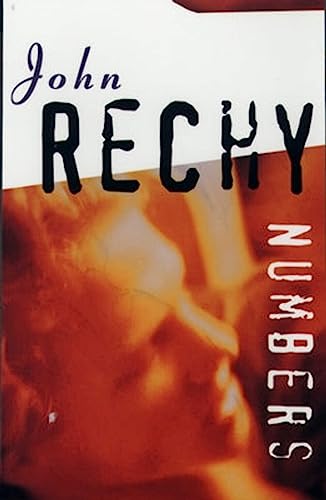
Book jacket/back: Johnny Rio, a handsome narcissist but no longer a pretty boy, travels to Los Angeles, the site of past sexual conquest and remembered youthful radiance, in a frenzied attempt to recreate his younger self. Johnny has ten precious days to draw the "numbers," the men who will confirm his desirability, and with the hungry focus of a man on borrowed time, he stalks the dark balconies of all-night theaters, the hot sands of gay beaches, and shady glens of city parks, attempting to attract shadowy sex-hunters in an obcessive battle against the passing of his youth.
Die Inhaltsangabe kann sich auf eine andere Ausgabe dieses Titels beziehen.
Auszug. © Genehmigter Nachdruck. Alle Rechte vorbehalten.
Numbers
By John RechyGrove Atlantic, Inc.
Copyright © 1967 John Rechy
All rights reserved.
ISBN: 978-0-8021-5198-8All rights reserved.
CHAPTER 1
HE LEFT PHOENIX in the morning, in the early dawning moments when the world is purple; and he saw, on the highway, bands of spectral birds clustered on the pavement searching for God knows what — certainly not food, not on the bare highway and so near the sleeping city.
Expecting them to take flight quickly, he did not reduce his speed; but even as the car dashed dangerously toward them, they remained there as if mysteriously involved in some suicidal ritual — until Johnny Rio, who would have brooded grayly about killing anything (he would prefer to swerve off the road), smashed at his brakes and sounded his honk — the long sound spreading emptily, lonesomely, into the caverns of the still morning.
Only then did the strange birds scatter — but very, very slowly, reluctantly; they flew away — gliding like pieces of dark paper abandoned suddenly by an erratic wind; gliding, but quite low, just barely above the hood of the car: as if in a deep trance.
Again and again, as he drives now much more slowly (the car hardly moving, Johnny himself caught in the hypnotic mood this phantasmal morning has spread over the birds and the highway), he encounters other, similar birds, always small, always shadowy, always in groups of eight or nine, always as if courting a harsh, inevitable destiny, either reluctant to move away from or unaware of the crushing path of the car.
Within a distance of perhaps a mile, the birds were gone.
Once again, Johnny can slash the desert in his speeding new car, as he has done from Texas to New Mexico, into Arizona — the country he has traveled from Laredo, through the burned desert, the level lands leprously spotted with dried bushes; and he's rushing to Los Angeles for a reason he does not know: knowing only that he's returning for ten days.
Exactly ten days.
To avoid the yellow heat of the Arizona desert, a heat remembered from other, distant times, he left Phoenix early (after arriving there yesterday afternoon: renting a room in one of those synthetic "luxury" motels which seem to be made of layers of colored sugar; and he lay by the pool glancing admiringly and often at his slenderly muscled body stretched sensually turning dark tan under the raging summer sun, the hairs on his legs gold despite his dark-brown hair); but already, now that he's many, many miles into the desert, the heat is panting at the windows in recurrent smothering breaths.
He removes his shirt. He never wears underclothes, and so his chest is bare. He feels free and sexual.
The sun has whitened the desert, transforming it paradoxically into that snowy, icy spectacle created by the sand and the trembling waves of steam released by the pavement in the distance. A car ahead of Johnny (but not ahead for long: he has a compulsion to pass) augments the sense of unreality which has not yet been lifted; that car seems to float on the horizon as if on a frozen lake.
Deliberately to shatter the mood, Johnny turns the radio on, hoping for one of those miraculously lunatic stations that spew out the blessedly mesmerizing wailing of young groups with lovely names, the hopped-up disc jockeys making bad jokes; or hoping for a biblestation from which a Negro preacher will moan out ineffable rocking blue damnation. But Johnny has already traveled too far from the cities, and all the radio picks up is one of those square stations you inevitably get so inappropriately as you speed frantically in the daytime along the highways of America toward an urgent destination.
He's going 90 miles an hour.
The amorphous heat is fierce.
Far, far away he sees a shadow slice the air before him sharply like a scythe ripping the sky: perhaps a vulture swooping down on something dead in the desert. Johnny imagines it perched humped over the bleeding flesh. Appalled by the cruel image, he futilely tries the radio again.
But death, which he avoids thinking of, seems determined to permeate his awareness; it does like a knife in his flesh.
Behind him are memories of dead birds smashed by other cars along the highways — of the red, red freshly spilled blood smeared on the concrete pavement. The crushed feathers.
And already his windshield is speckled heavily with those tragic moth-creatures that descend from the sky to crash against the glass — each tiny life transformed mercilessly in one instant into a powdery smear, perhaps a dot of blood on the pane — to be wiped off with a moist paper towel at the next gas station.
Are those dusty insects aware of the windshield? Do they lunge from the sky, welcoming their destruction? Or are they trying to enter the car to escape the powerful currents created by the plunging cars? Deceived by the glass, they crash against an invisible destiny — a destiny unperceived until the fatal moment.
Not that Johnny would equate destiny with death, which may be only an anticlimax in the curve of life; no, his awareness is not so much of death as of a welcome extended to fate, of the suicide that doesn't involve the taking of life: of the infinite ways in which your "number" (so many penultimate numbers!) comes up every single day.
Thinking that, Johnny accelerates his speed to 95 — as he lunges toward the foggy city of lost angels.
Unconsciously, he's begun to count the number of bugs slaughtered by his speeding car.
Splash! ... One. ...
Two ... three....
He's about to count four, but the tiny fluttering speck veers away from the windshield, escapes. Its number wasn't up.
But when it is — ...
He imagines a roster, with everyone in the world — past, present, future — numbered (as in that book of the Bible in which Moses is commanded by God to take a census of his people): all listed neatly in long, thin, tight columns. Say that your number is infinite-billion, six million, eight hundred and sixty-six thousand, three hundred and seventy-three. That means you'll go immediately after number infinite-billion, six million, eight hundred and sixty-six thousand, three hundred and seventy-two. If you could only determine the numbers of those before you, then you'd know almost to the instant when your own would come up. (A sure way, Johnny can't help thinking with amusement, of insuring that you will, indeed, be your brother's keeper!)
Splut! ... Four.
He imagines God poised behind an automatic rifle sniping each "number" down — though on occasion He might, for expediency, use a machine gun to topple the ranks like dominoes.
Johnny notices the fifth crushed bug since he began counting.
When your number comes up —...
Six!
Suddenly aware of what he's been counting, and angered by it, he tries once again to shut off that area of his mind obsessed with death and self-destruction — that area opened by the shadowy birds outside of Phoenix, the crushed feathers glued with blood to the pavement, the mothy bugs on the windshield.
And this is how he tries to shut those thoughts off: He looks down at his shirtless chest, which — deeply, deeply tanned — gleams with sweat. Pleased by the sight, he runs his hand over it, brings that hand to his mouth, and he licks his own perspiration, feeling excitement burgeoning between his legs. He spreads his knees, arches his body. His foot on the pedal accelerates the speed still more: one hundred miles an hour.
Triumphantly, the thought of sex has driven away the thought...
„Über diesen Titel“ kann sich auf eine andere Ausgabe dieses Titels beziehen.
Suchergebnisse für Numbers (Rechy, John)

Beispielbild für diese ISBN
Numbers
Anbieter: HPB-Diamond, Dallas, TX, USA
Verkäuferbewertung 5 von 5 Sternen

Paperback. Zustand: Very Good. Connecting readers with great books since 1972! Used books may not include companion materials, and may have some shelf wear or limited writing. We ship orders daily and Customer Service is our top priority! Bestandsnummer des Verkäufers S_469584897
Gebraucht kaufen
EUR 3,59
EUR 3,29 Versand
Versand innerhalb von USA
Versand innerhalb von USA
Anzahl: 1 verfügbar
Beispielbild für diese ISBN
Numbers
Anbieter: HPB-Emerald, Dallas, TX, USA
Verkäuferbewertung 5 von 5 Sternen
paperback. Zustand: Very Good. Connecting readers with great books since 1972! Used books may not include companion materials, and may have some shelf wear or limited writing. We ship orders daily and Customer Service is our top priority! Bestandsnummer des Verkäufers S_474135638
Gebraucht kaufen
EUR 3,60
EUR 3,29 Versand
Versand innerhalb von USA
Versand innerhalb von USA
Anzahl: 1 verfügbar
Beispielbild für diese ISBN
Numbers
Anbieter: ThriftBooks-Dallas, Dallas, TX, USA
Verkäuferbewertung 5 von 5 Sternen
Paperback. Zustand: Very Good. No Jacket. May have limited writing in cover pages. Pages are unmarked. ~ ThriftBooks: Read More, Spend Less. Bestandsnummer des Verkäufers G0802151981I4N00
Gebraucht kaufen
EUR 7,20
Versand gratis
Versand innerhalb von USA
Versand innerhalb von USA
Anzahl: 1 verfügbar
Beispielbild für diese ISBN
Numbers
Anbieter: ThriftBooks-Dallas, Dallas, TX, USA
Verkäuferbewertung 5 von 5 Sternen
Paperback. Zustand: Fair. No Jacket. Readable copy. Pages may have considerable notes/highlighting. ~ ThriftBooks: Read More, Spend Less. Bestandsnummer des Verkäufers G0802151981I5N00
Gebraucht kaufen
EUR 7,20
Versand gratis
Versand innerhalb von USA
Versand innerhalb von USA
Anzahl: 1 verfügbar
Foto des Verkäufers
Numbers
Anbieter: Goodwill of Central and Coastal Virginia, Richmond, VA, USA
Verkäuferbewertung 4 von 5 Sternen

Zustand: acceptable. Bestandsnummer des Verkäufers CCVV.0802151981.A
Gebraucht kaufen
EUR 3,32
EUR 5,04 Versand
Versand innerhalb von USA
Versand innerhalb von USA
Anzahl: 1 verfügbar
Beispielbild für diese ISBN
Numbers
Verlag:
Grove/Atlantic, Incorporated, 1994
ISBN 10: 0802151981
ISBN 13: 9780802151988
Gebraucht
Softcover
Anbieter: Better World Books: West, Reno, NV, USA
Verkäuferbewertung 5 von 5 Sternen
Zustand: Very Good. Former library copy. Pages intact with possible writing/highlighting. Binding strong with minor wear. Dust jackets/supplements may not be included. Includes library markings. Stock photo provided. Product includes identifying sticker. Better World Books: Buy Books. Do Good. Bestandsnummer des Verkäufers GRP79002178
Gebraucht kaufen
EUR 9,95
Versand gratis
Versand innerhalb von USA
Versand innerhalb von USA
Anzahl: 1 verfügbar
Foto des Verkäufers
Numbers (Paperback or Softback)
Verlag:
Grove Press 1/13/1994, 1994
ISBN 10: 0802151981
ISBN 13: 9780802151988
Neu
Paperback or Softback
Anbieter: BargainBookStores, Grand Rapids, MI, USA
Verkäuferbewertung 5 von 5 Sternen
Paperback or Softback. Zustand: New. Numbers. Book. Bestandsnummer des Verkäufers BBS-9780802151988
Foto des Verkäufers
Numbers
Verlag:
Grove Press / Atlantic Monthly Press, US, 1994
ISBN 10: 0802151981
ISBN 13: 9780802151988
Neu
Paperback
Anbieter: Rarewaves USA, HEBRON, KY, USA
Verkäuferbewertung 5 von 5 Sternen
Paperback. Zustand: New. Rev ed. Bestandsnummer des Verkäufers LU-9780802151988
Neu kaufen
EUR 14,32
Versand gratis
Versand innerhalb von USA
Versand innerhalb von USA
Anzahl: Mehr als 20 verfügbar
Beispielbild für diese ISBN
Numbers
Anbieter: Lakeside Books, Benton Harbor, MI, USA
Verkäuferbewertung 5 von 5 Sternen
Zustand: New. Brand New! Not Overstocks or Low Quality Book Club Editions! Direct From the Publisher! We're not a giant, faceless warehouse organization! We're a small town bookstore that loves books and loves it's customers! Buy from Lakeside Books! Bestandsnummer des Verkäufers OTF-S-9780802151988
Neu kaufen
EUR 10,82
EUR 3,51 Versand
Versand innerhalb von USA
Versand innerhalb von USA
Anzahl: Mehr als 20 verfügbar
Beispielbild für diese ISBN
Numbers
Anbieter: California Books, Miami, FL, USA
Verkäuferbewertung 4 von 5 Sternen
Zustand: New. Bestandsnummer des Verkäufers I-9780802151988
Neu kaufen
EUR 17,19
Versand gratis
Versand innerhalb von USA
Versand innerhalb von USA
Anzahl: Mehr als 20 verfügbar