
Numbers Ebc: Journey to God's Rest-Land (Everyman's Bible Commentaries) - Softcover
Buch 4 von 31: Everyman's Bible Commentaries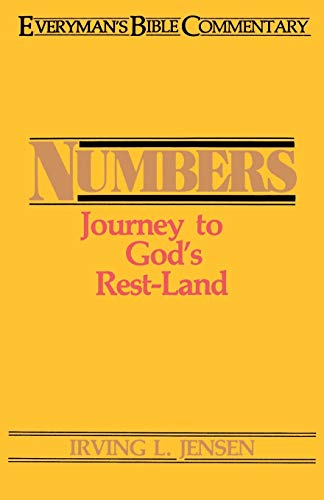
Inhaltsangabe
This passage-by-passage commentary incorporates charts and a simple outline in its exposition of an important Old Testament book. The events of Numbers form the story of the Israelites traveling from Mount Sinai to the border of the Promised Land. Sometimes called 'the book of journeyings' or 'the book of murmurings,' Numbers contains many significant lessons for God's people today. Dr. Jensen points out many pertinent applications of these lessons in this study, as well as explaining the history of the Israelites.
"Its arrangement is commendable—it could serve as a marvelous guide for home study of the Bible or for group study. The outline before each section is well chosen and interwoven in the body of the material." — Derward W. Deere, Golden Gate Baptist Theological Seminary
"Its arrangement is commendable—it could serve as a marvelous guide for home study of the Bible or for group study. The outline before each section is well chosen and interwoven in the body of the material." — Derward W. Deere, Golden Gate Baptist Theological Seminary
Die Inhaltsangabe kann sich auf eine andere Ausgabe dieses Titels beziehen.
Über die Autorin bzw. den Autor
IRVING L. JENSEN (B.A., Wagner College; S.T.B., Biblical Seminary; Th.D., Northwestern Theological Seminary), was professor and chairman of the department of Bible at Bryan College, Dayton, Tennessee, and the author of numerous books, including the entire Bible Self-Study Series; Jensen's Survey of the Old Testament; Jensen's Survey of the New Testament; Jensen's Bible Study Charts; Acts: An Inductive Study; Independent Bible Study; and How to Profit from Bible Reading.
Auszug. © Genehmigter Nachdruck. Alle Rechte vorbehalten.
Numbers
Journey to God's Rest-Land
By Irving L. JensenMoody Press
Copyright © 1964 The Moody Bible Institute of Chicago
All rights reserved.
ISBN: 978-0-8024-2004-6All rights reserved.
Contents
Preface,
Introduction,
Part One: Preparation for the Journey (1:1–10:10) (At Sinai),
Part Two: The journey (10:11–22:1) (To Moab),
Part Three: At the Gate to the Land (22:2–36:13) (At Moab),
Conclusion,
Short Bibliography for Numbers,
CHAPTER 1
Part One
PREPARATION FOR THE JOURNEY
(1:1–10:10)
I. ORDER AND ORGANIZATION (1:1—4:49)
The first prominent truth about the ways of God revealed in the Book of Numbers is His order and planning. This is vividly demonstrated in the Genesis account of the creation of the universe. Here in Numbers it is manifested in His leading a great host of people (at least two million) on a journey through strange lands.
A. Order of Inventory (1:1-54)
At this point in the history of the Israelites everything pointed to a goal not yet attained, the occupation of the land of Canaan. This was not the goal of a dreamer, but the goal promised by the God who already had done marvelous miracles in behalf of His very own people. He had formed them into a nation as He had promised Abraham: "I will make of thee a great nation" (Gen. 12:2). He had delivered them from the utmost in human bondage in Egypt. He had also encouraged them as to the reality of occupying Canaan by making prior specific provision for the kind of life and worship which would be theirs. The Book of Leviticus is filled with such provision and direction, e.g., "When ye come into the land which I give you, then shall the land keep a sabbath unto Jehovah" (Lev. 25:2).
Advance day was now imminent for Israel. It was the first day of the second month, in the "second year after they were come out of the land of Egypt" (1:1). The logistic problems of a mass march of more than half a million fighting men, besides the women and children, were of fantastic proportions, exceeded only by the infinite resources of such a leader and sustainer as Jehovah Himself.
The first order of the day in terms of preparation for the journey was that of personnel inventory: "Take ye the sum" (1:2). Moses and Aaron, with the help of princes or heads of each tribe (1:4-16), assembled all the congregation and numbered by tribes every male, twenty years old and upward, able to go forth to war (1:3).
Before even listing the numbers of each tribe, Moses as writer of Numbers was inspired to insert early in the record the fact of his utter obedience to the commandment of God. Moses did not raise doubts about the ultimate outcome of the journey, utter murmurings about the laborious task of census-taking, or push the job over to someone else. The record says, "As Jehovah commanded Moses, so he numbered them in the wilderness of Sinai" (1:19). If Jehovah's initiative is the first outstanding truth in the opening chapters of Numbers, Moses' obedience is the second.
The count of the men of war begins at 1:20. When all the records were in, this was the count by tribes (apparently recorded in terms of round numbers, rounded off to units of one hundred, except the tribe of Gad): Reuben, 46,500; Simeon, 59,300; Gad, 45,650; Judah, 74,600; Issachar, 54,400; Zebulun, 57,400; Ephraim, 40,500; Manasseh, 32,200; Benjamin, 35,400; Dan, 62,700; Asher, 41,500; Naphtali, 53,400. The grand total was 603,550 fighting men (1:46).
"But the Levites after the tribe of their fathers were not numbered among them" (1:47), since their task along the way would not be to battle the enemy hosts, but to take care of the tabernacle and its belongings, and to minister in its services (1:5053). In the eyes of God, work, war, and worship were a trio, each part of which was indispensable to the successful completion of the journey to Canaan. Even if the success of a battle depended on hosts of men, it would never call away a Levite from his duties connected with the people's worship. If the favor of God depended on worship and communion, then work and war, in their place and time and by commandment of God, were indispensables to the sanctity of the people. What the people of Israel needed to see so desperately was that the General who was planning the strategy knew what He was doing, and that to disobey His orders was to bring doom.
"Take ye the sum" (1:2). The numbering of the men of war before the journey started was in effect a representative measure of the number of the total people of God. This people of God, recently delivered from the bondage of Egypt, brought into Sinaitic covenant relationship, and now anticipating entrance shortly into the promised land of rest, symbolize some interesting spiritual lessons for the Christian today:
(1) Each child of God in the large Body of Christ is an individual soul, known by his heavenly Father (for a total number is the sum of individual parts).
(2) Victorious Christian living (the life of rest in God) is possible only for those already redeemed from the bondage of sin. (Those numbered in anticipation of the march to Canaan had been delivered from Egypt's bondage.)
(3) The attainment of spiritual rest comes by spiritual warfare and by the prevailing might of God. (The numbering anticipated and served the logistic purposes for the battles to come.)
(4) Being a Christian is not a guarantee of automatic victorious living.
This latter truth reflects one of the most sobering facts of the history of Numbers, namely, that of all those counted in this early census of Numbers, only two actually were to enter the land. "All that were numbered of you ... shall not come into the land ... save Caleb the son of Jephunneh, and Joshua the son of Nun" (14:29, 30). The writer to the Hebrews reminds us that the people did not enter the land because of unbelief and disobedience.
B. Order of Encampment (2:1-34)
A mass of people, unordered, invites confusion and riot. Jesus honored order when He prepared to feed over five thousand people at one time. He commanded them to "sit down by companies upon the green grass. And they sat down in ranks, by hundreds, and by fifties" (Mark 6:39, 40). How much more the need for order and efficiency with over two million Israelites in the wilderness!
Chapter 2 records the details of the positioning of the tribes while they were encamped and while they were on the march. For encampment, the locations were identified by the directions east, south, west and north, with the tabernacle in the very center: "Over against the tent of meeting shall they encamp round about" (2:2). The order for marching was identified by the sequence as listed in the account.
1. At the Head of the March, the East Campers (2:3-9) "They shall set forth first" (2:9).
a. The camp of Judah
b. Next, the tribe of Issachar
c. Followed by the tribe of Zebulun
d. At this point (10:17) the Gershonites and Merarites followed, carrying their burden of the tabernacle structure, so as to have this ready when the Kohathites would arrive with the sacred things (10:21).
2. Followed by the Second Rank, the South Campers (2:10-16)
a. The camp of Reuben
b. Next, the tribe of Simeon
c. Followed by the tribe of Gad
3. Next, the Camp of Levites (2:17)
They were responsible for everything of the camp and tabernacle except that which was carried earlier by the Gershonites and Merarites....
„Über diesen Titel“ kann sich auf eine andere Ausgabe dieses Titels beziehen.
Suchergebnisse für Numbers Ebc: Journey to God's Rest-Land (Everyman's...

Beispielbild für diese ISBN
Numbers- Everyman's Bible Commentary: Journey to God's Rest-Land (Everyman's Bible Commentaries)
Anbieter: Bookmans, Tucson, AZ, USA
Verkäuferbewertung 5 von 5 Sternen

Paperback. Zustand: Acceptable. Satisfaction 100% guaranteed. Bestandsnummer des Verkäufers mon0002194628
Gebraucht kaufen
EUR 2,53
EUR 3,50 Versand
Versand innerhalb von USA
Versand innerhalb von USA
Anzahl: 1 verfügbar
Beispielbild für diese ISBN
Numbers- Everymans Bible Commentary: Journey to Gods Rest-Land
Anbieter: Hawking Books, Edgewood, TX, USA
Verkäuferbewertung 4 von 5 Sternen

Zustand: Very Good. Very Good Condition. Has some wear. Five star seller - Buy with confidence! Bestandsnummer des Verkäufers X0802420044X2
Gebraucht kaufen
EUR 6,10
Versand gratis
Versand innerhalb von USA
Versand innerhalb von USA
Anzahl: 1 verfügbar
Beispielbild für diese ISBN
Numbers- Everyman's Bible Commentary: Journey to God's Rest-Land
Anbieter: ThriftBooks-Dallas, Dallas, TX, USA
Verkäuferbewertung 5 von 5 Sternen
Paperback. Zustand: Good. No Jacket. Pages can have notes/highlighting. Spine may show signs of wear. ~ ThriftBooks: Read More, Spend Less. Bestandsnummer des Verkäufers G0802420044I3N00
Gebraucht kaufen
EUR 6,14
Versand gratis
Versand innerhalb von USA
Versand innerhalb von USA
Anzahl: 1 verfügbar
Beispielbild für diese ISBN
Numbers- Everyman's Bible Commentary: Journey to God's Rest-Land
Anbieter: ThriftBooks-Dallas, Dallas, TX, USA
Verkäuferbewertung 5 von 5 Sternen
Paperback. Zustand: Very Good. No Jacket. May have limited writing in cover pages. Pages are unmarked. ~ ThriftBooks: Read More, Spend Less. Bestandsnummer des Verkäufers G0802420044I4N00
Gebraucht kaufen
EUR 6,14
Versand gratis
Versand innerhalb von USA
Versand innerhalb von USA
Anzahl: 1 verfügbar
Beispielbild für diese ISBN
Numbers : Journey to God's Rest-Land
Anbieter: Better World Books, Mishawaka, IN, USA
Verkäuferbewertung 5 von 5 Sternen
Zustand: Good. New Edition. Pages intact with minimal writing/highlighting. The binding may be loose and creased. Dust jackets/supplements are not included. Stock photo provided. Product includes identifying sticker. Better World Books: Buy Books. Do Good. Bestandsnummer des Verkäufers GRP102299174
Gebraucht kaufen
EUR 6,28
Versand gratis
Versand innerhalb von USA
Versand innerhalb von USA
Anzahl: 1 verfügbar
Foto des Verkäufers
Numbers- Everyman's Bible Commentary: Journey to God's Rest-Land (Everyman's Bible Commentaries)
Anbieter: ChristianBookbag / Beans Books, Inc., Westlake, OH, USA
Verkäuferbewertung 5 von 5 Sternen
paperback. Zustand: As New. New with remainder mark. Buy multiples from our store to save on shipping. Bestandsnummer des Verkäufers 2407301460
Gebraucht kaufen
EUR 5,41
EUR 3,47 Versand
Versand innerhalb von USA
Versand innerhalb von USA
Anzahl: 1 verfügbar
Foto des Verkäufers
Numbers- Everyman's Bible Commentary: Journey to God's Rest-Land (Everyman's Bible Commentaries)
Anbieter: ChristianBookbag / Beans Books, Inc., Westlake, OH, USA
Verkäuferbewertung 5 von 5 Sternen
paperback. Zustand: New. New with remainder mark. Buy multiples from our store to save on shipping. Bestandsnummer des Verkäufers 2212130896
Foto des Verkäufers
Numbers: Journey to God's Rest-Land (Everyman's Bible Commentary Ser.)
Anbieter: Peter & Rachel Reynolds, BISHOP AUCKLAND, Vereinigtes Königreich
Verkäuferbewertung 5 von 5 Sternen
Paperback. Zustand: Good. . 128 pages. Spine a bit faded and creased, bookplate to inside front cover. Bestandsnummer des Verkäufers 445437
Gebraucht kaufen
EUR 4,47
EUR 15,06 Versand
Versand von Vereinigtes Königreich nach USA
Versand von Vereinigtes Königreich nach USA
Anzahl: 1 verfügbar
Beispielbild für diese ISBN
Everyman's Bible Commentary Series: Numbers: Journey to God's Rest-Land
Anbieter: Anybook.com, Lincoln, Vereinigtes Königreich
Verkäuferbewertung 5 von 5 Sternen
Zustand: Good. This is an ex-library book and may have the usual library/used-book markings inside.This book has soft covers. In good all round condition. Please note the Image in this listing is a stock photo and may not match the covers of the actual item,250grams, ISBN:0802420044. Bestandsnummer des Verkäufers 5760581
Gebraucht kaufen
EUR 10,73
EUR 15,76 Versand
Versand von Vereinigtes Königreich nach USA
Versand von Vereinigtes Königreich nach USA
Anzahl: 1 verfügbar
Beispielbild für diese ISBN
Numbers: Journey to God's Rest-land
Print-on-DemandAnbieter: THE SAINT BOOKSTORE, Southport, Vereinigtes Königreich
Verkäuferbewertung 5 von 5 Sternen
Paperback / softback. Zustand: New. This item is printed on demand. New copy - Usually dispatched within 5-9 working days. Bestandsnummer des Verkäufers C9780802420046
Neu kaufen
EUR 16,45
EUR 14,11 Versand
Versand von Vereinigtes Königreich nach USA
Versand von Vereinigtes Königreich nach USA
Anzahl: Mehr als 20 verfügbar