
Verwandte Artikel zu A Different Kind of Cell: The Story of a Murderer Who...
Inhaltsangabe
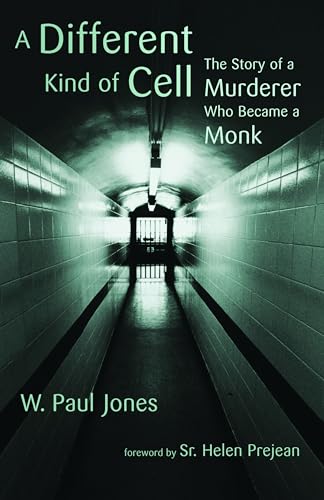
Gripping account of one man's spiritual transformation while in solitary confinement Clayton Fountain was thought by most to be beyond all hope of redemption. Serving several life sentences for five violent murders (four of them committed while behind bars), he was condemned to live out his days in solitary confinement, entombed in a cell of concrete and steel built specifically for him at the U.S. Penitentiary in Marion, Illinois. Yet even this ruthless murderer was not beyond the limits of divine mercy. Although he never again emerged from his cell, Fountain undertook a profound spiritual journey that led to a genuine religious conversion and his decision to become a hermit and a brother in the Trappist Order. Father W. Paul Jones, who served as Fountain's spiritual advisor for six years until Fountain's sudden death in 2004, tells this amazing story with candor and compassion.
Die Inhaltsangabe kann sich auf eine andere Ausgabe dieses Titels beziehen.
Über die Autorin bzw. den Autor
W. Paul Jones is a Roman Catholic priest, a Trappist brother at Assumption Abbey in the Ozarks, and founding spiritual director of the Hermitage Spiritual Retreat Center, Pittsburg, Missouri. His other books include The Art of Spiritual Direction
Auszug. © Genehmigter Nachdruck. Alle Rechte vorbehalten.
A Different Kind of Cell
The Story of a Murderer Who Became a MonkBy W. Paul JonesWilliam B. Eerdmans Publishing Company
Copyright © 2011 W. Paul JonesAll right reserved.
ISBN: 978-0-8028-6651-6
Contents
Foreword, by Sr. Helen Prejean..............................ixPrologue: On Mercy..........................................xi1. An Overture..............................................12. Dancing with Death.......................................53. Beyond Alcatraz..........................................134. Unto the Third and Fourth Generation.....................195. Exposé and Its Reversal.............................296. From Skepticism to Friendship............................497. Realism and the Dark Night...............................798. Almost a Home............................................959. Limits to Divine Mercy?..................................107Epilogue: A Closure.........................................117
Chapter One
An Overture* * *
While I have always tended to find God's leadings of me inexplicable, one relationship in particular defies all logic. There is no conceivable way I could have imagined that I would become the closest friend of Clayton Anthony Fountain — the legendary killer, widely regarded as the most dangerous person in the entire U.S. federal prison system.
The simple facts are indisputable. He was a hardened killer, convicted of murdering in cold blood five different people at five different times with no apparent motive. In fact, four of his five victims were in prison with him in the United States Penitentiary in Marion, Illinois — the successor to Alcatraz. Although constrained in the cell block of "last resort" in this highest of security prisons, given a single cell inside a "cage" designed to enforce severe isolation and extraordinary surveillance, Clayton earned in just seven years a fearsome renown of being both incorrigible and uncontrollable. Of him, U.S. prosecuting attorney Frederick Hess alleged, "I have never, in eighteen years of law practice, ever found a cold-stone killer that deserves the death penalty more than he does."
Yet at the time of Clayton's rampages, there was no death penalty for federal prisoners — not yet. Thus officials were baffled at the same time that they were desperate for some solution to "the Fountain nightmare." Much to the relief of everyone at Marion, it was decided in 1984 that there was no other alternative but to construct an extraordinary chamber in the bowels of the Medical Center for Federal Prisoners in Springfield, Missouri, so designed that Clayton could be totally isolated, once and for all. There he would remain in solitary confinement until he died twenty-one years later. The intention was to cut him off completely from all contact with other humans — except for guards, carefully chosen.
Disdain for him was so heavy for a number of years that the silent treatment was complete, without even a word from the guard who would slide Clayton's meals through a slot in the double-plated steel door. Especially infuriating for the federal prison personnel was that Clayton had intentionally stabbed to death a prison guard in Marion and severely wounded two others. The unspoken working assumption seemed to be that forcing an inevitable nervous breakdown would be just retribution for Clayton. Indeed, years later, when I was finally permitted to visit Clayton, his isolation chamber was across the corridor from a double-tiered unit for the criminally insane. A mélange of screams issuing from their padded cells provided the only "human" sounds Clayton could hear. Not even his mother, Ruth, doubted the appropriateness of Clayton's imprisonment, yet she never gave up praying for her son, plagued by the nightmare that the authorities had "thrown away the key."
What was to unfold within that isolation chamber, however, would be contrary to every expectation — incredibly so. Yet I must be clear from the beginning of this story that only a very few of us would ever come to believe, at least publicly, the authenticity of what was to happen. A staff member of the chaplain's office made a comment to me that perhaps spoke for many: "The fact that he hasn't become unglued under such conditions only proves how crazy the man is. A sane person would have been a basket case long before this." Reactions to his changed behavior, then, were mixed. On the one hand, there were federal prison authorities who admitted surprise at his change without trusting that it would last. On the other hand, there were those who regarded what they were observing as one of the biggest con jobs in prison history. The most kindly judgment available was that Clayton was "self-deceived."
Whatever conclusion one comes to draw, there is agreement on one thing: something intriguing did happen over the fifteen-year period beginning in December 1989. Still, whatever the authenticity, a "catch-22" was destined always to circumscribe it. One of Clayton's few parole-board reviews expressed it this way: "Parole cannot even be considered unless Clayton's self-professed transformation could be tested through social interaction with other persons." Yet, understandably, the prison authorities prohibited anyone even to touch Clayton, certainly in no way daring to gamble on opening his double steel door to permit his interacting with anyone. Thus, as we shall see, any talk of parole would prove to be little more than theoretical, for what board would entertain release for a prisoner whose trail of sentencing had accumulated five life sentences to be lived out consecutively? Through it all, however, Clayton Fountain was sustained by an amazing amount of hope, which he never relinquished, not even when he was almost crushed by disappointment.
If the word miracle is in any sense appropriate to this story, it is probably best reserved for me. Suspiciously, skeptically, and unwillingly, I slowly became one of the few people to accept as genuine Clayton's pilgrimage, one just as mystifying to him as it was to me. Our walk together became uncanny, especially when he came to the conviction that he was being called to the priesthood. I began to be haunted by a gnawing question, especially in strange dreams. "I'm nearing the end of a good life. Clayton is reaching his prime. If my taking Clayton's place in that cell could somehow free him to go to a seminary to study for the priesthood, would I be willing to do it?" After all, members of the Order of Mercedarians, founded in the thirteenth century, took a vow of willingness to offer themselves as hostages if necessary in order to rescue Christians who had been taken prisoner by the Moors. I knew that the question haunting my dreams was totally crazy, but it persisted. And out of my thinking and praying came a quiet conviction: I would do it.
From that point on, the meaning of my pilgrimage as Christian, monk, and priest became intertwined in an inexplicable way with Clayton's own spiritual quest. It was a saga that ended for me on July 11, 2005, in my monastic cemetery in the Ozark Mountains of Missouri ...
But this is to jump far ahead in our story. The violent beginning with its irreparable downward spiral began on March 6, 1974. The scene opens with Clayton Fountain as an eighteen-year-old U.S. Marine stationed in Subic Bay, Republic of the Philippines.
Chapter Two
Dancing with Death...
„Über diesen Titel“ kann sich auf eine andere Ausgabe dieses Titels beziehen.
Suchergebnisse für A Different Kind of Cell: The Story of a Murderer Who...

Beispielbild für diese ISBN
A Different Kind of Cell : The Story of a Murderer Who Became a Monk
Verlag:
Eerdmans Publishing Company, William B., 2011
ISBN 10: 0802866514
ISBN 13: 9780802866516
Gebraucht
Softcover
Anbieter: Better World Books, Mishawaka, IN, USA
Verkäuferbewertung 5 von 5 Sternen

Zustand: Very Good. Pages intact with possible writing/highlighting. Binding strong with minor wear. Dust jackets/supplements may not be included. Stock photo provided. Product includes identifying sticker. Better World Books: Buy Books. Do Good. Bestandsnummer des Verkäufers 7580384-6
Gebraucht kaufen
EUR 7,54
Versand gratis
Versand innerhalb von USA
Versand innerhalb von USA
Anzahl: 1 verfügbar
Beispielbild für diese ISBN
A Different Kind of Cell : The Story of a Murderer Who Became a Monk
Verlag:
Eerdmans Publishing Company, William B., 2011
ISBN 10: 0802866514
ISBN 13: 9780802866516
Gebraucht
Softcover
Anbieter: Better World Books, Mishawaka, IN, USA
Verkäuferbewertung 5 von 5 Sternen
Zustand: Good. Former library copy. Pages intact with minimal writing/highlighting. The binding may be loose and creased. Dust jackets/supplements are not included. Includes library markings. Stock photo provided. Product includes identifying sticker. Better World Books: Buy Books. Do Good. Bestandsnummer des Verkäufers 4506785-6
Gebraucht kaufen
EUR 7,54
Versand gratis
Versand innerhalb von USA
Versand innerhalb von USA
Anzahl: 1 verfügbar
Beispielbild für diese ISBN
A Different Kind of Cell : The Story of a Murderer Who Became a Monk
Verlag:
Eerdmans Publishing Company, William B., 2011
ISBN 10: 0802866514
ISBN 13: 9780802866516
Gebraucht
Softcover
Anbieter: Better World Books, Mishawaka, IN, USA
Verkäuferbewertung 5 von 5 Sternen
Zustand: Good. Pages intact with minimal writing/highlighting. The binding may be loose and creased. Dust jackets/supplements are not included. Stock photo provided. Product includes identifying sticker. Better World Books: Buy Books. Do Good. Bestandsnummer des Verkäufers GRP105293368
Gebraucht kaufen
EUR 7,54
Versand gratis
Versand innerhalb von USA
Versand innerhalb von USA
Anzahl: 1 verfügbar
Beispielbild für diese ISBN
A Different Kind of Cell: The Story of a Murderer Who Became a Monk
Verlag:
William B. Eerdmans Publishing Company, 2011
ISBN 10: 0802866514
ISBN 13: 9780802866516
Gebraucht
Paperback
Anbieter: ThriftBooks-Dallas, Dallas, TX, USA
Verkäuferbewertung 5 von 5 Sternen
Paperback. Zustand: Very Good. No Jacket. May have limited writing in cover pages. Pages are unmarked. ~ ThriftBooks: Read More, Spend Less. Bestandsnummer des Verkäufers G0802866514I4N00
Gebraucht kaufen
EUR 7,59
Versand gratis
Versand innerhalb von USA
Versand innerhalb von USA
Anzahl: 1 verfügbar
Beispielbild für diese ISBN
A Different Kind of Cell: The Story of a Murderer Who Became a Monk
Verlag:
William B. Eerdmans Publishing Company, 2011
ISBN 10: 0802866514
ISBN 13: 9780802866516
Gebraucht
Paperback
Anbieter: ThriftBooks-Dallas, Dallas, TX, USA
Verkäuferbewertung 5 von 5 Sternen
Paperback. Zustand: Good. No Jacket. Former library book; Pages can have notes/highlighting. Spine may show signs of wear. ~ ThriftBooks: Read More, Spend Less. Bestandsnummer des Verkäufers G0802866514I3N10
Gebraucht kaufen
EUR 7,59
Versand gratis
Versand innerhalb von USA
Versand innerhalb von USA
Anzahl: 1 verfügbar
Beispielbild für diese ISBN
A Different Kind of Cell: The Story of a Murderer Who Became a Monk
Verlag:
William B. Eerdmans Publishing Company, 2011
ISBN 10: 0802866514
ISBN 13: 9780802866516
Gebraucht
Paperback
Anbieter: ThriftBooks-Phoenix, Phoenix, AZ, USA
Verkäuferbewertung 5 von 5 Sternen
Paperback. Zustand: Very Good. No Jacket. May have limited writing in cover pages. Pages are unmarked. ~ ThriftBooks: Read More, Spend Less. Bestandsnummer des Verkäufers G0802866514I4N00
Gebraucht kaufen
EUR 7,59
Versand gratis
Versand innerhalb von USA
Versand innerhalb von USA
Anzahl: 1 verfügbar
Beispielbild für diese ISBN
A Different Kind of Cell: The Story of a Murderer Who Became a Monk
Verlag:
William B. Eerdmans Publishing Company, 2011
ISBN 10: 0802866514
ISBN 13: 9780802866516
Gebraucht
Paperback
Anbieter: ThriftBooks-Atlanta, AUSTELL, GA, USA
Verkäuferbewertung 5 von 5 Sternen
Paperback. Zustand: Good. No Jacket. Pages can have notes/highlighting. Spine may show signs of wear. ~ ThriftBooks: Read More, Spend Less. Bestandsnummer des Verkäufers G0802866514I3N00
Gebraucht kaufen
EUR 7,59
Versand gratis
Versand innerhalb von USA
Versand innerhalb von USA
Anzahl: 1 verfügbar
Beispielbild für diese ISBN
A Different Kind of Cell: The Story of a Murderer Who Became a Monk
Verlag:
Wm. B. Eerdmans Publishing Co., 2011
ISBN 10: 0802866514
ISBN 13: 9780802866516
Gebraucht
paperback
Anbieter: HPB-Ruby, Dallas, TX, USA
Verkäuferbewertung 5 von 5 Sternen
paperback. Zustand: Very Good. Connecting readers with great books since 1972! Used books may not include companion materials, and may have some shelf wear or limited writing. We ship orders daily and Customer Service is our top priority! Bestandsnummer des Verkäufers S_468689892
Gebraucht kaufen
EUR 4,35
EUR 3,34 Versand
Versand innerhalb von USA
Versand innerhalb von USA
Anzahl: 1 verfügbar
Beispielbild für diese ISBN
A Different Kind of Cell: The Story of a Murderer Who Became a Monk
Verlag:
Wm. B. Eerdmans Publishing Company, 2011
ISBN 10: 0802866514
ISBN 13: 9780802866516
Gebraucht
Paperback
Anbieter: Keeps Books, Wilmington, IL, USA
Verkäuferbewertung 5 von 5 Sternen
Paperback. Zustand: Used: Very Good. Unmarked, uncreased, gently used. Cover has slight shelfwear. Pages clean & bright, binding tight. Bestandsnummer des Verkäufers 140302068
Gebraucht kaufen
EUR 3,63
EUR 4,39 Versand
Versand innerhalb von USA
Versand innerhalb von USA
Anzahl: 1 verfügbar
Foto des Verkäufers
A Different Kind of Cell: The Story of a Murderer Who Became a Monk
Anbieter: ChristianBookbag / Beans Books, Inc., Westlake, OH, USA
Verkäuferbewertung 5 von 5 Sternen
Paperback. Zustand: As New. New with remainder mark. Buy multiples from our store to save on shipping. Bestandsnummer des Verkäufers 2010070135
Gebraucht kaufen
EUR 7,21
EUR 3,52 Versand
Versand innerhalb von USA
Versand innerhalb von USA
Anzahl: 1 verfügbar