
Verwandte Artikel zu Teaching and Christian Practices: Reshaping Faith and...
Inhaltsangabe
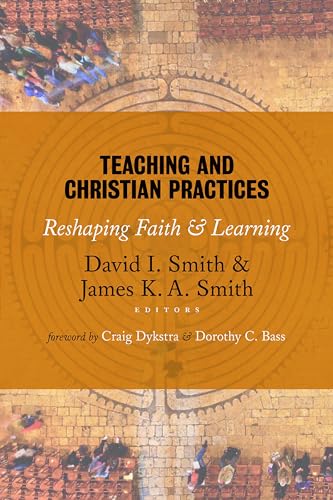
Over the past twenty years there has been a ferment of reflection on the integration of faith and learning -- yet relatively little notice has been paid to the integration of faith and teaching in the Christian university. In Teaching and Christian Practices twelve university professors describe and reflect on their efforts to allow historic Christian practices to reshape and redirect their pedagogical strategies. Whether using spiritually formative reading to enhance a literature course, table fellowship to reinforce concepts in a pre-nursing nutrition course, or Christian hermeneutics to interpret data in an economics course, the authors present a practice of teaching and learning rooted in the rich tradition of Christian practices -- one that reconceives classrooms and laboratories as vital arenas for faith and spiritual growth.
Die Inhaltsangabe kann sich auf eine andere Ausgabe dieses Titels beziehen.
Über die Autorin bzw. den Autor
David I. Smith is director of the Kuyers Institute for Christian Teaching and Learning and Director of Graduate Studies in Education at Calvin College, Grand Rapids, Michigan.
Auszug. © Genehmigter Nachdruck. Alle Rechte vorbehalten.
Teaching and Christian Practices
Reshaping Faith and LearningBy David I. Smith James K. A. SmithWilliam B. Eerdmans Publishing Company
Copyright © 2011 Wm B. Eerdmans Publishing Co.All right reserved.
ISBN: 978-0-8028-6685-1
Contents
FOREWORD Craig Dykstra and Dorothy C. Bass.................................................................................................................viiACKNOWLEDGMENTS.............................................................................................................................................xiINTRODUCTION: Practices, Faith, and Pedagogy David I. Smith and James K. A. Smith..........................................................................1Pedagogical Rhythms: Practices and Reflections on Practice Rebecca Konyndyk DeYoung........................................................................24Reading Practices and Christian Pedagogy: Enacting Charity with Texts David I. Smith.......................................................................43The Rough Trail to Authentic Pedagogy: Incorporating Hospitality, Fellowship, and Testimony into the Classroom Carolyne Call................................61Eat This Class: Breaking Bread in the Undergraduate Classroom Julie A. P. Walton and Matthew Walters.......................................................80From Curiosity to Studiousness: Catechizing the Appetite for Learning Paul J. Griffiths....................................................................102From Tourists to Pilgrims: Christian Practices and the First-Year Experience Ashley Woodiwiss..............................................................123Keeping Time in the Social Sciences: An Experiment with Fixed-Hour Prayer and the Liturgical Calendar James K. A. Smith....................................140How Christian Practices Help to Engage Students Morally and Spiritually: Testimony from a Western Civilization Course Glenn E. Sanders.....................157Thrill Rides and Labyrinths: The Pedagogical Logic of Freedom and Constraint Matthew Walhout...............................................................177Christian Practices and Technical Courses: Making Integral Connections Kurt C. Schaefer....................................................................194Recruiting Students' Imaginations: Prospects and Pitfalls of Practices David I. Smith......................................................................211CONTRIBUTORS................................................................................................................................................224
Chapter One
Pedagogical Rhythms: Practices and Reflections on PracticeRebecca Konyndyk DeYoung
Some Reflections on Why Practices Are Needed
Imagine that you died today. In the days that follow, your friends and family gather together to mourn you and remember you. Imagine what they would say about you and about your life. There would be things to celebrate, things to regret, things they would miss about you, and no doubt a few things they wouldn't! If you were to listen in on those imaginary conversations and capture them on paper—in other words, to write an honest testimonial of the person you were and the life you lived—how would that speech read? For the sake of this exercise, an honest word is better than a good word, if you have to choose.
Now imagine a second version of the speech. This time, think of the speech you wish someone could honestly have given at your funeral—including all the good things you wish were true of you, the way the first speech you wrote would have read had you become all that you wanted to be.
Why this imaginative exercise? Funerals are one of the few places we still reflect on and talk about a person's character—not just one's achievements or quirks, but the person one was and the stories that best revealed this and the qualities that marked the character of one's life. It's also one of the few times we take the time to reflect on our lives as a whole—to set aside the tyranny of the daily and the urgent and to measure our life in terms of "big picture" concerns. A funeral is an occasion to try to view the whole package, to think about how the parts of your character and your life fit together—what they added up to and what your life said about the kind of person you were.
In short, this eulogy-writing exercise is a reflective moment of self-examination and a memento mori all wrapped up in one. To put it another way, it's one example of a practice of reflecting. It presses the questions that are at the heart of a liberal arts education and a Christian life of discipleship: "Who am I? Is this who I want to be? What goods and virtues are expressed in the way I'm living? What is the human good, the best way to live? And how does my life measure up to that ideal?" The first speech tells us who we are now. The second speech articulates the calling, the mission, the task that still lies ahead: "What sort of person do I hope yet to become? What picture of a good human life should inform my future choices and commitments?"
I teach a philosophy seminar on the medieval philosopher and theologian Thomas Aquinas at Calvin College. In it, we study Aquinas's writings on the virtues and vices. When my students do this eulogy exercise in class, I have them add a second step. Based on the speeches they wrote, I have them write down three character traits that they would like to get rid of (from the first speech) and three character traits that they want to cultivate (from the second speech). My students tend to begin this assignment hesitantly and with furrowed brows. Their lists of virtues often include invented words such as "forgivingness" and "lovingness," descriptive phrases such as "being more positive about myself" and "laughing more" and "being a better friend," as well as items that they're not sure count as virtues, such as "leadership," "assertiveness," and "creativity." When they write "strength" on their list, I ask them what that means. Perseverance—remembering that you can also persevere in sin? Or the motivation to endure even when it's difficult? Or the guts to withstand physical pain or exertion? Or the ability to stand up boldly for their beliefs? Or is it some combination of these? When I ask them, quite often they're not exactly sure what they meant. Likewise, several students might list "being true to themselves" but then disagree about whether this means being sincere even if you are bad, whether there might be differences between merely telling the truth and being honest or sincere, and whether contemporary "authenticity" has anything to do with, say, a Christian idea of faithfulness or moral integrity. Stumbling through this listing exercise after writing their initial speeches thus helps them feel the need for an education about the concepts and vocabulary necessary to do the next step of articulation and analysis.
I had this experience myself in graduate school. Challenged by the demands of a competitive academic program, I struggled with the usual insecurities—finding and securing a place in a new pecking order, fearing the shame that came with offering a naïve or uninformed answer aloud in class, trying to impress erudite and imposing professors who would eventually be helping or hindering my job prospects. My inner emotional landscape was defensive and fearful; my strategy in public was to avoid detection, lest I be exposed for the incompetent fool that I felt I was. (I found out...
„Über diesen Titel“ kann sich auf eine andere Ausgabe dieses Titels beziehen.
Suchergebnisse für Teaching and Christian Practices: Reshaping Faith and...

Beispielbild für diese ISBN
Teaching and Christian Practices: Reshaping Faith and Learning
Verlag:
Wm. B. Eerdmans Publishing Co., 2011
ISBN 10: 0802866859
ISBN 13: 9780802866851
Gebraucht
Softcover
Anbieter: World of Books (was SecondSale), Montgomery, IL, USA
Verkäuferbewertung 5 von 5 Sternen

Zustand: Very Good. Item in very good condition! Textbooks may not include supplemental items i.e. CDs, access codes etc. Bestandsnummer des Verkäufers 00110089727
Gebraucht kaufen
EUR 5,33
Versand gratis
Versand innerhalb von USA
Versand innerhalb von USA
Anzahl: 1 verfügbar
Beispielbild für diese ISBN
Teaching and Christian Practices: Reshaping Faith and Learning
Verlag:
William B Eerdmans Publishing Co, 2011
ISBN 10: 0802866859
ISBN 13: 9780802866851
Gebraucht
Paperback
Anbieter: World of Books (was SecondSale), Montgomery, IL, USA
Verkäuferbewertung 5 von 5 Sternen
Paperback. Zustand: Good. In Teaching and Christian Practices several university professors describe and reflect on their efforts to allow historic Christian practices to reshape and redirect their pedagogical strategies. Whether allowing spiritually formative reading to enhance a literature course, employing table fellowship and shared meals to reinforce concepts in a pre-nursing nutrition course, or using Christian hermeneutical practices to interpret data in an economics course, these teacher-authors envision ways of teaching and learning that are rooted in the rich tradition of Christian practices, as together they reconceive classrooms and laboratories as vital arenas for faith and spiritual growth. Bestandsnummer des Verkäufers 00104983934
Gebraucht kaufen
EUR 5,33
Versand gratis
Versand innerhalb von USA
Versand innerhalb von USA
Anzahl: 4 verfügbar
Beispielbild für diese ISBN
Teaching and Christian Practices: Reshaping Faith and Learning
Verlag:
Wm. B. Eerdmans Publishing Co. (edition ), 2011
ISBN 10: 0802866859
ISBN 13: 9780802866851
Gebraucht
Paperback
Anbieter: BooksRun, Philadelphia, PA, USA
Verkäuferbewertung 5 von 5 Sternen
Paperback. Zustand: Very Good. It's a well-cared-for item that has seen limited use. The item may show minor signs of wear. All the text is legible, with all pages included. It may have slight markings and/or highlighting. Bestandsnummer des Verkäufers 0802866859-11-1
Gebraucht kaufen
EUR 5,34
Versand gratis
Versand innerhalb von USA
Versand innerhalb von USA
Anzahl: 1 verfügbar
Foto des Verkäufers
Teaching and Christian Practices: Reshaping Faith and Learning
Verlag:
Wm. B. Eerdmans Publishing Co., 2011
ISBN 10: 0802866859
ISBN 13: 9780802866851
Gebraucht
Softcover
Anbieter: Upward Bound Books, VALRICO, FL, USA
Verkäuferbewertung 5 von 5 Sternen
Zustand: acceptable. Fully readable with visible signs of use. Cover may have creases, dents, or edge wear. Pages may include writing, highlighting, or folded corners. Binding remains intact. Dust jacket included if originally issued with hardcover. Supplemental items e.g., CDs, codes, or inserts are not guaranteed. We ship daily, Monday through Friday excluding weekends and holidays , in a protective poly mailer for secure delivery. Bestandsnummer des Verkäufers UBV.0802866859.A
Gebraucht kaufen
EUR 3,11
EUR 3,82 Versand
Versand innerhalb von USA
Versand innerhalb von USA
Anzahl: 1 verfügbar
Beispielbild für diese ISBN
Teaching and Christian Practices : Reshaping Faith and Learning
Verlag:
Eerdmans Publishing Company, William B., 2011
ISBN 10: 0802866859
ISBN 13: 9780802866851
Gebraucht
Softcover
Anbieter: Better World Books, Mishawaka, IN, USA
Verkäuferbewertung 5 von 5 Sternen
Zustand: Good. Former library copy. Pages intact with minimal writing/highlighting. The binding may be loose and creased. Dust jackets/supplements are not included. Includes library markings. Stock photo provided. Product includes identifying sticker. Better World Books: Buy Books. Do Good. Bestandsnummer des Verkäufers 11228978-6
Gebraucht kaufen
EUR 6,99
Versand gratis
Versand innerhalb von USA
Versand innerhalb von USA
Anzahl: 1 verfügbar
Beispielbild für diese ISBN
Teaching and Christian Practices : Reshaping Faith and Learning
Verlag:
Eerdmans Publishing Company, William B., 2011
ISBN 10: 0802866859
ISBN 13: 9780802866851
Gebraucht
Softcover
Anbieter: Better World Books, Mishawaka, IN, USA
Verkäuferbewertung 5 von 5 Sternen
Zustand: Very Good. Former library copy. Pages intact with possible writing/highlighting. Binding strong with minor wear. Dust jackets/supplements may not be included. Includes library markings. Stock photo provided. Product includes identifying sticker. Better World Books: Buy Books. Do Good. Bestandsnummer des Verkäufers 17696969-75
Gebraucht kaufen
EUR 6,99
Versand gratis
Versand innerhalb von USA
Versand innerhalb von USA
Anzahl: 1 verfügbar
Beispielbild für diese ISBN
Teaching and Christian Practices : Reshaping Faith and Learning
Verlag:
Eerdmans Publishing Company, William B., 2011
ISBN 10: 0802866859
ISBN 13: 9780802866851
Gebraucht
Softcover
Anbieter: Better World Books: West, Reno, NV, USA
Verkäuferbewertung 5 von 5 Sternen
Zustand: Very Good. Pages intact with possible writing/highlighting. Binding strong with minor wear. Dust jackets/supplements may not be included. Stock photo provided. Product includes identifying sticker. Better World Books: Buy Books. Do Good. Bestandsnummer des Verkäufers 4269406-6
Gebraucht kaufen
EUR 6,99
Versand gratis
Versand innerhalb von USA
Versand innerhalb von USA
Anzahl: 1 verfügbar
Beispielbild für diese ISBN
Teaching and Christian Practices : Reshaping Faith and Learning
Verlag:
Eerdmans Publishing Company, William B., 2011
ISBN 10: 0802866859
ISBN 13: 9780802866851
Gebraucht
Softcover
Anbieter: Better World Books, Mishawaka, IN, USA
Verkäuferbewertung 5 von 5 Sternen
Zustand: Good. Pages intact with minimal writing/highlighting. The binding may be loose and creased. Dust jackets/supplements are not included. Stock photo provided. Product includes identifying sticker. Better World Books: Buy Books. Do Good. Bestandsnummer des Verkäufers 4919387-6
Gebraucht kaufen
EUR 6,99
Versand gratis
Versand innerhalb von USA
Versand innerhalb von USA
Anzahl: 1 verfügbar
Beispielbild für diese ISBN
Teaching and Christian Practices : Reshaping Faith and Learning
Verlag:
Eerdmans Publishing Company, William B., 2011
ISBN 10: 0802866859
ISBN 13: 9780802866851
Gebraucht
Softcover
Anbieter: Better World Books: West, Reno, NV, USA
Verkäuferbewertung 5 von 5 Sternen
Zustand: Good. Pages intact with minimal writing/highlighting. The binding may be loose and creased. Dust jackets/supplements are not included. Stock photo provided. Product includes identifying sticker. Better World Books: Buy Books. Do Good. Bestandsnummer des Verkäufers 4919387-6
Gebraucht kaufen
EUR 6,99
Versand gratis
Versand innerhalb von USA
Versand innerhalb von USA
Anzahl: 1 verfügbar
Beispielbild für diese ISBN
Teaching and Christian Practices: Reshaping Faith and Learning
Anbieter: Half Price Books Inc., Dallas, TX, USA
Verkäuferbewertung 5 von 5 Sternen
Paperback. Zustand: Very Good. Connecting readers with great books since 1972! Used books may not include companion materials, and may have some shelf wear or limited writing. We ship orders daily and Customer Service is our top priority! Bestandsnummer des Verkäufers S_475409154
Gebraucht kaufen
EUR 3,67
EUR 3,34 Versand
Versand innerhalb von USA
Versand innerhalb von USA
Anzahl: 1 verfügbar