
Verwandte Artikel zu The Navy SEAL Art of War: Leadership Lessons from the...
Inhaltsangabe
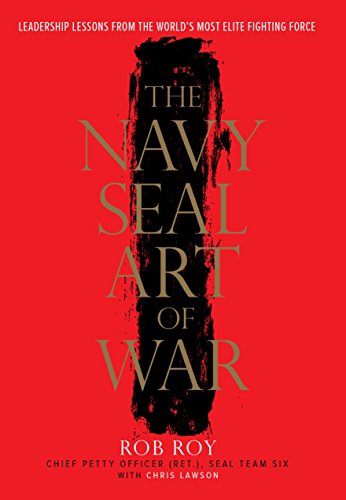
In a groundbreaking, narrative-driven book for businesses, managers (and those who aspire to the managerial ranks), and entrepreneurs, a veteran Navy SEAL Chief Petty Officer shows how the skills that enable SEAL teams to achieve the impossible in the battlefield can help business executives and career-minded individuals make better decisions and get the best out of their teams.
Anyone can make good decisions when everything is in their favor. But in life, as in war, it’s in chaotic, challenging times that genuine leaders distinguish themselves. As a Navy SEAL Chief Petty Officer, Rob Roy learned this lesson over twenty-five years of combat, in which the difference between life and death was his team’s ability to decode complex environments, take decisive action, and seize opportunities when they presented themselves.
In The Navy SEAL Art of War, Roy decodes the leadership lessons of the battlefield for today’s business leaders and individuals: how to make good decisions under pressure, how to utilize and leverage the strengths of others while minimizing the weaknesses of the individual or team, and how to act instead of react, anticipating events despite having minimal information and effectively communicating tasks and priorities.
Illustrated with countless stories from the front lines, and featuring unprecedented exercises and drills from the SEALs’ training program, The Navy SEAL Art of War is destined to take its place aside It’s Your Ship as a bestselling business classic.
Die Inhaltsangabe kann sich auf eine andere Ausgabe dieses Titels beziehen.
Über die Autorin bzw. den Autor
Rob Roy, Chief Petty Officer, spent twenty years as a Navy SEAL (including service on the legendary SEAL Team Six) before founding Sot-G, an eighty-hour intensive leadership course that uses military combat training to teach executives and managers the leadership skills they need to succeed in business and in life. The program has been featured in the Wall Street Journal, Entrepreneur, and Inc.
Chris Lawson is the speechwriter to the Secretary of the U. S. Army, the Honorable John McHugh, and was previously the chief civilian speechwriter for Gen. Martin Dempsey, the Chairman of the Joint Chiefs of Staff. Lawson a former national security journalist for Gannett, as well as the former managing editor for the Army Times and the Navy Times, and a former managing editor for Men’s Health magazine. He served for six years as a Marine Corps Combat Correspondent, from 1985 to 1991, and was the Corps’ Journalist of the Year in 1989. He lives in Northern Virginia with his wife and family.
Auszug. © Genehmigter Nachdruck. Alle Rechte vorbehalten.
Be Ready for Whatever the Booger Eaters Throw Your Way
No plan survives first contact with the enemy. That maxim is especially true in what SEALs call close quarters battle, or CQB, where homes, hallways, alleys, and streets become war zones in the blink of an eye. For a CQB mission to be successful—like the 2011 bin Laden raid in Abbottabad, Pakistan—extensive planning and training are essential. Nowhere is a SEAL’s value as a living, breathing precision-guided munition more necessary. And when it goes right, whether planned or freelanced in real time on site, CQB is an amazing—almost Zen-like—experience to behold: armed frogmen flowing like water through a house or building, shooting, moving, and communicating in an exhilarating, effortless dance of death.
Also known as close quarters defense or close quarters combat, CQB is one of the most difficult things a SEAL does. Something as intense as hand-to-hand fighting requires that an individual be honed to a razor’s edge so that actions aren’t debated or deliberated over, but are performed without hesitation. While meticulous planning is essential, successful missions like CQB always circle back to training. When you are well trained everything becomes instinctual. That’s the game changer. On a certain level, it’s no different than what a football or baseball player or emergency room doctor experiences during critical moments. Repetition (training) leads to memorization and memorization leads to instinct. Therefore, one must train and train their skills until they know a procedure cold. And then they must train some more. In unpredictable situations like combat, such training is the key to victory. That’s why the SEALS who got bin Laden didn’t bail when one of their stealth helicopters—a modified UH-60 Black Hawk—clipped a compound wall and had to make a hard landing. They had trained for just that kind of scenario. No panic. No problem. Instinct kicked in. They know what to do. Mission on.
It’s the same in business. Martin, a CEO of a small printing and graphics company in Maryland, created a culture of endless training for his sales and marketing force after listening to one of my lectures. He says the impact on his team has been miraculous.
“Just when we think we’re ready, we now train just a little bit more,” he wrote to me. “When it’s time to make a presentation to a potential client, a customer, or a board, we don’t believe there’s any such thing as being over prepared.”
As his teams put together their presentations, Martin said, he always asks them: “Are we adding real value? Are we challenging the customer and ourselves? Have we properly learned about the actual people we are planning for?”
“We never just ‘wing it,’ ” he wrote. “There’s a real difference in being confident and being cocky. Confident recognizes that there’s always something more we can add to the presentation that’s unique or specific or counter-intuitive for the client. Cocky says ‘been there, done that. Let’s just do it again.’ The SEALs have taught me the value of training—of doing my homework. The customer always knows if you’re good, or just mailing it in.”
Such rigorous preparation enables Martin’s teams to freelance with ease and confidence when necessary. They know how to blow away the client—not bullshit them.
When you have trained to perform on an instinctual level, you can act instead of react. In combat, ironically, bad stuff usually happens because of a lack of action. The moment you pause or second-guess, the bad guy may grab a hostage and change the whole equation.
So how does one train for these sorts of successes? By using the crawl, walk, run approach. In SEAL training, first we teach a SEAL to shoot. Then teach him to shoot and run. Then teach him to shoot accurately while running. Then we teach him to do it in total darkness. And so on. Once an individual is proficient, we begin training that skill in myriad conditions, situations, and scenarios—likely gaining real-world experience along the way. Equally as important: we train the way we fight, not the other way around. There’s a difference. If one fights the way they train, then they will act like they do on the rifle range. They will pick their weapon up, check it, and do all the safety bullshit, etc. The real world is dirty, aggressive, and intimidating, and one must train that way, too.
Commander’s Intent
When a military action absolutely, positively has to be mounted overnight, the president phones 1-800-USN-SEAL. That conversation—as it should be for senior leaders—is always quick and pointed. The commander in chief explicitly states the end goal—“Sink this boat; take out that bad guy; free those hostages,” etc.—and rightly leaves the details on how to accomplish that mission to his capable subordinates. No need for micromanagement. The SEALs accept the responsibility and are held accountable for their subsequent actions. More important, they know what needs to be done and what outcome determines and defines the mission’s success. They’ve been unleashed.
This vital communication is known in military parlance as “Commander’s Intent.” Not to be confused with organizational “vision” or “values,” Commander’s Intent is a clearly defined and articulated goal for a particular mission. Successful leaders—regardless of their operational environment—routinely issue it. By doing so, teams can properly plan and ultimately succeed on the battlefield. Remember, in the fog of war, plans change and confusion reigns. Armed with Commander’s Intent, however, dynamic operators on the pointy end of the spear can always press the fight. When everyone clearly knows what right looks like, individuals and small teams are free to deploy their knowledge and creativity when plans go awry. They maneuver in new and asymmetrical ways, develop tactics, techniques, and procedures on the fly, slashing and jabbing through the fog of confusion. No one stands around with their hands in their pockets wondering what to do next. Commander’s Intent is, therefore, an empowering tool—a leader’s guiding principle—that allows subordinates to display personal initiative in times of uncertainty. In many cases, individual improvisation will be what saves the day—not the original plan.
Imagine a combat scenario where enemy forces are harassing a military convoy route through a specific mountain pass. The commander issues his intent to the operating forces, ordering them to ensure safe passage through the treacherous pass. He does not, however, specify what weapons to use, which routes to take, or what units to send. He simply articulates his intent to clear the route. The details on how to accomplish that are left to subordinate commanders and their charges. To quote General George S. Patton, who could easily have been a SEAL: “Never tell people how to do things. Tell them what to do, and they will surprise you with their ingenuity.”
Jonathon is a senior vice president of one of North America’s largest building materials manufacturing companies. He’s also a recovering micromanager. After years of mowing through talented subordinates who ultimately tired of his overbearing, intrusive leadership style and palpable lack of trust, and quit to take their talent elsewhere, Jonathon attended one of my Leadership Under Fire seminars. He saw how SEALs thrive on a culture of trust. He grudgingly—but laudably—discovered that while successful in his business, he could...
„Über diesen Titel“ kann sich auf eine andere Ausgabe dieses Titels beziehen.
Suchergebnisse für The Navy SEAL Art of War: Leadership Lessons from the...

Beispielbild für diese ISBN
The Navy SEAL Art of War: Leadership Lessons from the World's Most Elite Fighting Force
Anbieter: World of Books (was SecondSale), Montgomery, IL, USA
Verkäuferbewertung 5 von 5 Sternen

Hardback. Zustand: Fair. In a groundbreaking, narrative-driven book for businesses, managers (and those who aspire to the managerial ranks), and entrepreneurs, a veteran Navy SEAL Chief Petty Officer shows how the skills that enable SEAL teams to achieve the impossible in the battlefield can help business executives and career-minded individuals make better decisions and get the best out of their teams. Anyone can make good decisions when everything is in their favor. But in life, as in war, it's in chaotic, challenging times that genuine leaders distinguish themselves. As a Navy SEAL Chief Petty Officer, Rob Roy learned this lesson over twenty-five years of combat, in which the difference between life and death was his team's ability to decode complex environments, take decisive action, and seize opportunities when they presented themselves. In The Navy SEAL Art of War, Roy decodes the leadership lessons of the battlefield for today's business leaders and individuals: how to make good decisions under pressure, how to utilize and leverage the strengths of others while minimizing the weaknesses of the individual or team, and how to act instead of react, anticipating events despite having minimal information and effectively communicating tasks and priorities. Illustrated with countless stories from the front lines, and featuring unprecedented exercises and drills from the SEALs' training program, The Navy SEAL Art of War is destined to take its place aside It's Your Ship as a bestselling business classic. Bestandsnummer des Verkäufers 00030657900
Gebraucht kaufen
EUR 3,85
Versand gratis
Versand innerhalb von USA
Versand innerhalb von USA
Anzahl: 1 verfügbar
Beispielbild für diese ISBN
The Navy SEAL Art of War: Leadership Lessons from the World's Most Elite Fighting Force
Anbieter: World of Books (was SecondSale), Montgomery, IL, USA
Verkäuferbewertung 5 von 5 Sternen
Hardback. Zustand: Good. In a groundbreaking, narrative-driven book for businesses, managers (and those who aspire to the managerial ranks), and entrepreneurs, a veteran Navy SEAL Chief Petty Officer shows how the skills that enable SEAL teams to achieve the impossible in the battlefield can help business executives and career-minded individuals make better decisions and get the best out of their teams. Anyone can make good decisions when everything is in their favor. But in life, as in war, it's in chaotic, challenging times that genuine leaders distinguish themselves. As a Navy SEAL Chief Petty Officer, Rob Roy learned this lesson over twenty-five years of combat, in which the difference between life and death was his team's ability to decode complex environments, take decisive action, and seize opportunities when they presented themselves. In The Navy SEAL Art of War, Roy decodes the leadership lessons of the battlefield for today's business leaders and individuals: how to make good decisions under pressure, how to utilize and leverage the strengths of others while minimizing the weaknesses of the individual or team, and how to act instead of react, anticipating events despite having minimal information and effectively communicating tasks and priorities. Illustrated with countless stories from the front lines, and featuring unprecedented exercises and drills from the SEALs' training program, The Navy SEAL Art of War is destined to take its place aside It's Your Ship as a bestselling business classic. Bestandsnummer des Verkäufers CIN0804137757G
Gebraucht kaufen
EUR 3,85
Versand gratis
Versand innerhalb von USA
Versand innerhalb von USA
Anzahl: 2 verfügbar
Beispielbild für diese ISBN
The Navy SEAL Art of War: Leadership Lessons from the World's Most Elite Fighting Force
Anbieter: World of Books Inc, Montgomery, IL, USA
Verkäuferbewertung 4 von 5 Sternen

Hardback. Zustand: Fair. In a groundbreaking, narrative-driven book for businesses, managers (and those who aspire to the managerial ranks), and entrepreneurs, a veteran Navy SEAL Chief Petty Officer shows how the skills that enable SEAL teams to achieve the impossible in the battlefield can help business executives and career-minded individuals make better decisions and get the best out of their teams. Anyone can make good decisions when everything is in their favor. But in life, as in war, it's in chaotic, challenging times that genuine leaders distinguish themselves. As a Navy SEAL Chief Petty Officer, Rob Roy learned this lesson over twenty-five years of combat, in which the difference between life and death was his team's ability to decode complex environments, take decisive action, and seize opportunities when they presented themselves. In The Navy SEAL Art of War, Roy decodes the leadership lessons of the battlefield for today's business leaders and individuals: how to make good decisions under pressure, how to utilize and leverage the strengths of others while minimizing the weaknesses of the individual or team, and how to act instead of react, anticipating events despite having minimal information and effectively communicating tasks and priorities. Illustrated with countless stories from the front lines, and featuring unprecedented exercises and drills from the SEALs' training program, The Navy SEAL Art of War is destined to take its place aside It's Your Ship as a bestselling business classic. Bestandsnummer des Verkäufers CIN0804137757A
Gebraucht kaufen
EUR 5,69
Versand gratis
Versand innerhalb von USA
Versand innerhalb von USA
Anzahl: 1 verfügbar
Beispielbild für diese ISBN
The Navy SEAL Art of War: Leadership Lessons from the World's Most Elite Fighting Force
Anbieter: World of Books Inc, Montgomery, IL, USA
Verkäuferbewertung 4 von 5 Sternen
Hardback. Zustand: Good. In a groundbreaking, narrative-driven book for businesses, managers (and those who aspire to the managerial ranks), and entrepreneurs, a veteran Navy SEAL Chief Petty Officer shows how the skills that enable SEAL teams to achieve the impossible in the battlefield can help business executives and career-minded individuals make better decisions and get the best out of their teams. Anyone can make good decisions when everything is in their favor. But in life, as in war, it's in chaotic, challenging times that genuine leaders distinguish themselves. As a Navy SEAL Chief Petty Officer, Rob Roy learned this lesson over twenty-five years of combat, in which the difference between life and death was his team's ability to decode complex environments, take decisive action, and seize opportunities when they presented themselves. In The Navy SEAL Art of War, Roy decodes the leadership lessons of the battlefield for today's business leaders and individuals: how to make good decisions under pressure, how to utilize and leverage the strengths of others while minimizing the weaknesses of the individual or team, and how to act instead of react, anticipating events despite having minimal information and effectively communicating tasks and priorities. Illustrated with countless stories from the front lines, and featuring unprecedented exercises and drills from the SEALs' training program, The Navy SEAL Art of War is destined to take its place aside It's Your Ship as a bestselling business classic. Bestandsnummer des Verkäufers CIN0804137757G
Gebraucht kaufen
EUR 5,69
Versand gratis
Versand innerhalb von USA
Versand innerhalb von USA
Anzahl: 2 verfügbar
Beispielbild für diese ISBN
The Navy Seal Art of War: Leadership Lessons from the World's Most Elite Fighting Force
Anbieter: ThriftBooks-Dallas, Dallas, TX, USA
Verkäuferbewertung 5 von 5 Sternen
Hardcover. Zustand: Fair. No Jacket. Readable copy. Pages may have considerable notes/highlighting. ~ ThriftBooks: Read More, Spend Less. Bestandsnummer des Verkäufers G0804137757I5N00
Gebraucht kaufen
EUR 7,27
Versand gratis
Versand innerhalb von USA
Versand innerhalb von USA
Anzahl: 1 verfügbar
Foto des Verkäufers
The Navy SEAL Art of War: Leadership Lessons from the World's Most Elite Fighting Force
Anbieter: Goodwill, Brooklyn Park, MN, USA
Verkäuferbewertung 4 von 5 Sternen
Zustand: good. All pages and cover are intact including the dust cover, if applicable . Spine may show signs of wear. Pages may include limited notes and highlighting. May include "From the library of" labels. Shrink wrap, dust covers, or boxed set case may be missing. Item may be missing bundled media. Bestandsnummer des Verkäufers MINV.0804137757.G
Gebraucht kaufen
EUR 3,84
EUR 3,56 Versand
Versand innerhalb von USA
Versand innerhalb von USA
Anzahl: 1 verfügbar
Beispielbild für diese ISBN
The Navy SEAL Art of War : Leadership Lessons from the World's Most Elite Fighting Force
Verlag:
Crown Publishing Group, The, 2015
ISBN 10: 0804137757
ISBN 13: 9780804137751
Gebraucht
Hardcover
Erstausgabe
Anbieter: Better World Books: West, Reno, NV, USA
Verkäuferbewertung 5 von 5 Sternen
Zustand: Very Good. First Edition. Former library copy. Pages intact with possible writing/highlighting. Binding strong with minor wear. Dust jackets/supplements may not be included. Includes library markings. Stock photo provided. Product includes identifying sticker. Better World Books: Buy Books. Do Good. Bestandsnummer des Verkäufers 18045876-6
Gebraucht kaufen
EUR 9,23
Versand gratis
Versand innerhalb von USA
Versand innerhalb von USA
Anzahl: 1 verfügbar
Beispielbild für diese ISBN
The Navy SEAL Art of War: Leadership Lessons from the World's Most Elite Fighting Force
Anbieter: HPB-Emerald, Dallas, TX, USA
Verkäuferbewertung 5 von 5 Sternen
Hardcover. Zustand: Very Good. Connecting readers with great books since 1972! Used books may not include companion materials, and may have some shelf wear or limited writing. We ship orders daily and Customer Service is our top priority! Bestandsnummer des Verkäufers S_489144573
Gebraucht kaufen
EUR 7,35
EUR 3,35 Versand
Versand innerhalb von USA
Versand innerhalb von USA
Anzahl: 1 verfügbar
Foto des Verkäufers
The Navy SEAL Art of War: Leadership Lessons from the World's Most Elite Fighting Force
Anbieter: Goodbookscafe, Macon, GA, USA
Verkäuferbewertung 5 von 5 Sternen
Zustand: very_good. Used with minimal wear, no writing or markings, corners maybe bent, few crease lines. Bestandsnummer des Verkäufers MGV.0804137757.VG
Gebraucht kaufen
EUR 21,32
EUR 3,56 Versand
Versand innerhalb von USA
Versand innerhalb von USA
Anzahl: 1 verfügbar
Beispielbild für diese ISBN
The Navy SEAL Art of War; Leadership Lessons from the World's Most Elite Fighting Force
Anbieter: Skoob-ebooks, Pontiac, QC, Kanada
Verkäuferbewertung 5 von 5 Sternen
Hardcover. Zustand: Very Good. Zustand des Schutzumschlags: Very Good-. Minor wear only. The pages are clean and crisp with no highlighting or writing detected. The DJ has little shelf wear with edges mostly straight and crisp. Satisfaction guaranteed with 30-day returns. Ships from Canada.; 144 X 22 X 216 millimeters; 224 pages; R6 781k/746k s5. Bestandsnummer des Verkäufers 15770
Gebraucht kaufen
EUR 21,60
EUR 11,59 Versand
Versand von Kanada nach USA
Versand von Kanada nach USA
Anzahl: 1 verfügbar