Inhaltsangabe
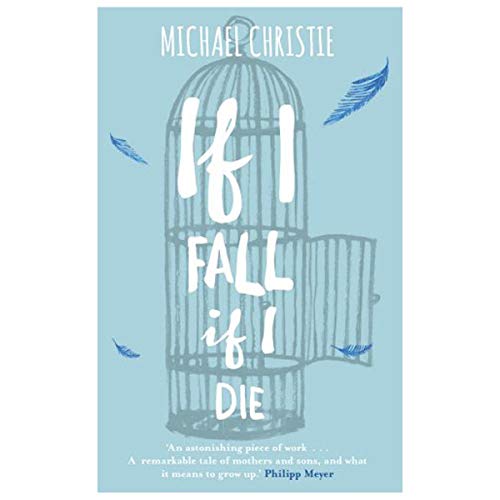
A heartfelt and wondrous debut about family, fear, and skateboarding, that Karen Russell calls "A bruiser of a tale . . . a death-defying coming-of-age story."
Will has never been outside, at least not since he can remember. And he has certainly never gotten to know anyone other than his mother, a fiercely loving yet wildly eccentric agoraphobe who panics at the thought of opening the front door. Their world is rich and fun- loving—full of art, science experiments, and music—and all confined to their small house.
But Will’s thirst for adventure can’t be contained. Clad in a protective helmet and unsure of how to talk to other kids, he finally ventures outside. At his new school he meets Jonah, an artsy loner who introduces Will to the high-flying freedoms of skateboarding. Together, they search for a missing local boy, help a bedraggled vagabond, and evade a dangerous bootlegger. The adventure is more than Will ever expected, pulling him far from the confines of his closed-off world and into the throes of early adulthood, and all the risks that everyday life offers.
In buoyant, kinetic prose, Michael Christie has written an emotionally resonant and keenly observed novel about mothers and sons, fears and uncertainties, and the lengths we’ll go for those we love.
Die Inhaltsangabe kann sich auf eine andere Ausgabe dieses Titels beziehen.
Über die Autorin bzw. den Autor
MICHAEL CHRISTIE received an MFA from the University of British Columbia and is a former professional skateboarder. His first book,The Beggar's Garden, was a finalist for a number of major Canadian prizes and the winner of the City of Vancouver Book Award. He lives with his family on Galiano Island, British Columbia.If I Fall, If I Die is his U.S. debut.
Auszug. © Genehmigter Nachdruck. Alle Rechte vorbehalten.
1
The boy stepped Outside, and he did not die.
He was not riddled with arrows, his hair did not spring into flame, and his breath did not crush his lungs like spent grocery bags. His eyeballs did not sizzle in their sockets, and his heart’s pistons did not seize. No barbarian lopped his head into a blood-soggy wicker basket, and no glinting ninja stars were zinged into his throat.
Actually, incredibly: nothing happened--no immolation, no bloodbath, no spontaneous asphyxiation, no tide of shivery terror crashing upon the shore of his heart--not even a trace of his mother’s Black Lagoon in his breath.
Somehow Will was calm.
The day’s bronzy light, shredded by a copse of birch, tossed a billion luminous knife blades onto the front lawn. And he dared to continue down the walk--where he’d watched hundreds of deliverymen stride to their house bearing fresh food for them to eat and new clothes for them to wear--with the paving stones granular and toilet-bowl cool under his naked feet. Venturing out into the unreal arena of his front yard for the first time in his memory, he discovered only early summer crispness in the air--this Outside air--its breeze slaloming through the jagged wisps of his cut-off shorts, in and out of the straps of his Helmet. Will had felt this same air sweep through the window in New York on those rare occasions he opened it, despite how it worried his mother, but something was sapped when it came through. He’d never immersed himself this way, not since his memory got impressionistic and gauzy as if it had been transcribed by a stenographer in full Black Lagoon.
Will was Outside because he’d heard an odd bang while painting a six-foot masterpiece his mother had commissioned for London, a composition she twice in passing compared to Mark Rothko, who was a genius painter, just like him. At first he’d thought another bird had struck the big picture window in Cairo. Will once watched a blue jay--he’d identified it with the bird book he used as a drawing reference--palsying there in the ochre dirt beneath the glass, its neck canted grimly as though trying to watch an upside-down film. Blood rimmed its eyes and its beak was shattered like an egg ready to be peeled. It had thought it would go for a nice flitter through Cairo, over the burnt-orange velour loveseat, through the high, bright cavern of the hallway where Will’s masterpieces were hung, past dim London with its ravine of bookshelves and credenza display of his sculptures, over the staircase with its twin railings she’d installed on either side (for safety), and pick off some food scraps around the slow cooker in Paris. Had its mother never warned it about glass? Will had wondered, sitting there fogging the window until the creature finally stilled and Will startled himself with a sob, both of pity, and of thankfulness for their safety Inside. Nothing ever died in their house--except for bugs, lightbulbs, and batteries. Outside, however, was another story.
Though his mother feared pets, other creatures had more successfully entered their home. He’d found trickles of ants in the basement, mouse turds peppering the pantry, and crews of flies sprinting across the windows. Rogue moths snuck through the door when Will opened it for deliverymen, their wings powdery and fragrant like the makeup that sat unused on his mother’s long teak dresser in San Francisco. He’d cup the moths in his hands, feel their desperate clatter between his palms, then cast them through the only unscreened window in Venice.
Sometimes people had come. Once the furnace was repaired by an ancient man who smelled of pastrami and wood smoke. And for a time the paperboy would leave his strange, grubby shoes by the front door and play LEGO with Will on the carpet in Cairo. At first it was thrilling, until Will noticed the older boy’s proclivity for breathing exclusively through his too-small nose and building only uninspired bunkerish structures, mixing colors together like an architectural test pattern. After a few weeks, Will stopped answering the door when he knocked, telling his mother that he didn’t need friends because he was an artistic genius. “Don’t toot your own horn,” she’d said, smiling.
Of course he’d considered going Outside thousands of times--as he’d considered executing a standing double backflip or walking around with his feet magnetized to the ceiling or chainsawing a trapdoor in the floor--but had never dared. Even when he lobbed their garbage bags as far to the curb as he could manage from the front foyer, or watched shirtless neighborhood boys plow their BMXs through the meaty summer heat, he’d never been sufficiently tempted. Mailmen over the years had asked why he and his mother were always home, and Will often replied, “Why are you a mailman?” with one raised eyebrow, which usually shut them up.
The real reason was that he was her protector. Her guardian. From herself. From it: the Black Lagoon. It wasn’t like he was trapped. The doors were not locked. She made no rules, issued no commandments, decreed no penalties, and exacted no punishments. Staying Inside was something he’d invented, intuited, for her sake, to keep her from falling so deep she’d tremble and explode and weep all her tears and go dry and insubstantial as the dandelion fluff that occasionally coasted Inside like tiny satellites. He’d always known that if fear took her for good, he’d be left treading water forever in the ocean of life with nothing to buoy him.
But birds usually made a different sound against the window, more sickening and soft, like a strike from those plush drumsticks used in marching bands, not the sharper bang he’d heard. In a gust of curiosity, Will had set down the fan brush he was using to texture a block of mustardy-green acrylic paint, then removed his smock and slipped out the front door as easily as entering a long-neglected wing of their house. He hadn’t actually expected catastrophe, or a bloodbath, but with little to compare to, hadn’t ruled them out either. Wordlessly she’d taught him that the Outside was built of danger, of slicing edges and crushing weights, of piercing needlepoints and pummeling drop-offs, of an unrelenting potential for suffocation, electrocution, mayhem, and harm. So today a generous portion of him was left mutely astonished that, so far anyway, the Outside was nearly pleasant.
Thrilling himself with his own daring, Will moved now from the concrete out into the grass, grotesquely alive beneath his feet--a carpet made of salad that he half-expected to grip his toes and hold him fast. Luckily, his Helmet would safeguard him if he tripped or a branch dropped lethally from above. After some painfully prickly searching in the cedar bushes, he found it, the source of the bang: a husk of charred matter that resembled a tiny exploded wasp nest, smoking faintly like the humidifier his mother put in his room in the winter. The dirt was blackened around it, the air charred and sulfurous, and it occurred to Will this was some kind of bomb.
Now he glimpsed a figure dart around the side of the house, boy shaped, something heavy looped over his shoulders, and Will wondered if he’d been hurt somehow by the explosion. Will followed him around the corner, passing the strange dryer vent fuming with the startling Inside smell of fabric softener and warmed clothes, their clothes, and had just rounded the rear of his house when he toppled, a nuclear drill of pain boring between his temples, a masterpiece film of neon spindles whirling through his eyelids. Some diminished part of his mind registered a demonic shrieking, and he realized then that the noise was being squeezed from his own lungs....
„Über diesen Titel“ kann sich auf eine andere Ausgabe dieses Titels beziehen.
Weitere beliebte Ausgaben desselben Titels

Suchergebnisse für If I Fall, If I Die

Beispielbild für diese ISBN
If I Fall, If I Die
Anbieter: World of Books (was SecondSale), Montgomery, IL, USA
Verkäuferbewertung 5 von 5 Sternen

Zustand: Very Good. Item in very good condition! Textbooks may not include supplemental items i.e. CDs, access codes etc. Bestandsnummer des Verkäufers 00078169115
Gebraucht kaufen
EUR 3,85
Versand gratis
Versand innerhalb von USA
Versand innerhalb von USA
Anzahl: 1 verfügbar
Beispielbild für diese ISBN
If I Fall, If I Die
Verlag:
Hogarth (edition First Edition), 2015
ISBN 10: 0804140804
ISBN 13: 9780804140805
Gebraucht
Hardcover
Erstausgabe
Anbieter: BooksRun, Philadelphia, PA, USA
Verkäuferbewertung 5 von 5 Sternen
Hardcover. Zustand: Good. First Edition. It's a preowned item in good condition and includes all the pages. It may have some general signs of wear and tear, such as markings, highlighting, slight damage to the cover, minimal wear to the binding, etc., but they will not affect the overall reading experience. Bestandsnummer des Verkäufers 0804140804-11-1
Gebraucht kaufen
EUR 4,27
Versand gratis
Versand innerhalb von USA
Versand innerhalb von USA
Anzahl: 2 verfügbar
Beispielbild für diese ISBN
If I Fall, If I Die
Anbieter: Bookmonger.Ltd, HILLSIDE, NJ, USA
Verkäuferbewertung 4 von 5 Sternen

hardcover. Zustand: Very Good. Ex-library book* Marks on edge *. Bestandsnummer des Verkäufers mon0000688202
Gebraucht kaufen
EUR 1,32
EUR 3,42 shipping
Versand innerhalb von USA
Versand innerhalb von USA
Anzahl: 1 verfügbar
Beispielbild für diese ISBN
If I Fall, If I Die
Anbieter: Once Upon A Time Books, Siloam Springs, AR, USA
Verkäuferbewertung 4 von 5 Sternen
hardcover. Zustand: Acceptable. This is a used book. It may contain highlighting/underlining and/or the book may show heavier signs of wear . It may also be ex-library or without dustjacket. This is a used book. It may contain highlighting/underlining and/or the book may show heavier signs of wear . It may also be ex-library or without dustjacket. Bestandsnummer des Verkäufers mon0000755743
Gebraucht kaufen
EUR 1,50
EUR 3,38 shipping
Versand innerhalb von USA
Versand innerhalb von USA
Anzahl: 1 verfügbar
Beispielbild für diese ISBN
If I Fall, If I Die
Anbieter: Once Upon A Time Books, Siloam Springs, AR, USA
Verkäuferbewertung 4 von 5 Sternen
hardcover. Zustand: Good. This is a used book in good condition and may show some signs of use or wear . This is a used book in good condition and may show some signs of use or wear . Bestandsnummer des Verkäufers mon0001319422
Gebraucht kaufen
EUR 1,56
EUR 3,38 shipping
Versand innerhalb von USA
Versand innerhalb von USA
Anzahl: 1 verfügbar
Beispielbild für diese ISBN
If I Fall, If I Die
Anbieter: Wonder Book, Frederick, MD, USA
Verkäuferbewertung 5 von 5 Sternen
Zustand: Very Good. Very Good condition. Good dust jacket. With remainder mark. A copy that may have a few cosmetic defects. May also contain a few markings such as an owner's name, short gifter's inscription or light stamp. Bestandsnummer des Verkäufers Q14D-00543
Gebraucht kaufen
EUR 5,35
Versand gratis
Versand innerhalb von USA
Versand innerhalb von USA
Anzahl: 1 verfügbar
Beispielbild für diese ISBN
If I Fall, If I Die
Anbieter: HPB-Red, Dallas, TX, USA
Verkäuferbewertung 5 von 5 Sternen
hardcover. Zustand: Very Good. Connecting readers with great books since 1972! Used textbooks may not include companion materials such as access codes, etc. May have some wear or limited writing/highlighting. We ship orders daily and Customer Service is our top priority! Bestandsnummer des Verkäufers S_392665029
Gebraucht kaufen
EUR 2,64
EUR 3,20 shipping
Versand innerhalb von USA
Versand innerhalb von USA
Anzahl: 1 verfügbar
Beispielbild für diese ISBN
If I Fall, If I Die
Verlag:
Crown/Archetype, 2015
ISBN 10: 0804140804
ISBN 13: 9780804140805
Gebraucht
Hardcover
Erstausgabe
Anbieter: Better World Books, Mishawaka, IN, USA
Verkäuferbewertung 5 von 5 Sternen
Zustand: Good. 1st. Former library book; may include library markings. Used book that is in clean, average condition without any missing pages. Bestandsnummer des Verkäufers 5544281-6
Gebraucht kaufen
EUR 5,97
Versand gratis
Versand innerhalb von USA
Versand innerhalb von USA
Anzahl: 2 verfügbar
Beispielbild für diese ISBN
If I Fall, If I Die
Anbieter: ThriftBooks-Phoenix, Phoenix, AZ, USA
Verkäuferbewertung 5 von 5 Sternen
Hardcover. Zustand: Very Good. No Jacket. Former library book; May have limited writing in cover pages. Pages are unmarked. ~ ThriftBooks: Read More, Spend Less. Bestandsnummer des Verkäufers G0804140804I4N10
Gebraucht kaufen
EUR 6,17
Versand gratis
Versand innerhalb von USA
Versand innerhalb von USA
Anzahl: 1 verfügbar
Beispielbild für diese ISBN
If I Fall, If I Die
Anbieter: ThriftBooks-Atlanta, AUSTELL, GA, USA
Verkäuferbewertung 5 von 5 Sternen
Hardcover. Zustand: Very Good. No Jacket. May have limited writing in cover pages. Pages are unmarked. ~ ThriftBooks: Read More, Spend Less. Bestandsnummer des Verkäufers G0804140804I4N00
Gebraucht kaufen
EUR 6,17
Versand gratis
Versand innerhalb von USA
Versand innerhalb von USA
Anzahl: 1 verfügbar