Verwandte Artikel zu A Little Life
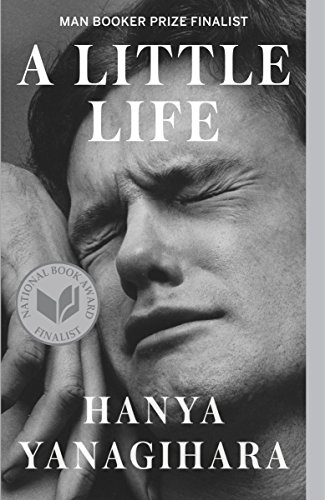
Zu dieser ISBN ist aktuell kein Angebot verfügbar.
Alle Exemplare der Ausgabe mit dieser ISBN anzeigen
Críticas:
"Astonishing." --The Atlantic "Deeply moving. . . . A wrenching portrait of the enduring grace of friendship." --NPR "Elemental, irreducible." --The New Yorker
"Hypnotic. . . . An intimate, operatic friendship between four men." --The Economist "Capacious and consuming. . . . Immersive." --The Boston Globe
"Beautiful." --Los Angeles Times
"Exquisite. . . . It's not hyperbole to call this novel a masterwork--if anything that word is simply just too little for it." --San Francisco Chronicle "Remarkable. . . . An epic study of trauma and friendship written with such intelligence and depth of perception that it will be one of the benchmarks against which all other novels that broach those subjects (and they are legion) will be measured. . . . A Little Life announces [Yanagihara] as a major American novelist." --The Wall Street Journal "Utterly gripping. Wonderfully romantic and sometimes harrowing, A Little Life kept me reading late into the night, night after night." --Edmund White
"Spellbinding . . . . An exquisitely written, complex triumph." --O, The Oprah Magazine "Drawn in extraordinary detail by incantatory prose. . . . Affecting and transcendent." --The Washington Post "[A Little Life] lands with a real sense of occasion: the arrival of a major new voice in fiction. . . . Yanagihara's achievement has less to do with size . . . than with the breadth and depth of its considerable power, which speaks not to the indomitability of the spirit, but to the fragility of the self." --Vogue
"Exquisite. . . . The book shifts from a generational portrait to something darker and more tender: an examination of the depths of human cruelty, counterbalanced by the restorative powers of friendship." --The New Yorker
"A book unlike any other. . . . A Little Life asks serious questions about humanism and euthanasia and psychiatry and any number of the partis pris of modern western life. . . . A devastating read that will leave your heart, like the Grinch's, a few sizes larger." --The Guardian
"Exceedingly good." --Newsweek
"A Little Life is unlike anything else out there. Over the top, beyond the pale and quite simply unforgettable." --The Independent
"Piercing. . . . [Yanagihara is] an author with the talent to interrogate the basest and most beautiful extremes of human behaviour with sustained, bruising intensity." --The Times Literary Supplement
"A brave novel. . . . Impressive and moving." --Literary Review
"Enthralling and completely immersive. . . . Stunning." --Daily News
Reseña del editor:
"Hypnotic. . . . An intimate, operatic friendship between four men." --The Economist "Capacious and consuming. . . . Immersive." --The Boston Globe
"Beautiful." --Los Angeles Times
"Exquisite. . . . It's not hyperbole to call this novel a masterwork--if anything that word is simply just too little for it." --San Francisco Chronicle "Remarkable. . . . An epic study of trauma and friendship written with such intelligence and depth of perception that it will be one of the benchmarks against which all other novels that broach those subjects (and they are legion) will be measured. . . . A Little Life announces [Yanagihara] as a major American novelist." --The Wall Street Journal "Utterly gripping. Wonderfully romantic and sometimes harrowing, A Little Life kept me reading late into the night, night after night." --Edmund White
"Spellbinding . . . . An exquisitely written, complex triumph." --O, The Oprah Magazine "Drawn in extraordinary detail by incantatory prose. . . . Affecting and transcendent." --The Washington Post "[A Little Life] lands with a real sense of occasion: the arrival of a major new voice in fiction. . . . Yanagihara's achievement has less to do with size . . . than with the breadth and depth of its considerable power, which speaks not to the indomitability of the spirit, but to the fragility of the self." --Vogue
"Exquisite. . . . The book shifts from a generational portrait to something darker and more tender: an examination of the depths of human cruelty, counterbalanced by the restorative powers of friendship." --The New Yorker
"A book unlike any other. . . . A Little Life asks serious questions about humanism and euthanasia and psychiatry and any number of the partis pris of modern western life. . . . A devastating read that will leave your heart, like the Grinch's, a few sizes larger." --The Guardian
"Exceedingly good." --Newsweek
"A Little Life is unlike anything else out there. Over the top, beyond the pale and quite simply unforgettable." --The Independent
"Piercing. . . . [Yanagihara is] an author with the talent to interrogate the basest and most beautiful extremes of human behaviour with sustained, bruising intensity." --The Times Literary Supplement
"A brave novel. . . . Impressive and moving." --Literary Review
"Enthralling and completely immersive. . . . Stunning." --Daily News
ONE OF THE BEST BOOKS OF THE YEAR
The New York Times · The Washington Post · The Wall Street Journal · NPR · Vanity Fair · Vogue · Minneapolis Star Tribune · St. Louis Post-Dispatch · The Guardian · O, The Oprah Magazine · Slate · Newsday · Buzzfeed · The Economist · Newsweek · People · Kansas City Star · Shelf Awareness · Time Out New York · Huffington Post · Book Riot · Refinery29 · Bookpage · Publishers Weekly · Kirkus
WINNER OF THE KIRKUS PRIZE
A MAN BOOKER PRIZE FINALIST
A NATIONAL BOOK AWARD FINALIST
A Little Life follows four college classmates—broke, adrift, and buoyed only by their friendship and ambition—as they move to New York in search of fame and fortune. While their relationships, which are tinged by addiction, success, and pride, deepen over the decades, the men are held together by their devotion to the brilliant, enigmatic Jude, a man scarred by an unspeakable childhood trauma. A hymn to brotherly bonds and a masterful depiction of love in the twenty-first century, Hanya Yanagihara’s stunning novel is about the families we are born into, and those that we make for ourselves.
The New York Times · The Washington Post · The Wall Street Journal · NPR · Vanity Fair · Vogue · Minneapolis Star Tribune · St. Louis Post-Dispatch · The Guardian · O, The Oprah Magazine · Slate · Newsday · Buzzfeed · The Economist · Newsweek · People · Kansas City Star · Shelf Awareness · Time Out New York · Huffington Post · Book Riot · Refinery29 · Bookpage · Publishers Weekly · Kirkus
WINNER OF THE KIRKUS PRIZE
A MAN BOOKER PRIZE FINALIST
A NATIONAL BOOK AWARD FINALIST
A Little Life follows four college classmates—broke, adrift, and buoyed only by their friendship and ambition—as they move to New York in search of fame and fortune. While their relationships, which are tinged by addiction, success, and pride, deepen over the decades, the men are held together by their devotion to the brilliant, enigmatic Jude, a man scarred by an unspeakable childhood trauma. A hymn to brotherly bonds and a masterful depiction of love in the twenty-first century, Hanya Yanagihara’s stunning novel is about the families we are born into, and those that we make for ourselves.
„Über diesen Titel“ kann sich auf eine andere Ausgabe dieses Titels beziehen.
- VerlagAnchor
- Erscheinungsdatum2016
- ISBN 10 0804172706
- ISBN 13 9780804172707
- EinbandTapa blanda
- Anzahl der Seiten832
- Bewertung
Neu kaufen
Mehr zu diesem Angebot erfahren
EUR 14,56
Versand:
Gratis
Innerhalb der USA
Weitere beliebte Ausgaben desselben Titels
Beste Suchergebnisse bei AbeBooks
Foto des Verkäufers
A Little Life by Yanagihara, Hanya [Paperback ]
Verlag:
Anchor, 2016
ISBN 10: 0804172706
ISBN 13: 9780804172707
Neu
Soft Cover
Anzahl: Mehr als 20 verfügbar
Anbieter: booksXpress, Bayonne, NJ, USA

Soft Cover. Zustand: new. Bestandsnummer des Verkäufers 9780804172707
Beispielbild für diese ISBN
A Little Life
Verlag:
Anchor, 2016
ISBN 10: 0804172706
ISBN 13: 9780804172707
Neu
Softcover
Anzahl: Mehr als 20 verfügbar
Anbieter: Lakeside Books, Benton Harbor, MI, USA

Zustand: New. Brand New! Not Overstocks or Low Quality Book Club Editions! Direct From the Publisher! We're not a giant, faceless warehouse organization! We're a small town bookstore that loves books and loves it's customers! Buy from Lakeside Books!. Bestandsnummer des Verkäufers OTF-S-9780804172707
Foto des Verkäufers
A Little Life (Paperback or Softback)
Verlag:
Anchor Books 1/26/2016, 2016
ISBN 10: 0804172706
ISBN 13: 9780804172707
Neu
Paperback or Softback
Anzahl: 5 verfügbar
Anbieter: BargainBookStores, Grand Rapids, MI, USA
Paperback or Softback. Zustand: New. A Little Life 1.35. Book. Bestandsnummer des Verkäufers BBS-9780804172707
Foto des Verkäufers
Little Life
Anbieter: GreatBookPrices, Columbia, MD, USA
Zustand: New. Bestandsnummer des Verkäufers 24685178-n
Beispielbild für diese ISBN
A Little Life Format: Paperback
Verlag:
Penguin Random House, 2016
ISBN 10: 0804172706
ISBN 13: 9780804172707
Neu
Softcover
Anzahl: Mehr als 20 verfügbar
Anbieter: INDOO, Avenel, NJ, USA
Zustand: New. Brand New. Bestandsnummer des Verkäufers 9780804172707
Beispielbild für diese ISBN
A Little Life
Anbieter: Book Deals, Tucson, AZ, USA
Zustand: New. New! This book is in the same immaculate condition as when it was published 1.35. Bestandsnummer des Verkäufers 353-0804172706-new
Beispielbild für diese ISBN
A Little Life
Anbieter: Ergodebooks, Houston, TX, USA
Paperback. Zustand: New. Bestandsnummer des Verkäufers BKZN9780804172707
Beispielbild für diese ISBN
A Little Life
Anbieter: Village Works, New York, NY, USA
Soft cover. Zustand: New. Bestandsnummer des Verkäufers 001549
Beispielbild für diese ISBN
A Little Life
Anbieter: Books Unplugged, Amherst, NY, USA
Zustand: New. Buy with confidence! Book is in new, never-used condition 1.35. Bestandsnummer des Verkäufers bk0804172706xvz189zvxnew
Beispielbild für diese ISBN
A Little Life
Anbieter: Ergodebooks, Houston, TX, USA
Softcover. Zustand: New. Reprint. NEW YORK TIMES BESTSELLER A stunning portrait of the enduring grace of friendship (NPR) about the families we are born into, and those that we make for ourselves. A masterful depiction of love in the twenty-first century.NATIONAL BOOK AWARD FINALIST MAN BOOKER PRIZE FINALIST WINNER OF THE KIRKUS PRIZEA Little Life follows four college classmates-broke, adrift, and buoyed only by their friendship and ambition-as they move to New York in search of fame and fortune. While their relationships, which are tinged by addiction, success, and pride, deepen over the decades, the men are held together by their devotion to the brilliant, enigmatic Jude, a man scarred by an unspeakable childhood trauma. A hymn to brotherly bonds and a masterful depiction of love in the twenty-first century, Hanya Yanagiharas stunning novel is about the families we are born into, and those that we make for ourselves.Look for Hanya Yanagiharaslatest bestselling novel, To Paradise. Bestandsnummer des Verkäufers DADAX0804172706