
Verwandte Artikel zu Transforming the Past: Tradition and Kinship Among...
Inhaltsangabe
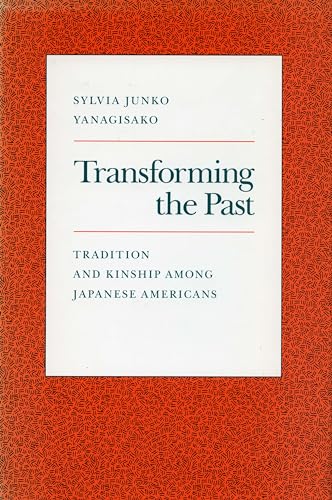
This book is at once a cultural history of Japanese American kinship and a contribution to the study of the contemporary kinship system of the United States. It brings to the analysis of American kinship a theoretical perspective that attends to the historically situated, symbolic processes through which people interpret and thereby transform their kinship relations. By examining kinship change among Japanese Americans, I elucidate a particular case of a general process I take as having been central to the development of contemporary American kinship. For, while Japanese Americans have a unique and rich cultural heritage and a distinctive and troubled social history, the process of kinship change they have undergone since the turn of the century has been shared by many other Americans. I begin with the premise that kinship relations are structured by symbolic relations and serve symbolic functions as well as social ones. It follows from this that kinship change involves symbolic processes, and that a study of it must attend to the manner in which relations among symbols, meanings, and actions have shaped relations among people. My second premise is that we can comprehend the system of symbols and meanings structuring people's kinship relations in the present only if we know their kinship relations in the past. If symbolic systems help people answer the questions and cope with the problems of meaning they confront in their everyday lives, symbolic analysis can only be enriched by a knowledge of the social history that has given rise to these questions and problems. Conversely, we can comprehend that social history only if we comprehend the system of symbols and meanings through which people interpret and thereby transform the past. In this study I treat the oral kinship autobiographies I elicited from first- and second-generation Japanese Americans in Seattle, Washington, both as cultural tales and as accounts with a good degree of historical veracity. Because people's recollections of the past are reasonably accurate and do not obliterate facts so much as reinterpret them, they can be mined to reconstruct a social history of events and actions. At the same time they can be used, along with what people say about the present, as material for a symbolic analysis. Unlike most Japanese Americans, and most of those who have studied them, I do not uncritically assume a timeless past of "Japanese tradition" in which stem-family households were endlessly reproduced by people who obeyed the "rules of the Japanese family system." Instead, on the one hand, I reconstruct kinship relations in Japan from immigrants' accounts of their kinship biographies and, on the other, regard the Japanese past and the American present that figure so centrally in these accounts as complex symbols whose meanings must be explicated. The analytic strategy I have formulated for this study is one I think can be usefully applied to groups besides Japanese Americans and other ethnic groups whose conceptions of their particular cultural traditions and experiences as immigrants are similarly prominent in their discourse on kinship relations. It can help us better understand the social and symbolic processes shaping kinship even among those sectors of our society whose ethnicity has been made invisible by hegemonic processes that cast a particular cultural system as a generalized American one. For whether they view themselves as having an ethnic past that is Polish, Italian, African, English, or, in the case of "just plain American," one supposedly unmarked by ethnicity, all these folk commonly speak of a "traditional" past in opposition to the "modern" present. Like Japanese Americans, they too construct tradition by reconceptualizing the past in relation to the meaning of their actions in the present, thereby transforming past and present in a dialectic of interpretation.
Die Inhaltsangabe kann sich auf eine andere Ausgabe dieses Titels beziehen.
Suchergebnisse für Transforming the Past: Tradition and Kinship Among...

Beispielbild für diese ISBN
Transforming the Past : Tradition and Kinship among Japanese Americans
Verlag:
Stanford University Press, 1992
ISBN 10: 0804720177
ISBN 13: 9780804720175
Gebraucht
Softcover
Anbieter: Better World Books, Mishawaka, IN, USA
Verkäuferbewertung 5 von 5 Sternen

Zustand: Good. Pages intact with minimal writing/highlighting. The binding may be loose and creased. Dust jackets/supplements are not included. Stock photo provided. Product includes identifying sticker. Better World Books: Buy Books. Do Good. Bestandsnummer des Verkäufers 38498418-20
Gebraucht kaufen
EUR 8,13
Versand gratis
Versand innerhalb von USA
Versand innerhalb von USA
Anzahl: 3 verfügbar
Beispielbild für diese ISBN
Transforming the Past: Tradition and Kinship Among Japanese Americans
ISBN 10: 0804720177
ISBN 13: 9780804720175
Gebraucht
Paperback
Anbieter: BooksRun, Philadelphia, PA, USA
Verkäuferbewertung 5 von 5 Sternen
Paperback. Zustand: Very Good. First Paperback Edition. It's a well-cared-for item that has seen limited use. The item may show minor signs of wear. All the text is legible, with all pages included. It may have slight markings and/or highlighting. Bestandsnummer des Verkäufers 0804720177-11-1
Gebraucht kaufen
EUR 8,18
Versand gratis
Versand innerhalb von USA
Versand innerhalb von USA
Anzahl: 1 verfügbar
Beispielbild für diese ISBN
Transforming the Past: Tradition and Kinship Among Japanese Americans
Verlag:
Stanford University Press, 1992
ISBN 10: 0804720177
ISBN 13: 9780804720175
Gebraucht
Paperback
Anbieter: ThriftBooks-Atlanta, AUSTELL, GA, USA
Verkäuferbewertung 5 von 5 Sternen
Paperback. Zustand: Good. No Jacket. Pages can have notes/highlighting. Spine may show signs of wear. ~ ThriftBooks: Read More, Spend Less. Bestandsnummer des Verkäufers G0804720177I3N00
Gebraucht kaufen
EUR 10,25
Versand gratis
Versand innerhalb von USA
Versand innerhalb von USA
Anzahl: 1 verfügbar
Beispielbild für diese ISBN
Transforming the Past : Tradition and Kinship among Japanese Americans
Verlag:
Stanford University Press, 1992
ISBN 10: 0804720177
ISBN 13: 9780804720175
Gebraucht
Softcover
Anbieter: Better World Books Ltd, Dunfermline, Vereinigtes Königreich
Verkäuferbewertung 5 von 5 Sternen
Zustand: Very Good. Former library copy. Pages intact with possible writing/highlighting. Binding strong with minor wear. Dust jackets/supplements may not be included. Includes library markings. Stock photo provided. Product includes identifying sticker. Better World Books: Buy Books. Do Good. Bestandsnummer des Verkäufers 54982768-20
Gebraucht kaufen
EUR 8,02
EUR 5,98 Versand
Versand von Vereinigtes Königreich nach USA
Versand von Vereinigtes Königreich nach USA
Anzahl: 1 verfügbar
Foto des Verkäufers
Transforming the past: tradition and kinship among Japanese Americans
Verlag:
Stanford University Press, Stanford, 1985
ISBN 10: 0804720177
ISBN 13: 9780804720175
Gebraucht
Paperback
Anbieter: Bolerium Books Inc., San Francisco, CA, USA
Verkäuferbewertung 5 von 5 Sternen
Paperback. vii, 289p., wraps lightly worn else very good condition. Bestandsnummer des Verkäufers 294707
Gebraucht kaufen
EUR 17,83
Versand gratis
Versand innerhalb von USA
Versand innerhalb von USA
Anzahl: 1 verfügbar
Beispielbild für diese ISBN
Transforming the Past: Tradition and Kinship Among Japanese Americans
Verlag:
Stanford University Press, 1992
ISBN 10: 0804720177
ISBN 13: 9780804720175
Gebraucht
paperback
Anbieter: Textbooks_Source, Columbia, MO, USA
Verkäuferbewertung 5 von 5 Sternen
paperback. Zustand: Good. First Paperback Edition. Ships same day or next business day! UPS shipping available (Priority Mail for AK/HI/APO/PO Boxes). Used sticker and some writing and/or highlighting. Used books may not include working access code. Used books will not include dust jackets. Bestandsnummer des Verkäufers 000283623U
Gebraucht kaufen
EUR 14,76
EUR 3,60 Versand
Versand innerhalb von USA
Versand innerhalb von USA
Anzahl: 3 verfügbar
Beispielbild für diese ISBN
Transforming the Past: Tradition and Kinship Among Japanese Americans
Verlag:
Stanford University Press, 1992
ISBN 10: 0804720177
ISBN 13: 9780804720175
Neu
Soft cover
Erstausgabe
Anbieter: Seven Lamps Rare Books, Oxford, Vereinigtes Königreich
Verkäuferbewertung 5 von 5 Sternen
Soft cover. Zustand: New. 1st Edition. Ownership inscription: None Dog-earing: None Foxing: None Page staining: None Annotations: None Other damage: None Synopsis: In studying first- and second-generation Japanese Americans in Seattle, the author illuminates a key area in the understanding of how immigrants consciously and unconsciously move from their culture or origin to the culture of America. Bestandsnummer des Verkäufers ABE-1787766431276
Neu kaufen
EUR 3,70
EUR 23,93 Versand
Versand von Vereinigtes Königreich nach USA
Versand von Vereinigtes Königreich nach USA
Anzahl: 1 verfügbar
Foto des Verkäufers
Transforming the Past : Tradition and Kinship Among Japanese Americans
Anbieter: GreatBookPrices, Columbia, MD, USA
Verkäuferbewertung 5 von 5 Sternen
Zustand: New. Bestandsnummer des Verkäufers 252970-n
Neu kaufen
EUR 26,35
EUR 2,38 Versand
Versand innerhalb von USA
Versand innerhalb von USA
Anzahl: Mehr als 20 verfügbar
Foto des Verkäufers
Transforming the Past : Tradition and Kinship Among Japanese Americans
Verlag:
Stanford University Press, 1992
ISBN 10: 0804720177
ISBN 13: 9780804720175
Gebraucht
Softcover
Anbieter: GreatBookPrices, Columbia, MD, USA
Verkäuferbewertung 5 von 5 Sternen
Zustand: As New. Unread book in perfect condition. Bestandsnummer des Verkäufers 252970
Gebraucht kaufen
EUR 27,89
EUR 2,38 Versand
Versand innerhalb von USA
Versand innerhalb von USA
Anzahl: Mehr als 20 verfügbar
Beispielbild für diese ISBN
Transforming the Past: Tradition and Kinship Among Japanese Americans
Verlag:
Stanford University Press, 1985
ISBN 10: 0804720177
ISBN 13: 9780804720175
Gebraucht
Soft cover
Erstausgabe
Anbieter: Budget Books, Pasadena, CA, USA
Verkäuferbewertung 5 von 5 Sternen
Soft cover. Zustand: Fine. 1st Edition. Very slightly upturned corners. Otherwise new. Ships from California. Bestandsnummer des Verkäufers 6991
Gebraucht kaufen
EUR 26,92
EUR 4,51 Versand
Versand innerhalb von USA
Versand innerhalb von USA
Anzahl: 1 verfügbar