
Verwandte Artikel zu Religion (Cultural Memory in the Present)
Religion (Cultural Memory in the Present) - Softcover
Buch 6 von 213: Cultural Memory in the Present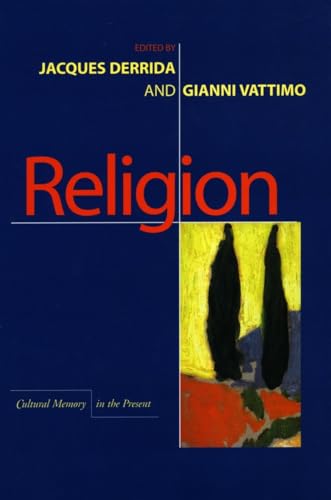
Inhaltsangabe
What should we make of the return to the sacred evidenced by the new vitality of churches, sects, and religious beliefs in many parts of the world today? What are the boundaries between the essential traits of religion and those of ethics and justice? Is there a "truth" to religion? This remarkable volume includes reflections on such questions by three of the most important philosophers of our time—Jacques Derrida, Gianni Vattimo, and Hans-Georg Gadamer. Together with other distinguished thinkers, they address a wide range of questions about the meaning, status, and future prospects of religion.
In his meditation on the "return of religion," entitled "Faith and Knowledge: The Two Sources of 'Religion' at the Limits of Mere Reason," Derrida addresses the ways in which this return is intrinsically linked to transformations of which the new media are both the carriers and the symptom. Derrida coins this process one of globalatinization. This neologism signals, among other things, the process of a certain universalization of the Roman word or concept of religion, which tends to become hegemonic, as well as a certain performativity discernible in the new media and in contemporary structures of testimony and confession. Examples of this include, Derrida reminds us, not only the phenomenon of televangelism and televisual stagings of the pope's journeys, and not only the portrayal and self-presentation of Islam, but also the fetishization and becoming virtually absolute of the televisual and the multimedial as such.
Using Being and Time as a point of reference, Vattimo suggests that religious experience is both an individual experience and a manifestation of a historical rhythm within which religion regularly appears and disappears. A commentary by Gadamer summarizes and enriches the contributions by Derrida and Vattimo.
Four essays by Maurizio Ferraris, Eugenio Trias, Vincenzo Vitiello, and Aldo Giorgio Gargani complete the volume by examining other facets of the "religious."
Die Inhaltsangabe kann sich auf eine andere Ausgabe dieses Titels beziehen.
Über die Autorin bzw. den Autor
Jacques Derrida (1930–2004) was director of studies at the école des hautes études en sciences sociales, Paris, and professor of humanities at the University of California, Irvine. He is the author of many books published by the University of Chicago Press.
Von der hinteren Coverseite
What should we make of the return to the sacred evidenced by the new vitality of churches, sects, and religious beliefs in many parts of the world today? What are the boundaries between the essential traits of religion and those of ethics and justice? Is there a “truth” to religion? This remarkable volume includes reflections on such questions by three of the most important philosophers of our time—Jacques Derrida, Gianni Vattimo, and Hans-Georg Gadamer. Together with other distinguished thinkers, they address a wide range of questions about the meaning, status, and future prospects of religion.
In his meditation on the “return of religion,” entitled “Faith and Knowledge: The Two Sources of ‘Religion’ at the Limits of Mere Reason,” Derrida addresses the ways in which this return is intrinsically linked to transformations of which the new media are both the carriers and the symptom. Derrida coins this process one of globalatinization. This neologism signals, among other things, the process of a certain universalization of the Roman word or concept of religion, which tends to become hegemonic, as well as a certain performativity discernible in the new media and in contemporary structures of testimony and confession. Examples of this include, Derrida reminds us, not only the phenomenon of televangelism and televisual stagings of the pope’s journeys, and not only the portrayal and self-presentation of Islam, but also the fetishization and becoming virtually absolute of the televisual and the multimedial as such.
Using Being and Time as a point of reference, Vattimo suggests that religious experience is both an individual experience and a manifestation of a historical rhythm within which religion regularly appears and disappears. A commentary by Gadamer summarizes and enriches the contributions by Derrida and Vattimo.
Four essays by Maurizio Ferraris, Eugenio Trias, Vincenzo Vitiello, and Aldo Giorgio Gargani complete the volume by examining other facets of the “religious.”
In his meditation on the “return of religion,” entitled “Faith and Knowledge: The Two Sources of ‘Religion’ at the Limits of Mere Reason,” Derrida addresses the ways in which this return is intrinsically linked to transformations of which the new media are both the carriers and the symptom. Derrida coins this process one of globalatinization. This neologism signals, among other things, the process of a certain universalization of the Roman word or concept of religion, which tends to become hegemonic, as well as a certain performativity discernible in the new media and in contemporary structures of testimony and confession. Examples of this include, Derrida reminds us, not only the phenomenon of televangelism and televisual stagings of the pope’s journeys, and not only the portrayal and self-presentation of Islam, but also the fetishization and becoming virtually absolute of the televisual and the multimedial as such.
Using Being and Time as a point of reference, Vattimo suggests that religious experience is both an individual experience and a manifestation of a historical rhythm within which religion regularly appears and disappears. A commentary by Gadamer summarizes and enriches the contributions by Derrida and Vattimo.
Four essays by Maurizio Ferraris, Eugenio Trias, Vincenzo Vitiello, and Aldo Giorgio Gargani complete the volume by examining other facets of the “religious.”
Aus dem Klappentext
What should we make of the return to the sacred evidenced by the new vitality of churches, sects, and religious beliefs in many parts of the world today? What are the boundaries between the essential traits of religion and those of ethics and justice? Is there a truth to religion? This remarkable volume includes reflections on such questions by three of the most important philosophers of our time Jacques Derrida, Gianni Vattimo, and Hans-Georg Gadamer. Together with other distinguished thinkers, they address a wide range of questions about the meaning, status, and future prospects of religion.
In his meditation on the return of religion, entitled Faith and Knowledge: The Two Sources of Religion at the Limits of Mere Reason, Derrida addresses the ways in which this return is intrinsically linked to transformations of which the new media are both the carriers and the symptom. Derrida coins this process one of globalatinization. This neologism signals, among other things, the process of a certain universalization of the Roman word or concept of religion, which tends to become hegemonic, as well as a certain performativity discernible in the new media and in contemporary structures of testimony and confession. Examples of this include, Derrida reminds us, not only the phenomenon of televangelism and televisual stagings of the pope s journeys, and not only the portrayal and self-presentation of Islam, but also the fetishization and becoming virtually absolute of the televisual and the multimedial as such.
Using Being and Time as a point of reference, Vattimo suggests that religious experience is both an individual experience and a manifestation of a historical rhythm within which religion regularly appears and disappears. A commentary by Gadamer summarizes and enriches the contributions by Derrida and Vattimo.
Four essays by Maurizio Ferraris, Eugenio Trias, Vincenzo Vitiello, and Aldo Giorgio Gargani complete the volume by examining other facets of the religious.
In his meditation on the return of religion, entitled Faith and Knowledge: The Two Sources of Religion at the Limits of Mere Reason, Derrida addresses the ways in which this return is intrinsically linked to transformations of which the new media are both the carriers and the symptom. Derrida coins this process one of globalatinization. This neologism signals, among other things, the process of a certain universalization of the Roman word or concept of religion, which tends to become hegemonic, as well as a certain performativity discernible in the new media and in contemporary structures of testimony and confession. Examples of this include, Derrida reminds us, not only the phenomenon of televangelism and televisual stagings of the pope s journeys, and not only the portrayal and self-presentation of Islam, but also the fetishization and becoming virtually absolute of the televisual and the multimedial as such.
Using Being and Time as a point of reference, Vattimo suggests that religious experience is both an individual experience and a manifestation of a historical rhythm within which religion regularly appears and disappears. A commentary by Gadamer summarizes and enriches the contributions by Derrida and Vattimo.
Four essays by Maurizio Ferraris, Eugenio Trias, Vincenzo Vitiello, and Aldo Giorgio Gargani complete the volume by examining other facets of the religious.
„Über diesen Titel“ kann sich auf eine andere Ausgabe dieses Titels beziehen.
Suchergebnisse für Religion (Cultural Memory in the Present)

Beispielbild für diese ISBN
Religion (Cultural Memory in the Present)
Verlag:
Stanford University Press (edition 1), 1998
ISBN 10: 0804734879
ISBN 13: 9780804734875
Gebraucht
Paperback
Anbieter: BooksRun, Philadelphia, PA, USA
Verkäuferbewertung 5 von 5 Sternen

Paperback. Zustand: Very Good. 1. It's a well-cared-for item that has seen limited use. The item may show minor signs of wear. All the text is legible, with all pages included. It may have slight markings and/or highlighting. Bestandsnummer des Verkäufers 0804734879-11-1
Gebraucht kaufen
EUR 6,18
Versand gratis
Versand innerhalb von USA
Versand innerhalb von USA
Anzahl: 1 verfügbar
Beispielbild für diese ISBN
Religion (Cultural Memory in the Present)
Verlag:
Stanford University Press, 1998
ISBN 10: 0804734879
ISBN 13: 9780804734875
Gebraucht
Paperback
Anbieter: Half Price Books Inc., Dallas, TX, USA
Verkäuferbewertung 5 von 5 Sternen
Paperback. Zustand: Very Good. Connecting readers with great books since 1972! Used books may not include companion materials, and may have some shelf wear or limited writing. We ship orders daily and Customer Service is our top priority! Bestandsnummer des Verkäufers S_477279834
Gebraucht kaufen
EUR 4,67
EUR 3,34 Versand
Versand innerhalb von USA
Versand innerhalb von USA
Anzahl: 1 verfügbar
Beispielbild für diese ISBN
Religion
Verlag:
Stanford University Press, 1998
ISBN 10: 0804734879
ISBN 13: 9780804734875
Gebraucht
Paperback
Anbieter: ThriftBooks-Dallas, Dallas, TX, USA
Verkäuferbewertung 5 von 5 Sternen
Paperback. Zustand: Very Good. No Jacket. Former library book; May have limited writing in cover pages. Pages are unmarked. ~ ThriftBooks: Read More, Spend Less. Bestandsnummer des Verkäufers G0804734879I4N10
Gebraucht kaufen
EUR 8,22
Versand gratis
Versand innerhalb von USA
Versand innerhalb von USA
Anzahl: 1 verfügbar
Beispielbild für diese ISBN
Religion
Verlag:
Stanford University Press, 1998
ISBN 10: 0804734879
ISBN 13: 9780804734875
Gebraucht
Paperback
Anbieter: ThriftBooks-Dallas, Dallas, TX, USA
Verkäuferbewertung 5 von 5 Sternen
Paperback. Zustand: Fair. No Jacket. Readable copy. Pages may have considerable notes/highlighting. ~ ThriftBooks: Read More, Spend Less. Bestandsnummer des Verkäufers G0804734879I5N00
Gebraucht kaufen
EUR 8,22
Versand gratis
Versand innerhalb von USA
Versand innerhalb von USA
Anzahl: 1 verfügbar
Beispielbild für diese ISBN
Religion (Cultural Memory in the Present)
Verlag:
Stanford University Press, 1998
ISBN 10: 0804734879
ISBN 13: 9780804734875
Gebraucht
paperback
Anbieter: Solomon's Mine Books, Howard, PA, USA
Verkäuferbewertung 5 von 5 Sternen
paperback. Zustand: Good. 1998 paperback. Shelf wear/corner bump/staining to covers and edges. Pages are unmarked. Notes inside both covers. Bestandsnummer des Verkäufers webrelgnj
Gebraucht kaufen
EUR 10,65
Versand gratis
Versand innerhalb von USA
Versand innerhalb von USA
Anzahl: 1 verfügbar
Beispielbild für diese ISBN
Religion: Cultural Memory in the Present
Verlag:
Stanford University Press, Stanford, CA, 1998
ISBN 10: 0804734879
ISBN 13: 9780804734875
Gebraucht
Soft cover
Erstausgabe
Anbieter: Banbury Road Books, Fountain Valley, CA, USA
Verkäuferbewertung 5 von 5 Sternen
Soft cover. Zustand: Very Good. 1st Edition. Clean, lightly read copy in Very Good + condition (almost near fine). Name stamp on the fly-sheet, but no marking or writing in the book. Covers are clean and show only very slight shelf wear. Binding is firm. Bestandsnummer des Verkäufers ABE-1769472384145
Gebraucht kaufen
EUR 10,05
EUR 5,12 Versand
Versand innerhalb von USA
Versand innerhalb von USA
Anzahl: 1 verfügbar
Beispielbild für diese ISBN
Religion [Cultural Memory in the Present]
Verlag:
Stanford University Press, 1998
ISBN 10: 0804734879
ISBN 13: 9780804734875
Gebraucht
Softcover
Anbieter: Windows Booksellers, Eugene, OR, USA
Verkäuferbewertung 5 von 5 Sternen
Paperback. Slight wear on all edges of text with red sharpie line on lower edge of text. Cover slightly dented at front upper corner. Otherwise VG 211 pp. Bestandsnummer des Verkäufers 755981
Gebraucht kaufen
EUR 10,10
EUR 6,68 Versand
Versand innerhalb von USA
Versand innerhalb von USA
Anzahl: 1 verfügbar
Beispielbild für diese ISBN
Religion
Verlag:
Stanford University Press, Stanford, 1998
ISBN 10: 0804734879
ISBN 13: 9780804734875
Gebraucht
softcover
Anbieter: Abacus Bookshop, Pittsford, NY, USA
Verkäuferbewertung 5 von 5 Sternen
softcover. Zustand: Fine copy. Later prt. 8vo, 211 pp., Cultural Memory in the Present series. Bestandsnummer des Verkäufers 122071
Gebraucht kaufen
EUR 13,77
EUR 3,56 Versand
Versand innerhalb von USA
Versand innerhalb von USA
Anzahl: 1 verfügbar
Beispielbild für diese ISBN
Religion (Cultural Memory in the Present)
Verlag:
Stanford University Press, 1998
ISBN 10: 0804734879
ISBN 13: 9780804734875
Gebraucht
Paperback
Anbieter: AwesomeBooks, Wallingford, Vereinigtes Königreich
Verkäuferbewertung 5 von 5 Sternen
Paperback. Zustand: Very Good. Religion (Cultural Memory in the Present) This book is in very good condition and will be shipped within 24 hours of ordering. The cover may have some limited signs of wear but the pages are clean, intact and the spine remains undamaged. This book has clearly been well maintained and looked after thus far. Money back guarantee if you are not satisfied. See all our books here, order more than 1 book and get discounted shipping. . Bestandsnummer des Verkäufers 7719-9780804734875
Gebraucht kaufen
EUR 17,73
EUR 4,92 Versand
Versand von Vereinigtes Königreich nach USA
Versand von Vereinigtes Königreich nach USA
Anzahl: 1 verfügbar
Foto des Verkäufers
Religion
Anbieter: GreatBookPrices, Columbia, MD, USA
Verkäuferbewertung 5 von 5 Sternen
Zustand: New. Bestandsnummer des Verkäufers 252304-n
Neu kaufen
EUR 21,40
EUR 2,35 Versand
Versand innerhalb von USA
Versand innerhalb von USA
Anzahl: Mehr als 20 verfügbar