
Verwandte Artikel zu Party, Process, and Political Change in Congress, Volume...
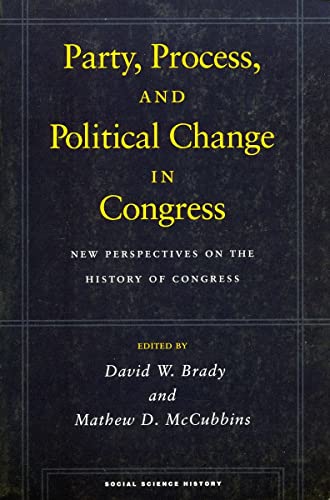
Party, Process, and Political Change in Congress, Volume 1: New Perspectives on the History of Congress (Stanford Series in Social Science History) - Softcover
Inhaltsangabe
In recent decades, political scientists have produced an enormous body of scholarship dealing with the U.S. Congress, and in particular congressional organization. However, most of this research has focused on Congress in the twentieth century-especially the post-New Deal era-and the long history of Congress has been largely neglected. The contributors to this book demonstrate that this inattention to congressional history has denied us many rich opportunities to more fully understand the evolution and functioning of the modern Congress.
In striking contrast to the modern era, which is marked by only modest partisan realignment and institutional change, the period preceding the New Deal was a time of rapid and substantial change in Congress. During the nation's first 150 years, parties emerged, developed, and realigned; the standing rules of the House and Senate expanded and underwent profound changes; the workload of Congress increased dramatically; and both houses grew considerably in size.
Studying history is valuable in large part because it allows scholars to observe greater variation in many of the parameters of their theories, and to test their core assumptions. A historical approach pushes scholars to recognize and confront the limits of their theories, resulting in theories that have increased validity and broader applicability. Thus, incorporating history into political science gives us a more dynamic view of Congress than the relatively static picture that emerges from a strict focus on recent periods.
Each contributor engages one of three general questions that have animated the literature on congressional politics in recent years: What is the role of party organizations in policy making? In what ways have congressional process and procedure changed over the years? How does congressional process and procedure affect congressional politics and policy?
Die Inhaltsangabe kann sich auf eine andere Ausgabe dieses Titels beziehen.
Über die Autorinnen und Autoren
David W. Brady is Bowen H. and Janice Arthur McCoy Professor of Political Science in the Stanford Graduate School of Business. Among his books are Continuity and Change in House Elections (with John F. Cogan and Morris P. Fiorina, Stanford, 2000) and Critical Elections and Congressional Policy Making (Stanford, 1988). Mathew D. McCubbins is Professor of Political Science at the University of California, San Diego. His work on Congress includes Legislative Leviathan (with Gary W. Cox).
David W. Brady is Bowen H. and Janice Arthur McCoy Professor of Political Science in the Stanford Graduate School of Business. Among his books are Continuity and Change in House Elections (with John F. Cogan and Morris P. Fiorina, Stanford, 2000) and Critical Elections and Congressional Policy Making (Stanford, 1988). Mathew D. McCubbins is Professor of Political Science at the University of California, San Diego. His work on Congress includes Legislative Leviathan (with Gary W. Cox).
Von der hinteren Coverseite
In recent decades, political scientists have produced an enormous body of scholarship dealing with the U.S. Congress, and in particular congressional organization. However, most of this research has focused on Congress in the twentieth century—especially the post-New Deal era—and the long history of Congress has been largely neglected. The contributors to this book demonstrate that this inattention to congressional history has denied us many rich opportunities to more fully understand the evolution and functioning of the modern Congress.
In striking contrast to the modern era, which is marked by only modest partisan realignment and institutional change, the period preceding the New Deal was a time of rapid and substantial change in Congress. During the nation’s first 150 years, parties emerged, developed, and realigned; the standing rules of the House and Senate expanded and underwent profound changes; the workload of Congress increased dramatically; and both houses grew considerably in size.
Studying history is valuable in large part because it allows scholars to observe greater variation in many of the parameters of their theories, and to test their core assumptions. A historical approach pushes scholars to recognize and confront the limits of their theories, resulting in theories that have increased validity and broader applicability. Thus, incorporating history into political science gives us a more dynamic view of Congress than the relatively static picture that emerges from a strict focus on recent periods.
Each contributor engages one of three general questions that have animated the literature on congressional politics in recent years: What is the role of party organizations in policy making? In what ways have congressional process and procedure changed over the years? How does congressional process and procedure affect congressional politics and policy?
In striking contrast to the modern era, which is marked by only modest partisan realignment and institutional change, the period preceding the New Deal was a time of rapid and substantial change in Congress. During the nation’s first 150 years, parties emerged, developed, and realigned; the standing rules of the House and Senate expanded and underwent profound changes; the workload of Congress increased dramatically; and both houses grew considerably in size.
Studying history is valuable in large part because it allows scholars to observe greater variation in many of the parameters of their theories, and to test their core assumptions. A historical approach pushes scholars to recognize and confront the limits of their theories, resulting in theories that have increased validity and broader applicability. Thus, incorporating history into political science gives us a more dynamic view of Congress than the relatively static picture that emerges from a strict focus on recent periods.
Each contributor engages one of three general questions that have animated the literature on congressional politics in recent years: What is the role of party organizations in policy making? In what ways have congressional process and procedure changed over the years? How does congressional process and procedure affect congressional politics and policy?
Aus dem Klappentext
In recent decades, political scientists have produced an enormous body of scholarship dealing with the U.S. Congress, and in particular congressional organization. However, most of this research has focused on Congress in the twentieth century especially the post-New Deal era and the long history of Congress has been largely neglected. The contributors to this book demonstrate that this inattention to congressional history has denied us many rich opportunities to more fully understand the evolution and functioning of the modern Congress.
In striking contrast to the modern era, which is marked by only modest partisan realignment and institutional change, the period preceding the New Deal was a time of rapid and substantial change in Congress. During the nation s first 150 years, parties emerged, developed, and realigned; the standing rules of the House and Senate expanded and underwent profound changes; the workload of Congress increased dramatically; and both houses grew considerably in size.
Studying history is valuable in large part because it allows scholars to observe greater variation in many of the parameters of their theories, and to test their core assumptions. A historical approach pushes scholars to recognize and confront the limits of their theories, resulting in theories that have increased validity and broader applicability. Thus, incorporating history into political science gives us a more dynamic view of Congress than the relatively static picture that emerges from a strict focus on recent periods.
Each contributor engages one of three general questions that have animated the literature on congressional politics in recent years: What is the role of party organizations in policy making? In what ways have congressional process and procedure changed over the years? How does congressional process and procedure affect congressional politics and policy?
In striking contrast to the modern era, which is marked by only modest partisan realignment and institutional change, the period preceding the New Deal was a time of rapid and substantial change in Congress. During the nation s first 150 years, parties emerged, developed, and realigned; the standing rules of the House and Senate expanded and underwent profound changes; the workload of Congress increased dramatically; and both houses grew considerably in size.
Studying history is valuable in large part because it allows scholars to observe greater variation in many of the parameters of their theories, and to test their core assumptions. A historical approach pushes scholars to recognize and confront the limits of their theories, resulting in theories that have increased validity and broader applicability. Thus, incorporating history into political science gives us a more dynamic view of Congress than the relatively static picture that emerges from a strict focus on recent periods.
Each contributor engages one of three general questions that have animated the literature on congressional politics in recent years: What is the role of party organizations in policy making? In what ways have congressional process and procedure changed over the years? How does congressional process and procedure affect congressional politics and policy?
Auszug. © Genehmigter Nachdruck. Alle Rechte vorbehalten.
PARTY, PROCESS, AND POLITICAL CHANGE IN CONGRESS
New Perspectives on the History of CongressSTANFORD UNIVERSITY PRESS
Copyright © 2002 Board of Trustees of the Leland Stanford Junior UniversityAll right reserved.
ISBN: 978-0-8047-4571-0
Contents
Contributors...............................................................................................................................................................................................................................ixTables.....................................................................................................................................................................................................................................xvFigures....................................................................................................................................................................................................................................xixAcknowledgments............................................................................................................................................................................................................................xxii1. Party, Process, and Political Change: New Perspectives on the History of Congress DAVID W. BRADY AND MATHEW D. MCCUBBINS...............................................................................................................1PART I: PARTIES, COMMITTEES, AND POLITICAL CHANGE IN CONGRESS2. The Historical Variability in Conditional Party Government, 1877-1994 JOHN H. ALDRICH, MARK M. BERGER, AND DAVID W. ROHDE..............................................................................................................173. Do Parties Matter? BARBARA SINCLAIR....................................................................................................................................................................................................364. Party and Preference in Congressional Decision Making: Roll Call Voting in the House of Representatives, 1889-1999 JOSEPH COOPER AND GARRY YOUNG.......................................................................................645. Agenda Power in the U.S. House of Representatives, 1877-1986 GARY W. COX AND MATHEW D. MCCUBBINS.......................................................................................................................................1076. Agenda Power in the U.S. Senate, 1877-1986 ANDREA C. CAMPBELL, GARY W. COX, AND MATHEW D. MCCUBBINS....................................................................................................................................1467. Party Loyalty and Committee Leadership in the House, 1921-40 BRIAN R. SALA.............................................................................................................................................................166PART II: THE EVOLUTION AND CHOICE OF CONGRESSIONAL INSTITUTIONS8. Order from Chaos: The Transformation of the Committee System in the House, 1816-22 JEFFERY A. JENKINS AND CHARLES H. STEWART III.......................................................................................................1959. Leadership and Institutional Change in the Nineteenth-Century House RANDALL STRAHAN....................................................................................................................................................23710. Institutional Evolution and the Rise of the Tuesday-Thursday Club in the House of Representatives TIMOTHY P. NOKKEN AND BRIAN R. SALA.................................................................................................27011. Policy Leadership and the Development of the Modern Senate GERALD GAMM AND STEVEN S. SMITH............................................................................................................................................287PART III: POLICY CHOICE AND CONGRESSIONAL INSTITUTIONS12. Why Congress? What the Failure of the Confederation Congress and the Survival of the Federal Congress Tell Us About the New Institutionalism JOHN H. ALDRICH, CALVIN C. JILLSON, AND RICK K. WILSON...................................31513. Agenda Manipulation, Strategic Voting, and Legislative Details in the Compromise of 1850 SEAN M. THERIAULT AND BARRY R. WEINGAST......................................................................................................34314. Congress and the Territorial Expansion of the United States NOLAN MCCARTY, KEITH T. POOLE, AND HOWARD ROSENTHAL.......................................................................................................................39215. Representation of the Antebellum South in the House of Representatives: Measuring the Impact of the Three-Fifths Clause BRIAN D. HUMES, ELAINE K. SWIFT, RICHARD M. VALELLY, KENNETH FINEGOLD, AND EVELYN C. FINK.....................452Afterword: History as a Laboratory DAVID W. BRADY AND MATHEW D. MCCUBBINS.................................................................................................................................................................471Notes......................................................................................................................................................................................................................................473Works Cited................................................................................................................................................................................................................................501Name Index.................................................................................................................................................................................................................................525Subject Index..............................................................................................................................................................................................................................533
Chapter One
Party, Process, and Political Change: New Perspectives on the History of CongressDAVID W. BRADY AND MATHEW D. MCCUBBINS
In recent decades, political scientists have produced an enormous body of scholarship dealing with the U.S. Congress and particularly with congressional organization. This wealth of scholarly work is quite diverse, spanning a wide range of theoretical perspectives, methodologies, and research questions. Yet to a great extent, contributions to this field share a common characteristic: they focus primarily on Congress in the twentieth century, often dealing only with the post-New Deal era. This modern emphasis is understandable-it is both sensible and unsurprising that our abilities and our interests are most keenly focused on our own times or the recent past. Our emphasis on only modern times, however, reduces our ken. While our theories of legislative institutions have substantial predictive power in the modern House and Senate, they say little about institutional or behavioral change. Our models tend to be static models of an unchanging time.
Many of the competing theories of legislative behavior and organization that are bandied about in the contemporary literature are found to be "observationally equivalent" over the range of behaviors that we observe in contemporary American politics. We find it difficult to test our static understandings with the data we have available, so we find it equally difficult to choose among the theories that...
„Über diesen Titel“ kann sich auf eine andere Ausgabe dieses Titels beziehen.
Suchergebnisse für Party, Process, and Political Change in Congress, Volume...

Beispielbild für diese ISBN
Party, Process, and Political Change in Congress, Volume 1: New Perspectives on the History of Congress
Verlag:
Stanford University Press, 2002
ISBN 10: 0804745714
ISBN 13: 9780804745710
Gebraucht
Paperback
Anbieter: World of Books (was SecondSale), Montgomery, IL, USA
Verkäuferbewertung 5 von 5 Sternen

Paperback. Zustand: Good. This book argues that, despite the scholarly emphasis on 20th-century congressional history, it is necessary to study the nation's first 150 years in order to understand more fully the evolution and functioning of the modern Congress. Bestandsnummer des Verkäufers 00108161266
Gebraucht kaufen
EUR 13,14
Versand gratis
Versand innerhalb von USA
Versand innerhalb von USA
Anzahl: 1 verfügbar
Beispielbild für diese ISBN
Party, Process, and Political Change in Congress, Volume 1: New Perspectives on the History of Congress
Verlag:
Stanford University Press, 2002
ISBN 10: 0804745714
ISBN 13: 9780804745710
Gebraucht
Paperback
Anbieter: World of Books Inc, Montgomery, IL, USA
Verkäuferbewertung 4 von 5 Sternen

Paperback. Zustand: Good. This book argues that, despite the scholarly emphasis on 20th-century congressional history, it is necessary to study the nation's first 150 years in order to understand more fully the evolution and functioning of the modern Congress. Bestandsnummer des Verkäufers CIN0804745714G
Gebraucht kaufen
EUR 14,98
Versand gratis
Versand innerhalb von USA
Versand innerhalb von USA
Anzahl: 1 verfügbar
Beispielbild für diese ISBN
Party, Process, and Political Change in Congress, Volume 1: New Perspectives on the History of Congress (Social Science History)
Verlag:
Stanford University Press, 2002
ISBN 10: 0804745714
ISBN 13: 9780804745710
Gebraucht
Paperback
Anbieter: Once Upon A Time Books, Siloam Springs, AR, USA
Verkäuferbewertung 4 von 5 Sternen
Paperback. Zustand: Good. This is a used book in good condition and may show some signs of use or wear . This is a used book in good condition and may show some signs of use or wear . Bestandsnummer des Verkäufers mon0000546432
Gebraucht kaufen
EUR 17,88
EUR 3,51 Versand
Versand innerhalb von USA
Versand innerhalb von USA
Anzahl: 1 verfügbar
Foto des Verkäufers
Party, Process, and Political Change in Congress, Volume 1: New Perspectives on the History of Congress (Social Science History)
Verlag:
Stanford University Press, 2002
ISBN 10: 0804745714
ISBN 13: 9780804745710
Gebraucht
Paperback
Anbieter: Archives Books, Inc., Edmond, OK, USA
Verkäuferbewertung 5 von 5 Sternen
Paperback. Zustand: Good. No markings. Historic Oklahoma Bookstore on Route 66. Packages shipped daily, Mon-Friday. Bestandsnummer des Verkäufers mon0000718228
Gebraucht kaufen
EUR 16,20
EUR 5,78 Versand
Versand innerhalb von USA
Versand innerhalb von USA
Anzahl: 1 verfügbar
Foto des Verkäufers
Party, Process, and Political Change in Congress, Volume 1: New Perspectives on the History of Congress (Social Science History)
Verlag:
Stanford University Press, 2002
ISBN 10: 0804745714
ISBN 13: 9780804745710
Gebraucht
Softcover
Anbieter: Solr Books, Lincolnwood, IL, USA
Verkäuferbewertung 5 von 5 Sternen
Zustand: very_good. This book is in Very good condition. There may be a few flaws like shelf wear and some light wear. Bestandsnummer des Verkäufers BCV.0804745714.VG
Gebraucht kaufen
EUR 16,98
EUR 7,10 Versand
Versand innerhalb von USA
Versand innerhalb von USA
Anzahl: 1 verfügbar
Beispielbild für diese ISBN
Party, Process, and Political Change in Congress: New Perspectives on the History of Congress (Social Science History)
Verlag:
Stanford University Press, 2002
ISBN 10: 0804745714
ISBN 13: 9780804745710
Gebraucht
Softcover
Anbieter: Anybook.com, Lincoln, Vereinigtes Königreich
Verkäuferbewertung 5 von 5 Sternen
Zustand: Good. This is an ex-library book and may have the usual library/used-book markings inside.This book has soft covers. In good all round condition. Please note the Image in this listing is a stock photo and may not match the covers of the actual item,850grams, ISBN:9780804745710. Bestandsnummer des Verkäufers 2281611
Gebraucht kaufen
EUR 27,05
EUR 15,47 Versand
Versand von Vereinigtes Königreich nach USA
Versand von Vereinigtes Königreich nach USA
Anzahl: 1 verfügbar
Foto des Verkäufers
Party, Process, and Political Change in Congress : New Perspectives on the History of Congress
Anbieter: GreatBookPrices, Columbia, MD, USA
Verkäuferbewertung 5 von 5 Sternen
Zustand: New. Bestandsnummer des Verkäufers 759827-n
Neu kaufen
EUR 45,47
EUR 2,35 Versand
Versand innerhalb von USA
Versand innerhalb von USA
Anzahl: Mehr als 20 verfügbar
Foto des Verkäufers
Party, Process, and Political Change in Congress, Volume 1: New Perspectives on the History of Congress (Paperback or Softback)
Verlag:
Stanford University Press 8/16/2002, 2002
ISBN 10: 0804745714
ISBN 13: 9780804745710
Neu
Paperback or Softback
Anbieter: BargainBookStores, Grand Rapids, MI, USA
Verkäuferbewertung 5 von 5 Sternen
Paperback or Softback. Zustand: New. Party, Process, and Political Change in Congress, Volume 1: New Perspectives on the History of Congress. Book. Bestandsnummer des Verkäufers BBS-9780804745710
Beispielbild für diese ISBN
Party, Process, and Political Change in Congress, Volume 1: New Perspectives on the History of Congress (Social Science History)
Anbieter: California Books, Miami, FL, USA
Verkäuferbewertung 5 von 5 Sternen
Zustand: New. Bestandsnummer des Verkäufers I-9780804745710
Neu kaufen
EUR 48,57
Versand gratis
Versand innerhalb von USA
Versand innerhalb von USA
Anzahl: Mehr als 20 verfügbar
Beispielbild für diese ISBN
Party, Process, and Political Change in Congress, Volume 1: New Perspectives on the History of Congress
Verlag:
Stanford University Press, 2002
ISBN 10: 0804745714
ISBN 13: 9780804745710
Gebraucht
Paperback / softback
Anbieter: THE SAINT BOOKSTORE, Southport, Vereinigtes Königreich
Verkäuferbewertung 5 von 5 Sternen
Paperback / softback. Zustand: Good. Used copy in good condition - Usually dispatched within 3 working days. Bestandsnummer des Verkäufers D9780804745710
Gebraucht kaufen
EUR 26,68
EUR 24,60 Versand
Versand von Vereinigtes Königreich nach USA
Versand von Vereinigtes Königreich nach USA
Anzahl: 1 verfügbar