
Verwandte Artikel zu Sublime Historical Experience (Cultural Memory in the...
Sublime Historical Experience (Cultural Memory in the Present) - Softcover
Buch 78 von 213: Cultural Memory in the Present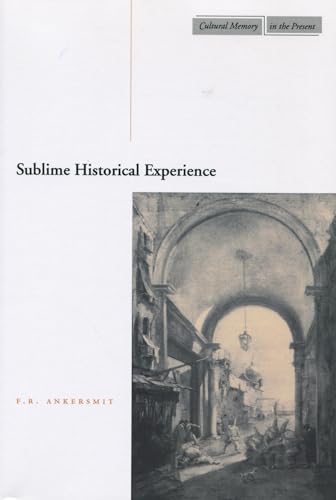
Inhaltsangabe
Why are we interested in history at all? Why do we feel the need to distinguish between past and present? In this book, the author argues that the past originates from an experience of rupture separating past and present. Think of the radical rupture with Europe's past that was effected by the French and the Industrial Revolutions. Sublime Historical Experience investigates how the notion of sublime historical experience complicates and challenges existing conceptions of language, truth, and knowledge. These experiences of rupture are paradoxical since they involve both the separation of past and present and, at the same time, the effort to overcome this separation in terms of historical knowledge. The experience unites feelings of loss/pain with those of love/satisfaction, and thus is in agreement with how sublime experience is ordinarily defined. The experience is also precognitive since it precedes (the possibility of) historical knowledge. As such it is a challenge to traditional conceptions of the relationship between experience and truth or language. It compels us to disconnect the notions of experience and truth.
Die Inhaltsangabe kann sich auf eine andere Ausgabe dieses Titels beziehen.
Über die Autorinnen und Autoren
Frank Ankersmit is Professor of History at the University of Groningen. Stanford University Press has published three of his previous books: Aesthetic Politics (1996), Historical Representation (2002), and Political Representation (2002).
Frank Ankersmit is Professor of History at the University of Groningen. Stanford University Press has published three of his previous books: Aesthetic Politics (1996), Historical Representation (2002), and Political Representation (2002).
Von der hinteren Coverseite
Why are we interested in history at all? Why do we feel the need to distinguish between past and present? In this book, the author argues that the past originates from an experience of rupture separating past and present. Think of the radical rupture with Europe's past that was effected by the French and the Industrial Revolutions. Sublime Historical Experience investigates how the notion of sublime historical experience complicates and challenges existing conceptions of language, truth, and knowledge. These experiences of rupture are paradoxical since they involve both the separation of past and present and, at the same time, the effort to overcome this separation in terms of historical knowledge. The experience unites feelings of loss/pain with those of love/satisfaction, and thus is in agreement with how sublime experience is ordinarily defined. The experience is also precognitive since it precedes (the possibility of) historical knowledge. As such it is a challenge to traditional conceptions of the relationship between experience and truth or language. It compels us to disconnect the notions of experience and truth.
Aus dem Klappentext
Why are we interested in history at all? Why do we feel the need to distinguish between past and present? In this book, the author argues that the past originates from an experience of rupture separating past and present. Think of the radical rupture with Europe's past that was effected by the French and the Industrial Revolutions. Sublime Historical Experience investigates how the notion of sublime historical experience complicates and challenges existing conceptions of language, truth, and knowledge. These experiences of rupture are paradoxical since they involve both the separation of past and present and, at the same time, the effort to overcome this separation in terms of historical knowledge. The experience unites feelings of loss/pain with those of love/satisfaction, and thus is in agreement with how sublime experience is ordinarily defined. The experience is also precognitive since it precedes (the possibility of) historical knowledge. As such it is a challenge to traditional conceptions of the relationship between experience and truth or language. It compels us to disconnect the notions of experience and truth.
Auszug. © Genehmigter Nachdruck. Alle Rechte vorbehalten.
SUBLIME HISTORICAL EXPERIENCE
By Frank AnkersmitSTANFORD UNIVERSITY PRESS
Copyright © 2005 Board of Trustees of the Leland Stanford Junior UniversityAll right reserved.
ISBN: 978-0-8047-4936-7
Contents
List of Illustrations.....................................................................xiAcknowledgments...........................................................................xiiiPreface...................................................................................xvIntroduction: Experience in history and in philosophy.....................................11 Linguistic transcendentalism in extremis: The case of Richard Rorty.....................172 From language to experience.............................................................693 Huizinga and the experience of the past.................................................1094 Fragments of a history of historical experience.........................................1415 Gadamer and historical experience.......................................................1936 (Pragmatist) aesthetic experience and historical experience.............................2417 Subjective historical experience: The past as elegy.....................................2638 Sublime historical experience...........................................................317Epilogue: Rousseau and Hlderlin..........................................................369Notes.....................................................................................397Index.....................................................................................465
Chapter One
LINGUISTIC TRANSCENDENTALISM IN EXTREMIS: THE CASE OF RICHARD RORTY
Language goes all the way down. -(Richard Rorty) The scientific revolution of the seventeenth century perfectly suited an abstract, Cartesian view of experience that effectively denied the existence of primary experience. After Descartes, Western philosophers and scientists tended to replace the commonsense concepts of experience, wisdom, and know-how with an increasingly technical account of experience as made up of disconnected, subjective, sensory states. 1.1 introduction
Two different stories can be told about the recent history of philosophy and about Richard Rorty's place in that history. According to the first story, Rorty is the philosopher who broke in a revolutionary and radical manner with what has been for several centuries, since Descartes and Kant, the primary goal of most philosophical investigation. According to the alternative story, he is, on the contrary, the philosopher who-together with some others like Derrida and Davidson-put the crown on that tradition we associate with Descartes and Kant.
Let me start with the first story. This story runs as follows. Since the days of Plato and Aristotle, Western philosophy was mainly interested in the problem of the nature of our knowledge of reality; it was always concerned with the metaphysical, epistemological, rationalist, empiricist, or linguistic foundations of our knowledge of reality and with the question how this knowledge is acquired and can be legitimated. The main heroes in this story are Descartes and Kant. As philosophers-and as epistemologists-they opted for what Putnam has called the God's eye view, that is, for a point of view lying itself outside both observed reality and the subject of knowledge, and they hoped that from that "sublime" point of view the relationship between the knowing subject and the object of our knowledge could be established in a neutral and undistorted way. Whatever their differences were, both Descartes and Kant-and the many philosophers who have continued their enterprise down to the present day-believed that all our most essential questions with regard to the nature, origin, "foundations," and legitimation of knowledge could be properly answered from the unassailable point of view of this transcendental self.
It is true that there have been philosophers such as Hegel or Marx who doubted the possibility of such an ahistorical, universalist transcendental point of view. But what philosophers like these effected, in the end, was a historicization of epistemology and a correction of the historical blindness of traditional epistemology rather than its destruction. As Gadamer has so brilliantly shown, historism, Hegel's experiment with the Absolute Spirit and Marx's conception of ideology were, in fact, attempts to continue the epistemological enterprise with even better and stronger, namely historical means rather than that these philosophers dealt the deathblow to epistemology, as they often liked to believe themselves. Historicization was for these philosophers not the destruction but the very perfection of epistemological certainty. Hence, we should not see the historists or the Hegelians as philosophers who were the first to abandon epistemology-as is so often done in accordance with how they liked to present themselves-but rather as those philosophers who have taken the epistemological enterprise to its very logical end. "History" now took the place of the transcendental ego; it offered the only point of view from which truth could be found and was thus expected to fulfill the same function as its more abstract and timeless predecessor.
In sum, it was not Hegel or Foucault but only Rorty, as the true heir to Heidegger, Gadamer, Derrida, and Davidson and to American pragmatism, who successfully tripped up the whole epistemological tradition. Rorty was the first who had the courage to abandon the transcendentalist point of view and all that went with it: The Rortyan pragmatist knows that such a point of view outside both reality and language is an impossibility and that all the illusions of modernist Western philosophy proceeded from the Enlightenment's dream of the transcendentalist point of view. Hence, with Rorty a long and important chapter in the history of Western philosophy has come to an end, and we may consider his oeuvre as the announcement of a new post-epistemological chapter in the book of that history. Now that the epistemological anachoorsis from the world-the attempt to withdraw from the world to a transcendental point of view outside the world itself-has been abandoned, we may expect that this new chapter will deal with the direct interaction between subject and object, or between language and the world. And since human action is the favorite domain of this interaction between reality and our knowledge of reality, ethics and politics may be expected to become the main topics of this new chapter in the history of philosophy. Ethics and politics will thus take the place of the abstractions of traditional, foundationalist philosophy. The vivere privatim ac domestice will be replaced once again by "civic humanism," just as the medieval obsession with the civitas Dei was replaced, in the works by Bruni or Salutati, by the compass of the vivere civile. And in his later writings Rorty was brilliantly successful in demonstrating what this shift ought to mean for contemporary philosophy.
But one can also tell a quite different story about the history of philosophy and Rorty's role in it. This story goes as follows. The Aristotle of De Anima experience and knowledge are the result of a union, interaction, or even outright identification of the subject and the object of knowledge. The subject may be said to possess (experiential) knowledge of the object if the subject succeeds in achieving a formal (that is, not a material) similarity to the object. One may think here of how...
„Über diesen Titel“ kann sich auf eine andere Ausgabe dieses Titels beziehen.
Suchergebnisse für Sublime Historical Experience (Cultural Memory in the...

Foto des Verkäufers
Sublime Historical Experience (Cultural Memory in the Present)
Verlag:
Stanford University Press, 2005
ISBN 10: 0804749361
ISBN 13: 9780804749367
Gebraucht
Softcover
Anbieter: Greenworld Books, Arlington, TX, USA
Verkäuferbewertung 5 von 5 Sternen

Zustand: very_good. Fast Free Shipping â" Very Good condition book with a firm cover and clean pages. Shows normal use and some light wear or limited notes markings. A solid, nice copy to enjoy. Bestandsnummer des Verkäufers GWV.0804749361.VG
Gebraucht kaufen
EUR 17,52
Versand gratis
Versand innerhalb von USA
Versand innerhalb von USA
Anzahl: 1 verfügbar
Beispielbild für diese ISBN
Sublime Historical Experience (Cultural Memory in the Present)
Verlag:
Stanford University Press, 2005
ISBN 10: 0804749361
ISBN 13: 9780804749367
Gebraucht
paperback
Anbieter: HPB-Red, Dallas, TX, USA
Verkäuferbewertung 5 von 5 Sternen
paperback. Zustand: Good. Connecting readers with great books since 1972! Used textbooks may not include companion materials such as access codes, etc. May have some wear or writing/highlighting. We ship orders daily and Customer Service is our top priority! Bestandsnummer des Verkäufers S_471586630
Gebraucht kaufen
EUR 14,64
EUR 3,23 Versand
Versand innerhalb von USA
Versand innerhalb von USA
Anzahl: 1 verfügbar
Foto des Verkäufers
Sublime Historical Experience (Cultural Memory in the Present)
Verlag:
Stanford University Press, 2005
ISBN 10: 0804749361
ISBN 13: 9780804749367
Gebraucht
Softcover
Anbieter: Goodwill of Central and Coastal Virginia, Richmond, VA, USA
Verkäuferbewertung 4 von 5 Sternen

Zustand: acceptable. Bestandsnummer des Verkäufers CCVV.0804749361.A
Gebraucht kaufen
EUR 14,38
EUR 4,95 Versand
Versand innerhalb von USA
Versand innerhalb von USA
Anzahl: 1 verfügbar
Foto des Verkäufers
Sublime Historical Experience
Anbieter: GreatBookPrices, Columbia, MD, USA
Verkäuferbewertung 5 von 5 Sternen
Zustand: New. Bestandsnummer des Verkäufers 3340789-n
Neu kaufen
EUR 26,47
EUR 2,28 Versand
Versand innerhalb von USA
Versand innerhalb von USA
Anzahl: Mehr als 20 verfügbar
Foto des Verkäufers
Sublime Historical Experience (Paperback or Softback)
Verlag:
Stanford University Press 2/28/2005, 2005
ISBN 10: 0804749361
ISBN 13: 9780804749367
Neu
Paperback or Softback
Anbieter: BargainBookStores, Grand Rapids, MI, USA
Verkäuferbewertung 5 von 5 Sternen
Paperback or Softback. Zustand: New. Sublime Historical Experience. Book. Bestandsnummer des Verkäufers BBS-9780804749367
Beispielbild für diese ISBN
Sublime Historical Experience (Cultural Memory in the Present)
Anbieter: California Books, Miami, FL, USA
Verkäuferbewertung 4 von 5 Sternen
Zustand: New. Bestandsnummer des Verkäufers I-9780804749367
Neu kaufen
EUR 29,32
Versand gratis
Versand innerhalb von USA
Versand innerhalb von USA
Anzahl: Mehr als 20 verfügbar
Foto des Verkäufers
Sublime Historical Experience
Verlag:
Stanford University Press, 2005
ISBN 10: 0804749361
ISBN 13: 9780804749367
Gebraucht
Softcover
Anbieter: GreatBookPrices, Columbia, MD, USA
Verkäuferbewertung 5 von 5 Sternen
Zustand: As New. Unread book in perfect condition. Bestandsnummer des Verkäufers 3340789
Gebraucht kaufen
EUR 29,14
EUR 2,28 Versand
Versand innerhalb von USA
Versand innerhalb von USA
Anzahl: Mehr als 20 verfügbar
Foto des Verkäufers
Sublime Historical Experience
Verlag:
Stanford University Press, US, 2005
ISBN 10: 0804749361
ISBN 13: 9780804749367
Neu
Paperback
Anbieter: Rarewaves USA, HEBRON, KY, USA
Verkäuferbewertung 5 von 5 Sternen
Paperback. Zustand: New. Why are we interested in history at all? Why do we feel the need to distinguish between past and present? In this book, the author argues that the past originates from an experience of rupture separating past and present. Think of the radical rupture with Europe's past that was effected by the French and the Industrial Revolutions. Sublime Historical Experience investigates how the notion of sublime historical experience complicates and challenges existing conceptions of language, truth, and knowledge. These experiences of rupture are paradoxical since they involve both the separation of past and present and, at the same time, the effort to overcome this separation in terms of historical knowledge. The experience unites feelings of loss/pain with those of love/satisfaction, and thus is in agreement with how sublime experience is ordinarily defined. The experience is also precognitive since it precedes (the possibility of) historical knowledge. As such it is a challenge to traditional conceptions of the relationship between experience and truth or language. It compels us to disconnect the notions of experience and truth. Bestandsnummer des Verkäufers LU-9780804749367
Neu kaufen
EUR 32,26
Versand gratis
Versand innerhalb von USA
Versand innerhalb von USA
Anzahl: Mehr als 20 verfügbar
Beispielbild für diese ISBN
Sublime Historical Experience
Anbieter: PBShop.store UK, Fairford, GLOS, Vereinigtes Königreich
Verkäuferbewertung 5 von 5 Sternen
PAP. Zustand: New. New Book. Shipped from UK. Established seller since 2000. Bestandsnummer des Verkäufers FW-9780804749367
Neu kaufen
EUR 28,39
EUR 6,85 Versand
Versand von Vereinigtes Königreich nach USA
Versand von Vereinigtes Königreich nach USA
Anzahl: 15 verfügbar
Beispielbild für diese ISBN
Sublime Historical Experience (Cultural Memory in the Present)
Verlag:
Stanford University Press, 2005
ISBN 10: 0804749361
ISBN 13: 9780804749367
Gebraucht
Softcover
Anbieter: RavenstoneBooks, Rotherham, Vereinigtes Königreich
Verkäuferbewertung 3 von 5 Sternen

Zustand: Used: Very Good. This is a very good clean copy with no inscriptions. It will be posted from the UK within 24 hours in a padded envelope by a family run bookstore. Please let me know if you require photos of the actual book and I will send them through to you. Bestandsnummer des Verkäufers 2mar25/10
Gebraucht kaufen
EUR 26,32
EUR 13,01 Versand
Versand von Vereinigtes Königreich nach USA
Versand von Vereinigtes Königreich nach USA
Anzahl: 1 verfügbar