
Verwandte Artikel zu Beyond the Middle Kingdom: Comparative Perspectives...
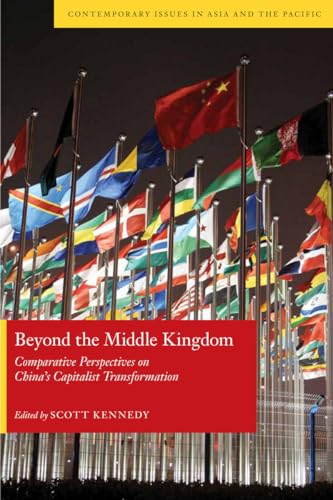
Beyond the Middle Kingdom: Comparative Perspectives on Chinaas Capitalist Transformation: Comparative Perspectives on China's Capitalist Transformation (Contemporary Issues in Asia and the Pacific) - Softcover
Inhaltsangabe
This book breaks new ground by systematically examining China's capitalist transformation through several comparative lenses. The great majority of research on China to date has consisted of single-country studies. This is the result of the methodological demands of studying China and a sense of the country's distinctiveness due to its grand size and long history. The moniker Middle Kingdom, a direct translation of the Chinese-language word for China, is one of the most prominent symbols of the country's supposed uniqueness.
Composed of contributions from leading specialists on China's political economy, this volume demonstrates the benefits of systematically comparing China with other countries, including France, Russia, Japan, South Korea, Indonesia, India, Brazil, and South Africa. Doing so puts the People's Republic in a light not available through other approaches, and it provides a chance to consider political theories by including an important case too often left out of studies.
Die Inhaltsangabe kann sich auf eine andere Ausgabe dieses Titels beziehen.
Über die Autorinnen und Autoren
Scott Kennedy is Associate Professor, Departments of East Asian Languages & Cultures and Political Science, and Director, Research Center for Chinese Politics and Business, Indiana University. He is author of The Business of Lobbying in China (Harvard University Press, 2005) and editor of China Cross Talk: The American Debate over China Policy Since Normalization, A Reader (Rowman & Littlefield, 2003). His current research projects are on the growing role of Chinese industry and government in global governance and on the evolution of corporate political activity in China.
Scott Kennedy is Associate Professor, Departments of East Asian Languages & Cultures and Political Science, and Director, Research Center for Chinese Politics and Business, Indiana University. He is author of The Business of Lobbying in China (Harvard University Press, 2005) and editor of China Cross Talk: The American Debate over China Policy Since Normalization, A Reader (Rowman & Littlefield, 2003). His current research projects are on the growing role of Chinese industry and government in global governance and on the evolution of corporate political activity in China.
Auszug. © Genehmigter Nachdruck. Alle Rechte vorbehalten.
Beyond the Middle Kingdom
Comparative Perspectives on China's Capitalist TransformationStanford University Press
Copyright © 2011 Board of Trustees of the Leland Stanford Junior UniversityAll right reserved.
ISBN: 978-0-8047-6958-7
Contents
List of Figures and Tables............................................................................................................................................xiAcknowledgments.......................................................................................................................................................xiiiINTRODUCTION..........................................................................................................................................................11. Overcoming Our Middle Kingdom Complex: Finding China's Place in Comparative Politics Scott Kennedy................................................................3PART ONE: CHINESE ECONOMIC REFORM AND THE VARIETIES OF CAPITALISM.....................................................................................................232. Variety Within and Without: The Political Economy of Chinese Regulation Margaret M. Pearson.......................................................................253. Developmental Dreams: Policy and Reality in China's Economic Reforms Arthur R. Kroeber............................................................................444. Crossing the River by Feeling for Stones or Carried Across by the Current? The Transformation of the Chinese Automotive Sector Andrew Wedeman.....................665. Welfare Policy Pathways Among Large Uneven Developers Mark W. Frazier.............................................................................................89PART TWO: INTEREST GROUPS IN AN AUTHORITARIAN CONTEXT.................................................................................................................1116. Fragmented Influence: Business Lobbying in China in Comparative Perspective Scott Kennedy.........................................................................1137. Comparing China's Capitalists: Neither Democratic Nor Exceptional Kellee S. Tsai..................................................................................1368. When Are Banks Sold to Foreigners? An Examination of the Politics of Selling Banks in Mexico, Korea, and China Victor Shih........................................159CONCLUSION............................................................................................................................................................1799. Placing China in Comparison: An Outsider's Perspective Gregory J. Kasza...........................................................................................181Notes.................................................................................................................................................................191List of Contributors..................................................................................................................................................233Index.................................................................................................................................................................237
Chapter One
Overcoming Our Middle Kingdom ComplexFinding China's Place in Comparative Politics
SCOTT KENNEDY
For those who follow China, the country appears to be a mass of contradictions that defy logic. The People's Republic of China (PRC) is led by a Communist Party, but China ranks only second to the United States in number of billionaires. The Politburo Standing Committee has extraordinary power, yet the lowest township and village officials regularly flout national policies. And, perhaps most surprising of all, despite an economic revolution that has resulted in China adopting economic policies and institutions found in capitalist systems and generated social pluralization that includes extensive transnational linkages, democratization seems less likely than ever. There is another kind of contradiction, which is not bedeviling China but rather those of us who study that country. There seems to be a disjuncture between how quickly China is changing and how slowly we are adapting the way we study the country's politics.
Don't get me wrong. Over the last sixty years, China specialists have moved from simply trying to describe Chinese politics to comparing Chinese reality against various theories and offering up new explanations of politics by drawing on the Chinese case. Yet we rarely use a tool that provides the title of the disciplinary subfield in which many China experts reside: comparison (as in "the comparative politics subfield"). The PRC is led by a Communist Party, but it has rarely been systematically compared with other Communist countries. China is now awash in capital, but it is only infrequently compared (or contrasted) with other capitalist countries. And even though nonstate actors, from businesspeople to peasants, are becoming more politically active-around 80,000 protests take place each year—their behavior likewise is rarely directly measured against that of their cousins elsewhere. The goal of this volume is to demonstrate that, in light of China's capitalist transformation, there is greater utility than ever in examining China through different comparative lenses, for what it teaches us both about China as well as about politics more generally.
Studying Chinese Politics and Political Economy: Different Degrees of Theorizing
The comparative politics subfield of the political science discipline—and that is the formal home of comparative political economy specialists—is misnamed. We are all at heart specialists in domestic politics and political economy, either of a country or region or of a discrete issue, such as the bureaucracy, democratization, or protest. We are attentive to international and transnational factors but typically only in so much as they shape or are shaped by domestic political processes. Under this umbrella, there is wide variation in scholars' goals, research methods, and scope of the data they collect. Some aim at description of political behavior and systems, while others seek to develop theories that contain causal inferences about politics beyond the specific people or events being studied. In so doing, some aim for grand theories that hold across time and space, while others seek to develop "middle range" theories that hold true under a narrower set of circumstances. Domestic politics and comparative political economy scholars employ a range of methods, from qualitative case studies to large-n quantitative analyses to formal modeling, or a combination of these techniques. And finally, some scholars obtain their data from a single polity and others use data from several countries, either a small number to allow for focused comparison or a wide cross section to facilitate statistical analysis. For those interested in contributing to theories of politics, no one approach is necessarily better than any other, and there is growing sentiment that scholars should employ multiple methods in order to obtain as authoritative findings as possible.
This book's empirical focus is on political economy questions, that is, issues that involve the politics of economics (such as how political institutions shape economic policy and business behavior) or the economics of politics (such as how globalization realigns political alliances), but the insights identified here are highly relevant to students of Chinese politics and society...
„Über diesen Titel“ kann sich auf eine andere Ausgabe dieses Titels beziehen.
Suchergebnisse für Beyond the Middle Kingdom: Comparative Perspectives...

Beispielbild für diese ISBN
Beyond the Middle Kingdom: Comparative Perspectives on China's Capitalist Transformation (Contemporary Issues in Asia and the Pacific)
Verlag:
Stanford University Press, 2011
ISBN 10: 0804769583
ISBN 13: 9780804769587
Gebraucht
paperback
Anbieter: HPB-Diamond, Dallas, TX, USA
Verkäuferbewertung 5 von 5 Sternen

paperback. Zustand: Very Good. Connecting readers with great books since 1972! Used books may not include companion materials, and may have some shelf wear or limited writing. We ship orders daily and Customer Service is our top priority! Bestandsnummer des Verkäufers S_447384248
Gebraucht kaufen
EUR 8,01
EUR 3,27 Versand
Versand innerhalb von USA
Versand innerhalb von USA
Anzahl: 1 verfügbar
Beispielbild für diese ISBN
Beyond the Middle Kingdom: Comparative Perspectives on Chinaas Capitalist Transformation
Verlag:
Stanford University Press, 2011
ISBN 10: 0804769583
ISBN 13: 9780804769587
Gebraucht
Paperback
Anbieter: ThriftBooks-Atlanta, AUSTELL, GA, USA
Verkäuferbewertung 5 von 5 Sternen
Paperback. Zustand: As New. No Jacket. Pages are clean and are not marred by notes or folds of any kind. ~ ThriftBooks: Read More, Spend Less. Bestandsnummer des Verkäufers G0804769583I2N00
Gebraucht kaufen
EUR 11,58
Versand gratis
Versand innerhalb von USA
Versand innerhalb von USA
Anzahl: 1 verfügbar
Beispielbild für diese ISBN
Beyond the Middle Kingdom: Comparative Perspectives on China's Capitalist Transformation (Contemporary Issues in Asia and the Pacific)
Verlag:
Stanford University Press, 2011
ISBN 10: 0804769583
ISBN 13: 9780804769587
Gebraucht
Paperback
Anbieter: Midtown Scholar Bookstore, Harrisburg, PA, USA
Verkäuferbewertung 5 von 5 Sternen
Paperback. Zustand: Very Good. Very Good - Crisp, clean, unread book with some shelfwear/edgewear, may have a remainder mark - NICE Standard-sized. Bestandsnummer des Verkäufers M0804769583Z2
Gebraucht kaufen
EUR 6,94
EUR 5,23 Versand
Versand innerhalb von USA
Versand innerhalb von USA
Anzahl: 4 verfügbar
Beispielbild für diese ISBN
Beyond the Middle Kingdom : Comparative Perspectives on China's Capitalist Transformation
Anbieter: GreatBookPrices, Columbia, MD, USA
Verkäuferbewertung 5 von 5 Sternen
Zustand: New. Bestandsnummer des Verkäufers 12480190-n
Neu kaufen
EUR 21,85
EUR 2,30 Versand
Versand innerhalb von USA
Versand innerhalb von USA
Anzahl: Mehr als 20 verfügbar
Beispielbild für diese ISBN
Beyond the Middle Kingdom: Comparative Perspectives on China's Capitalist Transformation (Contemporary Issues in Asia and the Pacific)
Anbieter: California Books, Miami, FL, USA
Verkäuferbewertung 4 von 5 Sternen

Zustand: New. Bestandsnummer des Verkäufers I-9780804769587
Neu kaufen
EUR 24,23
Versand gratis
Versand innerhalb von USA
Versand innerhalb von USA
Anzahl: Mehr als 20 verfügbar
Foto des Verkäufers
Beyond the Middle Kingdom
Verlag:
Stanford University Press, US, 2011
ISBN 10: 0804769583
ISBN 13: 9780804769587
Neu
Paperback
Anbieter: Rarewaves USA, HEBRON, KY, USA
Verkäuferbewertung 5 von 5 Sternen
Paperback. Zustand: New. This book breaks new ground by systematically examining China's capitalist transformation through several comparative lenses. The great majority of research on China to date has consisted of single-country studies. This is the result of the methodological demands of studying China and a sense of the country's distinctiveness due to its grand size and long history. The moniker Middle Kingdom, a direct translation of the Chinese-language word for China, is one of the most prominent symbols of the country's supposed uniqueness. Composed of contributions from leading specialists on China's political economy, this volume demonstrates the benefits of systematically comparing China with other countries, including France, Russia, Japan, South Korea, Indonesia, India, Brazil, and South Africa. Doing so puts the People's Republic in a light not available through other approaches, and it provides a chance to consider political theories by including an important case too often left out of studies. Bestandsnummer des Verkäufers LU-9780804769587
Neu kaufen
EUR 24,47
Versand gratis
Versand innerhalb von USA
Versand innerhalb von USA
Anzahl: Mehr als 20 verfügbar
Foto des Verkäufers
Beyond the Middle Kingdom : Comparative Perspectives on China's Capitalist Transformation
Verlag:
Stanford University Press, 2011
ISBN 10: 0804769583
ISBN 13: 9780804769587
Gebraucht
Softcover
Anbieter: GreatBookPrices, Columbia, MD, USA
Verkäuferbewertung 5 von 5 Sternen
Zustand: As New. Unread book in perfect condition. Bestandsnummer des Verkäufers 12480190
Gebraucht kaufen
EUR 22,51
EUR 2,30 Versand
Versand innerhalb von USA
Versand innerhalb von USA
Anzahl: Mehr als 20 verfügbar
Beispielbild für diese ISBN
Beyond the Middle Kingdom
Anbieter: PBShop.store UK, Fairford, GLOS, Vereinigtes Königreich
Verkäuferbewertung 5 von 5 Sternen
PAP. Zustand: New. New Book. Shipped from UK. Established seller since 2000. Bestandsnummer des Verkäufers FW-9780804769587
Neu kaufen
EUR 22,31
EUR 4,85 Versand
Versand von Vereinigtes Königreich nach USA
Versand von Vereinigtes Königreich nach USA
Anzahl: 15 verfügbar
Beispielbild für diese ISBN
Beyond the Middle Kingdom - Comparative Perspectives on China`s Capitalist Transformation (eng)
Anbieter: Brook Bookstore On Demand, Napoli, NA, Italien
Verkäuferbewertung 5 von 5 Sternen
Zustand: new. Bestandsnummer des Verkäufers 5c051e8835ed41ba07f2617680fa6d47
Neu kaufen
EUR 26,86
EUR 5,50 Versand
Versand von Italien nach USA
Versand von Italien nach USA
Anzahl: Mehr als 20 verfügbar
Beispielbild für diese ISBN
Beyond the Middle Kingdom Comparative Perspectives on China's Capitalist Transformation
Print-on-DemandAnbieter: Revaluation Books, Exeter, Vereinigtes Königreich
Verkäuferbewertung 5 von 5 Sternen
Paperback. Zustand: Brand New. 256 pages. 9.00x6.00x0.70 inches. In Stock. This item is printed on demand. Bestandsnummer des Verkäufers __0804769583
Neu kaufen
EUR 24,39
EUR 11,66 Versand
Versand von Vereinigtes Königreich nach USA
Versand von Vereinigtes Königreich nach USA
Anzahl: 2 verfügbar