
Verwandte Artikel zu The Cold War: A History
Inhaltsangabe
"The history of the Cold War has been the history of the world since 1954."
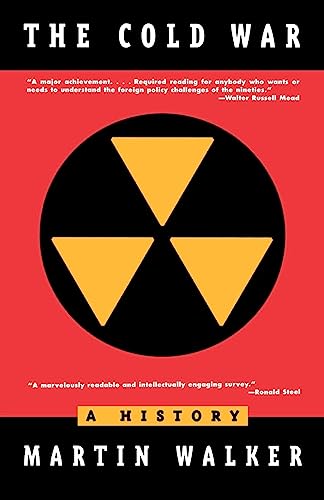
So begins The Cold War: A History, a wide-ranging narrative by award-winning political commentator Martin Walker, which was one of the first major studies of its kind.
Now that it's over, it's crucial to our future to understand how the Cold War has shaped us and, especially, to recognize it as the economic and political dynamic that determined the structure of today's global economy.
From the origins of the Marshall Plan, which revived Europe after World War II, and the strategic decision to rebuild a defeated Japan into a bulwark against China, to the collapse of the Berlin Wall, this authoritative work reveals how the West was built into an economic alliance that overpowered the Soviet economy while also unleashing global economic forces that today challenge the traditional nation-state.
The Cold War was more of a global conflict than was either of this century's two major wars; far more than a confrontation between states or even empires, it was, as Martin Walker puts it, "a total war between economic and social systems, an industrial test to destruction."
Walker reminds us how easy it is to forget that there were many occasions in the late 1940s in which victory seemed far from assured, and that this uncertainty lent a particular urgency to the efforts of postwar Western leaders. The West continued to be alarmed by the prospect of defeat right up to the Soviet empire's last breath. At the end of the 1940s the fear was generated by communist expansion into Eastern Europe and China; in the 1960s by the prospect of defeat in Vietnam. In the 1970s the failure of détente and the West's economic crisis brought a new generation of dedicated anti-Communists to prominence. For more than forty years, as this detailed analysis makes clear, the outcome of the Cold War was in doubt.
We also come to understand how the arms race caused new alignments and shifts in domestic power. As the United States became the national security state, California, which had a population of five million at the start of the Cold War, grew to thirty million and, by the 1980s provided one in every ten members of Congress and two presidents.
Using newly opened Kremlin archives and his own experiences in the field, Martin Walker has written a brilliant analysis of the conflict that has shaped the contemporary world.
Die Inhaltsangabe kann sich auf eine andere Ausgabe dieses Titels beziehen.
Über die Autorin bzw. den Autor
Martin Walker, author of The Cold War: A History and the Bruno, Chief of Police mystery series, is the U.S. bureau chief for The Guardian (London), a regular commentator for CNN, and a columnist for newspapers in the United States, Europe, and Moscow. A published novelist and poet, he lives in Washington, D.C. with his wife, the novelist Julia Watson, and their two daughters.
Von der hinteren Coverseite
"The history of the Cold War has been the history of the world since 1945". So begins this wide-ranging narrative by an award-winning political commentator, which is the first major study of the Cold War. Now that it is over, it is crucial to our future to understand how the Cold War has shaped us and, especially, to recognize it as the economic and political dynamic that determined the structure of today's global economy. From the origins of the Marshall Plan, which revived Europe after World War II, and the strategic decision to rebuild a defeated Japan into a bulwark against China to the collapse of the Berlin Wall, this authoritative work reveals how the West was built into an economic alliance that overpowered the Soviet economy while also unleashing global economic forces that today challenge the traditional nation-state. The Cold War was more of a global conflict than was either of this century's two major wars; far more than a confrontation between states or even empires, it was, as Martin Walker puts it, "a total war between economic and social systems, an industrial test to destruction". Walker reminds us how easy it is to forget that there were many occasions from the late 1940s on when victory seemed far from assured, and that lent a particular urgency to the efforts of postwar Western leaders. The West continued to be alarmed by the prospect of defeat right up to the Soviet empire's last breath. At the end of the 1940s the fear was generated by communist expansion into Eastern Europe and China; in the 1950s it was fueled by the Soviets' supposed technological superiority, and in the 1960s by the prospect of defeat in Vietnam. In the 1970s the failure of detente and theWest's economic crisis brought a new generation of dedicated anti-Communists to prominence. For more than forty years, as this detailed analysis makes clear, the outcome of the Cold War was in doubt. We also come to understand how the arms race caused new alignments and shifts in domestic power. As the United States became the national security state, California, which had a population of five million at the start of the Cold War, grew to thirty million and, by the 1980s, provided one in every ten members of Congress and two presidents. Using newly opened Kremlin archives and his own experiences in the field, the author has written, with style and authority, a brilliant analysis of the conflict that has shaped the contemporary world.
„Über diesen Titel“ kann sich auf eine andere Ausgabe dieses Titels beziehen.
Suchergebnisse für The Cold War: A History

Beispielbild für diese ISBN
The Cold War A History
Anbieter: World of Books (was SecondSale), Montgomery, IL, USA
Verkäuferbewertung 5 von 5 Sternen

Zustand: Acceptable. Item in acceptable condition! Textbooks may not include supplemental items i.e. CDs, access codes etc. Bestandsnummer des Verkäufers 00100581769
Gebraucht kaufen
EUR 4,49
Versand gratis
Versand innerhalb von USA
Versand innerhalb von USA
Anzahl: 2 verfügbar
Beispielbild für diese ISBN
The Cold War: A History
Anbieter: World of Books (was SecondSale), Montgomery, IL, USA
Verkäuferbewertung 5 von 5 Sternen
Paperback. Zustand: Good. "The history of the Cold War has been the history of the world since 1954." So begins The Cold War: A History, a wide-ranging narrative by award-winning political commentator Martin Walker, which was one of the first major studies of its kind. Now that it's over, it's crucial to our future to understand how the Cold War has shaped us and, especially, to recognize it as the economic and political dynamic that determined the structure of today's global economy. From the origins of the Marshall Plan, which revived Europe after World War II, and the strategic decision to rebuild a defeated Japan into a bulwark against China, to the collapse of the Berlin Wall, this authoritative work reveals how the West was built into an economic alliance that overpowered the Soviet economy while also unleashing global economic forces that today challenge the traditional nation-state. The Cold War was more of a global conflict than was either of this century's two major wars; far more than a confrontation between states or even empires, it was, as Martin Walker puts it, "a total war between economic and social systems, an industrial test to destruction." Walker reminds us how easy it is to forget that there were many occasions in the late 1940s in which victory seemed far from assured, and that this uncertainty lent a particular urgency to the efforts of postwar Western leaders. The West continued to be alarmed by the prospect of defeat right up to the Soviet empire's last breath. At the end of the 1940s the fear was generated by communist expansion into Eastern Europe and China; in the 1960s by the prospect of defeat in Vietnam. In the 1970s the failure of détente and the West's economic crisis brought a new generation of dedicated anti-Communists to prominence. For more than forty years, as this detailed analysis makes clear, the outcome of the Cold War was in doubt. We also come to understand how the arms race caused new alignments and shifts in domestic power. As the United States became the national security state, California, which had a population of five million at the start of the Cold War, grew to thirty million and, by the 1980s provided one in every ten members of Congress and two presidents. Using newly opened Kremlin archives and his own experiences in the field, Martin Walker has written a brilliant analysis of the conflict that has shaped the contemporary world. Bestandsnummer des Verkäufers 00099531303
Gebraucht kaufen
EUR 4,49
Versand gratis
Versand innerhalb von USA
Versand innerhalb von USA
Anzahl: 6 verfügbar
Foto des Verkäufers
The Cold War: A History
Anbieter: Aspen Book Co., Denver, CO, USA
Verkäuferbewertung 5 von 5 Sternen
Zustand: good. A well-loved companion. Corners and cover might show a little wear, and you could find some notes or highlights. The dust jacket might be MIA, it might have been a library book and extras aren't guaranteedâ"but the story's all there! Bestandsnummer des Verkäufers PKV.0805034544.G
Gebraucht kaufen
EUR 4,50
Versand gratis
Versand innerhalb von USA
Versand innerhalb von USA
Anzahl: 1 verfügbar
Beispielbild für diese ISBN
The Cold War: A History
Verlag:
Holt Paperbacks (edition Reprint), 1995
ISBN 10: 0805034544
ISBN 13: 9780805034547
Gebraucht
Paperback
Anbieter: BooksRun, Philadelphia, PA, USA
Verkäuferbewertung 5 von 5 Sternen
Paperback. Zustand: Fair. Reprint. The item might be beaten up but readable. May contain markings or highlighting, as well as stains, bent corners, or any other major defect, but the text is not obscured in any way. Bestandsnummer des Verkäufers 0805034544-7-22
Gebraucht kaufen
EUR 5,93
Versand gratis
Versand innerhalb von USA
Versand innerhalb von USA
Anzahl: 1 verfügbar
Beispielbild für diese ISBN
The Cold War
Anbieter: Hawking Books, Edgewood, TX, USA
Verkäuferbewertung 4 von 5 Sternen

Zustand: Acceptable. **Has lots of writing/highlighting** Meets the acceptable condition guidelines. Has wear. Five star seller - Ships Quickly - Buy with confidence! Bestandsnummer des Verkäufers X0805034544X4
Gebraucht kaufen
EUR 6,31
Versand gratis
Versand innerhalb von USA
Versand innerhalb von USA
Anzahl: 1 verfügbar
Beispielbild für diese ISBN
The Cold War: A History
Anbieter: World of Books Inc, Montgomery, IL, USA
Verkäuferbewertung 4 von 5 Sternen
Paperback. Zustand: Good. "The history of the Cold War has been the history of the world since 1954." So begins The Cold War: A History, a wide-ranging narrative by award-winning political commentator Martin Walker, which was one of the first major studies of its kind. Now that it's over, it's crucial to our future to understand how the Cold War has shaped us and, especially, to recognize it as the economic and political dynamic that determined the structure of today's global economy. From the origins of the Marshall Plan, which revived Europe after World War II, and the strategic decision to rebuild a defeated Japan into a bulwark against China, to the collapse of the Berlin Wall, this authoritative work reveals how the West was built into an economic alliance that overpowered the Soviet economy while also unleashing global economic forces that today challenge the traditional nation-state. The Cold War was more of a global conflict than was either of this century's two major wars; far more than a confrontation between states or even empires, it was, as Martin Walker puts it, "a total war between economic and social systems, an industrial test to destruction." Walker reminds us how easy it is to forget that there were many occasions in the late 1940s in which victory seemed far from assured, and that this uncertainty lent a particular urgency to the efforts of postwar Western leaders. The West continued to be alarmed by the prospect of defeat right up to the Soviet empire's last breath. At the end of the 1940s the fear was generated by communist expansion into Eastern Europe and China; in the 1960s by the prospect of defeat in Vietnam. In the 1970s the failure of détente and the West's economic crisis brought a new generation of dedicated anti-Communists to prominence. For more than forty years, as this detailed analysis makes clear, the outcome of the Cold War was in doubt. We also come to understand how the arms race caused new alignments and shifts in domestic power. As the United States became the national security state, California, which had a population of five million at the start of the Cold War, grew to thirty million and, by the 1980s provided one in every ten members of Congress and two presidents. Using newly opened Kremlin archives and his own experiences in the field, Martin Walker has written a brilliant analysis of the conflict that has shaped the contemporary world. Bestandsnummer des Verkäufers CIN0805034544G
Gebraucht kaufen
EUR 6,32
Versand gratis
Versand innerhalb von USA
Versand innerhalb von USA
Anzahl: 6 verfügbar
Beispielbild für diese ISBN
The Cold War: A History
Anbieter: World of Books Inc, Montgomery, IL, USA
Verkäuferbewertung 4 von 5 Sternen
Paperback. Zustand: Fair. "The history of the Cold War has been the history of the world since 1954." So begins The Cold War: A History, a wide-ranging narrative by award-winning political commentator Martin Walker, which was one of the first major studies of its kind. Now that it's over, it's crucial to our future to understand how the Cold War has shaped us and, especially, to recognize it as the economic and political dynamic that determined the structure of today's global economy. From the origins of the Marshall Plan, which revived Europe after World War II, and the strategic decision to rebuild a defeated Japan into a bulwark against China, to the collapse of the Berlin Wall, this authoritative work reveals how the West was built into an economic alliance that overpowered the Soviet economy while also unleashing global economic forces that today challenge the traditional nation-state. The Cold War was more of a global conflict than was either of this century's two major wars; far more than a confrontation between states or even empires, it was, as Martin Walker puts it, "a total war between economic and social systems, an industrial test to destruction." Walker reminds us how easy it is to forget that there were many occasions in the late 1940s in which victory seemed far from assured, and that this uncertainty lent a particular urgency to the efforts of postwar Western leaders. The West continued to be alarmed by the prospect of defeat right up to the Soviet empire's last breath. At the end of the 1940s the fear was generated by communist expansion into Eastern Europe and China; in the 1960s by the prospect of defeat in Vietnam. In the 1970s the failure of détente and the West's economic crisis brought a new generation of dedicated anti-Communists to prominence. For more than forty years, as this detailed analysis makes clear, the outcome of the Cold War was in doubt. We also come to understand how the arms race caused new alignments and shifts in domestic power. As the United States became the national security state, California, which had a population of five million at the start of the Cold War, grew to thirty million and, by the 1980s provided one in every ten members of Congress and two presidents. Using newly opened Kremlin archives and his own experiences in the field, Martin Walker has written a brilliant analysis of the conflict that has shaped the contemporary world. Bestandsnummer des Verkäufers CIN0805034544A
Gebraucht kaufen
EUR 6,32
Versand gratis
Versand innerhalb von USA
Versand innerhalb von USA
Anzahl: 2 verfügbar
Beispielbild für diese ISBN
The Cold War
Anbieter: Wonder Book, Frederick, MD, USA
Verkäuferbewertung 5 von 5 Sternen
Zustand: Very Good. Very Good condition. A copy that may have a few cosmetic defects. May also contain light spine creasing or a few markings such as an owner's name, short gifter's inscription or light stamp. Bestandsnummer des Verkäufers Q15Q-00356
Gebraucht kaufen
EUR 6,40
Versand gratis
Versand innerhalb von USA
Versand innerhalb von USA
Anzahl: 1 verfügbar
Beispielbild für diese ISBN
The Cold War
Anbieter: Wonder Book, Frederick, MD, USA
Verkäuferbewertung 5 von 5 Sternen
Zustand: Good. Good condition. A copy that has been read but remains intact. May contain markings such as bookplates, stamps, limited notes and highlighting, or a few light stains. Bestandsnummer des Verkäufers H15A-02849
Gebraucht kaufen
EUR 6,40
Versand gratis
Versand innerhalb von USA
Versand innerhalb von USA
Anzahl: 1 verfügbar
Beispielbild für diese ISBN
The Cold War: A History
Anbieter: ThriftBooks-Dallas, Dallas, TX, USA
Verkäuferbewertung 5 von 5 Sternen
Paperback. Zustand: Good. No Jacket. Pages can have notes/highlighting. Spine may show signs of wear. ~ ThriftBooks: Read More, Spend Less. Bestandsnummer des Verkäufers G0805034544I3N00
Gebraucht kaufen
EUR 6,45
Versand gratis
Versand innerhalb von USA
Versand innerhalb von USA
Anzahl: 1 verfügbar