
Verwandte Artikel zu Organizing from the Inside Out for Teens: The Foolproof...
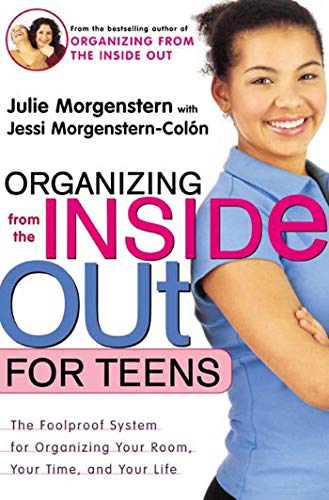
Organizing from the Inside Out for Teens: The Foolproof System for Organizing Your Room, Your Time, and Your Life - Softcover
Inhaltsangabe
A guide from America's #1 organizer and her daughter that "explains why less clutter in your world means more time for you to study, sleep, or hang out" (CosmoGirl).
Today's teens are busier than ever. Figuring out how to balance schoolwork, friends, and extracurricular activities can often feel as difficult as performing a high-wire act without a net. And many teens become even more frustrated by the remedies the adults in their lives prescribe: even if teens would like to see their floors or finish their homework occasionally, they don't want to do that by throwing away their stuff or spending less time with their friends. Instead, they want to figure out a way to make the most of their space and time-which is precisely what Julie Morgenstern and her teenage daughter, Jessi Morgenstern-Colón, offer.
With Organizing from the Inside Out for Teens, teens will learn:
-How to rearrange a room so that it's not just for sleep, but also for friends and homework
-How to organize a backpack to find what's needed when it's needed
-How to create a schedule that allows time for schoolwork, extracurriculars, and fun
-How to maintain a system so that it remains relevant and helpful
With quizzes, lists of useful organizational resources, and advice from other teens around the country, Organizing from the Inside Out for Teens will prove an indispensable guide for overwhelmed teenagers everywhere.
Die Inhaltsangabe kann sich auf eine andere Ausgabe dieses Titels beziehen.
Über die Autorin bzw. den Autor
Julie Morgenstern is the author of the New York Times bestsellers Organizing from the Inside Out and Time Management from the Inside Out, both of which have been developed into popular specials for PBS. She is an internationally renowned organization consultant and has shared her expertise on The Oprah Winfrey Show, The Rachael Ray Show, The Today Show, and more, and is quoted or featured regularly in, among other outlets, The New York Times, Time, and USA Today.
Von der hinteren Coverseite
Praise for author Julie Morgenstern:
"If I had had Julie Morgenstern's tips on how to organize my workload and prioritize my days, balancing my growing business and family life would have been much easier."
-Lilian Vernon, Chairman and CEO, Lilian Vernon Corporation, on Organizing from the Inside Out
"Time Management from the Inside Out is an outstanding resource in the process of being ready to live at a higher level. It won't just help you manage your time, it will help you manage your life. A valuable read!"
-Ken Blanchard, co-author of The One-Minute Manager and Leadership by the Book
"Everything you need to know about reclaiming your life from your busy schedule is contained in Julie's wonderful new book."
-Cheryl Richardson, author of Take Time for Your Life, on Time Management from the Inside Out
Aus dem Klappentext
Praise for author Julie Morgenstern:
"If I had had Julie Morgenstern's tips on how to organize my workload and prioritize my days, balancing my growing business and family life would have been much easier."
-Lilian Vernon, Chairman and CEO, Lilian Vernon Corporation, on Organizing from the Inside Out
"Time Management from the Inside Out is an outstanding resource in the process of being ready to live at a higher level. It won't just help you manage your time, it will help you manage your life. A valuable read!"
-Ken Blanchard, co-author of The One-Minute Manager and Leadership by the Book
"Everything you need to know about reclaiming your life from your busy schedule is contained in Julie's wonderful new book."
-Cheryl Richardson, author of Take Time for Your Life, on Time Management from the Inside Out
Auszug. © Genehmigter Nachdruck. Alle Rechte vorbehalten.
Organizing from the Inside Out for Teenagers
The Foolproof System for Organizing Your Room, Your Time, and Your LifeBy Julie MorgensternHolt Paperbacks
Copyright © 2002 Julie MorgensternAll right reserved.
ISBN: 9780805064704
Organizing from the Inside Out for Teens
PART 1
The Basics
1
What's Holding You Back?
If you're reading this book, chances are that you think you are a disorganized person (or someone you know thinks you are). You've been sometimes lovingly, and other times scoldingly, referred to as a slob, mess-aholic, or pack rat.
We're going to bust a lot of myths about getting organized, and here is the first one. Organizing is not about discipline. It's about design. If your system is a custom fit for you, maintaining it will be a breeze. You don't have to change who you are to get organized. You have to work with your natural habits and goals. You design the system to support you, not to change you.
Myth: Organizing is the same as being neat.
Fact: Organizing is not about how a space looks, but how it functions.
In the game of organization, substance is what matters, not style. Many people keep their rooms looking so neat and clean, you'd think you could eat off their floor. However, when push comes to shove, they can never find anything--because inside their drawers and closets, it's utter chaos. Others have rooms that are all piles, a stack of papers here, a mountain of clothes there, but when it's time to look for something they need, they can find it within seconds.
Messy does not equal disorganized. It doesn't matter if people think that your room looks like a disaster area. Here's the definition of organizing this book is based on: If you know where your stuff is, are able to find what you need when you need it, and are comfortablein your space, then you're organized! If you're happy with your schedule and comfortable with where your time is spent, then you are a good time manager. In that case you probably don't even need to read any further. But be honest with yourself. Take the following self-assessment to see if your piles are a help or a hindrance and if you're really as organized as you'd like to be.
DO YOU NEED THIS BOOK?
Take this assessment to determine if you are as organized as you'd like to be:
If you answered "false" to three or more of the above questions, keep reading. This book was written expressly for you. It will teach you how to organize your life so that you can succeed in all your goals and still find enough time to enjoy yourself.
Myth: Organizing is a talent you're either born with or not.
Fact: Organizing is a learnable skill.
You've tried to get organized in the past. Many times. Well, at least you've thought about it. You've spent marathon weekends sorting through the clutter in your room, getting rid of as much as you can, yet within days you're right back to the way it looked before. Your parents have doled out big bucks for every kind of calendar, Palm Pilot, and pager ever invented, alarm clocks that sing your favorite show tunes ... but you still find yourself racing behind the clock.
You're envious of the kids who seem to have it all together, who fit in a million after-school activities, get straight A's, are never late for anything, and always know where their keys are.
Is organizing a mysterious talent some lucky people are born with, while the rest of the world's poor, unfortunate souls (like you) are left to suffer? The truth is that organizing is a remarkably simple skill that anyone can learn. We have both learned it. And you can, too. That's what this book is all about.
Say it out loud: I am not a disorganized person! The fact is, everybody is organized somewhere. No matter how messy your room is, no matter how often you have lost your library books or scrambled at the last minute to do your homework, there's no doubt that somewhere--buried under the piles, hidden inside the chaos--there are some systems that are working for you. Right now, before reading any further, take a moment to define where you are organized by consulting the "Where Are You Organized?" assessment on the following page. Why start there, you ask? Because it builds confidence. It gives you energy. And it's the truth.
WHERE ARE YOU ORGANIZED?
Everybody is organized in some parts of his or her life, disorganized in others. Start this process on a positive note by identifying the areas in which you are organized: is it your homework, clothes, bedroom, memorabilia, collections, social life, time, photos, sock drawer? Then move on to the areas that need improvement. Examples:
Lilly Y., 17, GeorgiaWhat's organized: My clothes and social lifeWhat's not: My school stuff and studyingJonathan S., 15, New YorkWhat's organized: My homeworkWhat's not: My bedroom and sports gearAriela N., 16, FloridaWhat's organized: My photos and memorabiliaWhat's not: My papers and school suppliesYour turn:What's organized: ____________________What's not: __________________________
Myth: Organizing is about throwing things away.
Fact: You can keep everything that you want and still get organized.
"Look at all this junk!" "I gotta get rid of this clutter!" "I've got way too much stuff!" Many of us believe that organizing is about getting rid of as much "junk" as we possibly can. But organizing is never about throwing things away. It's about discovering what's important and giving yourself access to it. So instead of looking at organizing as a punishing process, like being stripped of all your treasures and gold, think of it as identifying what's important toyou and honoring it by giving it a place in your space or your schedule.
Many of us are collectors at heart. Fortunately, organizing doesn't mean saying good-bye to all our treasures. You don't have to live like a monk to be organized. Instead, celebrate all your worldly possessions by arranging them in one place. For instance, you can keep your vast collection of concert T-shirts folded on one or two easy-to-reach shelves rather than leaving them strewn about your closet and stuffed in random drawers. Or, consolidate your zillions of photos into a matching set of boxes and albums so you can actually enjoy looking at them. After all, what's the point of gathering all of those wonderful treasures if you can't find them when you want them?
You may be wondering: If organizing is a skill that anyone can learn, why am I so disorganized? Most people believe that clutter is caused by laziness, sloppiness, or pure incompetence. That could be the biggest myth of all. All messes are not created equal. There are actually more causes for clutter than you can imagine, and none of them have to do with your being lazy (even if you are sometimes!).
Rather than beating yourself up and dismissing yourself as a hopeless case, take a look at the ten most common causes of disorganization described below. The good news is that every problem has a cure. By pinpointing the real reasons for your chaos, you'll take the first steps toward solving the problem and save yourself lots of time and energy...
„Über diesen Titel“ kann sich auf eine andere Ausgabe dieses Titels beziehen.
Suchergebnisse für Organizing from the Inside Out for Teens: The Foolproof...

Beispielbild für diese ISBN
Organizing from the inside out
Anbieter: World of Books (was SecondSale), Montgomery, IL, USA
Verkäuferbewertung 5 von 5 Sternen

Zustand: Good. Item in good condition. Textbooks may not include supplemental items i.e. CDs, access codes etc. Bestandsnummer des Verkäufers 00051876950
Gebraucht kaufen
EUR 3,66
Versand gratis
Versand innerhalb von USA
Versand innerhalb von USA
Anzahl: 18 verfügbar
Beispielbild für diese ISBN
Organizing from the inside out
Anbieter: World of Books (was SecondSale), Montgomery, IL, USA
Verkäuferbewertung 5 von 5 Sternen
Zustand: Very Good. Item in very good condition! Textbooks may not include supplemental items i.e. CDs, access codes etc. Bestandsnummer des Verkäufers 00095415487
Gebraucht kaufen
EUR 3,66
Versand gratis
Versand innerhalb von USA
Versand innerhalb von USA
Anzahl: 4 verfügbar
Beispielbild für diese ISBN
Organizing from the inside out
Anbieter: World of Books (was SecondSale), Montgomery, IL, USA
Verkäuferbewertung 5 von 5 Sternen
Zustand: Acceptable. Item in acceptable condition! Textbooks may not include supplemental items i.e. CDs, access codes etc. Bestandsnummer des Verkäufers 00100646933
Gebraucht kaufen
EUR 3,66
Versand gratis
Versand innerhalb von USA
Versand innerhalb von USA
Anzahl: 4 verfügbar
Beispielbild für diese ISBN
Organizing from the Inside Out for Teenagers: The Foolproof System for Organizing Your Room, Your Time, and Your Life
Anbieter: Gulf Coast Books, Cypress, TX, USA
Verkäuferbewertung 5 von 5 Sternen
Paperback. Zustand: Good. Bestandsnummer des Verkäufers 0805064702-3-24383807
Gebraucht kaufen
EUR 3,67
Versand gratis
Versand innerhalb von USA
Versand innerhalb von USA
Anzahl: 1 verfügbar
Beispielbild für diese ISBN
Organizing from the Inside Out for Teenagers: The Foolproof System for Organizing Your Room, Your Time, and Your Life
Anbieter: Orion Tech, Kingwood, TX, USA
Verkäuferbewertung 5 von 5 Sternen
Paperback. Zustand: Good. Bestandsnummer des Verkäufers 0805064702-3-24253614
Gebraucht kaufen
EUR 3,67
Versand gratis
Versand innerhalb von USA
Versand innerhalb von USA
Anzahl: 1 verfügbar
Foto des Verkäufers
Organizing from the Inside Out for Teenagers: The Foolproof System for Organizing Your Room, Your Time, and Your Life
Anbieter: Zoom Books East, Glendale Heights, IL, USA
Verkäuferbewertung 5 von 5 Sternen
Zustand: very_good. Book is in very good condition and may include minimal underlining highlighting. The book can also include "From the library of" labels. May not contain miscellaneous items toys, dvds, etc. . We offer 100% money back guarantee and 24 7 customer service. Bestandsnummer des Verkäufers ZEV.0805064702.VG
Gebraucht kaufen
EUR 4,00
Versand gratis
Versand innerhalb von USA
Versand innerhalb von USA
Anzahl: 2 verfügbar
Foto des Verkäufers
Organizing from the Inside Out for Teenagers: The Foolproof System for Organizing Your Room, Your Time, and Your Life
Anbieter: Zoom Books Company, Lynden, WA, USA
Verkäuferbewertung 5 von 5 Sternen
Zustand: very_good. Book is in very good condition and may include minimal underlining highlighting. The book can also include "From the library of" labels. May not contain miscellaneous items toys, dvds, etc. . We offer 100% money back guarantee and 24 7 customer service. Bestandsnummer des Verkäufers ZBV.0805064702.VG
Gebraucht kaufen
EUR 4,00
Versand gratis
Versand innerhalb von USA
Versand innerhalb von USA
Anzahl: 2 verfügbar
Beispielbild für diese ISBN
Organizing from the Inside Out for Teenagers: The Foolproof System for Organizing Your Room, Your Time, and Your Life
Anbieter: BookHolders, Towson, MD, USA
Verkäuferbewertung 5 von 5 Sternen
Zustand: Good. [ No Hassle 30 Day Returns ][ Ships Daily ] [ Underlining/Highlighting: NONE ] [ Writing: NONE ] [ Edition: reprint ] Publisher: Owl Books Pub Date: 9/3/2002 Binding: Paperback Pages: 256 reprint edition. Bestandsnummer des Verkäufers 6796687
Gebraucht kaufen
EUR 4,09
Versand gratis
Versand innerhalb von USA
Versand innerhalb von USA
Anzahl: 1 verfügbar
Beispielbild für diese ISBN
Organizing from the Inside Out for Teenagers: The Foolproof System for Organizing Your Room, Your Time, and Your Life
Anbieter: More Than Words, Waltham, MA, USA
Verkäuferbewertung 5 von 5 Sternen
Zustand: Good. . . All orders guaranteed and ship within 24 hours. Before placing your order for please contact us for confirmation on the book's binding. Check out our other listings to add to your order for discounted shipping. Bestandsnummer des Verkäufers WAL-G-3c-002754
Gebraucht kaufen
EUR 0,90
EUR 3,51 Versand
Versand innerhalb von USA
Versand innerhalb von USA
Anzahl: 1 verfügbar
Foto des Verkäufers
Organizing from the Inside Out for Teenagers: The Foolproof System for Organizing Your Room, Your Time, and Your Life
Anbieter: Reliant Bookstore, El Dorado, KS, USA
Verkäuferbewertung 5 von 5 Sternen
Zustand: good. This book is in good condition with very minimal damage. Integrity of the book is in good condition with no missing pages. Pages can have minimal notes or highlighting. Cover image on the book may vary. Ships out quickly in a secure plastic mailer! Bestandsnummer des Verkäufers 56JTFR0029LJ_ns
Gebraucht kaufen
EUR 4,44
Versand gratis
Versand innerhalb von USA
Versand innerhalb von USA
Anzahl: 1 verfügbar