
Verwandte Artikel zu Cross of Iron
Inhaltsangabe
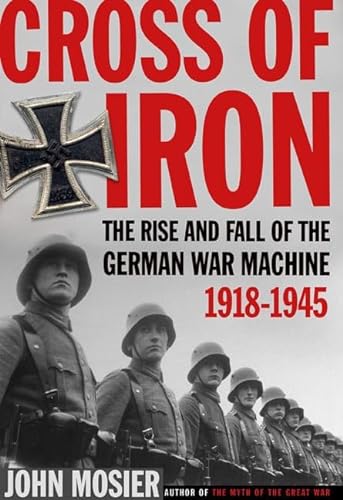
Acclaimed for his revisionist history of the German Army in World War I, John Mosier continues his pioneering work in "Cross of Iron", offering an intimate portrait of the twentieth-century German army from its inception, through World War I and the interwar years, to World War II and its climax in 1945. World War I has inspired a vast mythology of bravery and carnage, told largely by the victors, that has fascinated readers for decades. Many have come to believe that the fast ascendancy of the Allied army, matched by the failure of a German army shackled by its rigidity, led to the war's outcome. Mosier demystifies the strategic and tactical realities to explain that it was Germany's military culture that provided it with the advantage in the first war. Likewise, "Cross of Iron" offers stunning revelations regarding the weapons of World War II, forcing a re-evaluation of the reasons behind the French withdrawal, the Russian contribution, and Hitler as military thinker. Mosier lays to rest the notion that the army, as opposed to the SS, fought a clean and traditional war. Finally, he demonstrates how the German war machine succeeded against more powerful Allied armies until, in both wars, it was crushed by U.S. intervention. The result of thirty years of primary research, "Cross of Iron" is a powerful and authoritative reinterpretation of Germany at war.
Die Inhaltsangabe kann sich auf eine andere Ausgabe dieses Titels beziehen.
Über die Autorin bzw. den Autor
A former film critic and member of the Camera d'Or jury at the Cannes Film
Festival, John Mosier is currently a professor of English at Loyola University, New Orleans. His background as a military historian dates from his role in developing an interdisciplinary curriculum for the study of the two world wars in 1969, a program funded by the National Endowment for the Humanities. He is the author of The Blitzkrieg Myth and The Myth of the Great War and lives in Jefferson, Louisiana.
Festival, John Mosier is currently a professor of English at Loyola University, New Orleans. His background as a military historian dates from his role in developing an interdisciplinary curriculum for the study of the two world wars in 1969, a program funded by the National Endowment for the Humanities. He is the author of The Blitzkrieg Myth and The Myth of the Great War and lives in Jefferson, Louisiana.
Auszug. © Genehmigter Nachdruck. Alle Rechte vorbehalten.
Introduction: Truth and Error
The truth must be repeated over and over again; because error is repeatedly preached among us, and not only by individuals, but by the masses. In periodicals and cyclopedias, in schools and universities--everywhere, in fact, error prevails, and is quite easy in the feeling that it has a decided majority on its side. Often, too, people teach truth and error together, and stick to the latter.
Goethe1
During the First World War, the German army was astonishingly successful. British and French gains of territory were generally measured in meters, German gains in kilometers. As late as spring 1918, the Germans broke through the British and French lines on the Western Front, driving a series of wedges between the British and French forces and coming to within seventy kilometers of the heart of Paris. These achievements are all the more impressive because German losses were substantially fewer than those of the Allies.
In writing about the First World War, Winston Churchill observed that although the Allies did poorly on the battlefield, their propaganda was remarkably successful in covering up their losses of men and territory and in spinning every incident into a seamless account of triumph, an observation also made by British prime minister David Lloyd George in his memoirs.2 For the first three years of the war, the Allies rationalized their lack of progress by claiming that German victories came at a heavy price: German casualties were much higher than Allied ones. As that assertion slowly eroded in the face of investigations made by the French government, the numbers shifted: casualties were roughly equal.
After the armistice, the last claim, aided considerably by a pacifist campaign against war, became an established fact: the war on the Western Front had been an inconclusive, bloody stalemate. The Allies were finally victorious in the fall of 1918, the legend went, because the British beat the Germans on the battlefield, while, back at home, Germany was driven to the brink of surrender by the success of the blockade. This, too, was a largely British triumph, and although London had allies, it was the British who beat the Germans and forced them to surrender.
Like all great legends, the one about the Great War gave comfort to the survivors, nurturing their illusions. It justified the behavior of the governments concerned, and, by demonizing the Germans, it insulated their postwar treatment against a small but growing chorus of critics. Morally, ethically, philosophically, Adolf Hitler seemed the proof that his nation's detractors had been right. The case was closed.
After June 1940, however, these legends abruptly came back to haunt Germany's foes. If the Allies had indeed been victorious in 1918, why had they been beaten so quickly in 1940? One legend thus demanded another, and in the aftermath there was no shortage of ingenious explanations of Hitler's takeover of western Europe. Nobody, then or now, seemed much concerned about the philosophical implications of the rationalizations. But each story, each explanation, no matter how artful or reasonable, came down to the same premise: it empowered Hitler and enfeebled his enemies.
The first step in understanding the rise and fall of the German military, then, is a difficult one. It requires us to discard the seductive myths of the First World War and replace them with a more complex reality in which the Germans are seen to be enormously successful on the battlefield. They were better in 1940 because they had been better in 1914.
Although this idea is hard for many historians to accept, the facts have always been there, the most significant one being the casualty exchange ratio. During the war, André Maginot and Abel Ferry analyzed the casualty figures and came to the conclusion that the Allies were not winning the war of attrition, that French and British soldiers were not dying in fewer numbers than their German adversaries; a decade later, Churchill studied the final reports of the combatants and came to a more drastic conclusion.3 Recently, Niall Ferguson and I, working independently of each other, have established that the ratio of German soldiers killed to Allied soldiers killed approached 3:1 and was certainly 2:1.4
So the first question this book answers is this: Why were the Germans so successful?
Their triumphs were not a function of better equipment, novel concepts, brilliant senior commanders, or the feebleness of the enemy soldiery. When I began studying the German military and the world wars in 1969, I accepted the traditional paradigm and taught it to my students. Germany's achievement was a resounding tale of great captains like Erwin Rommel and Heinz Guderian, marvelous technological innovations (jet planes and guided missiles), and startling developments like the blitzkrieg. The Third Reich lost mostly because it was finally crushed on the battlefield by the Soviet Union, which not only bore the brunt of the fighting but was primarily responsible for the victory. There were two other factors as well: the combined Anglo-American air and land offensives, which stretched the Wehrmacht past the limits of endurance, and the fact that the leader of Germany was a madman whose decisions fatally crippled the machine.
Like the British legends of the Great War, very little in these standard accounts is true. The Wehrmacht's superiority in combat was not a function of better equipment. As chapters 4 and 5 make clear, German matériel was mostly inferior to that of its adversaries. Nor, as I explain in chapter 11, was the country ever able to produce enough supplies. Canada probably produced more trucks than Germany did.
Nor were the victory years of 1939-41 the result of some radically new concept of warfare. The blitzkrieg is such a wonderful notion that it is not likely to die, even though it hardly existed and certainly does not characterize the German army of 1939-40.5 In the eighteenth century, scientists attempted to explain the process of combustion by arguing that flammable materials all contained a substance that made them burn. This substance, which was odorless, colorless, and otherwise not amenable to detection, was called phlogiston. Blitzkrieg is the phlogiston of modern military history.
But legends have provenance not just because they are remarkable stories. They also endure because they provide us with easy answers to basic questions. The great advantage of the old story of the German army was that it offered clear answers to two implicit questions of some importance. On the one hand, it explained why the Wehrmacht was so good: great leadership, impressive weaponry, startling new tactics.
In strictly military terms, the truth is both simpler and less satisfying. The superiority of the Wehrmacht on the battlefield derives almost exclusively from intangibles such as leadership, doctrine, and institutional memory.
Superior leadership is difficult to measure. As I explain in chapters 1 and 2, however, we can quantify three significant factors that have a distinct impact on leadership. Historically, German officers existed in greater numbers and were much better educated than their counterparts in other nations. The selection process after 1918 ensured a high level of competence in the officer corps that would direct the military in the next war. The weakness of this process was that it yielded a group of able tacticians but sacrificed the traditional diversity of the German officer corps. The new leaders were great captains but lousy generals, one reason why Hitler found them easy to manipulate.
The other reason for German success is that the military built on its achievements in the Great War. In chapters 1 and 2, I show...
The truth must be repeated over and over again; because error is repeatedly preached among us, and not only by individuals, but by the masses. In periodicals and cyclopedias, in schools and universities--everywhere, in fact, error prevails, and is quite easy in the feeling that it has a decided majority on its side. Often, too, people teach truth and error together, and stick to the latter.
Goethe1
During the First World War, the German army was astonishingly successful. British and French gains of territory were generally measured in meters, German gains in kilometers. As late as spring 1918, the Germans broke through the British and French lines on the Western Front, driving a series of wedges between the British and French forces and coming to within seventy kilometers of the heart of Paris. These achievements are all the more impressive because German losses were substantially fewer than those of the Allies.
In writing about the First World War, Winston Churchill observed that although the Allies did poorly on the battlefield, their propaganda was remarkably successful in covering up their losses of men and territory and in spinning every incident into a seamless account of triumph, an observation also made by British prime minister David Lloyd George in his memoirs.2 For the first three years of the war, the Allies rationalized their lack of progress by claiming that German victories came at a heavy price: German casualties were much higher than Allied ones. As that assertion slowly eroded in the face of investigations made by the French government, the numbers shifted: casualties were roughly equal.
After the armistice, the last claim, aided considerably by a pacifist campaign against war, became an established fact: the war on the Western Front had been an inconclusive, bloody stalemate. The Allies were finally victorious in the fall of 1918, the legend went, because the British beat the Germans on the battlefield, while, back at home, Germany was driven to the brink of surrender by the success of the blockade. This, too, was a largely British triumph, and although London had allies, it was the British who beat the Germans and forced them to surrender.
Like all great legends, the one about the Great War gave comfort to the survivors, nurturing their illusions. It justified the behavior of the governments concerned, and, by demonizing the Germans, it insulated their postwar treatment against a small but growing chorus of critics. Morally, ethically, philosophically, Adolf Hitler seemed the proof that his nation's detractors had been right. The case was closed.
After June 1940, however, these legends abruptly came back to haunt Germany's foes. If the Allies had indeed been victorious in 1918, why had they been beaten so quickly in 1940? One legend thus demanded another, and in the aftermath there was no shortage of ingenious explanations of Hitler's takeover of western Europe. Nobody, then or now, seemed much concerned about the philosophical implications of the rationalizations. But each story, each explanation, no matter how artful or reasonable, came down to the same premise: it empowered Hitler and enfeebled his enemies.
The first step in understanding the rise and fall of the German military, then, is a difficult one. It requires us to discard the seductive myths of the First World War and replace them with a more complex reality in which the Germans are seen to be enormously successful on the battlefield. They were better in 1940 because they had been better in 1914.
Although this idea is hard for many historians to accept, the facts have always been there, the most significant one being the casualty exchange ratio. During the war, André Maginot and Abel Ferry analyzed the casualty figures and came to the conclusion that the Allies were not winning the war of attrition, that French and British soldiers were not dying in fewer numbers than their German adversaries; a decade later, Churchill studied the final reports of the combatants and came to a more drastic conclusion.3 Recently, Niall Ferguson and I, working independently of each other, have established that the ratio of German soldiers killed to Allied soldiers killed approached 3:1 and was certainly 2:1.4
So the first question this book answers is this: Why were the Germans so successful?
Their triumphs were not a function of better equipment, novel concepts, brilliant senior commanders, or the feebleness of the enemy soldiery. When I began studying the German military and the world wars in 1969, I accepted the traditional paradigm and taught it to my students. Germany's achievement was a resounding tale of great captains like Erwin Rommel and Heinz Guderian, marvelous technological innovations (jet planes and guided missiles), and startling developments like the blitzkrieg. The Third Reich lost mostly because it was finally crushed on the battlefield by the Soviet Union, which not only bore the brunt of the fighting but was primarily responsible for the victory. There were two other factors as well: the combined Anglo-American air and land offensives, which stretched the Wehrmacht past the limits of endurance, and the fact that the leader of Germany was a madman whose decisions fatally crippled the machine.
Like the British legends of the Great War, very little in these standard accounts is true. The Wehrmacht's superiority in combat was not a function of better equipment. As chapters 4 and 5 make clear, German matériel was mostly inferior to that of its adversaries. Nor, as I explain in chapter 11, was the country ever able to produce enough supplies. Canada probably produced more trucks than Germany did.
Nor were the victory years of 1939-41 the result of some radically new concept of warfare. The blitzkrieg is such a wonderful notion that it is not likely to die, even though it hardly existed and certainly does not characterize the German army of 1939-40.5 In the eighteenth century, scientists attempted to explain the process of combustion by arguing that flammable materials all contained a substance that made them burn. This substance, which was odorless, colorless, and otherwise not amenable to detection, was called phlogiston. Blitzkrieg is the phlogiston of modern military history.
But legends have provenance not just because they are remarkable stories. They also endure because they provide us with easy answers to basic questions. The great advantage of the old story of the German army was that it offered clear answers to two implicit questions of some importance. On the one hand, it explained why the Wehrmacht was so good: great leadership, impressive weaponry, startling new tactics.
In strictly military terms, the truth is both simpler and less satisfying. The superiority of the Wehrmacht on the battlefield derives almost exclusively from intangibles such as leadership, doctrine, and institutional memory.
Superior leadership is difficult to measure. As I explain in chapters 1 and 2, however, we can quantify three significant factors that have a distinct impact on leadership. Historically, German officers existed in greater numbers and were much better educated than their counterparts in other nations. The selection process after 1918 ensured a high level of competence in the officer corps that would direct the military in the next war. The weakness of this process was that it yielded a group of able tacticians but sacrificed the traditional diversity of the German officer corps. The new leaders were great captains but lousy generals, one reason why Hitler found them easy to manipulate.
The other reason for German success is that the military built on its achievements in the Great War. In chapters 1 and 2, I show...
„Über diesen Titel“ kann sich auf eine andere Ausgabe dieses Titels beziehen.
Suchergebnisse für Cross of Iron

Beispielbild für diese ISBN
Cross of Iron: The Rise and Fall of the German War Machine, 1918-1945
Anbieter: World of Books (was SecondSale), Montgomery, IL, USA
Verkäuferbewertung 5 von 5 Sternen

Zustand: Good. Item in good condition. Textbooks may not include supplemental items i.e. CDs, access codes etc. Bestandsnummer des Verkäufers 00109002990
Gebraucht kaufen
EUR 5,39
Versand gratis
Versand innerhalb von USA
Versand innerhalb von USA
Anzahl: 1 verfügbar
Beispielbild für diese ISBN
Cross of Iron: The Rise and Fall of the German War Machine, 1918-1945
Anbieter: ThriftBooks-Phoenix, Phoenix, AZ, USA
Verkäuferbewertung 5 von 5 Sternen
Hardcover. Zustand: Very Good. No Jacket. May have limited writing in cover pages. Pages are unmarked. ~ ThriftBooks: Read More, Spend Less. Bestandsnummer des Verkäufers G0805075771I4N00
Gebraucht kaufen
EUR 6,01
Versand gratis
Versand innerhalb von USA
Versand innerhalb von USA
Anzahl: 1 verfügbar
Beispielbild für diese ISBN
Cross of Iron: The Rise and Fall of the German War Machine, 1918-1945
Anbieter: ThriftBooks-Reno, Reno, NV, USA
Verkäuferbewertung 5 von 5 Sternen
Hardcover. Zustand: Very Good. No Jacket. May have limited writing in cover pages. Pages are unmarked. ~ ThriftBooks: Read More, Spend Less. Bestandsnummer des Verkäufers G0805075771I4N00
Gebraucht kaufen
EUR 6,01
Versand gratis
Versand innerhalb von USA
Versand innerhalb von USA
Anzahl: 1 verfügbar
Beispielbild für diese ISBN
Cross of Iron: The Rise and Fall of the German War Machine, 1918-1945
Anbieter: ThriftBooks-Dallas, Dallas, TX, USA
Verkäuferbewertung 5 von 5 Sternen
Hardcover. Zustand: Good. No Jacket. Former library book; Pages can have notes/highlighting. Spine may show signs of wear. ~ ThriftBooks: Read More, Spend Less. Bestandsnummer des Verkäufers G0805075771I3N10
Gebraucht kaufen
EUR 6,01
Versand gratis
Versand innerhalb von USA
Versand innerhalb von USA
Anzahl: 1 verfügbar
Beispielbild für diese ISBN
Cross of Iron: The Rise and Fall of the German War Machine, 1918-1945
Anbieter: ThriftBooks-Dallas, Dallas, TX, USA
Verkäuferbewertung 5 von 5 Sternen
Hardcover. Zustand: Very Good. No Jacket. May have limited writing in cover pages. Pages are unmarked. ~ ThriftBooks: Read More, Spend Less. Bestandsnummer des Verkäufers G0805075771I4N00
Gebraucht kaufen
EUR 6,01
Versand gratis
Versand innerhalb von USA
Versand innerhalb von USA
Anzahl: 1 verfügbar
Beispielbild für diese ISBN
Cross of Iron: The Rise and Fall of the German War Machine, 1918-1945
Anbieter: ThriftBooks-Atlanta, AUSTELL, GA, USA
Verkäuferbewertung 5 von 5 Sternen
Hardcover. Zustand: Very Good. No Jacket. May have limited writing in cover pages. Pages are unmarked. ~ ThriftBooks: Read More, Spend Less. Bestandsnummer des Verkäufers G0805075771I4N00
Gebraucht kaufen
EUR 6,01
Versand gratis
Versand innerhalb von USA
Versand innerhalb von USA
Anzahl: 1 verfügbar
Beispielbild für diese ISBN
Cross of Iron: The Rise and Fall of the German War Machine, 1918-1945
Anbieter: ThriftBooks-Dallas, Dallas, TX, USA
Verkäuferbewertung 5 von 5 Sternen
Hardcover. Zustand: Fair. No Jacket. Former library book; Readable copy. Pages may have considerable notes/highlighting. ~ ThriftBooks: Read More, Spend Less. Bestandsnummer des Verkäufers G0805075771I5N10
Gebraucht kaufen
EUR 6,01
Versand gratis
Versand innerhalb von USA
Versand innerhalb von USA
Anzahl: 1 verfügbar
Beispielbild für diese ISBN
Cross of Iron : The Rise and Fall of the German War Machine, 1918-1945
Anbieter: Better World Books: West, Reno, NV, USA
Verkäuferbewertung 5 von 5 Sternen
Zustand: Very Good. Former library copy. Pages intact with possible writing/highlighting. Binding strong with minor wear. Dust jackets/supplements may not be included. Includes library markings. Stock photo provided. Product includes identifying sticker. Better World Books: Buy Books. Do Good. Bestandsnummer des Verkäufers GRP87416571
Gebraucht kaufen
EUR 7,04
Versand gratis
Versand innerhalb von USA
Versand innerhalb von USA
Anzahl: 1 verfügbar
Beispielbild für diese ISBN
Cross of Iron : The Rise and Fall of the German War Machine, 1918-1945
Anbieter: Better World Books: West, Reno, NV, USA
Verkäuferbewertung 5 von 5 Sternen
Zustand: Fine. Used book that is in almost brand-new condition. May contain a remainder mark. Better World Books: Buy Books. Do Good. Bestandsnummer des Verkäufers 13662096-75
Gebraucht kaufen
EUR 7,04
Versand gratis
Versand innerhalb von USA
Versand innerhalb von USA
Anzahl: 1 verfügbar
Beispielbild für diese ISBN
Cross of Iron : The Rise and Fall of the German War Machine, 1918-1945
Anbieter: Better World Books, Mishawaka, IN, USA
Verkäuferbewertung 5 von 5 Sternen
Zustand: Good. Former library copy. Pages intact with minimal writing/highlighting. The binding may be loose and creased. Dust jackets/supplements are not included. Includes library markings. Stock photo provided. Product includes identifying sticker. Better World Books: Buy Books. Do Good. Bestandsnummer des Verkäufers GRP82973149
Gebraucht kaufen
EUR 7,04
Versand gratis
Versand innerhalb von USA
Versand innerhalb von USA
Anzahl: 1 verfügbar