
Verwandte Artikel zu Spoiling for a Fight: The Rise of Eliot Spitzer
Inhaltsangabe
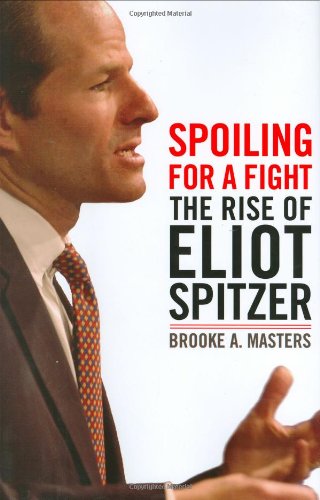
The rise to power of Eliot Spitzer, the scourge of Wall Street and one of America's most controversial politicians, by the reporter who knows his crusade best
Few politicians have burst onto the American scene with as much impact as Eliot Spitzer. He has exposed wrongdoing by stock analysts, mutual fund managers, and insurance brokers, and he has investigated corporations that have misled or defrauded investors and consumers. When federal regulators have fallen down on their responsibilities, Spitzer has stepped in to protect ordinary, middle-class Americans. His actions as the New York State attorney general have made companies change the way they do business, which in turn affects every American with a retirement plan, an insurance policy, or a prescription to fill.
No reporter has had better or more complete behind-the-scenes access to Spitzer's operation--and to the strategies that have underpinned his crusade against these powerful forces in the American economy--than Brooke A. Masters of The Washington Post. In Spoiling for a Fight, she presents a portrait that is at once dramatic and revealing, raising the question of whether Spitzer's way of conducting government business is good or bad for America.
Combining passion and zeal with a savvy understanding of the press, Spitzer has brought down some of the biggest names in American finance and now has his sights set on higher office. This revelatory book shows Americans how Spitzer has transformed their lives and what his crusade could mean for the future.
Few politicians have burst onto the American scene with as much impact as Eliot Spitzer. He has exposed wrongdoing by stock analysts, mutual fund managers, and insurance brokers, and he has investigated corporations that have misled or defrauded investors and consumers. When federal regulators have fallen down on their responsibilities, Spitzer has stepped in to protect ordinary, middle-class Americans. His actions as the New York State attorney general have made companies change the way they do business, which in turn affects every American with a retirement plan, an insurance policy, or a prescription to fill.
No reporter has had better or more complete behind-the-scenes access to Spitzer's operation--and to the strategies that have underpinned his crusade against these powerful forces in the American economy--than Brooke A. Masters of The Washington Post. In Spoiling for a Fight, she presents a portrait that is at once dramatic and revealing, raising the question of whether Spitzer's way of conducting government business is good or bad for America.
Combining passion and zeal with a savvy understanding of the press, Spitzer has brought down some of the biggest names in American finance and now has his sights set on higher office. This revelatory book shows Americans how Spitzer has transformed their lives and what his crusade could mean for the future.
Die Inhaltsangabe kann sich auf eine andere Ausgabe dieses Titels beziehen.
Über die Autorin bzw. den Autor
Brooke A. Masters is a staff writer for The Washington Post, based in New York, where she writes about financial services and white-collar crime. She has reported on the trials of Martha Stewart, Frank Quattrone, and Bernard Ebbers. In her sixteen years at the Post, she has also covered criminal justice, education, and politics. A graduate of Harvard University and the London School of Economics, she lives in Mamaroneck, New York, with her husband and two children.
Rezensionen
Masters's examination of the New York State attorney general's seven years in office is timely, given Spitzer's prosecutions of powerful financial industries and his candidacy in the Democratic gubernatorial primary. Even if Spitzer fails in his bid for the governorship, the book is worthy of study because it clearly explains the complicated, unsavory practices of insurance companies, mutual funds, Wall Street brokerages and the New York Stock Exchange. The author also skillfully places Spitzer in the context of previous reformers within government, especially Theodore Roosevelt, Louis Brandeis and Rudy Giuliani. She shows, too, how philosophical differences between state and federal regulators over the past 100 years set the stage for the crusading Spitzer. Masters, a New York–based reporter for the Washington Post, holds degrees from Harvard University and the London School of Economics that prepared her well for dissecting the arcane, corrupt industry routines usually unknown to consumers. Though Masters received cooperation from the 46-year-old Spitzer and many of his aides, this warts-and-all book demonstrates how the mostly sincere, mostly decent Spitzer can be hurt by his overweening ego and quick temper. (July)
Copyright © Reed Business Information, a division of Reed Elsevier Inc. All rights reserved.
If you're not a political junkie, a New Yorker or a financial- services executive, the name Eliot Spitzer may not ring a bell. In the next few years, I'll wager, you'll be hearing it often. Spitzer is the New York attorney general who -- much like Rudolph Giuliani in the late 1980s -- is becoming a national figure by spearheading a series of high-profile investigations into the brokerage, mutual-fund and other financial industries. As the presumptive Democratic nominee in New York's gubernatorial race, he should move up the Hudson River to Albany in January, at which point his name will be thrown into far bigger hats. Obama-Spitzer 2012, anyone?
As Brooke A. Masters ably demonstrates in her new biography, Spoiling for a Fight, what makes Spitzer special is that he appears to be that rare political animal: a mainstream liberal Democrat with an actual, functioning backbone. As attorney general, he has been a one-man wrecking crew, taking on and besting everyone from Merrill Lynch to the somnolent Securities and Exchange Commission, which sought gradual change over coffee at Starbucks with Wall Streeters while Spitzer took the Merrills of the world to court. Reading this book, one comes to believe that he is the real deal: honest, fearless and very, very smart. While Spitzer has yet to perfect the role of glad-handing Gotham pol, there is nevertheless an unmistakable whiff of Clinton or Kennedy in his story.
Masters, who covers white-collar crime for The Washington Post, does a fine job here, briskly tracing Spitzer's rise to public office, parsing his headline cases and, to her credit, shining the spotlight on the individual lawyers in the attorney general's office who actually initiated many of the investigations that form the foundation of the Spitzer legend. The book is well-researched, even-handed and thoughtful; Masters will no doubt become cable television's leading Spitzerologist for years to come. About the only mark against Spoiling for a Fight is that Masters never truly finds an authorial voice; thorough as her research is, the book reads like a 300-page newspaper article.
Masters is especially adept at placing Spitzer in a historical, political and legal context, drawing parallels, for instance, between his career and that of another progressive New York attorney general, Theodore Roosevelt. (Don't laugh; she makes the case.) Spitzer, who granted Masters several interviews, goes to great lengths to emphasize (convincingly) that he is not some rock-throwing, anti-capitalist radical; like Roosevelt, he embraces the free-market system, working inside it to correct deficiencies.
The fact that a New York official pursued the cases that Washington should have -- it was Spitzer, for instance, who felled Merrill's two-faced Internet analyst Henry Blodget for his conflicts of interest -- was as much a product of the SEC's coddling of Wall Street as of the attorney general's own aggressiveness. (An SEC friend, speaking at a Spitzer roast, read a mock telegram "from Eliot to the Vatican. 'Dear Pontiff: I have some comments on recent papal edicts. . . . As I read the Stamp Act of 1785, I have the authority to tax and regulate all items passing through New York, which we believe includes Catholicism.' ") Spitzer justifies his incursions onto federal turf by citing the Bush administration's efforts to palm off the provision of legal and other services onto the states. Washington's retreat left a gaping hole, Spitzer contends, which states -- to the dismay of corporate chieftains -- had a duty to fill. Talk about your law of unintended consequences.
Spitzer has been criticized by the usual suspects for over-aggressiveness, publicity-hogging and precedent-stretching -- the kinds of things every chesty attorney general gets accused of. Masters's portrayal of his upbringing undercuts these charges. The son of a wealthy, up-from-the-Lower-East-Side real-estate developer, Spitzer grew up in one of those frighteningly intellectual Upper West Side households (actually, the Riverdale section of the Bronx, which is a de facto Upper West Side colony) where every child must come to the dinner table with a topic for debate and everyone argues about Kant and Kierkegaard while families like mine are watching SportsCenter. If you didn't know the Spitzer family, you'd really need to hate them.
By the time he went to Princeton, Spitzer was already a wonk's wonk, the kind of earnest young heir who spent summers interning for Ralph Nader and working construction and wearing destiny on his arm like a tattoo. He took a star turn at the Manhattan district attorney's office and tried private practice for a few years, but his obvious ambition -- the rare topic Masters refrains from exploring -- propelled him prematurely into the 1994 race for state attorney general. He was roundly thrashed, but his poise and intellect got him noticed. Four years later, thanks in no small part to his family's millions, he won the brass ring.
One anecdote in Spoiling for a Fight particularly epitomizes Spitzer. In the middle of his investigation into duplicitous securities analysts, he accepted an invitation to speak at an Institutional Investor banquet honoring the "all-star" analysts of the year. Spitzer had a fire-breathing speech prepared and resisted an aide's entreaties to tone it down. Instead, he lectured the crowd on how the "star" analysts had let their clients down. "When measured by the performance of their stock recommendations," he said, "only one of this year's fifty-one first-team all-stars . . . ranked first in their sector." The audience actually began streaming to the exits. "I'm not going to sit here and listen to this [expletive]," one snapped.
Like him or loathe him, you can't help but admire a man who can pull off something like that.
Reviewed by Bryan Burrough
Copyright 2006, The Washington Post. All Rights Reserved.
Spitzer, New York's combative attorney general, has made a name for himself prosecuting Wall Street investment bankers and expanding his office into areas traditionally considered federal domain, from civil rights to environmental protection. Washington Post reporter Masters renders a penetrating view of a man who has set his sights on the governorship of New York. Based on interviews with Spitzer, his friends and colleagues, executive targets, regulators, and prosecutors, Masters examines the influences on Spitzer's drive and pugnacity. From a privileged background, Spitzer has been an admirer of progressives from Theodore Roosevelt to Louis Brandeis. Spitzer has taken on the giants of Wall Street, including Merrill Lynch, AIG, and online trading firms, building court cases and making out-of-court settlements to investors. His critics have compared his zeal and political ambition to those of another former prosecutor, Rudolph Guiliani. As Spitzer prepares for his next political move, readers will enjoy this look at a progressive crusader whose passion and sense of moral outrage have led him to take on the lions of Wall Street. Vanessa Bush
Copyright © American Library Association. All rights reserved
Auszug. © Genehmigter Nachdruck. Alle Rechte vorbehalten.
Chapter One
When Markets Need to Be Tamed
Eliot Spitzer had had enough.
It was October 2004. For six months, the hard-charging New York State attorney general and his staff had been following a tip that the huge corporate insurance broker Marsh Inc. was taking secret payments to steer clients to particular insurance companies. And for six months the company's corporate parent, Marsh & McLennan, had been effectively stonewalling, contending that there had been no underhandedness--that Marsh's clients had known about the payments and that the money hadn't affected the recommendations of the firm's brokers. Months of combing through e-mails and company documents had shown just the opposite, and worse. Some Marsh brokers had solicited false bids and told insurance companies what fees to charge so that they could steer business to favored firms. That was price-fixing, which was not only fraudulent behavior but a crime. Several insurance executives involved had already confessed and agreed to plead guilty.
But when Spitzer and his lawyers met with Marsh & McLennan's general counsel, William Rosoff, on October 12, they didn't get the mea culpa they had expected. Instead, they got the brush-off. Rosoff insisted that his company didn't understand what all the fuss was about. It wasn't really clear what had happened. No clients had been hurt by the arrangements. This was just the way things worked. And finally he said dismissively, "You just don't understand the insurance business."
It was time to go public. Spitzer wasn't about to let an insurance broker push him around, even if it was the world's largest. As New York attorney general, Spitzer had spent much of the past six years mounting legal attacks on a variety of wrongs, which in his estimation included everything from Wall Street corruption to President George W. Bush's environmental policies. His balding pate, jutting chin, and pointing finger were ubiquitous on television news shows and in the pages of the country's top newspapers. When he ventured outside his downtown Manhattan office, he couldn't walk two blocks without being stopped by well-wishers who praised him for standing up to Big Business. Tipsters jammed his office phone lines with tales of woe and financial malfeasance. What's more, his investigations got results. Spitzer had faced down all kinds of giant firms, from the investment banks Citigroup and Merrill Lynch to the drug maker GlaxoSmithKline to the Food Emporium supermarket chain. He had exacted reforms and huge penalties: more than $1.5 billion from a dozen Wall Street investment banks for issuing biased research; more than $3.5 billion from mutual funds and brokers for improper short-term trading. And he was still only forty-five years old. All of this made him a rising star in the Democratic Party.
But in the Marsh case, Spitzer wanted to do more. He had decided to send a strong message to corporate America that his investigations were about more than money. From now on, top executives who presided over bad behavior couldn't simply claim they had had no idea what was happening, pay a fine, and expect to walk away unscathed. "We've been trying, through these cases, to make the larger point that some core ethical behavior is necessary," Spitzer reflected. "At some point you have to say, wait a minute, fellows. That's it. It's only when you hold the CEO accountable that you show people that something must change. The question is how to do that."
Dogged lawyers in Spitzer's office had already spent sleepless nights crafting a detailed and dramatic legal complaint that laid out the bid-rigging and contract-steering allegations against Marsh. But there was no evidence that the company's chief executive, Jeffrey Greenberg, had known about or condoned the scheme, which had started before his arrival at the company. Nor was it entirely clear that Greenberg had authorized Rosoff's stiff-arm defense. But even though the attorney general's investigators had never talked to the CEO directly, Spitzer was convinced the problems flowed from the executive suite. The bid-rigging case wasn't his first run-in with Marsh & McLennan. Its Putnam Investments subsidiary had been embroiled in the mutual fund trading scandal that had started the previous year. And its Mercer Consulting arm had paid a settlement as part of Spitzer's high-profile battle with New York Stock Exchange chairman Richard A. Grasso over Grasso's $140 million pay package. Marsh & McLennan "had three main businesses and no apparent controls in any of them. At some point you suspect the laxness is coming from the top. . . . It was at best a completely passive management," remembered David D. Brown IV, the assistant attorney general who spearheaded both the mutual fund and insurance probes for Spitzer. Bringing charges against Greenberg personally would be unfair, Spitzer knew. But there must be something else he could do.
On the morning of October 14, Spitzer gathered with his senior staff in his twenty-fifth-floor office in downtown Manhattan to prepare for that day's press conference about the Marsh case. Television cameras and newspaper reporters were already assembling in a room down the hall, and stock traders were hovering by their televisions, ready to dump their shares of whatever company turned out to be Spitzer's unlucky target. In Spitzer's office, his top deputies clustered beside his desk and peppered their boss with questions, pretending to be reporters. As the mock session broke up, Spitzer made an announcement. "I'm going to refuse to negotiate with this management," he said. Spitzer's lieutenants stared at him in silence.
Spitzer was proposing something unprecedented, at least in the recent annals of white-collar crime. In a free-market economy, boards of directors were supposed to have the freedom to choose company executives without government interference. By announcing that he would not negotiate with the firm's current leadership, Spitzer was imposing a Hobson's choice on Marsh & McLennan's board of directors--they could fire Jeffrey Greenberg or face possible criminal charges against the company. Recent history had shown that it was virtually impossible for a public company to withstand a criminal indictment. Just two years earlier, the accounting giant Arthur Andersen had all but vanished after being charged in federal court with obstruction of justice. And Merrill Lynch's stock had lost about 20 percent of its value in three weeks when Spitzer publicly refused to rule out corporate criminal charges. In the past, some prosecutors had asked for leadership changes as part of a settlement, but they had done it quietly, indirectly--the government might say to company lawyers with a knowing look, "You might find this case easier to settle if you had a different chief executive." No one could remember a case where a prosecutor went public with such a demand. "Are you sure you really want to do that?" asked First Deputy Attorney General Michele Hirshman, Spitzer's number two.
Hirshman and the others knew that Spitzer was already being roasted in the corporate world as a headline-hunting bully with no respect for market forces or due process of law. The Wall Street Journal editorial page, often seen as the voice of the business community's conservative wing, had made him its top enemy, editorializing against him weekly (and sometimes daily) as an ambitious meddler. The Forbes.com website was offering readers a printer-ready Halloween mask of Spitzer. Even some people who supported Spitzer's efforts to uncover fraud and change industries were perturbed by some of his tactics: the constant publicity, the rhetorical attacks on fellow regulators, and a perceived fondness for using the threat of criminal sanctions to pressure individuals and companies into cooperating with his probes. Forcing out Marsh's chief executive would only fan the flames.
To Spitzer, however, unusual times called for unusual measures. The collapse of the 1990s technology bubble had wiped out the college and retirement savings of millions of Americans. He believed that the country's business leaders had lost their moral compass. Some corporate giants, such as Enron and WorldCom, were so riddled with wrongdoing that they had collapsed when the fraud was revealed. Others, including some investment banks and mutual funds, had exploited their customers' trust in the name of higher profits. "How could we live in a society where we have so many smart people at the tops of these institutions and things have gone so terribly wrong?" Spitzer asked. "Have we forgotten our ethics?" Someone had to take action to protect the vulnerable, he believed, if only to restore the country's faith in its financial and political system. "The market does not survive without transparency, fair dealing and fair play," Spitzer explained. "We have persuaded tens of millions of Americans to invest in the market. If those new entrants to the market began to lose faith . . . they could withdraw from the market and put their money someplace else."
Spitzer believed that government officials should look back a century to another period when the country was coping with rapid economic change that created great wealth while impoverishing millions. Back in the 1890s, a small group of visionary but ruthless businessmen profited immensely from rapid industrialization and new economies of scale. Known collectively as the robber barons, titans such as John D. Rockefeller, J. Pierpont Morgan, and Edward H. Harriman built multimillion-dollar conglomerates and drove competition out of entire sectors of the economy. They dominated industry, finance, and commerce and tried to control the political process as well. But their success had a dark side. Factory workers lived and worked in appalling conditions. Poor harvests and rising indebtedness put many rural Americans at risk of losing their homes and livelihoods. Fraudsters abounded in the fledgling financial services sector, tricking innocent people out of ...
„Über diesen Titel“ kann sich auf eine andere Ausgabe dieses Titels beziehen.
Suchergebnisse für Spoiling for a Fight: The Rise of Eliot Spitzer

Beispielbild für diese ISBN
Spoiling for a Fight: The Rise of Eliot Spitzer
Anbieter: World of Books (was SecondSale), Montgomery, IL, USA
Verkäuferbewertung 5 von 5 Sternen

Hardback. Zustand: Good. Compelling, suspenseful, and deeply reported . . . Masters gives a dramatic inside account of the fight between Spitzer and the titans of finance.--Newsday Few politicians have burst onto the American scene with as much impact as Eliot Spitzer. As New York's attorney general, he exposed wrongdoing by stock analysts, mutual fund managers, and insurance brokers, and investigated corporations that have misled or defrauded ordinary investors and consumers. And as the next governor of New York, Spitzer is now a rising star on the national political scene. No reporter has had better or more complete behind-the-scenes access to Spitzer than Brooke A. Masters, who covered him for four years at The Washington Post. Spoiling for a Fight is her dramatic and revealing portrait of the politician who has brought down some of the biggest names in American finance and has set his sights on higher office. And in a new afterword, she chronicles his ascension to New York's highest office and assesses his future political prospects. Bestandsnummer des Verkäufers 00095263155
Gebraucht kaufen
EUR 5,18
Versand gratis
Versand innerhalb von USA
Versand innerhalb von USA
Anzahl: 1 verfügbar
Beispielbild für diese ISBN
Spoiling for a Fight: The Rise of Eliot Spitzer
Anbieter: World of Books (was SecondSale), Montgomery, IL, USA
Verkäuferbewertung 5 von 5 Sternen
Hardback. Zustand: Very Good. Compelling, suspenseful, and deeply reported . . . Masters gives a dramatic inside account of the fight between Spitzer and the titans of finance.--Newsday Few politicians have burst onto the American scene with as much impact as Eliot Spitzer. As New York's attorney general, he exposed wrongdoing by stock analysts, mutual fund managers, and insurance brokers, and investigated corporations that have misled or defrauded ordinary investors and consumers. And as the next governor of New York, Spitzer is now a rising star on the national political scene. No reporter has had better or more complete behind-the-scenes access to Spitzer than Brooke A. Masters, who covered him for four years at The Washington Post. Spoiling for a Fight is her dramatic and revealing portrait of the politician who has brought down some of the biggest names in American finance and has set his sights on higher office. And in a new afterword, she chronicles his ascension to New York's highest office and assesses his future political prospects. Bestandsnummer des Verkäufers 00095336129
Gebraucht kaufen
EUR 5,18
Versand gratis
Versand innerhalb von USA
Versand innerhalb von USA
Anzahl: 1 verfügbar
Beispielbild für diese ISBN
Spoiling for a Fight: The Rise of Eliot Spitzer
Verlag:
Times Books (edition First Edition), 2006
ISBN 10: 0805079610
ISBN 13: 9780805079616
Gebraucht
Hardcover
Erstausgabe
Anbieter: BooksRun, Philadelphia, PA, USA
Verkäuferbewertung 5 von 5 Sternen
Hardcover. Zustand: Fair. First Edition. With dust jacket. The item might be beaten up but readable. May contain markings or highlighting, as well as stains, bent corners, or any other major defect, but the text is not obscured in any way. Bestandsnummer des Verkäufers 0805079610-7-1-29
Gebraucht kaufen
EUR 5,19
Versand gratis
Versand innerhalb von USA
Versand innerhalb von USA
Anzahl: 1 verfügbar
Beispielbild für diese ISBN
Spoiling for a Fight: The Rise of Eliot Spitzer
Verlag:
Times Books (edition First Edition), 2006
ISBN 10: 0805079610
ISBN 13: 9780805079616
Gebraucht
Hardcover
Erstausgabe
Anbieter: BooksRun, Philadelphia, PA, USA
Verkäuferbewertung 5 von 5 Sternen
Hardcover. Zustand: Very Good. First Edition. With dust jacket. It's a well-cared-for item that has seen limited use. The item may show minor signs of wear. All the text is legible, with all pages included. It may have slight markings and/or highlighting. Bestandsnummer des Verkäufers 0805079610-11-1-29
Gebraucht kaufen
EUR 5,19
Versand gratis
Versand innerhalb von USA
Versand innerhalb von USA
Anzahl: 1 verfügbar
Beispielbild für diese ISBN
Spoiling for a Fight: The Rise of Eliot Spitzer
Anbieter: Wonder Book, Frederick, MD, USA
Verkäuferbewertung 5 von 5 Sternen
Zustand: Very Good. Very Good condition. Good dust jacket. A copy that may have a few cosmetic defects. May also contain light spine creasing or a few markings such as an owner's name, short gifter's inscription or light stamp. Bestandsnummer des Verkäufers H21C-04166
Gebraucht kaufen
EUR 6,45
Versand gratis
Versand innerhalb von USA
Versand innerhalb von USA
Anzahl: 2 verfügbar
Beispielbild für diese ISBN
Spoiling for a Fight: The Rise of Eliot Spitzer
Anbieter: Wonder Book, Frederick, MD, USA
Verkäuferbewertung 5 von 5 Sternen
Zustand: As New. Like New condition. Like New dust jacket. With remainder mark. A near perfect copy that may have very minor cosmetic defects. Bestandsnummer des Verkäufers M14C-00613
Gebraucht kaufen
EUR 6,45
Versand gratis
Versand innerhalb von USA
Versand innerhalb von USA
Anzahl: 1 verfügbar
Beispielbild für diese ISBN
Spoiling for a Fight: The Rise of Eliot Spitzer
Anbieter: ThriftBooks-Dallas, Dallas, TX, USA
Verkäuferbewertung 5 von 5 Sternen
Hardcover. Zustand: Very Good. No Jacket. May have limited writing in cover pages. Pages are unmarked. ~ ThriftBooks: Read More, Spend Less. Bestandsnummer des Verkäufers G0805079610I4N00
Gebraucht kaufen
EUR 6,83
Versand gratis
Versand innerhalb von USA
Versand innerhalb von USA
Anzahl: 1 verfügbar
Beispielbild für diese ISBN
Spoiling for a Fight: The Rise of Eliot Spitzer
Anbieter: World of Books Inc, Montgomery, IL, USA
Verkäuferbewertung 4 von 5 Sternen

Hardback. Zustand: Good. Compelling, suspenseful, and deeply reported . . . Masters gives a dramatic inside account of the fight between Spitzer and the titans of finance.--Newsday Few politicians have burst onto the American scene with as much impact as Eliot Spitzer. As New York's attorney general, he exposed wrongdoing by stock analysts, mutual fund managers, and insurance brokers, and investigated corporations that have misled or defrauded ordinary investors and consumers. And as the next governor of New York, Spitzer is now a rising star on the national political scene. No reporter has had better or more complete behind-the-scenes access to Spitzer than Brooke A. Masters, who covered him for four years at The Washington Post. Spoiling for a Fight is her dramatic and revealing portrait of the politician who has brought down some of the biggest names in American finance and has set his sights on higher office. And in a new afterword, she chronicles his ascension to New York's highest office and assesses his future political prospects. Bestandsnummer des Verkäufers CIN0805079610G
Gebraucht kaufen
EUR 7,03
Versand gratis
Versand innerhalb von USA
Versand innerhalb von USA
Anzahl: 1 verfügbar
Beispielbild für diese ISBN
Spoiling for a Fight: The Rise of Eliot Spitzer
Anbieter: World of Books Inc, Montgomery, IL, USA
Verkäuferbewertung 4 von 5 Sternen
Hardback. Zustand: Very Good. Compelling, suspenseful, and deeply reported . . . Masters gives a dramatic inside account of the fight between Spitzer and the titans of finance.--Newsday Few politicians have burst onto the American scene with as much impact as Eliot Spitzer. As New York's attorney general, he exposed wrongdoing by stock analysts, mutual fund managers, and insurance brokers, and investigated corporations that have misled or defrauded ordinary investors and consumers. And as the next governor of New York, Spitzer is now a rising star on the national political scene. No reporter has had better or more complete behind-the-scenes access to Spitzer than Brooke A. Masters, who covered him for four years at The Washington Post. Spoiling for a Fight is her dramatic and revealing portrait of the politician who has brought down some of the biggest names in American finance and has set his sights on higher office. And in a new afterword, she chronicles his ascension to New York's highest office and assesses his future political prospects. Bestandsnummer des Verkäufers CIN0805079610VG
Gebraucht kaufen
EUR 7,03
Versand gratis
Versand innerhalb von USA
Versand innerhalb von USA
Anzahl: 1 verfügbar
Beispielbild für diese ISBN
Spoiling for a Fight: The Rise of Eliot Spitzer
Anbieter: HPB-Ruby, Dallas, TX, USA
Verkäuferbewertung 5 von 5 Sternen
Hardcover. Zustand: Good. Connecting readers with great books since 1972! Used books may not include companion materials, and may have some shelf wear or limited writing. We ship orders daily and Customer Service is our top priority! Bestandsnummer des Verkäufers S_288779245
Gebraucht kaufen
EUR 4,61
EUR 3,36 Versand
Versand innerhalb von USA
Versand innerhalb von USA
Anzahl: 1 verfügbar