
Verwandte Artikel zu Partitions
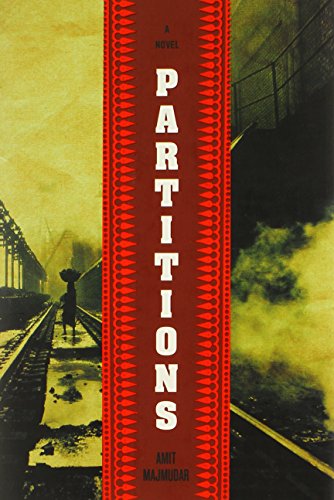
Inhaltsangabe
A stunning first novel, set during the violent 1947 partition of India, about uprooted children and their journeys to safety
As India is rent into two nations, communal violence breaks out on both sides of the new border and streaming hordes of refugees flee from blood and chaos.
At an overrun train station, Shankar and Keshav, twin Hindu boys, lose sight of their mother and join the human mass to go in search of her. A young Sikh girl, Simran Kaur, has run away from her father, who would rather poison his daughter than see her defiled. And Ibrahim Masud, an elderly Muslim doctor driven from the town of his birth, limps toward the new Muslim state of Pakistan, rediscovering on the way his role as a healer. As the displaced face a variety of horrors, this unlikely quartet comes together, defying every rule of self-preservation to forge a future of hope.
A dramatic, luminous story of families and nations broken and formed, Partitions introduces an extraordinary novelist who writes with the force and lyricism of poetry.
Die Inhaltsangabe kann sich auf eine andere Ausgabe dieses Titels beziehen.
Über die Autorin bzw. den Autor
Amit Majmudar is a diagnostic nuclear radiologist and an award-winning poet whose work has been featured in The Best American Poetry 2007. His first poetry collection, 0°, 0°, was published in 2009, and a novella, Azazel, was serialized in The Kenyon Review. Partitions is his first full-length novel. He lives in Columbus, Ohio.
Auszug. © Genehmigter Nachdruck. Alle Rechte vorbehalten.
Connections
I know only three people in this infinitude. Two boys: one in a dark blue kurta with tiny golden beads embroidered around the collar, the other in a bright green one with silver beads, matching. Keshav is wearing the blue, Shankar the green. These are their favorite colors and these their best, most precious clothes, worn only twice, both times to weddings in Lahore.
I know these boys and the woman whose hands they are holding. A few hours ago, when the stray dogs took up a brittle, pulse-steady barking throughout the city, she gave the boys the choice, the trunk thrown open on the cot. The clothes they wore were the only clothes they could take. They didn't hesitate, and she didn't protest, simply tugged off their shirts and dropped the silk over their still-raised arms. It didn't occur to her that they might attract attention, that people might think she carries more than just a little barrel of hundred-rupee notes stuffed in her bodice. It doesn't matter. The dust of the journey will make sure the clothes don't attract attention for long. Besides, she wanted to give them this choice, this exercise of will. A small defiance to tide them over during the coming helplessness.
I know that cot, too, where the trunk still lies open. Its canvas rectangle. Two shawls and three blankets, and still I shivered on it.
There is no way she can manage even a small trunk. What with both boys to hold, she will need her hands free. All she carries are the rupees. Not even the lingam from the temple in the bedroom corner. They have to leave. This is Pakistan now. The land meant to be pak, pure. Pure of them. She knows the train is going to Delhi, and Delhi is better than where they are, but she has no one in Delhi or anywhere else. That is part of why I love her, that quality of being found, of having no origin. Portuguese missionaries had discovered her sleeping naked in a furrow, her body strangely scarred, no language on her tongue. Neither Muslim nor Hindu nor Sikh: some fourth natural creature sprung from the soil. All she had was me. So young, and still their teachings never really took. She swept the church and prayed where she was pointed. She was fifteen years old when I strolled past her and stopped and, trembling, put on my spectacles. The immense church bell was swinging over our heads. I found her, she found me. I had been alone eleven years by then, a widower, on good terms with my family and my late wife's, prosperous in my father's practice (I hadn't even gotten a new nameplate; his name was still over the office door). All until my second, shameful marriage to a girl without family, without caste.
That woman is my wife, and those boys are my twins. Was my wife; were my twins. I am no longer with them. They lost me when the boys were a year and a half. But if I had a throat, and breath to push through that throat, and vocal cords to pinch close and shirr, I know what I would say.
I am here.
I am here because I am everywhere. I say I know only three people on the platform and in the trains, but in a sense I know all of them. In a passenger compartment, a woman is peeling an orange into a handkerchief. All this desperation around her, but she and hers are safely aboard, and tiny drops of juice spray as the rind rips off white, tenaciously fibrous. Through the smell of urine and smoke and stale metal and sweat comes this wayward note of orange. In this suffocation of bodies, it smells like an open field and wind. All the faces turn to the glow in her lap. Mine does too.
I dwell in that woman's eyes for a while. I rest there and use her calm to collect myself, though I cannot taste the orange with her. A sandal interrupts my meditation, braced on the bars across the open window. The foot is dusty, its big toenail black and still throbbing from something dropped during the frantic move. The sandal pauses and angles slightly as the man's weight is placed on it. A crust of dried mud flakes off into the train. It's an unexpected sight to see a foot like that, at face level, but the usual relationships among bodies do not hold anymore, underwater as we are. I slide through the window, outside again. All down the train, people are clambering from the platform directly onto the train roof. Sandals open off their feet and close again, soles worn thin, dark, smooth at the heel. Like the dark sinkholes of shadow around their eyes. When they look down, I can't see their eyes at all. All I see are holes in a skull.
A man on the roof waves for a clearing. No one moves. Once his brother forces his way up, though, accommodation is made. Bodies squeezed tight squeeze tighter, fine adjustments of the buttocks and tugs of bundles, half-inch shuffles and scoots. Space forms where no space was. Below, two more brothers have lifted a makeshift carriage, a wooden plank round which the corners of a torn green saree have been knotted. A figure entirely swallowed in it swings gently. You see only the small curve of the back. The brothers grab the plank ends and lift this delicate human cargo safely onto the roof. The plank is set down and the knots picked free.
The people around them expect a pregnant girl or crippled child. It turns out to be their grandfather, toothless, three days unshaven, staring at the sky through sky-colored cataracts. No movement, and for a while no blink. The others stare. They are looking for life. Still no blink. Finally the mouth closes. The throat rises and falls. The mouth opens. The people are satisfied; to have made room for the dying is tolerable. Just not for the dead.
I turn. A child is crying atop luggage stacked six high, set there as if to mark these goods claimed. He cannot get down. So many people, but he is on an island. I am the only one who hears the siren of his loneliness. I cannot comfort him. I may be everywhere, but I, too, don't know where his family is. In places such as these, I am almost blind. Shapes of bodies smear through time and overlap. I can trace glowing, individual strands only outside the station. An occasional pensive still life delineates itself, like a figure posing for a daguerrotype against a moving train—the place where a body has paused long enough to despair or sleep or hold a wound.
Only a fraction of my attention roams among the strangers at the station. I stay close to my wife and boys because I know what is going to happen here. This far ahead, at least, I can see. Not all the way to the end, because the end is never promised. But I can sense the danger a few minutes in advance, the way animals sense earthquakes, and I need to be here for it. Not that I can keep those tiny hands in hers or elbow apart this crowd before it panics. I cannot make space for them because I occupy none myself. Already the undertow exerts itself, invisible in these human waters but strong: rumor.
This will be the last train out. The tracks have been ripped up west of here. There are no more trains.
I cannot pinpoint where it starts. The idea springs up all around me at once, a hundred staccato thoughts and impressions. Rage at the sight of someone's back. This is the last chance. Move. Let us on. A bony hand clutches a rail. Elbows dig along a shoulder blade or spine. This is the last one. Shoulders brace low and slam a stranger's side or back. A woman's scream. The Mussulmaans are going to find us and hack us apart. A turban slapped onto the tracks. It unrolls under the train, an unbearable outrage. You know what they did in Rawalpindi. It's going to happen here.
Steam hisses. Shouts everywhere. Inside the compartments, on the train car roofs. Loudest of all on the platform, where a tidal surge of bodies flattens chests against the steel, and more bodies drive themselves up the clogged steps.
Get on. Get out of the way. Move.
They are only a few steps...
„Über diesen Titel“ kann sich auf eine andere Ausgabe dieses Titels beziehen.
Suchergebnisse für Partitions

Beispielbild für diese ISBN
Partitions: A Novel
Anbieter: World of Books (was SecondSale), Montgomery, IL, USA
Verkäuferbewertung 5 von 5 Sternen

Zustand: Very Good. Item in very good condition! Textbooks may not include supplemental items i.e. CDs, access codes etc. Bestandsnummer des Verkäufers 00077811575
Gebraucht kaufen
EUR 5,49
Versand gratis
Versand innerhalb von USA
Versand innerhalb von USA
Anzahl: 2 verfügbar
Beispielbild für diese ISBN
Partitions: A Novel
Anbieter: World of Books (was SecondSale), Montgomery, IL, USA
Verkäuferbewertung 5 von 5 Sternen
Zustand: Good. Good condition ex-library book with usual library markings and stickers. Bestandsnummer des Verkäufers 00094831486
Gebraucht kaufen
EUR 5,49
Versand gratis
Versand innerhalb von USA
Versand innerhalb von USA
Anzahl: 1 verfügbar
Beispielbild für diese ISBN
Partitions: A Novel
ISBN 10: 0805093958
ISBN 13: 9780805093957
Gebraucht
Hardcover
Anbieter: BooksRun, Philadelphia, PA, USA
Verkäuferbewertung 5 von 5 Sternen
Hardcover. Zustand: Very Good. First Edition first Printing. It's a well-cared-for item that has seen limited use. The item may show minor signs of wear. All the text is legible, with all pages included. It may have slight markings and/or highlighting. Bestandsnummer des Verkäufers 0805093958-11-1
Gebraucht kaufen
EUR 5,50
Versand gratis
Versand innerhalb von USA
Versand innerhalb von USA
Anzahl: 1 verfügbar
Beispielbild für diese ISBN
Partitions: A Novel
Anbieter: HPB-Ruby, Dallas, TX, USA
Verkäuferbewertung 5 von 5 Sternen
hardcover. Zustand: Very Good. Connecting readers with great books since 1972! Used books may not include companion materials, and may have some shelf wear or limited writing. We ship orders daily and Customer Service is our top priority! Bestandsnummer des Verkäufers S_392348165
Gebraucht kaufen
EUR 2,72
EUR 3,31 Versand
Versand innerhalb von USA
Versand innerhalb von USA
Anzahl: 1 verfügbar
Beispielbild für diese ISBN
Partitions: A Novel
Anbieter: ThriftBooks-Dallas, Dallas, TX, USA
Verkäuferbewertung 5 von 5 Sternen
Hardcover. Zustand: Very Good. No Jacket. May have limited writing in cover pages. Pages are unmarked. ~ ThriftBooks: Read More, Spend Less. Bestandsnummer des Verkäufers G0805093958I4N00
Gebraucht kaufen
EUR 6,19
Versand gratis
Versand innerhalb von USA
Versand innerhalb von USA
Anzahl: 1 verfügbar
Beispielbild für diese ISBN
Partitions: A Novel
Anbieter: ThriftBooks-Atlanta, AUSTELL, GA, USA
Verkäuferbewertung 5 von 5 Sternen
Hardcover. Zustand: Very Good. No Jacket. Missing dust jacket; May have limited writing in cover pages. Pages are unmarked. ~ ThriftBooks: Read More, Spend Less. Bestandsnummer des Verkäufers G0805093958I4N01
Gebraucht kaufen
EUR 6,19
Versand gratis
Versand innerhalb von USA
Versand innerhalb von USA
Anzahl: 1 verfügbar
Beispielbild für diese ISBN
Partitions: A Novel
Anbieter: ThriftBooks-Phoenix, Phoenix, AZ, USA
Verkäuferbewertung 5 von 5 Sternen
Hardcover. Zustand: Very Good. No Jacket. May have limited writing in cover pages. Pages are unmarked. ~ ThriftBooks: Read More, Spend Less. Bestandsnummer des Verkäufers G0805093958I4N00
Gebraucht kaufen
EUR 6,19
Versand gratis
Versand innerhalb von USA
Versand innerhalb von USA
Anzahl: 1 verfügbar
Beispielbild für diese ISBN
Partitions: A Novel
Anbieter: ThriftBooks-Dallas, Dallas, TX, USA
Verkäuferbewertung 5 von 5 Sternen
Hardcover. Zustand: Very Good. No Jacket. Former library book; May have limited writing in cover pages. Pages are unmarked. ~ ThriftBooks: Read More, Spend Less. Bestandsnummer des Verkäufers G0805093958I4N10
Gebraucht kaufen
EUR 6,19
Versand gratis
Versand innerhalb von USA
Versand innerhalb von USA
Anzahl: 1 verfügbar
Beispielbild für diese ISBN
Partitions: A Novel
Anbieter: ThriftBooks-Dallas, Dallas, TX, USA
Verkäuferbewertung 5 von 5 Sternen
Hardcover. Zustand: Good. No Jacket. Former library book; Pages can have notes/highlighting. Spine may show signs of wear. ~ ThriftBooks: Read More, Spend Less. Bestandsnummer des Verkäufers G0805093958I3N10
Gebraucht kaufen
EUR 6,19
Versand gratis
Versand innerhalb von USA
Versand innerhalb von USA
Anzahl: 1 verfügbar
Beispielbild für diese ISBN
Partitions: A Novel
Anbieter: ThriftBooks-Atlanta, AUSTELL, GA, USA
Verkäuferbewertung 5 von 5 Sternen
Hardcover. Zustand: Very Good. No Jacket. Former library book; May have limited writing in cover pages. Pages are unmarked. ~ ThriftBooks: Read More, Spend Less. Bestandsnummer des Verkäufers G0805093958I4N10
Gebraucht kaufen
EUR 6,19
Versand gratis
Versand innerhalb von USA
Versand innerhalb von USA
Anzahl: 1 verfügbar