
Verwandte Artikel zu Notes of a Native Son
Inhaltsangabe
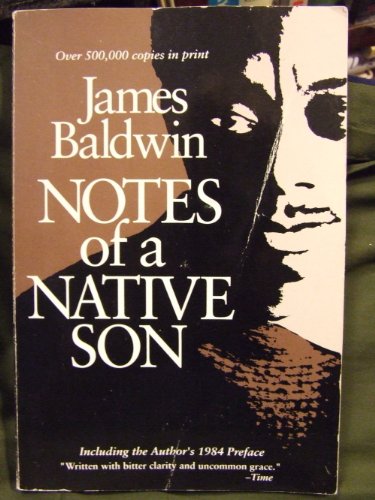
Originally published in 1955, James Baldwin's first nonfiction book has become a classic. These searing essays on life in Harlem, the protest novel, movies, and Americans abroad remain as powerful today as when they were written.
"He named for me the things you feel but couldn't utter. . . . Jimmy's essays articulated for the first time to white America what it meant to be American and a black American at the same time." -Henry Louis Gates, Jr.
"He named for me the things you feel but couldn't utter. . . . Jimmy's essays articulated for the first time to white America what it meant to be American and a black American at the same time." -Henry Louis Gates, Jr.
Die Inhaltsangabe kann sich auf eine andere Ausgabe dieses Titels beziehen.
Über die Autorin bzw. den Autor
James Baldwin (1924–1987) was a novelist, essayist, playwright, poet, and social critic, and one of America's foremost writers. His essays, such as “Notes of a Native Son” (1955), explore palpable yet unspoken intricacies of racial, sexual, and class distinctions in Western societies, most notably in mid-twentieth-century America. A Harlem, New York, native, he primarily made his home in the south of France.
His novels include Giovanni’s Room (1956), about a white American expatriate who must come to terms with his homosexuality, and Another Country (1962), about racial and gay sexual tensions among New York intellectuals. His inclusion of gay themes resulted in much savage criticism from the black community. Going to Meet the Man (1965) and Tell Me How Long the Train’s Been Gone (1968) provided powerful descriptions of American racism. As an openly gay man, he became increasingly outspoken in condemning discrimination against lesbian and gay people.
Auszug. © Genehmigter Nachdruck. Alle Rechte vorbehalten.
From the Introduction
I did not know James Baldwin the essayist before my first year of college. I knew only the James Baldwin of novels and short stories and plays, a trusted man who gave me, with his Harlem and his Harlem people, the kind of world I knew so well from growing up in my Washington, D.C. They were all one family, the people in Harlem and the people in Washington, Baldwin told me in that way of all grand and eloquent writers who speak the eternal and universal by telling us, word by hard-won word, of the minutiae of the everyday: The church ladies who put heart and soul into every church service as if to let their god know how worthy they are to step through the door into his heaven. The dust of poor folks’ apartments that forever hangs in the air as though to remind the people of their station in life. The streets of a city where the buildings Negroes live in never stand straight up but lean in mourning every which way.
So I knew this Baldwin and, in that strange way of members of the same family, he knew me. When I went off to college in late August 1968, I took few books, anticipating the adequacy of the library that awaited me at Holy Cross College. I packed only two books of nonfiction, both bought in a used bookstore not long after I was accepted to college. Both had never been read. The first was a ponderous 1950s to me on writing logical and well-reasoned essays. I was never to read it in my time at Holy Cross, perhaps because it was so inaccessible. (Seeing it on my dormitory room’s bookshelf, Clarence Thomas, a month before his graduation from Holy Cross in 1971, purchased the book from me for $5; I do not recall what I paid for it.) And the second was Notes of a Native Son. I was going off to a new life, a life of the mind and education among white people, and I felt that since Bald- win’s fiction had taught me so much about black people, his essays might have a similar effect given where I was going.
I entered Holy Cross as a mathematics major, primarily because I had done well in math in high school. I was extremely shy then, and I had never had my vision tested and did not know enough about anything to realize that my frequent inability to see the blackboard could be solved with eyeglasses. I sat in the back of the freshman calculus class run by a standoffish professor who spent most of the period with his back to his students as he wrote on the blackboard, and with all of that, I fell further and further behind as the semester progressed.
I will go into English, I told myself in December, knowing how much I loved to read and knowing that a calculus D was coming and so there would be no life in mathematics. Before leaving for Christmas vacation, I picked up Notes of a Native Son for the first time, perhaps understanding that now my life would be increasingly one of essay writing. The first thing James Baldwin tells me in “Autobiographical Notes” is, “I was born in Harlem. . . .” A simple, unadorned statement, as if in saying it plainly the reader would have a better sense of the importance of that fact. It was Harlem, but because I was so familiar with the Baldwin of fiction, the Baldwin whose black people could be Washingtonians, he could only have begun to connect in a better way if he had said, “I was born in Washington, D.C. . . .”
A good bit of that introductory essay deals with being a writer, something that would not have much meaning for me for many years: the necessity of delving into oneself to be able to tell the truth about the world one writes about; the difficulties of being a Negro writer when “the Negro problem” is so widely written about; the desire, at the end of the day, to be “a good writer.”
But within that short essay is a thirty-one-year-old, some- what worldly man (I did not get my first passport until I was fifty-four) who is still grappling with having been born into a small and often less than caring world, which was, for good or bad, a part of a larger world that generally rejected him and his small world. I was a Holy Cross student—often happy to be a student at “the Cross”—but I knew every time I stepped out of my room in Beaven dormitory that no part of that place in Worcester, Massachusetts, had been made with me in mind. I felt that but did not yet have very many words for it. Baldwin gave them to me. This is Baldwin, with his “special attitude,” talking of Shakespeare and the cathedral at Chartres and Rembrandt and the Empire State Building and Bach: “These were not really my creations, they did not contain my history; I might search in them in vain forever for any reflection of myself. I was an interloper; this was not my heritage.”
And so he continued throughout the rest of Notes, a gloriously keen and sensitive mind, something I did not completely appreciate at the time, something I’m sure he would smile about now. I confess that I could not then grasp some of his more complex thoughts, perhaps because I was merely too young and the world had yet to take such a harsh hold on me. And other thoughts of his I just dismissed, no doubt because I was, again, too young and because I was developing a militant streak that scoffed at notions not in line with my own developing ones. That militancy came naturally with the murder of Martin Luther King Jr. and the Vietnam War and with the new awareness that I was black in a white world. The militant me asked, for example, why would Baldwin write at times as if he were not black but some observer, a guilty one, true, but still an observer. “Our dehumanization of the Negro then,” he says to me in “Many Thousands Gone,” “is indivisible from dehumanization of ourselves: the loss of our own identity is the price we pay for our annulment of his.” And later: “We (Americans in general, that) like to point to Negroes and to most of their activities with a kind of tolerant scorn. . . .”
But with my focus on the constant use of words like “we” and “our,” it was easy for eighteen-year-old me in those last days of December 1968 to lose sight of so much of the truth and pain of that and other statements in “Thousands.” People, I have learned, have a way of taking root in one’s still- developing mind without our knowing it, especially people, like Baldwin, who live in the world of words. How else, then, to explain my every effort to tell in a novel as best I could the stories of slave masters, black and white, and how slavery crushed their souls every morning they got up from their beds and thanked their god for their dominion over others. If I knew the importance of telling that, it was because Baldwin and his kind had planted the idea long ago. (I give him so much credit because he was in the minority of all the black writers I was reading who understood the importance of giving white people their due as full-fledged human beings. Even before I knew I would get into this writing thing, Baldwin told me this: You do not have to fully humanize your black characters by dehumanizing the white ones.)
Traveling with Baldwin through Notes’ “The Harlem Ghetto,” “Journey to Atlanta,” and “Notes of a Native Son,” I was given a grander portrait of the man I had known only through fiction. His fiction certainly had an unprecedented and absolute life of its own, and I might have tried to imagine the man I was dealing with, but those essays afforded me something beyond the postage stamp–sized pictures of him and the few sentences of biography that came with my paperback editions of, say, Go Tell It on the...
„Über diesen Titel“ kann sich auf eine andere Ausgabe dieses Titels beziehen.
Suchergebnisse für Notes of a Native Son

Beispielbild für diese ISBN
Notes of a Native Son: 3rd Edition - Including the 1984 Author's Preface
Anbieter: World of Books (was SecondSale), Montgomery, IL, USA
Verkäuferbewertung 5 von 5 Sternen

Paperback. Zustand: Good. Jones, Edward P. (illustrator). #26 on The Guardian's list of 100 best nonfiction books of all time, the essays explore what it means to be Black in America In an age of Black Lives Matter, James Baldwin's essays on life in Harlem, the protest novel, movies, and African Americans abroad are as powerful today as when they were first written. With films like I Am Not Your Negro and the forthcoming If Beale Street Could Talk bringing renewed interest to Baldwin's life and work, Notes of a Native Son serves as a valuable introduction.Written during the 1940s and early 1950s, when Baldwin was only in his twenties, the essays collected in Notes of a Native Son capture a view of black life and black thought at the dawn of the civil rights movement and as the movement slowly gained strength through the words of one of the most captivating essayists and foremost intellectuals of that era. Writing as an artist, activist, and social critic, Baldwin probes the complex condition of being black in America. With a keen eye, he examines everything from the significance of the protest novel to the motives and circumstances of the many black expatriates of the time, from his home in The Harlem Ghetto to a sobering Journey to Atlanta. Notes of a Native Son inaugurated Baldwin as one of the leading interpreters of the dramatic social changes erupting in the United States in the twentieth century, and many of his observations have proven almost prophetic. His criticism on topics such as the paternalism of white progressives or on his own friend Richard Wright's work is pointed and unabashed. He was also one of the few writing on race at the time who addressed the issue with a powerful mixture of outrage at the gross physical and political violence against black citizens and measured understanding of their oppressors, which helped awaken a white audience to the injustices under their noses. Naturally, this combination of brazen criticism and unconventional empathy for white readers won Baldwin as much condemnation as praise. Notes is the book that established Baldwin's voice as a social critic, and it remains one of his most admired works. The essays collected here create a cohesive sketch of black America and reveal an intimate portrait of Baldwin's own search for identity as an artist, as a black man, and as an American. Bestandsnummer des Verkäufers 00110259930
Gebraucht kaufen
EUR 7,41
Versand gratis
Versand innerhalb von USA
Versand innerhalb von USA
Anzahl: 1 verfügbar
Foto des Verkäufers
Notes of a Native Son
Anbieter: Bay State Book Company, North Smithfield, RI, USA
Verkäuferbewertung 5 von 5 Sternen
Zustand: very_good. Jones, Edward P. (illustrator). Bestandsnummer des Verkäufers BSM.1DYZ8
Gebraucht kaufen
EUR 7,42
Versand gratis
Versand innerhalb von USA
Versand innerhalb von USA
Anzahl: 1 verfügbar
Beispielbild für diese ISBN
Notes of a Native Son: 3rd Edition - Including the 1984 Author's Preface
Anbieter: World of Books Inc, Montgomery, IL, USA
Verkäuferbewertung 4 von 5 Sternen

Paperback. Zustand: Good. Jones, Edward P. (illustrator). #26 on The Guardian's list of 100 best nonfiction books of all time, the essays explore what it means to be Black in America In an age of Black Lives Matter, James Baldwin's essays on life in Harlem, the protest novel, movies, and African Americans abroad are as powerful today as when they were first written. With films like I Am Not Your Negro and the forthcoming If Beale Street Could Talk bringing renewed interest to Baldwin's life and work, Notes of a Native Son serves as a valuable introduction.Written during the 1940s and early 1950s, when Baldwin was only in his twenties, the essays collected in Notes of a Native Son capture a view of black life and black thought at the dawn of the civil rights movement and as the movement slowly gained strength through the words of one of the most captivating essayists and foremost intellectuals of that era. Writing as an artist, activist, and social critic, Baldwin probes the complex condition of being black in America. With a keen eye, he examines everything from the significance of the protest novel to the motives and circumstances of the many black expatriates of the time, from his home in The Harlem Ghetto to a sobering Journey to Atlanta. Notes of a Native Son inaugurated Baldwin as one of the leading interpreters of the dramatic social changes erupting in the United States in the twentieth century, and many of his observations have proven almost prophetic. His criticism on topics such as the paternalism of white progressives or on his own friend Richard Wright's work is pointed and unabashed. He was also one of the few writing on race at the time who addressed the issue with a powerful mixture of outrage at the gross physical and political violence against black citizens and measured understanding of their oppressors, which helped awaken a white audience to the injustices under their noses. Naturally, this combination of brazen criticism and unconventional empathy for white readers won Baldwin as much condemnation as praise. Notes is the book that established Baldwin's voice as a social critic, and it remains one of his most admired works. The essays collected here create a cohesive sketch of black America and reveal an intimate portrait of Baldwin's own search for identity as an artist, as a black man, and as an American. Bestandsnummer des Verkäufers CIN0807064319G
Gebraucht kaufen
EUR 9,22
Versand gratis
Versand innerhalb von USA
Versand innerhalb von USA
Anzahl: 1 verfügbar
Beispielbild für diese ISBN
Notes of a Native Son (Beacon Paperback)
Anbieter: HPB Inc., Dallas, TX, USA
Verkäuferbewertung 5 von 5 Sternen
Paperback. Zustand: Very Good. Jones, Edward P. (illustrator). Connecting readers with great books since 1972! Used books may not include companion materials, and may have some shelf wear or limited writing. We ship orders daily and Customer Service is our top priority! Bestandsnummer des Verkäufers S_485720041
Gebraucht kaufen
EUR 6,33
EUR 3,30 Versand
Versand innerhalb von USA
Versand innerhalb von USA
Anzahl: 1 verfügbar
Beispielbild für diese ISBN
Notes of a Native Son (Beacon Paperback)
Anbieter: HPB-Diamond, Dallas, TX, USA
Verkäuferbewertung 5 von 5 Sternen
Paperback. Zustand: Very Good. Jones, Edward P. (illustrator). Connecting readers with great books since 1972! Used books may not include companion materials, and may have some shelf wear or limited writing. We ship orders daily and Customer Service is our top priority! Bestandsnummer des Verkäufers S_483033970
Gebraucht kaufen
EUR 6,33
EUR 3,30 Versand
Versand innerhalb von USA
Versand innerhalb von USA
Anzahl: 1 verfügbar
Beispielbild für diese ISBN
Notes of a Native Son
Anbieter: Better World Books, Mishawaka, IN, USA
Verkäuferbewertung 5 von 5 Sternen
Zustand: Good. Jones, Edward P. (illustrator). Former library copy. Pages intact with minimal writing/highlighting. The binding may be loose and creased. Dust jackets/supplements are not included. Includes library markings. Stock photo provided. Product includes identifying sticker. Better World Books: Buy Books. Do Good. Bestandsnummer des Verkäufers 4881671-6
Gebraucht kaufen
EUR 11,83
Versand gratis
Versand innerhalb von USA
Versand innerhalb von USA
Anzahl: 1 verfügbar
Beispielbild für diese ISBN
Notes of a Native Son
Anbieter: Better World Books: West, Reno, NV, USA
Verkäuferbewertung 5 von 5 Sternen
Zustand: Very Good. Jones, Edward P. (illustrator). Pages intact with possible writing/highlighting. Binding strong with minor wear. Dust jackets/supplements may not be included. Stock photo provided. Product includes identifying sticker. Better World Books: Buy Books. Do Good. Bestandsnummer des Verkäufers 5746067-6
Gebraucht kaufen
EUR 11,83
Versand gratis
Versand innerhalb von USA
Versand innerhalb von USA
Anzahl: 1 verfügbar
Beispielbild für diese ISBN
Notes of a Native Son
Anbieter: Better World Books: West, Reno, NV, USA
Verkäuferbewertung 5 von 5 Sternen
Zustand: Very Good. Jones, Edward P. (illustrator). Former library copy. Pages intact with possible writing/highlighting. Binding strong with minor wear. Dust jackets/supplements may not be included. Includes library markings. Stock photo provided. Product includes identifying sticker. Better World Books: Buy Books. Do Good. Bestandsnummer des Verkäufers 6519935-6
Gebraucht kaufen
EUR 11,83
Versand gratis
Versand innerhalb von USA
Versand innerhalb von USA
Anzahl: 1 verfügbar
Beispielbild für diese ISBN
Notes of a Native Son
Anbieter: Better World Books, Mishawaka, IN, USA
Verkäuferbewertung 5 von 5 Sternen
Zustand: Very Good. Jones, Edward P. (illustrator). Former library copy. Pages intact with possible writing/highlighting. Binding strong with minor wear. Dust jackets/supplements may not be included. Includes library markings. Stock photo provided. Product includes identifying sticker. Better World Books: Buy Books. Do Good. Bestandsnummer des Verkäufers 6519935-6
Gebraucht kaufen
EUR 11,83
Versand gratis
Versand innerhalb von USA
Versand innerhalb von USA
Anzahl: 1 verfügbar
Foto des Verkäufers
Notes of a Native Son
Anbieter: Goodbookscafe, Macon, GA, USA
Verkäuferbewertung 5 von 5 Sternen
Zustand: very_good. Jones, Edward P. (illustrator). Used with minimal wear, no writing or markings, corners maybe bent, few crease lines. Bestandsnummer des Verkäufers MGV.0807064319.VG
Gebraucht kaufen
EUR 9,05
EUR 3,51 Versand
Versand innerhalb von USA
Versand innerhalb von USA
Anzahl: 1 verfügbar