
Verwandte Artikel zu Between Freedom and Progress: The Lost World of Reconstructi...
Between Freedom and Progress: The Lost World of Reconstruction Politics (Conflicting Worlds: New Dimensions of the American Civil War) - Hardcover
Buch 62 von 103: Conflicting Worlds: New Dimensions of the American Civil War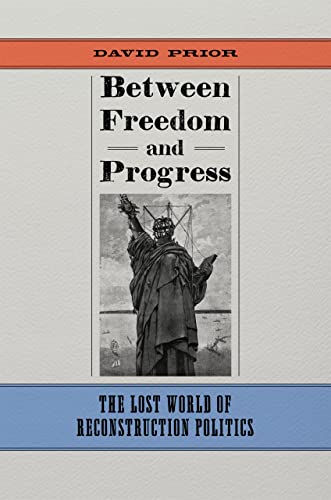
Inhaltsangabe
Between Freedom and Progress recovers and analyzes the global imaginings of Reconstruction’s partisans—those who struggled over and with Reconstruction—as they vied with one another to define the nature of their country after the Civil War. The remarkable technological and commercial transformations of the mid-nineteenth century—in particular, steam engines, telegraphs, and an expanded commercial printing capacity—created a constant stream of news, description, and storytelling from across and beyond the nation. Reconstruction’s partisans contended with each other to make sense of this information, motivated by intense political antagonism combined with a shared but contested set of ideas about freedom and progress. As writers, lecturers, editors, travelers, moral reformers, racists, abolitionists, politicians, suffragists, soldiers, and diplomats, Reconstruction’s partisans made competing claims about their place in the world. Understanding how, why, and when they did so helps ground our understanding of Reconstruction—itself a mysterious, transatlantic term—in its own intellectual context.
Three factors proved pivotal to the making of Reconstruction’s world. First, from 1865 to the early 1870s, the interconnected issues of how to remake the Union and how to remake the South exerted a powerful hold on federal politics, defining the partisan landscape and inspiring rival arguments about what was possible and what was good. The daunting nature of these issues created a sense of crisis across the political spectrum, with political discourse ranging in tone from combative to euphoric to apocalyptic. Second, though domestic in nature, these issues were refracted through two broadly held beliefs: that the causes of freedom and progress defined history and that distinctive peoples with their own characters composed the world’s population. These beliefs produced a disposition to think of developments from across and beyond the United States as essentially relatable to each other, encouraging an intellectual style that favored wide-ranging comparisons.
Third, far from being confined to the elite, this mode of thinking and arguing about the world lived and breathed in public texts that were produced and consumed on a weekly and daily basis. This commercialized and politicized world of mass publishing was highly unequal in structure and content, but it was also impressively vibrant and popular. Together, these three factors made the world of Reconstruction a global landscape of information, argumentation, and imagination that derived much of its vigor from domestic political battles.
Die Inhaltsangabe kann sich auf eine andere Ausgabe dieses Titels beziehen.
Über die Autorin bzw. den Autor
David Prior is assistant professor of history at the University of New Mexico and the editor of Reconstruction in a Globalizing World. He is also an editor at the online forums H-Slavery and H-Nationalism.
Von der hinteren Coverseite
"David Prior has written a fascinating and valuable study of America's Reconstruction within the context of sweeping domestic and international change. Between Freedom and Progress explores the impact of the development of mass communication, economics, evolving political and cultural thought, societal realignment, science and pseudo-science in framing Reconstruction in America."--Orville Vernon Burton, author of The Age of Lincoln
"With a fascinating series of unexpected case studies, Prior shows that global sensibilities were integral to the struggle over Reconstruction. Between Freedom and Progress is a tightly conceptualized, original, and stimulating history of political ideology. Its attention to tension and inconsistency make it an especially valuable contribution to the history of the Civil War era and the United States in the world."--Alison Efford, author of German Immigrants, Race, and Citizenship in the Civil War Era
Aus dem Klappentext
"David Prior has written a fascinating and valuable study of America s Reconstruction within the context of sweeping domestic and international change. Between Freedom and Progress explores the impact of the development of mass communication, economics, evolving political and cultural thought, societal realignment, science and pseudo-science in framing Reconstruction in America." Orville Vernon Burton, author of The Age of Lincoln
"With a fascinating series of unexpected case studies, Prior shows that global sensibilities were integral to the struggle over Reconstruction. Between Freedom and Progress is a tightly conceptualized, original, and stimulating history of political ideology. Its attention to tension and inconsistency make it an especially valuable contribution to the history of the Civil War era and the United States in the world." Alison Efford, author of German Immigrants, Race, and Citizenship in the Civil War Era
„Über diesen Titel“ kann sich auf eine andere Ausgabe dieses Titels beziehen.
Suchergebnisse für Between Freedom and Progress: The Lost World of Reconstructi...

Beispielbild für diese ISBN
Between Freedom and Progress: The Lost World of Reconstruction Politics
Anbieter: ThriftBooks-Atlanta, AUSTELL, GA, USA
Verkäuferbewertung 5 von 5 Sternen

Hardcover. Zustand: Good. No Jacket. Pages can have notes/highlighting. Spine may show signs of wear. ~ ThriftBooks: Read More, Spend Less. Bestandsnummer des Verkäufers G0807169684I3N00
Gebraucht kaufen
EUR 16,37
Versand gratis
Versand innerhalb von USA
Versand innerhalb von USA
Anzahl: 1 verfügbar
Beispielbild für diese ISBN
BETWEEN FREEDOM AND PROGRESS
Anbieter: INDOO, Avenel, NJ, USA
Verkäuferbewertung 5 von 5 Sternen
Zustand: New. Brand New. Bestandsnummer des Verkäufers 9780807169681
Neu kaufen
EUR 35,47
Versand gratis
Versand innerhalb von USA
Versand innerhalb von USA
Anzahl: Mehr als 20 verfügbar
Beispielbild für diese ISBN
Between Freedom and Progress
Anbieter: PBShop.store UK, Fairford, GLOS, Vereinigtes Königreich
Verkäuferbewertung 5 von 5 Sternen
HRD. Zustand: New. New Book. Shipped from UK. Established seller since 2000. Bestandsnummer des Verkäufers FW-9780807169681
Neu kaufen
EUR 38,57
EUR 5,86 Versand
Versand von Vereinigtes Königreich nach USA
Versand von Vereinigtes Königreich nach USA
Anzahl: 2 verfügbar
Foto des Verkäufers
Between Freedom and Progress : The Lost World of Reconstruction Politics
Anbieter: GreatBookPrices, Columbia, MD, USA
Verkäuferbewertung 5 von 5 Sternen
Zustand: New. Bestandsnummer des Verkäufers 35905853-n
Neu kaufen
EUR 43,30
EUR 2,29 Versand
Versand innerhalb von USA
Versand innerhalb von USA
Anzahl: Mehr als 20 verfügbar
Foto des Verkäufers
Between Freedom and Progress
Verlag:
Louisiana State University Press, US, 2019
ISBN 10: 0807169684
ISBN 13: 9780807169681
Neu
Hardcover
Anbieter: Rarewaves.com USA, London, LONDO, Vereinigtes Königreich
Verkäuferbewertung 5 von 5 Sternen
Hardback. Zustand: New. Between Freedom and Progress recovers and analyses the global imaginings of Reconstruction's partisans, those who struggled over and with Reconstruction, as they vied with one another to define the nature of their country after the Civil War. The remarkable technological and commercial transformations of the mid-nineteenth century, in particular, steam engines, telegraphs, and an expanded commercial printing capacity, created a constant stream of news, description, and storytelling from across and beyond the nation. Reconstruction's partisans contended with each other to make sense of this information, motivated by intense political antagonism combined with a shared but contested set of ideas about freedom and progress. As writers, lecturers, editors, travelers, moral reformers, racists, abolitionists, politicians, suffragists, soldiers, and diplomats, Reconstruction's partisans made competing claims about their place in the world. Understanding how, why, and when they did so helps ground our understanding of Reconstruction, itself a mysterious, transatlantic term, in its own intellectual context.Three factors proved pivotal to the making of Reconstruction's world. First, from 1865 to the early 1870s, the interconnected issues of how to remake the Union and how to remake the South exerted a powerful hold on federal politics, defining the partisan landscape and inspiring rival arguments about what was possible and what was good. The daunting nature of these issues created a sense of crisis across the political spectrum, with political discourse ranging in tone from combative to euphoric to apocalyptic. Second, though domestic in nature, these issues were refracted through two broadly held beliefs: that the causes of freedom and progress defined history and that distinctive peoples with their own characters composed the world's population. These beliefs produced a disposition to think of developments from across and beyond the United States as essentially relatable to each other, encouraging an intellectual style that favoured wide-ranging comparisons. Third, far from being confined to the elite, this mode of thinking and arguing about the world lived and breathed in public texts that were produced and consumed on a weekly and daily basis. This commercialised and politicised world of mass publishing was highly unequal in structure and content, but it was also impressively vibrant and popular. Together, these three factors made the world of Reconstruction a global landscape of information, argumentation, and imagination that derived much of its vigor from domestic political battles. Bestandsnummer des Verkäufers LU-9780807169681
Neu kaufen
EUR 47,22
Versand gratis
Versand von Vereinigtes Königreich nach USA
Versand von Vereinigtes Königreich nach USA
Anzahl: 1 verfügbar
Beispielbild für diese ISBN
Between Freedom and Progress: The Lost World of Reconstruction Politics (Conflicting Worlds: New Dimensions of the American Civil War)
Anbieter: California Books, Miami, FL, USA
Verkäuferbewertung 4 von 5 Sternen

Zustand: New. Bestandsnummer des Verkäufers I-9780807169681
Neu kaufen
EUR 50,02
Versand gratis
Versand innerhalb von USA
Versand innerhalb von USA
Anzahl: Mehr als 20 verfügbar
Foto des Verkäufers
Between Freedom and Progress : The Lost World of Reconstruction Politics
Anbieter: GreatBookPrices, Columbia, MD, USA
Verkäuferbewertung 5 von 5 Sternen
Zustand: As New. Unread book in perfect condition. Bestandsnummer des Verkäufers 35905853
Gebraucht kaufen
EUR 50,86
EUR 2,29 Versand
Versand innerhalb von USA
Versand innerhalb von USA
Anzahl: Mehr als 20 verfügbar
Beispielbild für diese ISBN
Between Freedom and Progress (Hardcover)
Verlag:
Louisiana State University Press, Baton Rouge, 2019
ISBN 10: 0807169684
ISBN 13: 9780807169681
Neu
Hardcover
Anbieter: Grand Eagle Retail, Bensenville, IL, USA
Verkäuferbewertung 5 von 5 Sternen
Hardcover. Zustand: new. Hardcover. Between Freedom and Progress recovers and analyses the global imaginings of Reconstruction's partisans, those who struggled over and with Reconstruction, as they vied with one another to define the nature of their country after the Civil War. The remarkable technological and commercial transformations of the mid-nineteenth century, in particular, steam engines, telegraphs, and an expanded commercial printing capacity, created a constant stream of news, description, and storytelling from across and beyond the nation. Reconstruction's partisans contended with each other to make sense of this information, motivated by intense political antagonism combined with a shared but contested set of ideas about freedom and progress. As writers, lecturers, editors, travelers, moral reformers, racists, abolitionists, politicians, suffragists, soldiers, and diplomats, Reconstruction's partisans made competing claims about their place in the world. Understanding how, why, and when they did so helps ground our understanding of Reconstruction, itself a mysterious, transatlantic term, in its own intellectual context.Three factors proved pivotal to the making of Reconstruction's world. First, from 1865 to the early 1870s, the interconnected issues of how to remake the Union and how to remake the South exerted a powerful hold on federal politics, defining the partisan landscape and inspiring rival arguments about what was possible and what was good. The daunting nature of these issues created a sense of crisis across the political spectrum, with political discourse ranging in tone from combative to euphoric to apocalyptic. Second, though domestic in nature, these issues were refracted through two broadly held beliefs: that the causes of freedom and progress defined history and that distinctive peoples with their own characters composed the world's population. These beliefs produced a disposition to think of developments from across and beyond the United States as essentially relatable to each other, encouraging an intellectual style that favoured wide-ranging comparisons. Third, far from being confined to the elite, this mode of thinking and arguing about the world lived and breathed in public texts that were produced and consumed on a weekly and daily basis. This commercialised and politicised world of mass publishing was highly unequal in structure and content, but it was also impressively vibrant and popular. Together, these three factors made the world of Reconstruction a global landscape of information, argumentation, and imagination that derived much of its vigor from domestic political battles. Recovers and analyses the global imaginings of Reconstruction's partisans, those who struggled over and with Reconstruction, as they vied with one another to define the nature of their country after the Civil War. Shipping may be from multiple locations in the US or from the UK, depending on stock availability. Bestandsnummer des Verkäufers 9780807169681
Beispielbild für diese ISBN
Between Freedom and Progress: The Lost World of Reconstruction Politics
Anbieter: Kennys Bookshop and Art Galleries Ltd., Galway, GY, Irland
Verkäuferbewertung 5 von 5 Sternen
Zustand: New. 2019. Illustrated. hardcover. . . . . . Bestandsnummer des Verkäufers V9780807169681
Neu kaufen
EUR 53,93
EUR 9,50 Versand
Versand von Irland nach USA
Versand von Irland nach USA
Anzahl: 1 verfügbar
Beispielbild für diese ISBN
Between Freedom and Progress: The Lost World of Reconstruction Politics
Verlag:
Louisiana State University Press, 2019
ISBN 10: 0807169684
ISBN 13: 9780807169681
Neu
Hardcover
Anbieter: THE SAINT BOOKSTORE, Southport, Vereinigtes Königreich
Verkäuferbewertung 5 von 5 Sternen
Hardback. Zustand: New. New copy - Usually dispatched within 4 working days. Bestandsnummer des Verkäufers B9780807169681
Neu kaufen
EUR 44,68
EUR 19,01 Versand
Versand von Vereinigtes Königreich nach USA
Versand von Vereinigtes Königreich nach USA
Anzahl: 2 verfügbar