
Verwandte Artikel zu White Women, Rape, and the Power of Race in Virginia,...
Inhaltsangabe
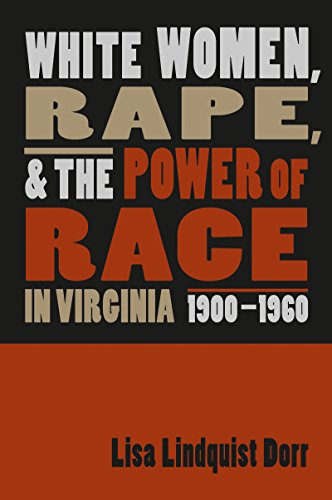
For decades, historians have primarily analyzed charges of black-on-white rape in the South through accounts of lynching or manifestly unfair trial proceedings, suggesting that white southerners invariably responded with extralegal violence and sham trials when white women accused black men of assault. Lisa Lindquist Dorr challenges this view with a careful study of legal records, newspapers, and clemency files from early-twentieth-century Virginia. White Virginians' inflammatory rhetoric, she argues, did not necessarily predict black men's ultimate punishment.
While trials were often grand public spectacles at which white men acted to protect white women and to police interracial relationships, Dorr points to cracks in white solidarity across class and gender lines. At the same time, trials and pardon proceedings presented African Americans with opportunities to challenge white racial power. Taken together, these cases uncover a world in which the mandates of segregation did not always hold sway, in which whites and blacks interacted in the most intimate of ways, and in which white women and white men saw their interests in conflict.
In Dorr's account, cases of black-on-white rape illuminate the paradoxes at the heart of segregated southern society: the tension between civilization and savagery, the desire for orderly and predictable racial boundaries despite conflicts among whites and relationships across racial boundaries, and the dignity of African Americans in a system dependent on their supposed inferiority. The rhetoric of protecting white women spoke of white supremacy and patriarchy, but its practice revealed the limits of both.
Die Inhaltsangabe kann sich auf eine andere Ausgabe dieses Titels beziehen.
Über die Autorin bzw. den Autor
Lisa Lindquist Dorr is assistant professor of history at the University of Alabama.
„Über diesen Titel“ kann sich auf eine andere Ausgabe dieses Titels beziehen.
Suchergebnisse für White Women, Rape, and the Power of Race in Virginia,...

Beispielbild für diese ISBN
White Women, Rape, and the Power of Race in Virginia, 1900-1960
Verlag:
The University of North Carolina Press, 2004
ISBN 10: 0807855146
ISBN 13: 9780807855140
Gebraucht
Paperback
Anbieter: World of Books (was SecondSale), Montgomery, IL, USA
Verkäuferbewertung 5 von 5 Sternen

Paperback. Zustand: Good. For decades, historians have primarily analyzed charges of black-on-white rape in the South through accounts of lynching or manifestly unfair trial proceedings, suggesting that white southerners invariably responded with extralegal violence and sham trials when white women accused black men of assault. Lisa Lindquist Dorr challenges this view with a careful study of legal records, newspapers, and clemency files from early-twentieth-century Virginia. White Virginians' inflammatory rhetoric, she argues, did not necessarily predict black men's ultimate punishment. While trials were often grand public spectacles at which white men acted to protect white women and to police interracial relationships, Dorr points to cracks in white solidarity across class and gender lines. At the same time, trials and pardon proceedings presented African Americans with opportunities to challenge white racial power. Taken together, these cases uncover a world in which the mandates of segregation did not always hold sway, in which whites and blacks interacted in the most intimate of ways, and in which white women and white men saw their interests in conflict. In Dorr's account, cases of black-on-white rape illuminate the paradoxes at the heart of segregated southern society: the tension between civilization and savagery, the desire for orderly and predictable racial boundaries despite conflicts among whites and relationships across racial boundaries, and the dignity of African Americans in a system dependent on their supposed inferiority. The rhetoric of protecting white women spoke of white supremacy and patriarchy, but its practice revealed the limits of both. Bestandsnummer des Verkäufers 00070807674
Gebraucht kaufen
EUR 3,22
Versand gratis
Versand innerhalb von USA
Versand innerhalb von USA
Anzahl: 1 verfügbar
Beispielbild für diese ISBN
White Women, Rape, and the Power of Race in Virginia, 1900-1960
Verlag:
The University of North Carolina Press, 2004
ISBN 10: 0807855146
ISBN 13: 9780807855140
Gebraucht
Paperback
Anbieter: World of Books Inc, Montgomery, IL, USA
Verkäuferbewertung 4 von 5 Sternen

Paperback. Zustand: Good. For decades, historians have primarily analyzed charges of black-on-white rape in the South through accounts of lynching or manifestly unfair trial proceedings, suggesting that white southerners invariably responded with extralegal violence and sham trials when white women accused black men of assault. Lisa Lindquist Dorr challenges this view with a careful study of legal records, newspapers, and clemency files from early-twentieth-century Virginia. White Virginians' inflammatory rhetoric, she argues, did not necessarily predict black men's ultimate punishment. While trials were often grand public spectacles at which white men acted to protect white women and to police interracial relationships, Dorr points to cracks in white solidarity across class and gender lines. At the same time, trials and pardon proceedings presented African Americans with opportunities to challenge white racial power. Taken together, these cases uncover a world in which the mandates of segregation did not always hold sway, in which whites and blacks interacted in the most intimate of ways, and in which white women and white men saw their interests in conflict. In Dorr's account, cases of black-on-white rape illuminate the paradoxes at the heart of segregated southern society: the tension between civilization and savagery, the desire for orderly and predictable racial boundaries despite conflicts among whites and relationships across racial boundaries, and the dignity of African Americans in a system dependent on their supposed inferiority. The rhetoric of protecting white women spoke of white supremacy and patriarchy, but its practice revealed the limits of both. Bestandsnummer des Verkäufers CIN0807855146G
Gebraucht kaufen
EUR 5,05
Versand gratis
Versand innerhalb von USA
Versand innerhalb von USA
Anzahl: 1 verfügbar
Beispielbild für diese ISBN
White Women, Rape, and the Power of Race in Virginia, 1900-1960
Verlag:
University of North Carolina Press, 2004
ISBN 10: 0807855146
ISBN 13: 9780807855140
Gebraucht
Softcover
Anbieter: Better World Books, Mishawaka, IN, USA
Verkäuferbewertung 5 von 5 Sternen
Zustand: Very Good. Former library copy. Pages intact with possible writing/highlighting. Binding strong with minor wear. Dust jackets/supplements may not be included. Includes library markings. Stock photo provided. Product includes identifying sticker. Better World Books: Buy Books. Do Good. Bestandsnummer des Verkäufers 48270179-6
Gebraucht kaufen
EUR 6,73
Versand gratis
Versand innerhalb von USA
Versand innerhalb von USA
Anzahl: 2 verfügbar
Beispielbild für diese ISBN
White Women, Rape, and the Power of Race in Virginia, 1900-1960
Verlag:
The University of North Carolina, 2004
ISBN 10: 0807855146
ISBN 13: 9780807855140
Gebraucht
paperback
Anbieter: HPB-Red, Dallas, TX, USA
Verkäuferbewertung 5 von 5 Sternen
paperback. Zustand: Good. Connecting readers with great books since 1972! Used textbooks may not include companion materials such as access codes, etc. May have some wear or writing/highlighting. We ship orders daily and Customer Service is our top priority! Bestandsnummer des Verkäufers S_406306953
Gebraucht kaufen
EUR 4,59
EUR 3,34 Versand
Versand innerhalb von USA
Versand innerhalb von USA
Anzahl: 1 verfügbar
Beispielbild für diese ISBN
White Women, Rape, and the Power of Race in Virginia, 1900-1960
Verlag:
The University of North Carolina Press, 2004
ISBN 10: 0807855146
ISBN 13: 9780807855140
Gebraucht
paperback
Anbieter: One Planet Books, Columbia, MO, USA
Verkäuferbewertung 4 von 5 Sternen
paperback. Zustand: Good. New edition. Ships in a BOX from Central Missouri! May not include working access code. Will not include dust jacket. Has used sticker(s) and some writing and/or highlighting. UPS shipping for most packages, (Priority Mail for AK/HI/APO/PO Boxes). Bestandsnummer des Verkäufers 000693475U
Gebraucht kaufen
EUR 6,87
EUR 3,55 Versand
Versand innerhalb von USA
Versand innerhalb von USA
Anzahl: 7 verfügbar
Foto des Verkäufers
White Women, Rape, and the Power of Race in Virginia, 1900-1960
Verlag:
University of North Carolina Press, Chapel Hill, 2004
ISBN 10: 0807855146
ISBN 13: 9780807855140
Gebraucht
Softcover
Anbieter: Browsing Is Arousing, Middlebury, VT, USA
Verkäuferbewertung 5 von 5 Sternen
Zustand: Very Good. Softcover, 327 pages. For decades, historians have primarily analyzed charges of black-on-white rape in the South through accounts of lynching or manifestly unfair trial proceedings, suggesting that white southerners invariably responded with extralegal violence and sham trials when white women accused black men of assault. Lisa Lindquist Dorr challenges this view with a careful study of legal records, newspapers, and clemency files from early-twentieth-century Virginia. White Virginians' inflammatory rhetoric, she argues, did not necessarily predict black men's ultimate punishment. Bump to top rear corner otherwise very good, clean. Record # 385024. Bestandsnummer des Verkäufers 385024
Gebraucht kaufen
EUR 11,01
EUR 6,23 Versand
Versand innerhalb von USA
Versand innerhalb von USA
Anzahl: 1 verfügbar
Beispielbild für diese ISBN
White Women, Rape, and the Power of Race in Virginia, 1900-1960
Verlag:
The University of North Carolina Press, 2004
ISBN 10: 0807855146
ISBN 13: 9780807855140
Gebraucht
Soft cover
Anbieter: Shadetree Rare Books, Chatham, VA, USA
Verkäuferbewertung 4 von 5 Sternen
Soft cover. Zustand: Good. Soft Cover. 8vo - over 7¾" - 9¾" tall. BRAND NEW BOOK. NO MARKS. PUBLISHED AT $19.95. For decades, historians have primarily analyzed charges of black-on-white rape in the South through accounts of lynching or manifestly unfair trial proceedings, suggesting that white southerners invariably responded with extralegal violence and sham trials when white women accused black men of assault. Lisa Lindquist Dorr challenges this view with a careful study of legal records, newspapers, and clemency files from early-twentieth-century Virginia. White Virginians' inflammatory rhetoric, she argues, did not necessarily predict black men's ultimate punishment. While trials were often grand public spectacles at which white men acted to protect white women and to police interracial relationships, Dorr points to cracks in white solidarity across class and gender lines. At the same time, trials and pardon proceedings presented African Americans with opportunities to challenge white racial power. Taken together, these cases uncover a world in which the mandates of segregation did not always hold sway, in which whites and blacks interacted in the most intimate of ways, and in which white women and white men saw their interests in conflict. In Dorr's account, cases of black-on-white rape illuminate the paradoxes at the heart of segregated southern society: the tension between civilization and savagery, the desire for orderly and predictable racial boundaries despite conflicts among whites and relationships across racial boundaries, and the dignity of African Americans in a system dependent on their supposed inferiority. The rhetoric of protecting white women spoke of white supremacy and patriarchy, but its practice revealed the limits of both. About the author: Lisa Lindquist Dorr is assistant professor of history at the University of Alabama. Bestandsnummer des Verkäufers N2791
Gebraucht kaufen
EUR 13,76
EUR 5,30 Versand
Versand innerhalb von USA
Versand innerhalb von USA
Anzahl: 1 verfügbar
Beispielbild für diese ISBN
White Women, Rape, and the Power of Race in Virginia, 1900-1960
Verlag:
The University of North Carolina Press, 2004
ISBN 10: 0807855146
ISBN 13: 9780807855140
Gebraucht
paperback
Anbieter: Textbooks_Source, Columbia, MO, USA
Verkäuferbewertung 5 von 5 Sternen
paperback. Zustand: Good. New edition. Ships in a BOX from Central Missouri! May not include working access code. Will not include dust jacket. Has used sticker(s) and some writing or highlighting. UPS shipping for most packages, (Priority Mail for AK/HI/APO/PO Boxes). Bestandsnummer des Verkäufers 000693475U
Gebraucht kaufen
EUR 17,92
EUR 3,55 Versand
Versand innerhalb von USA
Versand innerhalb von USA
Anzahl: 10 verfügbar
Beispielbild für diese ISBN
White Women, Rape, and the Power of Race in Virginia, 1900-1960
Verlag:
The University of North Carolina Press, 2004
ISBN 10: 0807855146
ISBN 13: 9780807855140
Neu
Softcover
Anbieter: California Books, Miami, FL, USA
Verkäuferbewertung 5 von 5 Sternen
Zustand: New. Bestandsnummer des Verkäufers I-9780807855140
Neu kaufen
EUR 52,29
EUR 2,67 Versand
Versand innerhalb von USA
Versand innerhalb von USA
Anzahl: Mehr als 20 verfügbar
Beispielbild für diese ISBN
White Women, Rape, and the Power of Race in Virginia, 1900-1960
Anbieter: Revaluation Books, Exeter, Vereinigtes Königreich
Verkäuferbewertung 5 von 5 Sternen
Paperback. Zustand: Brand New. 1st edition. 352 pages. 8.75x5.75x0.75 inches. In Stock. Bestandsnummer des Verkäufers x-0807855146
Neu kaufen
EUR 64,27
EUR 11,98 Versand
Versand von Vereinigtes Königreich nach USA
Versand von Vereinigtes Königreich nach USA
Anzahl: 2 verfügbar