
Verwandte Artikel zu Rereading the Sophists: Classical Rhetoric Refigured
Inhaltsangabe
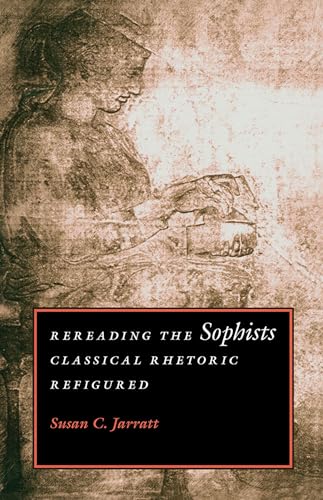
This book is a critically informed challenge to the traditional histories of rhetoric and to the current emphasis on Aristotle and Plato as the most significant classical voices in rhetoric. In it, Susan C. Jarratt argues that the first sophists—a diverse group of traveling intellectuals in the fifth century B.C.—should be given a more prominent place in the study of rhetoric and composition. Rereading the ancient sophists, she creates a new lens through which to see contemporary social issues, including the orality/literacy debate, feminist writing, deconstruction, and writing pedagogy.
The sophists’ pleasure in the play of language, their focus on historical contin-gency, and the centrality of their teaching for democratic practice were sufficiently threatening to their successors Plato and Aristotle that both sought to bury the sophists under philosophical theories of language. The censure of Plato and Aris-totle set a pattern for historical views of the sophists for centuries. Following Hegel and Nietzsche, Jarratt breaks the pattern, finding in the sophists a more progressive charter for teachers and scholars of reading and writing, as well as for those in the adjacent disciplines of literary criticism and theory, education, speech communication, and ancient history.
In tracing the historical interpretations of sophistic rhetoric, Jarratt suggests that the sophists themselves provide the outlines of an alternative to history-writing as the discovery and recounting of a set of stable facts. She sees sophistic use of narrative in argument as a challenge to a simple division between orality and literacy, current discussions of which virtually ignore the sophists. Outlining similarities between écriture féminine and sophistic style, Jarratt shows that contemporary feminisms have more in common with sophists than just a style; they share a rhetorical basis for deployment of theory in political action. In her final chapter, Jarratt takes issue with accounts of sophistic pedagogy focusing on technique and the development of the individual. She argues that, despite its employment by powerful demagogues, sophistic pedagogy offers a resource for today’s teachers interested in encouraging minority voices of resistance through language study as the practice of democracy.
Die Inhaltsangabe kann sich auf eine andere Ausgabe dieses Titels beziehen.
Über die Autorin bzw. den Autor
Susan C. Jarratt is associate professor of English at Miami University and is the recipient of several research awards.
„Über diesen Titel“ kann sich auf eine andere Ausgabe dieses Titels beziehen.
Suchergebnisse für Rereading the Sophists: Classical Rhetoric Refigured

Foto des Verkäufers
Rereading the Sophists: Classical Rhetoric Refigured
Verlag:
Southern Illinois University Press, 1998
ISBN 10: 0809322242
ISBN 13: 9780809322244
Gebraucht
Softcover
Anbieter: -OnTimeBooks-, Phoenix, AZ, USA
Verkäuferbewertung 5 von 5 Sternen

Zustand: good. A copy that has been read, remains in good condition. All pages are intact, and the cover is intact. The spine and cover show signs of wear. Pages can include notes and highlighting and show signs of wear, and the copy can include "From the library of" labels or previous owner inscriptions. 100% GUARANTEE! Shipped with delivery confirmation, if you're not satisfied with purchase please return item! Ships via media mail. Bestandsnummer des Verkäufers OTV.0809322242.G
Gebraucht kaufen
EUR 19,37
Versand gratis
Versand innerhalb von USA
Versand innerhalb von USA
Anzahl: 1 verfügbar
Beispielbild für diese ISBN
Rereading the Sophists: Classical Rhetoric Refigured
Verlag:
Southern Illinois University Pre, 1998
ISBN 10: 0809322242
ISBN 13: 9780809322244
Gebraucht
Paperback
Anbieter: Midtown Scholar Bookstore, Harrisburg, PA, USA
Verkäuferbewertung 5 von 5 Sternen
Paperback. Zustand: Acceptable. Acceptable - This is a significantly damaged book. It should be considered a reading copy only. Please order this book only if you are interested in the content and not the condition. May be ex-library. PAPERBACK Standard-sized. Bestandsnummer des Verkäufers M0809322242Z4
Gebraucht kaufen
EUR 16,26
EUR 5,17 Versand
Versand innerhalb von USA
Versand innerhalb von USA
Anzahl: 1 verfügbar
Beispielbild für diese ISBN
Rereading the Sophists : Classical Rhetoric Refigured
Verlag:
Southern Illinois University Press, 1998
ISBN 10: 0809322242
ISBN 13: 9780809322244
Gebraucht
Softcover
Anbieter: Better World Books, Mishawaka, IN, USA
Verkäuferbewertung 5 von 5 Sternen
Zustand: Good. Pages intact with minimal writing/highlighting. The binding may be loose and creased. Dust jackets/supplements are not included. Stock photo provided. Product includes identifying sticker. Better World Books: Buy Books. Do Good. Bestandsnummer des Verkäufers 9384053-6
Gebraucht kaufen
EUR 22,73
Versand gratis
Versand innerhalb von USA
Versand innerhalb von USA
Anzahl: 1 verfügbar
Foto des Verkäufers
Rereading the Sophists: Classical Rhetoric Refigured
Verlag:
Southern Illinois University Press, 1998
ISBN 10: 0809322242
ISBN 13: 9780809322244
Gebraucht
Softcover
Anbieter: Greenworld Books, Arlington, TX, USA
Verkäuferbewertung 5 von 5 Sternen
Zustand: very_good. Fast Free Shipping â" Very Good condition book with a firm cover and clean pages. Shows normal use and some light wear or limited notes markings. A solid, nice copy to enjoy. Bestandsnummer des Verkäufers GWV.0809322242.VG
Gebraucht kaufen
EUR 32,23
Versand gratis
Versand innerhalb von USA
Versand innerhalb von USA
Anzahl: 1 verfügbar
Foto des Verkäufers
Rereading the Sophists : Classical Rhetoric Refigured
Verlag:
Southern Illinois University Press, 1998
ISBN 10: 0809322242
ISBN 13: 9780809322244
Neu
Softcover
Anbieter: GreatBookPrices, Columbia, MD, USA
Verkäuferbewertung 5 von 5 Sternen
Zustand: New. Bestandsnummer des Verkäufers 317657-n
Neu kaufen
EUR 36,55
EUR 2,28 Versand
Versand innerhalb von USA
Versand innerhalb von USA
Anzahl: 2 verfügbar
Foto des Verkäufers
Rereading the Sophists
Verlag:
Southern Illinois University Press, US, 1998
ISBN 10: 0809322242
ISBN 13: 9780809322244
Neu
Paperback
Anbieter: Rarewaves.com USA, London, LONDO, Vereinigtes Königreich
Verkäuferbewertung 5 von 5 Sternen
Paperback. Zustand: New. This book is a critically informed challenge to the traditional histories of rhetoric and to the current emphasis on Aristotle and Plato as the most significant classical voices in rhetoric. In it, Susan C. Jarratt argues that the first sophists?a diverse group of traveling intellectuals in the fifth century B.C.?should be given a more prominent place in the study of rhetoric and composition. Rereading the ancient sophists, she creates a new lens through which to see contemporary social issues, including the orality/literacy debate, feminist writing, deconstruction, and writing pedagogy.The sophists' pleasure in the play of language, their focus on historical contin-gency, and the centrality of their teaching for democratic practice were sufficiently threatening to their successors Plato and Aristotle that both sought to bury the sophists under philosophical theories of language. The censure of Plato and Aris-totle set a pattern for historical views of the sophists for centuries. Following Hegel and Nietzsche, Jarratt breaks the pattern, finding in the sophists a more progressive charter for teachers and scholars of reading and writing, as well as for those in the adjacent disciplines of literary criticism and theory, education, speech communication, and ancient history.In tracing the historical interpretations of sophistic rhetoric, Jarratt suggests that the sophists themselves provide the outlines of an alternative to history-writing as the discovery and recounting of a set of stable facts. She sees sophistic use of narrative in argument as a challenge to a simple division between orality and literacy, current discussions of which virtually ignore the sophists. Outlining similarities between écriture féminine and sophistic style, Jarratt shows that contemporary feminisms have more in common with sophists than just a style; they share a rhetorical basis for deployment of theory in political action. In her final chapter, Jarratt takes issue with accounts of sophistic pedagogy focusing on technique and the development of the individual. She argues that, despite its employment by powerful demagogues, sophistic pedagogy offers a resource for today's teachers interested in encouraging minority voices of resistance through language study as the practice of democracy. Bestandsnummer des Verkäufers LU-9780809322244
Neu kaufen
EUR 38,90
Versand gratis
Versand von Vereinigtes Königreich nach USA
Versand von Vereinigtes Königreich nach USA
Anzahl: 1 verfügbar
Foto des Verkäufers
Rereading the Sophists: Classical Rhetoric Refigured
Verlag:
Southern Illinois University Press, 1998
ISBN 10: 0809322242
ISBN 13: 9780809322244
Gebraucht
Paperback
Erstausgabe
Anbieter: Southampton Books, Sag Harbor, NY, USA
Verkäuferbewertung 5 von 5 Sternen
Paperback. Zustand: Like New. First Edition. First Edition, Later Printing. Published by Southern Illinois University Press, 1998. Octavo. Paperback. Book is like new. Bestandsnummer des Verkäufers 502768
Gebraucht kaufen
EUR 35,52
EUR 4,30 Versand
Versand innerhalb von USA
Versand innerhalb von USA
Anzahl: 1 verfügbar
Foto des Verkäufers
Rereading the Sophists : Classical Rhetoric Refigured
Verlag:
Southern Illinois University Press, 1998
ISBN 10: 0809322242
ISBN 13: 9780809322244
Gebraucht
Softcover
Anbieter: GreatBookPrices, Columbia, MD, USA
Verkäuferbewertung 5 von 5 Sternen
Zustand: As New. Unread book in perfect condition. Bestandsnummer des Verkäufers 317657
Gebraucht kaufen
EUR 37,60
EUR 2,28 Versand
Versand innerhalb von USA
Versand innerhalb von USA
Anzahl: 2 verfügbar
Beispielbild für diese ISBN
Rereading the Sophists
Anbieter: PBShop.store UK, Fairford, GLOS, Vereinigtes Königreich
Verkäuferbewertung 5 von 5 Sternen
PAP. Zustand: New. New Book. Shipped from UK. Established seller since 2000. Bestandsnummer des Verkäufers FW-9780809322244
Neu kaufen
EUR 43,54
EUR 4,85 Versand
Versand von Vereinigtes Königreich nach USA
Versand von Vereinigtes Königreich nach USA
Anzahl: 3 verfügbar
Beispielbild für diese ISBN
Rereading the Sophists Classical Rhetoric Refigured
Anbieter: Revaluation Books, Exeter, Vereinigtes Königreich
Verkäuferbewertung 5 von 5 Sternen
Paperback. Zustand: Brand New. reprint edition. 184 pages. 8.75x5.75x0.50 inches. In Stock. Bestandsnummer des Verkäufers __0809322242
Neu kaufen
EUR 38,89
EUR 11,66 Versand
Versand von Vereinigtes Königreich nach USA
Versand von Vereinigtes Königreich nach USA
Anzahl: 2 verfügbar