
Verwandte Artikel zu How I Became a Nun
Inhaltsangabe
The New YorkerWashington Post"My story, the story of 'how I became a nun,' began very early in my life; I had just turned six. The beginning is marked by a vivid memory, which I can reconstruct down to the last detail. Before, there is nothing, and after, everything is an extension of the same vivid memory, continuous and unbroken, including the intervals of sleep, up to the point where I took the veil ."How I Became a NunHow I Became a Nun
Die Inhaltsangabe kann sich auf eine andere Ausgabe dieses Titels beziehen.
Über die Autorinnen und Autoren
César Aira was born in Coronel Pringles, Argentina in 1949, and has lived in Buenos Aires since 1967. He taught at the University of Buenos Aires (about Copi and Rimbaud) and at the University of Rosario (Constructivism and Mallarmé), and has translated and edited books from France, England, Italy, Brazil, Spain, Mexico, and Venezuela. Perhaps one of the most prolific writers in Argentina, and certainly one of the most talked about in Latin America, Aira has published more than 100 books to date in Argentina, Mexico, Colombia, Venezuela, Chile, and Spain, which have been translated for France, Great Britain, Italy, Brazil, Portugal, Greece, Austria, Romania, Russia, and the United States. One novel, La prueba, has been made into a feature film, and How I Became a Nun was chosen as one of Argentina's ten best books. Besides essays and novels Aira writes regularly for the Spanish newspaper El País. In addition to winning the 2021 Formentor Prize, he has received a Guggenheim scholarship, and was shortlisted for the Rómulo Gallegos prize and the Booker International Prize.
The poet and translator Chris Andrews has won the Valle Inclan Prize and the French-American Translation Prize for his work.
Auszug. © Genehmigter Nachdruck. Alle Rechte vorbehalten.
HOW I BECAME A NUN
By Csar AiraNew Directions Publishing Corporation
Copyright © 2005 Ediciones Era, S.A. de C.V.All right reserved.
ISBN: 978-0-8112-1631-9
Chapter One
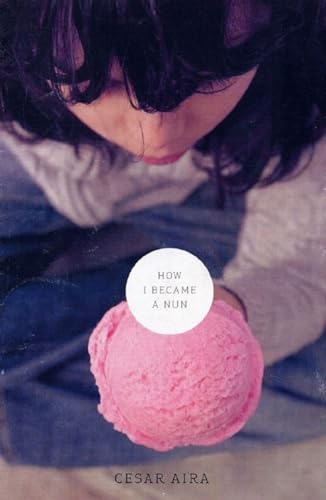
MY STORY, THE STORY of "how I became a nun," began very early in my life; I had just turned six. The beginning is marked by a vivid memory, which I can reconstruct down to the last detail. Before, there is nothing, and after, everything is an extension of the same vivid memory, continuous and unbroken, including the intervals of sleep, up to the point where I took the veil.We had moved to Rosario. For the first six years of my life, Mom, Dad and I lived in the province of Buenos Aires, in a town of which I have no recollection and to which I have not returned since: Coronel Pringles. The big city (as it seemed, by contrast) made an enormous impression on us. Within a few days of our arrival, my father kept a promise he had made: to buy me an ice cream. It was to be my first, since ice cream was not to be had in Pringles. Dad, who had been to the city as a young man, had on various occasions sung the praises of this delicacy, which he remembered as a glorious treat, although he was not able to put its special charm into words. He had described it to me, quite rightly, as something the uninitiated could not imagine, and that was all it took to plant "ice cream" in my childish mind, where it grew, taking on mythic proportions.
We made our way on foot to an ice-cream store that we had noticed the previous day. In we went. Dad ordered a fifty-cent ice cream for himself, with scoops of pistachio, sweet cream, and whisky-kumquat; for me, he ordered a ten-cent cone with a single scoop of strawberry. I loved the pink color. My frame of mind was positive. I was a devoted daughter. Dad could do no wrong in my eyes. We sat down on a sidewalk bench, under the trees (there were plane trees back then in downtown Rosario). I watched how Dad was doing it; in a matter of seconds he had disposed of his scoop of green ice cream. I dipped my little spoon in with great care and lifted it to my mouth.
No sooner had the first particles dissolved on my tongue than I felt physically ill. I had never tasted anything so revolting. I was rather fussy about food and had mastered the art of feigning disgust when I didn't feel like eating, but this went beyond anything I had ever tasted; it more than justified my worst exaggerations, even the ones I had refrained from acting out. For a fraction of a second I considered pretending. Dad had set his heart on making me happy, which was unusual, given his distant, irascible nature, averse to displays of affection, so it seemed a sin to spoil the occasion. I briefly envisioned the horrific prospect of eating the whole ice cream just to please him. It was only a thimbleful, the tiniest, kiddie-size cup, but at that moment it might as well have been a ton.
I don't know if my heroism would have stretched that far, but I didn't get a chance to put it to the test. The first mouthful provoked an involuntary grimace of disgust; Dad couldn't help but see. The grimace was almost exaggerated, expressing both the physiological reaction and its accompanying emotions: disillusion, fear, and the terrible sadness of being unable to bond with my father, even in the pursuit of a simple pleasure. Trying to hide it would have been absurd; even today, I couldn't hide it if I tried, because that grimace is still there on my face.
"What's wrong?"
Everything that was going to happen was audible in his tone.
Under normal circumstances I would have burst out crying at this point and been unable to reply. Like many hypersensitive children, I was perpetually on the verge of tears. But that horrendous taste, having descended into my throat, rose again like a backlash and sent a sudden shock through my body.
"Uggh ..."
"What?"
"It's ... awful."
"It's what?"
"Awful!" I shrieked in desperation.
"You don't like the ice cream?"
I remembered him saying as we walked to the store, among other remarks infused with pleasant anticipation, "We'll find out if you like ice cream." Naturally he said this assuming that I would. Don't all children? Some adults even remember their childhood as little more than a perpetual begging for ice cream. Which is why there was a tone of incredulous fatalism to his question, as if to say: "I don't believe it: even in a simple thing like this you're going to let me down."
I could see the indignation and scorn building in his eyes, but he controlled himself. He decided to give me another chance.
"Eat it. It's yummy," he said, and to prove it he scooped up a spoonful from his cone and put it into his mouth.
It was too late for me to back down now. The die was cast. In a way I didn't want to back down. I was beginning to realize that my only hope, having come this far, was to prove to Dad that what he had in his hands was revolting. I looked in horror at the pink of the ice cream. Farce was beginning to impinge on reality. Worse than that: farce was becoming reality, right in front of me, through me. I felt dizzy, but there was no turning back.
"It's awful! It's sickening!" I tried to whip myself into a frenzy. "It's foul!"
He said nothing. He stared into the empty space in front of him and quickly ate his ice cream. I was obviously getting nowhere, again. So, in a panic, I changed tack abruptly.
"It's bitter," I said.
"No, it's sweet" he replied with a forced and threatening gentleness.
"It's bitter!" I shouted.
"It's sweet."
"It's bitter!!"
Dad had already given up hope of getting any satisfaction from the outing. Sharing a pleasure and a moment of companionship: it was too late for all that now, and he must have been wondering how he could have been so nave, how he could ever have thought it possible. And yet, just to rub salt into his own wound, he set about trying to convince me of my mistake. Or to convince himself that I was his mistake.
"It's a very sweet strawberry-flavored ice cream-delicious."
I shook my head.
"No? So what flavor does it have then?"
"It's horrible!"
"I think it's delicious," he said calmly, gulping down another spoonful. His calmness was the most frightening thing of all.
My attempt to make peace was typically convoluted:
"I don't know how you can enjoy that junk," I said, in what was supposed to be an admiring tone of voice.
"Everyone likes ice cream," he said, white with rage. The mask of patience was slipping, and I don't know how I managed to hold back my tears. "Everyone except you, son, because you're a moron."
"No, Dad! I swear!"
"Eat that ice cream." (Coldly, sharply.) "I bought it for you to eat, you little moron."
"But I can't ...!"
"Eat it. Try it. You haven't even tried it."
Opening my eyes wide at this slur on my honesty (only a monster would have lied for the fun of it), I cried, "I swear it's horrible!"
"Of course it's not horrible. Try it." "I tried it already. I can't!"
Then he had an idea. He reverted to a condescending tone. "You know what it is? The coldness gave you a shock. Not the taste, but how cold it is. You'll soon get used to that, and then you'll realize how delicious it is."
I clutched at that straw. I wanted to believe in that possibility, which would never have occurred to me in a thousand years. But deep down l knew it was hopeless. It wasn't the coldness. I wasn't accustomed to ice-cold drinks (we didn't have a freezer) but I had tried them, and I knew...
„Über diesen Titel“ kann sich auf eine andere Ausgabe dieses Titels beziehen.
Suchergebnisse für How I Became a Nun

Beispielbild für diese ISBN
How I Became a Nun
Anbieter: World of Books (was SecondSale), Montgomery, IL, USA
Verkäuferbewertung 5 von 5 Sternen

Zustand: Good. Item in good condition. Textbooks may not include supplemental items i.e. CDs, access codes etc. Bestandsnummer des Verkäufers 00107517855
Gebraucht kaufen
EUR 5,24
Versand gratis
Versand innerhalb von USA
Versand innerhalb von USA
Anzahl: 1 verfügbar
Foto des Verkäufers
How I Became a Nun
Anbieter: Greenworld Books, Arlington, TX, USA
Verkäuferbewertung 5 von 5 Sternen
Zustand: good. Fast Free Shipping â" Good condition. It may show normal signs of use, such as light writing, highlighting, or library markings, but all pages are intact and the book is fully readable. A solid, complete copy that's ready to enjoy. Bestandsnummer des Verkäufers GWV.0811216314.G
Gebraucht kaufen
EUR 8,31
Versand gratis
Versand innerhalb von USA
Versand innerhalb von USA
Anzahl: 1 verfügbar
Beispielbild für diese ISBN
How I Became a Nun
Verlag:
New Directions Publishing Corporation, 2007
ISBN 10: 0811216314
ISBN 13: 9780811216319
Gebraucht
Paperback
Anbieter: ThriftBooks-Dallas, Dallas, TX, USA
Verkäuferbewertung 5 von 5 Sternen
Paperback. Zustand: Very Good. No Jacket. May have limited writing in cover pages. Pages are unmarked. ~ ThriftBooks: Read More, Spend Less. Bestandsnummer des Verkäufers G0811216314I4N00
Gebraucht kaufen
EUR 8,79
Versand gratis
Versand innerhalb von USA
Versand innerhalb von USA
Anzahl: 1 verfügbar
Beispielbild für diese ISBN
How I Became a Nun
Verlag:
New Directions Publishing Corporation, 2007
ISBN 10: 0811216314
ISBN 13: 9780811216319
Gebraucht
Paperback
Anbieter: ThriftBooks-Dallas, Dallas, TX, USA
Verkäuferbewertung 5 von 5 Sternen
Paperback. Zustand: Good. No Jacket. Pages can have notes/highlighting. Spine may show signs of wear. ~ ThriftBooks: Read More, Spend Less. Bestandsnummer des Verkäufers G0811216314I3N00
Gebraucht kaufen
EUR 8,79
Versand gratis
Versand innerhalb von USA
Versand innerhalb von USA
Anzahl: 1 verfügbar
Foto des Verkäufers
How I Became a Nun
Anbieter: Goodwill Books, Hillsboro, OR, USA
Verkäuferbewertung 5 von 5 Sternen
Zustand: good. Signs of wear and consistent use. Bestandsnummer des Verkäufers GICWV.0811216314.G
Gebraucht kaufen
EUR 5,35
EUR 3,45 Versand
Versand innerhalb von USA
Versand innerhalb von USA
Anzahl: 1 verfügbar
Foto des Verkäufers
How I Became a Nun
Anbieter: Blue Vase Books, Interlochen, MI, USA
Verkäuferbewertung 5 von 5 Sternen
Zustand: good. The item shows wear from consistent use, but it remains in good condition and works perfectly. All pages and cover are intact including the dust cover, if applicable . Spine may show signs of wear. Pages may include limited notes and highlighting. May NOT include discs, access code or other supplemental materials. Bestandsnummer des Verkäufers BVV.0811216314.G
Gebraucht kaufen
EUR 8,88
Versand gratis
Versand innerhalb von USA
Versand innerhalb von USA
Anzahl: 1 verfügbar
Foto des Verkäufers
How I Became a Nun
Anbieter: Big River Books, Powder Springs, GA, USA
Verkäuferbewertung 5 von 5 Sternen
Zustand: very_good. This book is in Very Good condition. The cover and pages have minor shelf wear. Binding is tight and pages are intact. Bestandsnummer des Verkäufers BRV.0811216314.VG
Gebraucht kaufen
EUR 8,92
EUR 3,45 Versand
Versand innerhalb von USA
Versand innerhalb von USA
Anzahl: 1 verfügbar
Foto des Verkäufers
How I Became a Nun
Anbieter: GreatBookPrices, Columbia, MD, USA
Verkäuferbewertung 5 von 5 Sternen
Zustand: New. Bestandsnummer des Verkäufers 4367070-n
Neu kaufen
EUR 10,69
EUR 2,28 Versand
Versand innerhalb von USA
Versand innerhalb von USA
Anzahl: 13 verfügbar
Foto des Verkäufers
How I Became a Nun
Verlag:
New Directions Publishing Corporation, US, 2007
ISBN 10: 0811216314
ISBN 13: 9780811216319
Neu
Paperback
Anbieter: Rarewaves USA, OSWEGO, IL, USA
Verkäuferbewertung 5 von 5 Sternen
Paperback. Zustand: New. The idea of the Native American living in perfect harmony with nature is one of the most cherished contemporary myths. But how truthful is this larger-than-life image? According to anthropologist Shepard Krech, the first humans in North America demonstrated all of the intelligence, self-interest, flexibility, and ability to make mistakes of human beings anywhere. As Nicholas Lemann put it in The New Yorker, "Krech is more than just a conventional-wisdom overturner; he has a serious larger point to make. . . . Concepts like ecology, waste, preservation, and even the natural (as distinct from human) world are entirely anachronistic when applied to Indians in the days before the European settlement of North America." "Offers a more complex portrait of Native American peoples, one that rejects mythologies, even those that both European and Native Americans might wish to embrace."-Washington Post "My story, the story of 'how I became a nun,' began very early in my life; I had just turned six. The beginning is marked by a vivid memory, which I can reconstruct down to the last detail. Before, there is nothing, and after, everything is an extension of the same vivid memory, continuous and unbroken, including the intervals of sleep, up to the point where I took the veil ." So starts Cesar Aira's astounding "autobiographical" novel. Intense and perfect, this invented narrative of childhood experience bristles with dramatic humor at each stage of growing up: a first ice cream, school, reading, games, friendship. The novel begins in Aira's hometown, Coronel Pringles. As self-awareness grows, the story rushes forward in a torrent of anecdotes which transform a world of uneventful happiness into something else: the anecdote becomes adventure, and adventure, fable, and then legend. Between memory and oblivion, reality and fiction, Cesar Aira's How I Became a Nun retains childhood's main treasures: the reality of fable and the delirium of invention.A few days after his fiftieth birthday, Aira noticed the thin rim of the moon, visible despite the rising sun. When his wife explained the phenomenon to him he was shocked that for fifty years he had known nothing about "something so obvious, so visible." This epiphany led him to write How I Became a Nun. With a subtle and melancholic sense of humor he reflects on his failures, on the meaning of life and the importance of literature. Bestandsnummer des Verkäufers LU-9780811216319
Foto des Verkäufers
How I Became a Nun (Paperback or Softback)
Verlag:
New Directions Publishing Corporation 2/28/2007, 2007
ISBN 10: 0811216314
ISBN 13: 9780811216319
Neu
Paperback or Softback
Anbieter: BargainBookStores, Grand Rapids, MI, USA
Verkäuferbewertung 5 von 5 Sternen
Paperback or Softback. Zustand: New. How I Became a Nun. Book. Bestandsnummer des Verkäufers BBS-9780811216319