
Verwandte Artikel zu The First Crusade and the Idea of Crusading (The Middle...
Inhaltsangabe
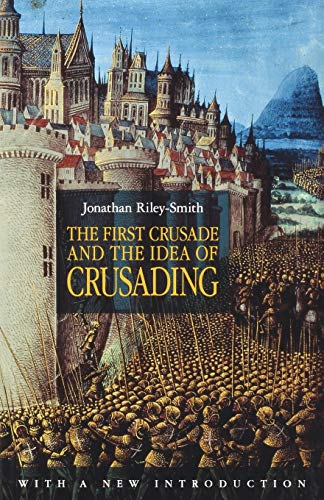
Focusing on the inner workings of the First Crusade in a way that no other work has done, The First Crusade and the Idea of Crusading delves into the Crusade's organization, its finances, and the division of authority and responsibility among its leaders and their relationships with one another and with their subordinates.
In the year 1095, Pope Urban II initiated what is known today as the First Crusade. His summons of the lay knights to the faith between 1095 and 1096 was Urban II's personal response to an appeal that had reached him from eastern Christians, the Pope referred to the struggle ahead as Christ's own war, to be fought in accordance with God's will and intentions. It was, too, called a war of liberation, designed to free the church and city of Jerusalem from oppression and pillage by the Muslims while liberating western Church from the errors into which it had fallen.
In this classic work, presented here with a new introduction, one of the world's most renowned crusade historians approaches this central topic of medieval history with freshness and impeccable research. Through the vivid presentation of a wide range of European chronicles and charter collections, Jonathan Riley-Smith provides a striking illumination of crusader motives and responses and a thoughtful analysis of the mechanisms that made this expedition successful.
Die Inhaltsangabe kann sich auf eine andere Ausgabe dieses Titels beziehen.
Über die Autorin bzw. den Autor
Jonathan Riley-Smith is Dixie Professor Emeritus of Ecclesiastical History at the University of Cambridge and author of many books, most recently The Crusades, Christianity, and Islam.
Auszug. © Genehmigter Nachdruck. Alle Rechte vorbehalten.
Introduction
The First Crusade was an extraordinary three-year epic which ended in triumph, in spite of the fact that almost every acknowledged rule of generalship was broken. The army which mustered across the Bosphorus in May 1097 and helped take the city of Nicaea consisted of rather more than 20,000 fighting men, of whom c.5,000 were knights, accompanied by perhaps 15,000 male and female pilgrims. Its leaders had expected to join a great Byzantine army under the emperor himself, who had been writing not only to the pope but also to western magnates like themselves, proposing that Jerusalem be restored to Christian control. Now, concluding that he had no intention of committing himself to such an adventure, they decided to break out on their own and to march for Jerusalem 1,200 miles away, at the height of summer and across alien territory which for over a third of the distance had been ravaged by nomadic Turks.
They could not have known that they were approaching a half open door. The recent deaths of the Fatimid caliph al-Mustansir, who had ruled Egypt for fifty-eight years, and his vizier, Badr al-Jamali, and of the 'Abbasid caliph al-Muqtadi, together with the Selchük Sultan Malikshah and his long-serving and powerful vizier, Nizam al-Mulk, had gravely weakened the two chief Muslim powers in the region. The Selchük sultanate, which stretched from Asia Minor to Iran, had disintegrated into principalities over which pretenders and members of the ruling family fought each other for control.
But the opposition the crusade faced was still potent and the deficiencies in the Christian army shambling to the East were apparent. Drawn from all over western Europe, it had no easy means of communication, because, even though most of the leaders came from what is now France, men from the north and from Languedoc could not understand one another. There was no commander-in-chief and the enterprise was run by a committee of the greater lords, who found it hard to agree on anything. Each of them had authority only over his household, and possibly his closer relations, because most arms-bearers, who were free-agents, drifted here and there, attaching themselves to anyone who could assure them and their little bands of followers of food and security.
The march would have been difficult in the best of conditions, which these were not. There was no system of provisioning and for long periods the crusaders were far from potential supply points. Most of their time was taken up in foraging. They had to fight most of their battles on foot, because they lost nearly all their horses and, even more seriously, their pack animals, so that they had to carry their baggage themselves. Research on the death rate among them suggests that for the knights it was in the region of 36 percent. Mortality must have been far higher among the poor.
The decision in late June 1097 to press on regardless of any assistance from the Byzantine Greeks was not the only gamble the leaders took. Nearly two years later, in May 1099, having progressed slowly with a strategy, such as it was, dominated by a determination to reduce methodically the stronger points down the Syrian coast, they suddenly decided to ignore the cities that stood in their path and make a dash for Jerusalem. Negotiations with the Egypt, which they knew was preparing a formidable army, had broken down and they wanted to reach their goal before it could be relieved. They covered the last 170 miles in little more than three weeks and whereas the city of Antioch in northern Syria had been besieged for eight months and then taken only through treachery, Jerusalem was stormed after only five weeks; indeed the first evidence we have for westerners knowing how to deploy a wide range of technologically advanced siege weaponry is to be found in the accounts of the assault on it.
It was conventional wisdom that the investment of strong points should be avoided if armies of relief were in the wings, because any force settled into a siege was handicapped by its posture. The crusaders paid no attention to this doctrine. They beat off three such armies and they took on two others that arrived on the scene just after cities had been successfully taken. They were not fools. They knew how weak they were and what risks they took. It is not surprising that they attributed their triumph to divine assistance or that their achievement enthralled their contemporaries and was venerated as a model of heroism and endurance for many centuries to some.
* * * *
My interest in the crusade led me to write two research books on it. The First Crusade and the Idea of Crusading was the first of them. I had come to the topic by an indirect route. In the 1970s I had discovered—rather late in the day—the writings of the militants of the South American Liberation movement and they had sparked an interest in the history of theories of Christian violence. I had planned to write a full account of the Christian theology of force and I had embarked on a serious reading of the scattered writings of St. Augustine of Hippo, the greatest of the early theorists.
By 1980 I was beginning to quail at the amount of ground I still had to cover and I started to focus on a much less ambitious project, a study of theory with reference to the First Crusade. This was mostly because I had persuaded myself that the crusade was the pivot around which the history of Christian war-theories turned. I became convinced that the ideas preached by Pope Urban II in 1095-6 were inchoate and that crusade theory would not have developed as it did were it not for the experiences on the march of the participants, whom I tried to treat as sympathetically as I could, and for the way these experiences were written up in theological terms by three accomplished monastic authors a decade later.
Becoming closely involved in the course of the expedition I found myself imagining what the crusaders had gone through. I had already begun to look at some of the charter-material, although I had no idea how much it there would prove to be. I wanted to ask whether light could be thrown on the reasons why men and women had been prepared to engage in something so severe and unpleasant. The second book was therefore complementary. It treated motivation rather than ideas and concentrated on the departure and return of the crusaders rather than on the campaign.
The books were published eleven years apart and straddled the nine-hundredth anniversary of the preaching of the crusade. This was commemorated in 1995 with conferences in England, Spain and France, where two ran concurrently at Clermont-Ferrand, organized by the Conseil Régional d'Auvergne and the Society for the Study of the Crusades and the Latin East. There was rumoured to be a third in the town at the same time, dedicated to a critique of bigotry and religious zealotry and convened by the local free-thinkers. At any rate, interest in the crusade was rekindled and publishers began to commission new general histories of the crusading movement. I do not think, however, that anything has appeared to modify my basic arguments, although I am now certain that Pope Urban's original message was more radical than I supposed, because I have become convinced that the most important element in it was the call to war as a penance.
* * * *
The books are best known—and controversial—for their empathetic treatment of the crusaders. They represent an approach which, as far as I am concerned, was first introduced forty years ago by Jean Richard in a preface to a little book of translated texts, in which he discussed briefly the themes of charity and penitence which have so absorbed me since. Other recent examples of this way of considering early crusading are books written by Marcus Bull and William Purkis, and...
„Über diesen Titel“ kann sich auf eine andere Ausgabe dieses Titels beziehen.
Suchergebnisse für The First Crusade and the Idea of Crusading (The Middle...

Beispielbild für diese ISBN
The First Crusade and the Idea of Crusading (The Middle Ages Series)
Verlag:
University of Pennsylvania Press, 2009
ISBN 10: 0812220765
ISBN 13: 9780812220766
Gebraucht
Softcover
Anbieter: Bookseller909, Granger, IA, USA
Verkäuferbewertung 5 von 5 Sternen

Zustand: Good. Used - Good. Book may not contain supplemental items such as CDs, access codes, etc. Bestandsnummer des Verkäufers 11-B-0066
Gebraucht kaufen
EUR 10,12
EUR 3,57 Versand
Versand innerhalb von USA
Versand innerhalb von USA
Anzahl: 1 verfügbar
Beispielbild für diese ISBN
The First Crusade and the Idea of Crusading (The Middle Ages Series)
Verlag:
University of Pennsylvania Press, 2009
ISBN 10: 0812220765
ISBN 13: 9780812220766
Gebraucht
Softcover
Anbieter: Bookseller909, Granger, IA, USA
Verkäuferbewertung 5 von 5 Sternen
Zustand: Acceptable. Used - Acceptable. Previous owner left stickers on cover. Book may not contain supplemental items such as CDs, access codes, etc. Bestandsnummer des Verkäufers 11-B-0067
Gebraucht kaufen
EUR 10,12
EUR 3,57 Versand
Versand innerhalb von USA
Versand innerhalb von USA
Anzahl: 2 verfügbar
Foto des Verkäufers
First Crusade and the Idea of Crusading
Verlag:
University of Pennsylvania Press, 2009
ISBN 10: 0812220765
ISBN 13: 9780812220766
Neu
Softcover
Anbieter: GreatBookPrices, Columbia, MD, USA
Verkäuferbewertung 5 von 5 Sternen
Zustand: New. Bestandsnummer des Verkäufers 6650974-n
Neu kaufen
EUR 27,13
EUR 2,36 Versand
Versand innerhalb von USA
Versand innerhalb von USA
Anzahl: Mehr als 20 verfügbar
Foto des Verkäufers
The First Crusade and the Idea of Crusading (Paperback or Softback)
Verlag:
University of Pennsylvania Press 11/1/2009, 2009
ISBN 10: 0812220765
ISBN 13: 9780812220766
Neu
Paperback or Softback
Anbieter: BargainBookStores, Grand Rapids, MI, USA
Verkäuferbewertung 5 von 5 Sternen
Paperback or Softback. Zustand: New. The First Crusade and the Idea of Crusading. Book. Bestandsnummer des Verkäufers BBS-9780812220766
Foto des Verkäufers
The First Crusade and the Idea of Crusading
Verlag:
University of Pennsylvania Press, US, 2009
ISBN 10: 0812220765
ISBN 13: 9780812220766
Neu
Paperback
Anbieter: Rarewaves USA, HEBRON, KY, USA
Verkäuferbewertung 5 von 5 Sternen
Paperback. Zustand: New. 2nd ed. Focusing on the inner workings of the First Crusade in a way that no other work has done, The First Crusade and the Idea of Crusading delves into the Crusade's organization, its finances, and the division of authority and responsibility among its leaders and their relationships with one another and with their subordinates. In the year 1095, Pope Urban II initiated what is known today as the First Crusade. His summons of the lay knights to the faith between 1095 and 1096 was Urban II's personal response to an appeal that had reached him from eastern Christians, the Pope referred to the struggle ahead as Christ's own war, to be fought in accordance with God's will and intentions. It was, too, called a war of liberation, designed to free the church and city of Jerusalem from oppression and pillage by the Muslims while liberating western Church from the errors into which it had fallen. In this classic work, presented here with a new introduction, one of the world's most renowned crusade historians approaches this central topic of medieval history with freshness and impeccable research.Through the vivid presentation of a wide range of European chronicles and charter collections, Jonathan Riley-Smith provides a striking illumination of crusader motives and responses and a thoughtful analysis of the mechanisms that made this expedition successful. Bestandsnummer des Verkäufers LU-9780812220766
Neu kaufen
EUR 30,24
Versand gratis
Versand innerhalb von USA
Versand innerhalb von USA
Anzahl: Mehr als 20 verfügbar
Foto des Verkäufers
First Crusade and the Idea of Crusading
Verlag:
University of Pennsylvania Press, 2009
ISBN 10: 0812220765
ISBN 13: 9780812220766
Gebraucht
Softcover
Anbieter: GreatBookPrices, Columbia, MD, USA
Verkäuferbewertung 5 von 5 Sternen
Zustand: As New. Unread book in perfect condition. Bestandsnummer des Verkäufers 6650974
Gebraucht kaufen
EUR 28,05
EUR 2,36 Versand
Versand innerhalb von USA
Versand innerhalb von USA
Anzahl: Mehr als 20 verfügbar
Beispielbild für diese ISBN
The First Crusade and the Idea of Crusading (The Middle Ages Series)
Verlag:
University of Pennsylvania Press, 2009
ISBN 10: 0812220765
ISBN 13: 9780812220766
Neu
Softcover
Anbieter: California Books, Miami, FL, USA
Verkäuferbewertung 5 von 5 Sternen
Zustand: New. Bestandsnummer des Verkäufers I-9780812220766
Neu kaufen
EUR 31,34
EUR 2,68 Versand
Versand innerhalb von USA
Versand innerhalb von USA
Anzahl: Mehr als 20 verfügbar
Foto des Verkäufers
The First Crusade and the Idea of Crusading
Verlag:
University of Pennsylvania Press, US, 2009
ISBN 10: 0812220765
ISBN 13: 9780812220766
Neu
Paperback
Anbieter: Rarewaves.com USA, London, LONDO, Vereinigtes Königreich
Verkäuferbewertung 5 von 5 Sternen
Paperback. Zustand: New. 2nd ed. Focusing on the inner workings of the First Crusade in a way that no other work has done, The First Crusade and the Idea of Crusading delves into the Crusade's organization, its finances, and the division of authority and responsibility among its leaders and their relationships with one another and with their subordinates. In the year 1095, Pope Urban II initiated what is known today as the First Crusade. His summons of the lay knights to the faith between 1095 and 1096 was Urban II's personal response to an appeal that had reached him from eastern Christians, the Pope referred to the struggle ahead as Christ's own war, to be fought in accordance with God's will and intentions. It was, too, called a war of liberation, designed to free the church and city of Jerusalem from oppression and pillage by the Muslims while liberating western Church from the errors into which it had fallen. In this classic work, presented here with a new introduction, one of the world's most renowned crusade historians approaches this central topic of medieval history with freshness and impeccable research.Through the vivid presentation of a wide range of European chronicles and charter collections, Jonathan Riley-Smith provides a striking illumination of crusader motives and responses and a thoughtful analysis of the mechanisms that made this expedition successful. Bestandsnummer des Verkäufers LU-9780812220766
Neu kaufen
EUR 36,71
Versand gratis
Versand von Vereinigtes Königreich nach USA
Versand von Vereinigtes Königreich nach USA
Anzahl: Mehr als 20 verfügbar
Beispielbild für diese ISBN
The First Crusade and the Idea of Crusading
Anbieter: Revaluation Books, Exeter, Vereinigtes Königreich
Verkäuferbewertung 5 von 5 Sternen
Paperback. Zustand: Brand New. 232 pages. 8.50x5.50x0.70 inches. In Stock. Bestandsnummer des Verkäufers x-0812220765
Neu kaufen
EUR 38,26
EUR 11,94 Versand
Versand von Vereinigtes Königreich nach USA
Versand von Vereinigtes Königreich nach USA
Anzahl: 2 verfügbar
Beispielbild für diese ISBN
The First Crusade and the Idea of Crusading
Verlag:
University of Pennsylvania Press, Philadelphia, 2009
ISBN 10: 0812220765
ISBN 13: 9780812220766
Gebraucht
Soft Cover
Erstausgabe
Anbieter: Webbooks, Wigtown, Wigtown, Vereinigtes Königreich
Verkäuferbewertung 5 von 5 Sternen
Soft Cover. Zustand: Very Good. No Jacket. Reprint. Lightly worn copy. Bestandsnummer des Verkäufers 012886
Gebraucht kaufen
EUR 14,76
EUR 35,83 Versand
Versand von Vereinigtes Königreich nach USA
Versand von Vereinigtes Königreich nach USA
Anzahl: 1 verfügbar