
Verwandte Artikel zu The Color Revolutions
Inhaltsangabe
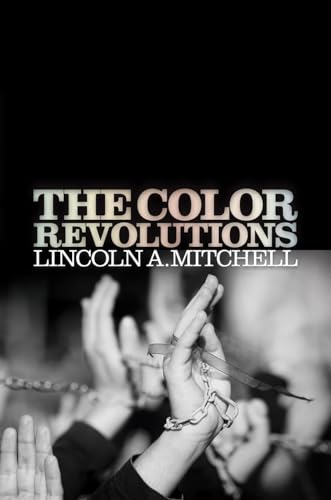
From late 2003 through mid-2005, a series of peaceful street protests toppled corrupt and undemocratic regimes in Georgia, Ukraine, and Kyrgyzstan and ushered in the election of new presidents in all three nations. These movements—collectively known as the Color Revolutions—were greeted in the West as democratic breakthroughs that might thoroughly reshape the political terrain of the former Soviet Union.
But as Lincoln A. Mitchell explains in The Color Revolutions, it has since become clear that these protests were as much reflections of continuity as they were moments of radical change. Not only did these movements do little to spur democratic change in other post-Soviet states, but their impact on Georgia, Ukraine, and Kyrgyzstan themselves was quite different from what was initially expected. In fact, Mitchell suggests, the Color Revolutions are best understood as phases in each nation's long post-Communist transition: significant events, to be sure, but far short of true revolutions.
The Color Revolutions explores the causes and consequences of all three Color Revolutions—the Rose Revolution in Georgia, the Orange Revolution in Ukraine, and the Tulip Revolution in Kyrgyzstan—identifying both common themes and national variations. Mitchell's analysis also addresses the role of American democracy promotion programs, the responses of nondemocratic regimes to the Color Revolutions, the impact of these events on U.S.-Russian relations, and the failed "revolutions" in Azerbaijan and Belarus in 2005 and 2006.
At a time when the Arab Spring has raised hopes for democratic development in the Middle East, Mitchell's account of the Color Revolutions serves as a valuable reminder of the dangers of confusing dramatic moments with lasting democratic breakthroughs.
Die Inhaltsangabe kann sich auf eine andere Ausgabe dieses Titels beziehen.
Über die Autorin bzw. den Autor
Lincoln A. Mitchell is Associate Research Scholar at the Harriman Institute, Columbia University and author of Uncertain Democracy: U.S. Foreign Policy and Georgia's Rose Revolution, also available from the University of Pennsylvania Press.
„Über diesen Titel“ kann sich auf eine andere Ausgabe dieses Titels beziehen.
Suchergebnisse für The Color Revolutions

Beispielbild für diese ISBN
The Color Revolutions
Verlag:
University of Pennsylvania Press, 2012
ISBN 10: 0812244176
ISBN 13: 9780812244175
Gebraucht
Hardcover
Anbieter: Better World Books, Mishawaka, IN, USA
Verkäuferbewertung 5 von 5 Sternen

Zustand: Good. Pages intact with minimal writing/highlighting. The binding may be loose and creased. Dust jackets/supplements are not included. Stock photo provided. Product includes identifying sticker. Better World Books: Buy Books. Do Good. Bestandsnummer des Verkäufers 68115139-6
Gebraucht kaufen
EUR 54,39
Versand gratis
Versand innerhalb von USA
Versand innerhalb von USA
Anzahl: 1 verfügbar
Foto des Verkäufers
Color Revolutions
Verlag:
University of Pennsylvania Press, 2012
ISBN 10: 0812244176
ISBN 13: 9780812244175
Neu
Hardcover
Anbieter: GreatBookPrices, Columbia, MD, USA
Verkäuferbewertung 5 von 5 Sternen
Zustand: New. Bestandsnummer des Verkäufers 18267594-n
Neu kaufen
EUR 84,69
EUR 2,36 Versand
Versand innerhalb von USA
Versand innerhalb von USA
Anzahl: 4 verfügbar
Foto des Verkäufers
The Color Revolutions
Verlag:
University of Pennsylvania Press, US, 2012
ISBN 10: 0812244176
ISBN 13: 9780812244175
Neu
Hardcover
Anbieter: Rarewaves USA, HEBRON, KY, USA
Verkäuferbewertung 5 von 5 Sternen
Hardback. Zustand: New. From late 2003 through mid-2005, a series of peaceful street protests toppled corrupt and undemocratic regimes in Georgia, Ukraine, and Kyrgyzstan and ushered in the election of new presidents in all three nations. These movements-collectively known as the Color Revolutions-were greeted in the West as democratic breakthroughs that might thoroughly reshape the political terrain of the former Soviet Union. But as Lincoln A. Mitchell explains in The Color Revolutions, it has since become clear that these protests were as much reflections of continuity as they were moments of radical change. Not only did these movements do little to spur democratic change in other post-Soviet states, but their impact on Georgia, Ukraine, and Kyrgyzstan themselves was quite different from what was initially expected. In fact, Mitchell suggests, the Color Revolutions are best understood as phases in each nation's long post-Communist transition: significant events, to be sure, but far short of true revolutions. The Color Revolutions explores the causes and consequences of all three Color Revolutions-the Rose Revolution in Georgia, the Orange Revolution in Ukraine, and the Tulip Revolution in Kyrgyzstan-identifying both common themes and national variations. Mitchell's analysis also addresses the role of American democracy promotion programs, the responses of nondemocratic regimes to the Color Revolutions, the impact of these events on U.S.-Russian relations, and the failed "revolutions" in Azerbaijan and Belarus in 2005 and 2006. At a time when the Arab Spring has raised hopes for democratic development in the Middle East, Mitchell's account of the Color Revolutions serves as a valuable reminder of the dangers of confusing dramatic moments with lasting democratic breakthroughs. Bestandsnummer des Verkäufers LU-9780812244175
Neu kaufen
EUR 87,12
Versand gratis
Versand innerhalb von USA
Versand innerhalb von USA
Anzahl: Mehr als 20 verfügbar
Foto des Verkäufers
Color Revolutions
Verlag:
University of Pennsylvania Press, 2012
ISBN 10: 0812244176
ISBN 13: 9780812244175
Gebraucht
Hardcover
Anbieter: GreatBookPrices, Columbia, MD, USA
Verkäuferbewertung 5 von 5 Sternen
Zustand: As New. Unread book in perfect condition. Bestandsnummer des Verkäufers 18267594
Gebraucht kaufen
EUR 96,61
EUR 2,36 Versand
Versand innerhalb von USA
Versand innerhalb von USA
Anzahl: 4 verfügbar
Beispielbild für diese ISBN
The Color Revolutions
Verlag:
University of Pennsylvania Press, 2012
ISBN 10: 0812244176
ISBN 13: 9780812244175
Neu
Hardcover
Anbieter: California Books, Miami, FL, USA
Verkäuferbewertung 5 von 5 Sternen
Zustand: New. Bestandsnummer des Verkäufers I-9780812244175
Neu kaufen
EUR 101,15
Versand gratis
Versand innerhalb von USA
Versand innerhalb von USA
Anzahl: Mehr als 20 verfügbar
Foto des Verkäufers
Color Revolutions
Verlag:
University of Pennsylvania Press, 2012
ISBN 10: 0812244176
ISBN 13: 9780812244175
Neu
Hardcover
Anbieter: GreatBookPricesUK, Woodford Green, Vereinigtes Königreich
Verkäuferbewertung 5 von 5 Sternen
Zustand: New. Bestandsnummer des Verkäufers 18267594-n
Neu kaufen
EUR 91,29
EUR 17,75 Versand
Versand von Vereinigtes Königreich nach USA
Versand von Vereinigtes Königreich nach USA
Anzahl: Mehr als 20 verfügbar
Foto des Verkäufers
Color Revolutions
Verlag:
University of Pennsylvania Press, 2012
ISBN 10: 0812244176
ISBN 13: 9780812244175
Gebraucht
Hardcover
Anbieter: GreatBookPricesUK, Woodford Green, Vereinigtes Königreich
Verkäuferbewertung 5 von 5 Sternen
Zustand: As New. Unread book in perfect condition. Bestandsnummer des Verkäufers 18267594
Gebraucht kaufen
EUR 103,59
EUR 17,75 Versand
Versand von Vereinigtes Königreich nach USA
Versand von Vereinigtes Königreich nach USA
Anzahl: Mehr als 20 verfügbar
Foto des Verkäufers
The Color Revolutions
Anbieter: moluna, Greven, Deutschland
Verkäuferbewertung 5 von 5 Sternen
Zustand: New. This book explores the origins of the Color Revolutions in Georgia, Ukraine, and Kyrgyzstan, asking what made them possible and what their impact was in each of these three countries. Ultimately, it argues that they had little impact on democratic developme. Bestandsnummer des Verkäufers 595036140
Neu kaufen
EUR 82,11
EUR 48,99 Versand
Versand von Deutschland nach USA
Versand von Deutschland nach USA
Anzahl: Mehr als 20 verfügbar
Beispielbild für diese ISBN
The Color Revolutions
Verlag:
University of Pennsylvania Press, 2012
ISBN 10: 0812244176
ISBN 13: 9780812244175
Neu
Hardcover
Anbieter: THE SAINT BOOKSTORE, Southport, Vereinigtes Königreich
Verkäuferbewertung 5 von 5 Sternen
Hardback. Zustand: New. This item is printed on demand. New copy - Usually dispatched within 5-9 working days. Bestandsnummer des Verkäufers C9780812244175
Neu kaufen
EUR 115,26
EUR 19,26 Versand
Versand von Vereinigtes Königreich nach USA
Versand von Vereinigtes Königreich nach USA
Anzahl: Mehr als 20 verfügbar
Foto des Verkäufers
The Color Revolutions
Verlag:
University of Pennsylvania Press, US, 2012
ISBN 10: 0812244176
ISBN 13: 9780812244175
Neu
Hardcover
Anbieter: Rarewaves USA United, HEBRON, KY, USA
Verkäuferbewertung 5 von 5 Sternen
Hardback. Zustand: New. From late 2003 through mid-2005, a series of peaceful street protests toppled corrupt and undemocratic regimes in Georgia, Ukraine, and Kyrgyzstan and ushered in the election of new presidents in all three nations. These movements-collectively known as the Color Revolutions-were greeted in the West as democratic breakthroughs that might thoroughly reshape the political terrain of the former Soviet Union. But as Lincoln A. Mitchell explains in The Color Revolutions, it has since become clear that these protests were as much reflections of continuity as they were moments of radical change. Not only did these movements do little to spur democratic change in other post-Soviet states, but their impact on Georgia, Ukraine, and Kyrgyzstan themselves was quite different from what was initially expected. In fact, Mitchell suggests, the Color Revolutions are best understood as phases in each nation's long post-Communist transition: significant events, to be sure, but far short of true revolutions. The Color Revolutions explores the causes and consequences of all three Color Revolutions-the Rose Revolution in Georgia, the Orange Revolution in Ukraine, and the Tulip Revolution in Kyrgyzstan-identifying both common themes and national variations. Mitchell's analysis also addresses the role of American democracy promotion programs, the responses of nondemocratic regimes to the Color Revolutions, the impact of these events on U.S.-Russian relations, and the failed "revolutions" in Azerbaijan and Belarus in 2005 and 2006. At a time when the Arab Spring has raised hopes for democratic development in the Middle East, Mitchell's account of the Color Revolutions serves as a valuable reminder of the dangers of confusing dramatic moments with lasting democratic breakthroughs. Bestandsnummer des Verkäufers LU-9780812244175
Neu kaufen
EUR 91,30
EUR 44,64 Versand
Versand innerhalb von USA
Versand innerhalb von USA
Anzahl: Mehr als 20 verfügbar