
Inhaltsangabe
“The Flamboya Tree is a fascinating story that will leave the reader informed about a missing piece of the World War II experience, and in awe of one family’s survival.”
—Elizabeth M. Norman, author of We Band of Angels: The Untold Story of American Nurses Trapped on Bataan by the Japanese
“It is a well-known fact that war, any war, is senseless and degrading. When innocent people are brought into that war because they happen to be in the wrong place at the wrong time, it becomes incomprehensible. Java, 1942, was such a place and time, and we were those innocent people.”
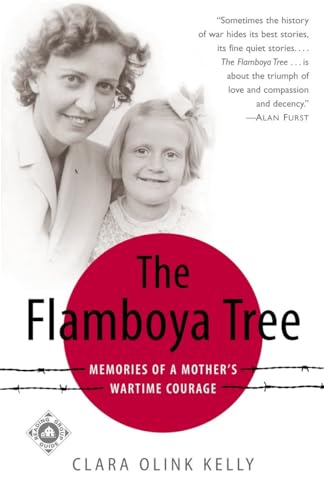
Fifty years after the end of World War II, Clara Olink Kelly sat down to write a memoir that is both a fierce and enduring testament to a mother’s courage and a poignant record of an often overlooked chapter of the war.
As the fighting in the Pacific spread, four-year-old Clara Olink and her family found their tranquil, pampered lives on the beautiful island of Java torn apart by the invasion of Japanese troops. Clara’s father was taken away, forced to work on the Burma railroad. For Clara, her mother, and her two brothers, the younger one only six weeks old, an insistent knock on the door ended all hope of escaping internment in a concentration camp. For nearly four years, they endured starvation, filth-ridden living conditions, sickness, and the danger of violence from their prison guards. Clara credits her mother with their survival: Even in the most perilous of situations, Clara’s mother never compromised her beliefs, never admitted defeat, and never lost her courage. Her resilience sustained her three children through their frightening years in the camp.
Told through the eyes of a young Clara, who was eight at the end of her family’s ordeal, The Flamboya Tree portrays her mother’s tenacity, the power of hope and humor, and the buoyancy of a child’s spirit. A painting of a flamboya tree—a treasured possession of the family’s former life—miraculously survived the surprise searches by the often brutal Japanese soldiers and every last-minute flight. Just as her mother carried this painting through the years of imprisonment and the life that followed, so Clara carries her mother’s unvanquished spirit through all of her experiences and into the reader’s heart.
Die Inhaltsangabe kann sich auf eine andere Ausgabe dieses Titels beziehen.
Über die Autorin bzw. den Autor
Clara Olink Kelly lives in Bellingham, Washington, with her husband. When she is not painting or creating other artwork, she loves nothing better than to spend time with her children and grandchildren. The Flamboya Tree is her first book.
Von der hinteren Coverseite
"The Flamboya Tree is a fascinating story that will leave the reader informed about a missing piece of the World War II experience, and in awe of one family's survival."
--Elizabeth M. Norman, author of We Band of Angels: The Untold Story of American Nurses Trapped on Bataan by the Japanese
"It is a well-known fact that war, any war, is senseless and degrading. When innocent people are brought into that war because they happen to be in the wrong place at the wrong time, it becomes incomprehensible. Java, 1942, was such a place and time, and we were those innocent people."
Fifty years after the end of World War II, Clara Olink Kelly sat down to write a memoir that is both a fierce and enduring testament to a mother's courage and a poignant record of an often overlooked chapter of the war.
As the fighting in the Pacific spread, four-year-old Clara Olink and her family found their tranquil, pampered lives on the beautiful island of Java torn apart by the invasion of Japanese troops. Clara's father was taken away, forced to work on the Burma railroad. For Clara, her mother, and her two brothers, the younger one only six weeks old, an insistent knock on the door ended all hope of escaping internment in a concentration camp. For nearly four years, they endured starvation, filth-ridden living conditions, sickness, and the danger of violence from their prison guards. Clara credits her mother with their survival: Even in the most perilous of situations, Clara's mother never compromised her beliefs, never admitted defeat, and never lost her courage. Her resilience sustained her three children through their frightening years in the camp.
Told through the eyes of a young Clara, who was eight at the end of her family's ordeal, The Flamboya Tree portrays her mother's tenacity, the power of hope and humor, and the buoyancy of a child's spirit. A painting of a flamboya tree--a treasured possession of the family's former life--miraculously survived the surprise searches by the often brutal Japanese soldiers and every last-minute flight. Just as her mother carried this painting through the years of imprisonment and the life that followed, so Clara carries her mother's unvanquished spirit through all of her experiences and into the reader's heart.
"From the Hardcover edition.
Auszug. © Genehmigter Nachdruck. Alle Rechte vorbehalten.
Chapter 1
Holland, 1946
"Why didn't you try to escape?"
That was all she said. Not "Thank God you made it. Now you are safe."
"Why didn't you try to escape?"
Why was she saying that? She was supposed to be so happy to see us. I saw again in my mind's eye the barbwire fences and the soldiers with their glistening bayonets, and felt once more that excruciating fear in the pit of my stomach. Try to escape? Lots of people had tried to escape.
I pushed the brutal memory from my mind. How long had we lived for this very moment? Through all those years, the words "when we get back to Holland" had sustained us. There had been no doubt in our minds that one day we would return to Holland to meet aunts and uncles, as well as cousins our own age. We had talked about celebrations with real cakes, and cookies, and lemonade. It was going to be such a happy time. I had imagined my grandmother telling us how lovely it was to see us at last. How big we'd grown, how pretty and handsome we looked. We had never met her, though we had heard so many wonderful tales about her. And now here we were in Holland, standing on her doorstep, and all we could do was stare at one another as though we were all waiting for something very special to happen.
Why hadn't we tried to escape?
It felt like a rebuke. We must not have tried hard enough. I looked over at my mother, wanting to protect her from the harsh words. My poor, sweet mother was obviously in a lot of pain, standing there on her infected, swollen legs. Sometimes she could hardly walk on them, let alone run. And wasn't that what you did when you tried to escape-run? Run as fast as you could? Glancing back at my grandmother, I began to feel very uncomfortable. She was standing there studying each of us in turn. Our pasty yellow skin and sunken eyes. Our bones sticking out through our worn, donated clothes. And worst of all, our filthy, lice-infested heads. She saw it all, and her eyes welled with tears.
My mother, my two brothers, Willem and Gijs, and I had only that day returned to Holland, my mother's homeland, after spending more than three and a half years in a Japanese concentration camp in Indonesia. We were not a pretty sight, and we had caught my grandmother completely off guard.
The ambulance drivers who had brought us here from the boat finally broke the awkward silence. They were still carrying the stretcher on which my oldest brother, Willem, lay covered with blankets. He was extremely ill with double pneumonia, and they were anxious to get him out of the damp, chilly air. My grandmother pulled herself upright and immediately motioned us all to come into the house. Gijs and I held tightly on to each other's hands and followed closely behind our mother as she hobbled painfully up the stone steps. Her beriberi was so bad by this time that she could probably not have survived more than a few months longer in the concentration camp.
"Is this another camp?" Gijs asked once we were inside and he had looked all around. "Where are the other people?"
Having been born just weeks before we were interned, he had grown up in the camps and had known only those overcrowded, filthy conditions as the way of life. This large, empty house was alien to him, as well as to me. We expected a horde of people to appear from every doorway.
As we milled around in the spacious hall, my grandmother asked the ambulance men to follow her upstairs with the stretcher so Willem could be put to bed. She was taken aback when Willem protested vehemently. Sick as he was, he was desperately trying to get off the stretcher to stay with us. My mother rushed to his side to reassure him and asked that he be allowed to lie in the same room where we would all be. Our many years of living in fear now made us want to stick close together.
While all this was going on, Gijs and I glanced nervously up the curving staircase to watch for anyone else up there. We could not believe that our grandmother lived all alone in such a big house. Our grandfather had died when our mother was just a young girl.
Many doorways opened off the hallway. Oriental carpets covered the hardwood floors, and ornate polished furniture filled the rooms. Everything shone and sparkled with a cleanliness unknown to us, as we had concentrated on simply staying alive. In the living room, little tables covered in pretty embroidered cloths stood ready to serve dainty sweets and teas from silver teapots. Our eyes focused immediately on the sugar lumps in the silver bowl.
"You may take one," our grandmother said with a smile. But I didn't dare. It was Gijs who quickly reached over and ravenously grabbed three, one for each of us.
"My God, what happened to you?" was all our grandmother could whisper as she shook her head in disbelief.
We watched her silently from a safe distance. Our mother gave a big sigh and stared out of the window. "Let me relax for a while," she said, "then I will try to explain."
It was obviously very difficult for my grandmother to accept our appalling condition, and she must have wanted to do something straightaway to rectify the injustices and hurts inflicted on her family by a cruel war. We must have seemed so unapproachable and scared, when all she wanted to do was make us feel welcome and safe. She was not able to simply stand back and let us be. She had no idea what we had been through, and so she again made the suggestion that we children go upstairs to see the surprises she had prepared for us. Surely gifts could ease some of the pain in our hearts, as well as hers.
Her kind invitation was again met with strong opposition. There was absolutely no way we were going anywhere with someone who, at this point, was a complete stranger. We didn't know what was up there. We were too wary of danger lurking around every corner.
"Why don't you bring the surprises downstairs so we can all see them," my mother suggested.
After thinking about it, our grandmother left the room. This eased the tension, and we nervously looked around. It was all very overwhelming. There were big oil paintings of Dutch country scenes hanging on the walls, while an ornately carved wooden floor lamp of a bird-of-paradise stood in the corner beside a piano. The long silk tassels hanging from the lamp shade rippled gently in the slightest breeze. A small gilt clock on the marble mantel chimed every half hour, while the pendulum with four shiny balls rotated first one way, then the other. I was mesmerized by it.
From the living room where we sat, huge sliding doors disappeared into the walls that opened to a sunroom. Wicker furniture with plump, flowered cushions stood on the tiled floor. Another tea table stood ready with a china tea set. Beyond the sunroom lay the garden. I was surprised to see another little house nestled among the trees.
"A little garden house," my grandmother called it, "for quiet moments."
It would become one of my favorite places to play, among the comfortable chaise longues where you could lie and page endlessly through wonderful picture books. When my mother's old dolls were unpacked from a wooden trunk in the attic and brought to the little house for me to play with, I felt that my happiness was truly complete, that I never wanted to leave this heavenly place. But that feeling was many, many months away yet.
Our grandmother returned from upstairs with several packages in her arms. Sticking close to our mother's side, we watched as she laid them in front of us on the table. For Willem, she had bought some boys' adventure books that couldn't have delighted him more, as he loved to read. For Gijs she brought a wooden toy. I received a cloth doll, complete with...
„Über diesen Titel“ kann sich auf eine andere Ausgabe dieses Titels beziehen.
Weitere beliebte Ausgaben desselben Titels

Suchergebnisse für The Flamboya Tree: Memories of a Mother's Wartime...

Beispielbild für diese ISBN
The Flamboya Tree Memories of
Verlag:
Random House Publishing Group, 2003
ISBN 10: 0812966856
ISBN 13: 9780812966855
Gebraucht
Softcover
Anbieter: World of Books (was SecondSale), Montgomery, IL, USA
Verkäuferbewertung 5 von 5 Sternen

Zustand: Good. Item in good condition. Textbooks may not include supplemental items i.e. CDs, access codes etc. Bestandsnummer des Verkäufers 00088826499
Gebraucht kaufen
EUR 4,45
Versand gratis
Versand innerhalb von USA
Versand innerhalb von USA
Anzahl: 4 verfügbar
Foto des Verkäufers
The Flamboya Tree: Memories of a Mother's Wartime Courage
Verlag:
Random House Publishing Group, 2003
ISBN 10: 0812966856
ISBN 13: 9780812966855
Gebraucht
Softcover
Anbieter: Zoom Books Company, Lynden, WA, USA
Verkäuferbewertung 5 von 5 Sternen
Zustand: very_good. Book is in very good condition and may include minimal underlining highlighting. The book can also include "From the library of" labels. May not contain miscellaneous items toys, dvds, etc. . We offer 100% money back guarantee and 24 7 customer service. Bestandsnummer des Verkäufers ZBV.0812966856.VG
Gebraucht kaufen
EUR 4,46
Versand gratis
Versand innerhalb von USA
Versand innerhalb von USA
Anzahl: 2 verfügbar
Foto des Verkäufers
The Flamboya Tree: Memories of a Mother's Wartime Courage
Verlag:
Random House Publishing Group, 2003
ISBN 10: 0812966856
ISBN 13: 9780812966855
Gebraucht
Softcover
Anbieter: Bay State Book Company, North Smithfield, RI, USA
Verkäuferbewertung 5 von 5 Sternen
Zustand: good. The book is in good condition with all pages and cover intact, including the dust jacket if originally issued. The spine may show light wear. Pages may contain some notes or highlighting, and there might be a "From the library of" label. Boxed set packaging, shrink wrap, or included media like CDs may be missing. Bestandsnummer des Verkäufers BSM.15XHM
Gebraucht kaufen
EUR 4,48
Versand gratis
Versand innerhalb von USA
Versand innerhalb von USA
Anzahl: 1 verfügbar
Beispielbild für diese ISBN
The Flamboya Tree : Memories of a Mother's Wartime Courage
Verlag:
Random House Publishing Group, 2003
ISBN 10: 0812966856
ISBN 13: 9780812966855
Gebraucht
Softcover
Anbieter: Better World Books, Mishawaka, IN, USA
Verkäuferbewertung 5 von 5 Sternen
Zustand: Very Good. Pages intact with possible writing/highlighting. Binding strong with minor wear. Dust jackets/supplements may not be included. Stock photo provided. Product includes identifying sticker. Better World Books: Buy Books. Do Good. Bestandsnummer des Verkäufers 4809570-75
Gebraucht kaufen
EUR 5,89
Versand gratis
Versand innerhalb von USA
Versand innerhalb von USA
Anzahl: 1 verfügbar
Beispielbild für diese ISBN
The Flamboya Tree : Memories of a Mother's Wartime Courage
Verlag:
Random House Publishing Group, 2003
ISBN 10: 0812966856
ISBN 13: 9780812966855
Gebraucht
Softcover
Anbieter: Better World Books, Mishawaka, IN, USA
Verkäuferbewertung 5 von 5 Sternen
Zustand: Good. Former library copy. Pages intact with minimal writing/highlighting. The binding may be loose and creased. Dust jackets/supplements are not included. Includes library markings. Stock photo provided. Product includes identifying sticker. Better World Books: Buy Books. Do Good. Bestandsnummer des Verkäufers 11533373-6
Gebraucht kaufen
EUR 5,89
Versand gratis
Versand innerhalb von USA
Versand innerhalb von USA
Anzahl: 1 verfügbar
Beispielbild für diese ISBN
The Flamboya Tree: Memories of a Mother's Wartime Courage
Verlag:
Random House Publishing Group, 2003
ISBN 10: 0812966856
ISBN 13: 9780812966855
Gebraucht
Paperback
Anbieter: ThriftBooks-Atlanta, AUSTELL, GA, USA
Verkäuferbewertung 5 von 5 Sternen
Paperback. Zustand: Very Good. No Jacket. May have limited writing in cover pages. Pages are unmarked. ~ ThriftBooks: Read More, Spend Less. Bestandsnummer des Verkäufers G0812966856I4N00
Gebraucht kaufen
EUR 6,10
Versand gratis
Versand innerhalb von USA
Versand innerhalb von USA
Anzahl: 1 verfügbar
Beispielbild für diese ISBN
The Flamboya Tree: Memories of a Mother's Wartime Courage
Verlag:
Random House Publishing Group, 2003
ISBN 10: 0812966856
ISBN 13: 9780812966855
Gebraucht
Paperback
Anbieter: ThriftBooks-Reno, Reno, NV, USA
Verkäuferbewertung 5 von 5 Sternen
Paperback. Zustand: Very Good. No Jacket. May have limited writing in cover pages. Pages are unmarked. ~ ThriftBooks: Read More, Spend Less. Bestandsnummer des Verkäufers G0812966856I4N00
Gebraucht kaufen
EUR 6,10
Versand gratis
Versand innerhalb von USA
Versand innerhalb von USA
Anzahl: 1 verfügbar
Beispielbild für diese ISBN
The Flamboya Tree: Memories of a Mother's Wartime Courage
Verlag:
Random House Publishing Group, 2003
ISBN 10: 0812966856
ISBN 13: 9780812966855
Gebraucht
Paperback
Anbieter: ThriftBooks-Dallas, Dallas, TX, USA
Verkäuferbewertung 5 von 5 Sternen
Paperback. Zustand: Very Good. No Jacket. Former library book; May have limited writing in cover pages. Pages are unmarked. ~ ThriftBooks: Read More, Spend Less. Bestandsnummer des Verkäufers G0812966856I4N10
Gebraucht kaufen
EUR 6,10
Versand gratis
Versand innerhalb von USA
Versand innerhalb von USA
Anzahl: 1 verfügbar
Beispielbild für diese ISBN
The Flamboya Tree: Memories of a Mother's Wartime Courage
Verlag:
Random House Publishing Group, 2003
ISBN 10: 0812966856
ISBN 13: 9780812966855
Gebraucht
Paperback
Anbieter: ThriftBooks-Dallas, Dallas, TX, USA
Verkäuferbewertung 5 von 5 Sternen
Paperback. Zustand: Very Good. No Jacket. May have limited writing in cover pages. Pages are unmarked. ~ ThriftBooks: Read More, Spend Less. Bestandsnummer des Verkäufers G0812966856I4N00
Gebraucht kaufen
EUR 6,10
Versand gratis
Versand innerhalb von USA
Versand innerhalb von USA
Anzahl: 1 verfügbar
Beispielbild für diese ISBN
The Flamboya Tree: Memories of a Mother's Wartime Courage
Verlag:
Random House Publishing Group, 2003
ISBN 10: 0812966856
ISBN 13: 9780812966855
Gebraucht
Softcover
Anbieter: Wonder Book, Frederick, MD, USA
Verkäuferbewertung 5 von 5 Sternen
Zustand: Very Good. Very Good condition. A copy that may have a few cosmetic defects. May also contain light spine creasing or a few markings such as an owner's name, short gifter's inscription or light stamp. Bestandsnummer des Verkäufers Q09T-00255
Gebraucht kaufen
EUR 6,75
Versand gratis
Versand innerhalb von USA
Versand innerhalb von USA
Anzahl: 1 verfügbar