
Inhaltsangabe
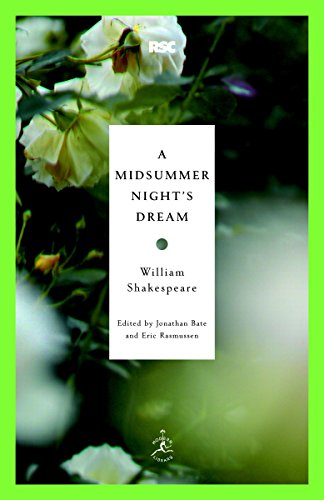
A continuation of the major series of individual Shakespeare plays from the world renowned Royal Shakespeare Company, edited by two brilliant, younger generation Shakespearean scholars Jonathan Bate and Eric Rasmussen
Incorporating definitive text and cutting-edge notes from William Shakespeare: Complete Works-the first authoritative, modernized edition of Shakespeare's First Folio in more than 300 years-this remarkable series of individual plays combines Jonathan Bate's insightful critical analysis with Eric Rasmussen's textual expertise.
Die Inhaltsangabe kann sich auf eine andere Ausgabe dieses Titels beziehen.
Über die Autorin bzw. den Autor
WILLIAM SHAKESPEARE (1564-1616) is today's most widely known and loved playwright.
THE ROYAL SHAKESPEARE COMPANY (RSC) is a world-renowned ensemble theater company in Stratford and London dedicated to bringing the works of Shakespeare and his contemporaries to a modern audience.
JONATHAN BATE is a professor of Shakespeare and Renaissance Literature at the University of Warwick. A prominent critic, award-winning biographer and broadcaster, Bate's books on Shakespeare include Soul of the Age.
ERIC RASMUSSEN, professor of English at the University of Nevada, is one of today's leading textual experts on Shakespeare.
Auszug. © Genehmigter Nachdruck. Alle Rechte vorbehalten.
Chapter 1
list of parts
THESEUS, Duke of Athens
HIPPOLYTA, Queen of the Amazons, betrothed to Theseus
EGEUS, an Athenian courtier, father to Hermia
LYSANDER, in love with Hermia
HERMIA, in love with Lysander, but ordered by her father to marry Demetrius
DEMETRIUS, in love with Hermia, though once a suitor to Helena
HELENA, in love with Demetrius
Peter QUINCE, a carpenter and leader of an amateur dramatic group, who speaks the PROLOGUE to their play
Nick BOTTOM, a weaver, who plays PYRAMUS in the amateur play
Francis FLUTE, a bellows-mender, who plays THISBE in the amateur play
SNUG, a joiner, who plays a LION in the amateur play
Tom SNOUT, a tinker, who plays a WALL in the amateur play
Robin STARVELING, a tailor, who plays MOONSHINE in the amateur play
OBERON, King of Fairies
TITANIA, Queen of Fairies
ROBIN Goodfellow, also known as Puck, a sprite in the service of Oberon
PEASEBLOSSOM
COBWEB
MOTH
MUSTARDSEED
PHILOSTRATE, an official in Theseus' court
Other Attendants at the court of Theseus; other Fairies attendant upon Oberon
Act 1 [Scene 1] running scene 1
Enter Theseus, Hippolyta, with others [Philostrate and attendants]
THESEUS Now, fair Hippolyta, our nuptial hour
Draws on apace. Four happy days bring in
Another moon: but O, methinks, how slow
This old moon wanes; she lingers my desires,
Like to a stepdame or a dowager
Long withering out a young man's revenue.
HIPPOLYTA Four days will quickly steep themselves in
nights,
Four nights will quickly dream away the time.
And then the moon, like to a silver bow
New-bent in heaven, shall behold the night
Of our solemnities.
THESEUS Go, Philostrate,
Stir up the Athenian youth to merriments,
Awake the pert and nimble spirit of mirth,
Turn melancholy forth to funerals:
The pale companion is not for our pomp.
[Exit Philostrate]
Hippolyta, I wooed thee with my sword,
And won thy love doing thee injuries.
But I will wed thee in another key,
With pomp, with triumph and with revelling.
Enter Egeus and his daughter Hermia, Lysander and Demetrius
EGEUS Happy be Theseus, our renownèd duke.
THESEUS Thanks, good Egeus: what's the news with thee?
EGEUS Full of vexation come I, with complaint
Against my child, my daughter Hermia.
Stand forth, Demetrius. My noble lord,
This man hath my consent to marry her.
Stand forth, Lysander. And my gracious duke,
This man hath bewitched the bosom of my child.-
Thou, thou, Lysander, thou hast given her rhymes,
And interchanged love-tokens with my child.
Thou hast by moonlight at her window sung,
With feigning voice verses of feigning love,
And stol'n the impression of her fantasy
With bracelets of thy hair, rings, gauds, conceits,
Knacks, trifles, nosegays, sweetmeats - messengers
Of strong prevailment in unhardened youth -
With cunning hast thou filched my daughter's heart,
Turned her obedience, which is due to me,
To stubborn harshness.- And, my gracious duke,
Be it so she will not here before your grace
Consent to marry with Demetrius,
I beg the ancient privilege of Athens:
As she is mine, I may dispose of her;
Which shall be either to this gentleman
Or to her death, according to our law
Immediately provided in that case.
THESEUS What say you, Hermia? Be advised, fair maid,
To you your father should be as a god,
One that composed your beauties, yea, and one
To whom you are but as a form in wax
By him imprinted and within his power
To leave the figure or disfigure it.
Demetrius is a worthy gentleman.
HERMIA So is Lysander.
THESEUS In himself he is.
But in this kind, wanting your father's voice,
The other must be held the worthier.
HERMIA I would my father looked but with my eyes.
THESEUS Rather your eyes must with his judgement look.
HERMIA I do entreat your grace to pardon me.
I know not by what power I am made bold,
Nor how it may concern my modesty
In such a presence here to plead my thoughts:
But I beseech your grace that I may know
The worst that may befall me in this case,
If I refuse to wed Demetrius.
THESEUS Either to die the death or to abjure
Forever the society of men.
Therefore, fair Hermia, question your desires,
Know of your youth, examine well your blood,
Whether, if you yield not to your father's choice,
You can endure the livery of a nun,
For aye to be in shady cloister mewed,
To live a barren sister all your life,
Chanting faint hymns to the cold fruitless moon.
Thrice blessèd they that master so their blood,
To undergo such maiden pilgrimage.
But earthlier happy is the rose distilled
Than that which withering on the virgin thorn
Grows, lives and dies in single blessedness.
HERMIA So will I grow, so live, so die, my lord,
Ere I will yield my virgin patent up
Unto his lordship, whose unwishèd yoke
My soul consents not to give sovereignty.
THESEUS Take time to pause, and by the next new
moon -
The sealing day betwixt my love and me,
For everlasting bond of fellowship -
Upon that day either prepare to die
For disobedience to your father's will,
Or else to wed Demetrius, as he would,
Or on Diana's altar to protest
For aye austerity and single life.
DEMETRIUS Relent, sweet Hermia.- And, Lysander, yield
Thy crazèd title to my certain right.
LYSANDER You have her father's love, Demetrius:
Let me have Hermia's. Do you marry him.
EGEUS Scornful Lysander! True, he hath my love;
And what is mine my love shall render him.
And she is mine, and all my right of her
I do estate unto Demetrius.
LYSANDER I am, my lord, as well derived as he,
As well possessed: my love is more than his,
My fortunes every way as fairly ranked,
If not with vantage, as Demetrius',
And, which is more than all these boasts can be,
I am beloved of beauteous Hermia.
Why should not I then prosecute my right?
Demetrius, I'll avouch it to his head,
Made love to Nedar's daughter, Helena,
And won her soul: and she, sweet lady, dotes,
Devoutly dotes, dotes in idolatry,
Upon this spotted and inconstant man.
THESEUS I must confess that I have heard so much,
And with Demetrius thought to have spoke thereof,
But, being over-full of self-affairs,
My mind did lose it. But, Demetrius, come,
And come, Egeus, you shall go with me.
I have some private schooling for you both.
For you, fair Hermia, look you arm yourself
To fit your fancies to your father's will,
Or else the law of Athens yields you up -
Which by no means we may extenuate -
To death or to a vow of single life.-
Come, my Hippolyta. What cheer, my love?-
Demetrius and Egeus, go along:
I must employ you in some business
Against our nuptial and confer with you
Of something nearly that concerns yourselves.
EGEUS With duty and desire we follow you.
Exeunt all but Lysander and Hermia
LYSANDER How now, my love! Why is your cheek so pale?
How chance the roses there do fade so fast?
HERMIA Belike for want of rain, which I could well
Beteem them from the tempest of mine eyes.
LYSANDER Ay me, for aught that I could ever read,
Could ever hear by tale or history,
The course of true love never did run smooth.
But either it was different in blood-
HERMIA O cross! Too high to be enthralled to low.
LYSANDER Or else misgraffèd in respect of years-
HERMIA O spite! Too old to be engaged to young.
LYSANDER Or else it stood upon the choice of merit-
HERMIA O hell! To choose love by another's eyes.
LYSANDER Or if there were a sympathy in...
„Über diesen Titel“ kann sich auf eine andere Ausgabe dieses Titels beziehen.
Weitere beliebte Ausgaben desselben Titels

Suchergebnisse für A Midsummer Night's Dream (Modern Library Classics)

Foto des Verkäufers
A Midsummer Night's Dream (Modern Library Classics)
Anbieter: Zoom Books East, Glendale Heights, IL, USA
Verkäuferbewertung 5 von 5 Sternen

Zustand: good. Book is in good condition and may include underlining highlighting and minimal wear. The book can also include "From the library of" labels. May not contain miscellaneous items toys, dvds, etc. . We offer 100% money back guarantee and 24 7 customer service. Bestandsnummer des Verkäufers ZEV.081296912X.G
Gebraucht kaufen
EUR 3,99
Versand gratis
Versand innerhalb von USA
Versand innerhalb von USA
Anzahl: 3 verfügbar
Foto des Verkäufers
A Midsummer Night's Dream (Modern Library Classics)
Anbieter: Zoom Books Company, Lynden, WA, USA
Verkäuferbewertung 5 von 5 Sternen
Zustand: very_good. Book is in very good condition and may include minimal underlining highlighting. The book can also include "From the library of" labels. May not contain miscellaneous items toys, dvds, etc. . We offer 100% money back guarantee and 24 7 customer service. Bestandsnummer des Verkäufers ZBV.081296912X.VG
Gebraucht kaufen
EUR 4,20
Versand gratis
Versand innerhalb von USA
Versand innerhalb von USA
Anzahl: 1 verfügbar
Beispielbild für diese ISBN
A Midsummer Night's Dream (Modern Library Classics)
Anbieter: World of Books (was SecondSale), Montgomery, IL, USA
Verkäuferbewertung 5 von 5 Sternen
Zustand: Good. Item in good condition. Textbooks may not include supplemental items i.e. CDs, access codes etc. Bestandsnummer des Verkäufers 00081861666
Gebraucht kaufen
EUR 4,22
Versand gratis
Versand innerhalb von USA
Versand innerhalb von USA
Anzahl: 6 verfügbar
Beispielbild für diese ISBN
A Midsummer Night's Dream (Modern Library Classics)
Anbieter: World of Books (was SecondSale), Montgomery, IL, USA
Verkäuferbewertung 5 von 5 Sternen
Zustand: Very Good. Item in very good condition! Textbooks may not include supplemental items i.e. CDs, access codes etc. Bestandsnummer des Verkäufers 00097489563
Gebraucht kaufen
EUR 4,22
Versand gratis
Versand innerhalb von USA
Versand innerhalb von USA
Anzahl: 1 verfügbar
Beispielbild für diese ISBN
A Midsummer Night's Dream (Modern Library Classics)
Verlag:
Modern Library (edition Reprint), 2008
ISBN 10: 081296912X
ISBN 13: 9780812969122
Gebraucht
Paperback
Anbieter: BooksRun, Philadelphia, PA, USA
Verkäuferbewertung 5 von 5 Sternen
Paperback. Zustand: Very Good. Reprint. It's a well-cared-for item that has seen limited use. The item may show minor signs of wear. All the text is legible, with all pages included. It may have slight markings and/or highlighting. Bestandsnummer des Verkäufers 081296912X-8-1
Gebraucht kaufen
EUR 4,42
Versand gratis
Versand innerhalb von USA
Versand innerhalb von USA
Anzahl: 1 verfügbar
Beispielbild für diese ISBN
A Midsummer Night's Dream (Modern Library Classics)
Verlag:
Modern Library (edition Reprint), 2008
ISBN 10: 081296912X
ISBN 13: 9780812969122
Gebraucht
Paperback
Anbieter: BooksRun, Philadelphia, PA, USA
Verkäuferbewertung 5 von 5 Sternen
Paperback. Zustand: Fair. Reprint. The item might be beaten up but readable. May contain markings or highlighting, as well as stains, bent corners, or any other major defect, but the text is not obscured in any way. Bestandsnummer des Verkäufers 081296912X-7-18
Gebraucht kaufen
EUR 4,71
Versand gratis
Versand innerhalb von USA
Versand innerhalb von USA
Anzahl: 1 verfügbar
Beispielbild für diese ISBN
A Midsummer Night's Dream (Modern Library Classics)
Anbieter: HPB-Diamond, Dallas, TX, USA
Verkäuferbewertung 5 von 5 Sternen
paperback. Zustand: Very Good. Connecting readers with great books since 1972! Used books may not include companion materials, and may have some shelf wear or limited writing. We ship orders daily and Customer Service is our top priority! Bestandsnummer des Verkäufers S_442672591
Gebraucht kaufen
EUR 2,34
EUR 3,28 Versand
Versand innerhalb von USA
Versand innerhalb von USA
Anzahl: 1 verfügbar
Beispielbild für diese ISBN
A Midsummer Night's Dream (Modern Library Classics)
Anbieter: HPB-Ruby, Dallas, TX, USA
Verkäuferbewertung 5 von 5 Sternen
paperback. Zustand: Very Good. Connecting readers with great books since 1972! Used books may not include companion materials, and may have some shelf wear or limited writing. We ship orders daily and Customer Service is our top priority! Bestandsnummer des Verkäufers S_446771611
Gebraucht kaufen
EUR 2,34
EUR 3,28 Versand
Versand innerhalb von USA
Versand innerhalb von USA
Anzahl: 1 verfügbar
Beispielbild für diese ISBN
A Midsummer Night's Dream
Anbieter: ThriftBooks-Atlanta, AUSTELL, GA, USA
Verkäuferbewertung 5 von 5 Sternen
Paperback. Zustand: Very Good. No Jacket. Former library book; May have limited writing in cover pages. Pages are unmarked. ~ ThriftBooks: Read More, Spend Less. Bestandsnummer des Verkäufers G081296912XI4N10
Gebraucht kaufen
EUR 5,84
Versand gratis
Versand innerhalb von USA
Versand innerhalb von USA
Anzahl: 1 verfügbar
Beispielbild für diese ISBN
A Midsummer Night's Dream
Anbieter: ThriftBooks-Reno, Reno, NV, USA
Verkäuferbewertung 5 von 5 Sternen
Paperback. Zustand: Very Good. No Jacket. May have limited writing in cover pages. Pages are unmarked. ~ ThriftBooks: Read More, Spend Less. Bestandsnummer des Verkäufers G081296912XI4N00
Gebraucht kaufen
EUR 5,84
Versand gratis
Versand innerhalb von USA
Versand innerhalb von USA
Anzahl: 1 verfügbar