
Verwandte Artikel zu If I Loved You, I Would Tell You This: Fiction
Inhaltsangabe
FINALIST FOR THE FRANK O’CONNOR SHORT STORY AWARD
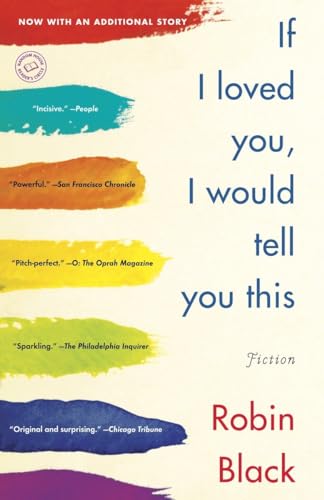
NOW WITH AN ADDITIONAL STORY
Heralding the arrival of a stunning new voice in American fiction, If I Loved You, I Would Tell You This takes readers into the minds and hearts of people navigating the unsettling transitions that life presents to us all: A father struggles to forge an independent identity as his blind daughter prepares for college. A mother comes to terms with her adult daughter’s infidelity. An artist mourns the end of a romance while painting the portrait of a dying man. Brilliant, hopeful, and fearlessly honest, If I Loved You, I Would Tell You This illuminates the truths of human relationships, truths we come to recognize in these characters and in ourselves.
Die Inhaltsangabe kann sich auf eine andere Ausgabe dieses Titels beziehen.
Über die Autorin bzw. den Autor
Robin Black’s stories and essays have appeared in numerous publications, including One Story, Colorado Review, The Georgia Review, Alaska Quarterly Review, Bellevue Literary Review, The Southern Review, and the anthology The Best Creative Nonfiction. The winner of many awards and a recipient of fellowships from the Leeway Foundation and the MacDowell Colony, Black is a graduate of the Warren Wilson MFA Program for Writers. She lives with her family in Philadelphia.
Auszug. © Genehmigter Nachdruck. Alle Rechte vorbehalten.
Chapter One
The Guide
At seventeen, Jack Snyder’s daughter is slender- faced and long of limb and still able to startle her father with her seeming certainty about everything she thinks. They’re driving along roads he doesn’t yet know, on their way to meet her first seeing-eye dog, and she is wearing polka-dotted sunglasses, a long jean skirt, and a shirt with the words: “If you can read this T-shirt, maybe YOU can tell ME what it says.” A kid from her school ordered them, in the dozens, and Lila bought three in different shades. “You’re sure they aren’t identical?” she questioned her mother at the time. “I don’t want my teachers thinking I never change my clothes.”
“Believe me, Lila,” Ann Snyder said. “I don’t want your teachers thinking you never change your clothes either.”
As Jack scans the road for signs, Lila is proclaiming to him in those certain tones of hers that if it weren’t for being quite so blind and having to have one, she’d definitely never get a dog. Never. Never ever. And her father is trying to follow her, trying to respond appropriately; but thoughts of Miranda Hamilton compete with the girl’s words. Miranda Hamilton unbuttoning her jeans the night before, sliding them down her thighs, stepping panty-clad from the denim pooled at her feet. Miranda Hamilton unbuttoning his suit pants, leaving them bound around his legs until he kicked them off. Miranda’s cropped blond hair fading into soft, colorless down along the back of her neck. Miranda laughing as she filled her mouth with bourbon from Jack’s glass and held the fluid there, smiling while it drizzled from her lips until he kissed her and swallowed it himself. Miranda whispering to Jack, her mouth still whiskey damp, just to lie back, lie still, while she moved her hips in something close to perfect circles over him. Just lie still. Just lie still. Just lie still.
“Really, Dad, they’re so obsequious,” Lila says, and Jack has to remind himself what they’re talking about. Guide dogs. They’re talking about guide dogs. “The whole alpha-male pack-mentality thing. Cats don’t give a shit about anyone, right?” Her father swerves around a pothole, and senses her sway beside him, unprepared. It’s an early- spring day and they are into the long weeks between the damage done by ice and snow and the repair work to come.
“That’s certainly their reputation,” Jack says. “Cats are undomesticatable. Too wild.”
“I find that infinitely more appealing.”
Jack nods silently, an assent he knows his daughter cannot see.
“Maybe I could have the first ever seeing-eye cat.” Lila crosses her arms. “Some real haughty feline with attitude.”
“You mean like you?”
But his daughter shakes her head. “No.” She turns her face toward the breeze of the open window, lifting her sunglasses. “No,” she repeats. “I’d want a guide cat who really doesn’t give a flying fuck.” She draws an audible breath through her nose. “Manure?”
“We’re in farm country now.” He says it quietly, as he looks around outside. Rolling hills of tilled soil settle dark brown against the clear blue sky. Occasional red barns dot the land, appealing in their melancholic disrepair. The scenery is picture-postcard beautiful, but he keeps that to himself. For now, anyway. Later in the day, maybe after dinner, he’ll call Miranda. And he’ll tell her all about how lovely the landscape looked; and then maybe he’ll tell her once again how painful these moments of unshared beauty can be. Standing in the farthest reaches of his backyard, he’ll hold his cell phone close against his mouth so he won’t have to shout and he’ll close his eyes as he describes to her again how solitary he so often feels with his sightless daughter by his side. How among all the things for which he might feel guilt, there’s always this one mountainous inequity: that he can see and Lila cannot.
“Is it pretty?” Lila asks.
“We’re out in the sticks. It’s okay.” He pictures Miranda pacing her kitchen, phone in hand, running an exasperated hand through her hair. This isn’t your strength, Jack. You have to learn to let go.
“Yeah, I figured as much.” Lila turns her head his way. “Are there cows?”
“A little way back there were. Black Angus, I think. Big and dark.”
“Sounds nice, Dad.” But Jack only murmurs a neutral sound, and Lila turns away, facing forward again. “The thing is,” she says, “I just can’t imagine raising a dog and then giving it away. Even if I don’t much like dogs, it still sounds like an elaborate form of masochism.”
“It’s a . . .” But Jack can’t find the word he wants, and he’s pretty sure he’s just missed their turn. “Dammit, I think we’re lost. No, wait, this must be right. It’s a good deed,” he says. “It’s something these guide dog people want to do. He’s your dog and they know that from day one. So they don’t get attached.”
“Yeah, right, Dad. Do you really believe that? That you can just tell yourself not to get attached? You don’t seem so thrilled about me going to college. Why didn’t you just tell yourself not to get attached?”
“Very funny.” But she’s right, of course. Who is he to assume anyone can tell themselves what to feel? He’s always been unable to tell his heart a goddamned thing. “Very clever, Lila,” he says. “But it’s the system. It’s how this guide dog business works. And since we benefit from the system for once, I’m not going to argue with it. Here we go. Sharp turn left . . .” He gives her the warning and at the edge of his vision sees her brace herself for the curve, hands gripping her seat. “Hang on, babe. This looks bumpy. Dirt road.”
“I think I can handle it. Bumps in the road are my speci-al-i-ty.” Lila has her head turned to the open window again, holding the door, her thick dark curls flying in the breeze. “Maybe there’s something wrong with me,” she says, “but I actually like the smell of manure.”
“No.” Her father draws in a deep breath of the sour, full air, savoring the simple fact that they’re smelling the same thing—a relief from all the sights they never share. “I agree with you, baby. It’s a strangely pleasing smell.”
“And, by the way, so is skunk.”
“Absolutely,” he agrees, remembering the pungent, oddly twisting scent of Miranda’s sweating skin. “Absolutely,” he tells his daughter. “So is skunk.”
Lila was six, playing in the garage of a neighboring family the Snyders didn’t really know, when an aerosol can of orange spray paint blew up in her face; and for a long time after that, many years, Jack was stuck on that one simple fact—on the tenuous, fleeting nature of the acquaintanceship. Almost as though the same accident, with the same result, in the home of a close friend would have somehow made more sense. But none of it made any sense, of course. He knew that. You could turn the thing around, replay it endless times—and you would. You would. And you would. And you would. But none of it made any sense at all. There you are one fine October day, living your life pretty much as you had planned, your lawyer’s...
„Über diesen Titel“ kann sich auf eine andere Ausgabe dieses Titels beziehen.
Suchergebnisse für If I Loved You, I Would Tell You This: Fiction

Beispielbild für diese ISBN
If I Loved You, I Would Tell You This: Fiction
Anbieter: World of Books (was SecondSale), Montgomery, IL, USA
Verkäuferbewertung 5 von 5 Sternen

Paperback. Zustand: Very Good. FINALIST FOR THE FRANK O'CONNOR SHORT STORY AWARD NOW WITH AN ADDITIONAL STORY Heralding the arrival of a stunning new voice in American fiction, If I Loved You, I Would Tell You This takes readers into the minds and hearts of people navigating the unsettling transitions that life presents to us all: A father struggles to forge an independent identity as his blind daughter prepares for college. A mother comes to terms with her adult daughter's infidelity. An artist mourns the end of a romance while painting the portrait of a dying man. Brilliant, hopeful, and fearlessly honest, If I Loved You, I Would Tell You This illuminates the truths of human relationships, truths we come to recognize in these characters and in ourselves. Bestandsnummer des Verkäufers 00098582350
Gebraucht kaufen
EUR 4,53
Versand gratis
Versand innerhalb von USA
Versand innerhalb von USA
Anzahl: 1 verfügbar
Beispielbild für diese ISBN
If I Loved You, I Would Tell You This: Fiction
Anbieter: World of Books (was SecondSale), Montgomery, IL, USA
Verkäuferbewertung 5 von 5 Sternen
Paperback. Zustand: Good. FINALIST FOR THE FRANK O'CONNOR SHORT STORY AWARD NOW WITH AN ADDITIONAL STORY Heralding the arrival of a stunning new voice in American fiction, If I Loved You, I Would Tell You This takes readers into the minds and hearts of people navigating the unsettling transitions that life presents to us all: A father struggles to forge an independent identity as his blind daughter prepares for college. A mother comes to terms with her adult daughter's infidelity. An artist mourns the end of a romance while painting the portrait of a dying man. Brilliant, hopeful, and fearlessly honest, If I Loved You, I Would Tell You This illuminates the truths of human relationships, truths we come to recognize in these characters and in ourselves. Bestandsnummer des Verkäufers 00108785979
Gebraucht kaufen
EUR 4,53
Versand gratis
Versand innerhalb von USA
Versand innerhalb von USA
Anzahl: 2 verfügbar
Beispielbild für diese ISBN
If I Loved You, I Would Tell You This: Fiction
Verlag:
Random House Publishing Group (edition 58719th), 2011
ISBN 10: 0812980689
ISBN 13: 9780812980684
Gebraucht
Paperback
Anbieter: BooksRun, Philadelphia, PA, USA
Verkäuferbewertung 5 von 5 Sternen
Paperback. Zustand: Very Good. 58719th. It's a well-cared-for item that has seen limited use. The item may show minor signs of wear. All the text is legible, with all pages included. It may have slight markings and/or highlighting. Bestandsnummer des Verkäufers 0812980689-11-1
Gebraucht kaufen
EUR 4,54
Versand gratis
Versand innerhalb von USA
Versand innerhalb von USA
Anzahl: 1 verfügbar
Beispielbild für diese ISBN
If I Loved You, I Would Tell You This: Fiction
Verlag:
Random House Publishing Group, 2011
ISBN 10: 0812980689
ISBN 13: 9780812980684
Gebraucht
Softcover
Anbieter: More Than Words, Waltham, MA, USA
Verkäuferbewertung 5 von 5 Sternen
Zustand: Good. A sound copy with only light wear. Overall a solid copy at a great price! Bestandsnummer des Verkäufers BOS-M-03g-01757
Gebraucht kaufen
EUR 1,72
EUR 3,56 Versand
Versand innerhalb von USA
Versand innerhalb von USA
Anzahl: 2 verfügbar
Beispielbild für diese ISBN
If I Loved You, I Would Tell You This: Fiction
Anbieter: World of Books Inc, Montgomery, IL, USA
Verkäuferbewertung 4 von 5 Sternen

Paperback. Zustand: Good. FINALIST FOR THE FRANK O'CONNOR SHORT STORY AWARD NOW WITH AN ADDITIONAL STORY Heralding the arrival of a stunning new voice in American fiction, If I Loved You, I Would Tell You This takes readers into the minds and hearts of people navigating the unsettling transitions that life presents to us all: A father struggles to forge an independent identity as his blind daughter prepares for college. A mother comes to terms with her adult daughter's infidelity. An artist mourns the end of a romance while painting the portrait of a dying man. Brilliant, hopeful, and fearlessly honest, If I Loved You, I Would Tell You This illuminates the truths of human relationships, truths we come to recognize in these characters and in ourselves. Bestandsnummer des Verkäufers CIN0812980689G
Gebraucht kaufen
EUR 6,37
Versand gratis
Versand innerhalb von USA
Versand innerhalb von USA
Anzahl: 2 verfügbar
Beispielbild für diese ISBN
If I Loved You, I Would Tell You This: Fiction
Anbieter: World of Books Inc, Montgomery, IL, USA
Verkäuferbewertung 4 von 5 Sternen
Paperback. Zustand: Very Good. FINALIST FOR THE FRANK O'CONNOR SHORT STORY AWARD NOW WITH AN ADDITIONAL STORY Heralding the arrival of a stunning new voice in American fiction, If I Loved You, I Would Tell You This takes readers into the minds and hearts of people navigating the unsettling transitions that life presents to us all: A father struggles to forge an independent identity as his blind daughter prepares for college. A mother comes to terms with her adult daughter's infidelity. An artist mourns the end of a romance while painting the portrait of a dying man. Brilliant, hopeful, and fearlessly honest, If I Loved You, I Would Tell You This illuminates the truths of human relationships, truths we come to recognize in these characters and in ourselves. Bestandsnummer des Verkäufers CIN0812980689VG
Gebraucht kaufen
EUR 6,37
Versand gratis
Versand innerhalb von USA
Versand innerhalb von USA
Anzahl: 1 verfügbar
Beispielbild für diese ISBN
If I Loved You, I Would Tell You This: Fiction
Verlag:
Random House Publishing Group, 2011
ISBN 10: 0812980689
ISBN 13: 9780812980684
Gebraucht
Softcover
Anbieter: Wonder Book, Frederick, MD, USA
Verkäuferbewertung 5 von 5 Sternen
Zustand: Good. Good condition. With remainder mark. A copy that has been read but remains intact. May contain markings such as bookplates, stamps, limited notes and highlighting, or a few light stains. Bestandsnummer des Verkäufers U11C-05574
Gebraucht kaufen
EUR 6,43
Versand gratis
Versand innerhalb von USA
Versand innerhalb von USA
Anzahl: 1 verfügbar
Beispielbild für diese ISBN
If I Loved You, I Would Tell You This: Stories
Anbieter: ThriftBooks-Atlanta, AUSTELL, GA, USA
Verkäuferbewertung 5 von 5 Sternen
Paperback. Zustand: Very Good. No Jacket. May have limited writing in cover pages. Pages are unmarked. ~ ThriftBooks: Read More, Spend Less. Bestandsnummer des Verkäufers G0812980689I4N00
Gebraucht kaufen
EUR 6,53
Versand gratis
Versand innerhalb von USA
Versand innerhalb von USA
Anzahl: 1 verfügbar
Beispielbild für diese ISBN
If I Loved You, I Would Tell You This: Stories
Anbieter: ThriftBooks-Atlanta, AUSTELL, GA, USA
Verkäuferbewertung 5 von 5 Sternen
Paperback. Zustand: Fair. No Jacket. Readable copy. Pages may have considerable notes/highlighting. ~ ThriftBooks: Read More, Spend Less. Bestandsnummer des Verkäufers G0812980689I5N00
Gebraucht kaufen
EUR 6,53
Versand gratis
Versand innerhalb von USA
Versand innerhalb von USA
Anzahl: 1 verfügbar
Beispielbild für diese ISBN
If I Loved You, I Would Tell You This : Fiction
Verlag:
Random House Publishing Group, 2011
ISBN 10: 0812980689
ISBN 13: 9780812980684
Gebraucht
Softcover
Anbieter: Better World Books, Mishawaka, IN, USA
Verkäuferbewertung 5 von 5 Sternen
Zustand: Very Good. Pages intact with possible writing/highlighting. Binding strong with minor wear. Dust jackets/supplements may not be included. Stock photo provided. Product includes identifying sticker. Better World Books: Buy Books. Do Good. Bestandsnummer des Verkäufers 4939525-6
Gebraucht kaufen
EUR 6,57
Versand gratis
Versand innerhalb von USA
Versand innerhalb von USA
Anzahl: 1 verfügbar