
Inhaltsangabe
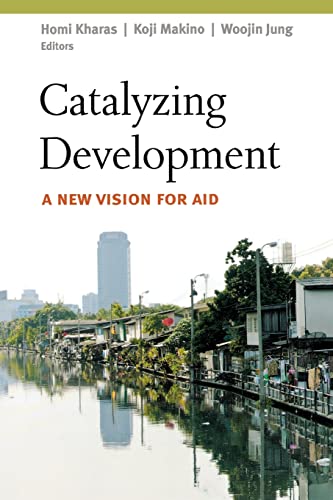
Some may dispute the effectiveness of aid. But few would disagree that aid delivered to the right source and in the right way can help poor and fragile countries develop. It can be a catalyst, but not a driver of development. Aid now operates in an arena with new players, such as middle-income countries, private philanthropists, and the business community; new challenges presented by fragile states, capacity development, and climate change; and new approaches, including transparency, scaling up, and South-South cooperation. The next High Level Forum on Aid Effectiveness must determine how to organize and deliver aid better in this environment.
Catalyzing Development proposes ten actionable game-changers to meet these challenges based on in-depth, scholarly research. It advocates for these to be included in a Busan Global Development Compact in order to guide the work of development partners in a flexible and differentiated manner in the years ahead.
Contributors: Kemal Dervis (Brookings Institution), Shunichiro Honda (JICA Research Institute), Akio Hosono (JICA Research Institute), Johannes F. Linn (Emerging Markets Forum and Brookings Institution), Ryutaro Murotani (JICA Research Institute), Jane Nelson (Harvard Kennedy School and Brookings Institution), Mai Ono (JICA Research Institute), Kang-ho Park (Ministry of Foreign Affairs and Trade, Korea), Tony Pipa (U.S. Agency for International Development), Sarah Puritz Milsom (Brookings Institution), Hyunjoo Rhee (Korea International Cooperation Agency), Mine Sato (JICA Research Institute), Shinichi Takeuchi (JICA Research Institute), Keiichi Tsunekawa (JICA Research Institute), Ngaire Woods (University College, Oxford), Sam Worthington (InterAction)
Die Inhaltsangabe kann sich auf eine andere Ausgabe dieses Titels beziehen.
Über die Autorinnen und Autoren
Homi Kharas is a senior fellow in the Center for Sustainable Development at The Brookings Institution. He studies politics and trends influencing developing countries, including aid to poor countries, the emergence of the middle class, and global governance and the G20.
Koji Makino is a visiting fellow at the JICA-Ogata Sadako Research Institute for Peace and Development and professor at Graduate School of Advanced Integrated Studies in Human Survivability, Kyoto University, Japan.
Woojin Jung is a policy analyst at the Korea International Cooperation Agency (KOICA).
Auszug. © Genehmigter Nachdruck. Alle Rechte vorbehalten.
Catalyzing Development
A New Vision for AidBROOKINGS INSTITUTION PRESS
Copyright © 2011 THE BROOKINGS INSTITUTIONAll right reserved.
ISBN: 978-0-8157-2133-8
Contents
Preface................................................................................................................................................................................vii1 Overview: An Agenda for the Busan High-Level Forum on Aid Effectiveness Homi Kharas, Koji Makino, and Woojin Jung...................................................................12 New Development Partners and a Global Development Partnership Kang-ho Park..........................................................................................................383 Private Development Assistance: The Importance of International NGOs and Foundations in a New Aid Architecture Samuel A. Worthington and Tony Pipa..................................614 The Private Sector and Aid Effectiveness: Toward New Models of Engagement Jane Nelson...............................................................................................835 Rethinking Aid Coordination Ngaire Woods............................................................................................................................................1126 Capacity Traps and Legitimacy Traps: Development Assistance and State Building in Fragile Situations Shinichi Takeuchi, Ryutaro Murotani, and Keiichi Tsunekawa.....................1277 Development Aid and Global Public Goods: The Example of Climate Protection Kemal Dervis and Sarah Puritz Milsom.....................................................................1558 Inside the Black Box of Capacity Development Akio Hosono, Shunichiro Honda, Mine Sato, and Mai Ono..................................................................................1799 Scaling Up with Aid: The Institutional Dimension Johannes F. Linn...................................................................................................................20210 Transparency: Changing the Accountability, Engagement, and Effectiveness of Aid Homi Kharas........................................................................................23311 Promoting South-South Cooperation through Knowledge Exchange Hyunjoo Rhee..........................................................................................................260Contributors...........................................................................................................................................................................281Index..................................................................................................................................................................................283
Chapter One
Overview: An Agenda for the Busan High-Level Forum on Aid EffectivenessHOMI KHARAS, KOJI MAKINO, AND WOOJIN JUNG
Today's world is shaped by growing economic integration alongside growing economic divergence. Over two dozen developing economies are expanding at rates that previously appeared miraculous, reducing poverty at unprecedented rates. Conversely, thirty-five developing countries with a combined population of 940 million can be classified as "fragile," or at risk of suffering de bilitating internal conflict. The potential for globalization to act as a positive force for development contrasts with the prospects for globalization to threaten, or be unable to protect, development through a failure to deal with the challenges of hunger, poverty, disease, and climate change. Many developing countries have neither the safety nets nor the macroeconomic institutions to manage global economic shocks. Developing countries today are quite differentiated in terms of the challenges they face and their capacity to respond.
International support for global development is now couched in terms of a broad strategic vision of long-term engagement to assist countries to sustain progress and evolve into partners that can help build a stable, inclusive global economy. This support is built on three pillars:
—An understanding that the responsibility for sustained development lies principally with the governments and institutions of each developing country, with foreign assistance playing a supportive, catalytic role.
—A recognition that a broad array of engagements between countries contribute to development, principally through trade, investment, finance, and aid.
—A desire to fashion an improved operational model for development cooperation that reflects the differential challenges of sustainable development, the diversity of state and nonstate development partners, and the dynamics of sustained development.
Aid must be understood in this context. It can only play a catalytic role, not a leading role, in development. Development will not happen because of aid, but aid can make a difference. Developing countries are responsible for their own development. Aid is but one of many instruments of development, and the catalytic impact of aid is often seen when other forces like trade and private investment are unleashed because of better economic policies and institutions supported by aid programs.
There have been many visible improvements in the operational model for aid since the late 1990s—untying, greater alignment with global priorities such as the Millennium Development Goals, more decentralized operations, use of country systems and budgets, and better donor coordination. But other problems with the operational model have emerged:
—The mandates for aid have expanded—growth, debt relief, humanitarian assistance, anticorruption and governance, delivery of public services, state building, and climate change adaptation, to name a few. With such broad mandates, there are no simple metrics of success by which to measure the impact of aid. Some suggest the need for a new architecture, in which aid is measured in a different way and oriented toward specific targets.
—Aid is terribly fragmented, with the number of official development assistance (ODA) projects surpassing 80,000 annually, delivered by at least 56 donor countries, with 197 bilateral agencies and 263 multilateral agencies. The number of tiny aid relationships is daunting and, with more players, aid is becoming less predictable, less transparent, and more volatile. Despite an advisory from the Accra High-Level Forum on Aid Effectiveness to "think twice" before setting up new multilateral aid agencies, the number continues to grow. Only one multi lateral development agency is known to have closed since World War II (the Nordic Development Bank). Alongside this, a new ecosystem of private development agencies has emerged—philanthropic foundations, international NGOs, church groups, corporations, and universities which command significant and growing resources. The actions of these groups are little understood, and they remain on the fringes of official development cooperation.
—The governance of aid is seen as bureaucratized and centralized at a time when more attention is being focused on the quality of aid because of pressures on some large donors to cut back on (or slow growth in) aid volumes. The result is overlap, confusion, and a lack of leadership in some areas.
Against this background, a major international forum on aid effectiveness will convene in November 2011 in Busan, Korea, under the auspices of the Development Assistance Committee of the OECD (OECD/DAC). The Busan meeting comes at an important juncture. Because aid is clearly not sufficient to achieve development, it is sometimes...
„Über diesen Titel“ kann sich auf eine andere Ausgabe dieses Titels beziehen.
Suchergebnisse für Catalyzing Development: A New Vision for Aid

Beispielbild für diese ISBN
Catalyzing Development (Paperback)
Verlag:
Bloomsbury Publishing Plc, Washington DC, 2011
ISBN 10: 0815721331
ISBN 13: 9780815721338
Neu
Paperback
Anbieter: Grand Eagle Retail, Bensenville, IL, USA
Verkäuferbewertung 5 von 5 Sternen

Paperback. Zustand: new. Paperback. Aid can only be a catalyst, not a driver of development. Aid can work: it has achieved notable successes in even the most disadvantageous country settings. But it is not a panacea. Many new playerssuch as middle-income countries, private philanthropists and even the private business communityare now providing aid, but their impact depends on how aid is organized and delivered. Catalyzing Development is an in-depth analysis of the new approaches that are needed to meet development challenges. Some may dispute the effectiveness of aid. But few would disagree that aid delivered to the right source and in the right way can help poor and fragile countries develop. This item is printed on demand. Shipping may be from multiple locations in the US or from the UK, depending on stock availability. Bestandsnummer des Verkäufers 9780815721338
Beispielbild für diese ISBN
Catalyzing Development: A New Vision for Aid
Anbieter: California Books, Miami, FL, USA
Verkäuferbewertung 4 von 5 Sternen

Zustand: New. Bestandsnummer des Verkäufers I-9780815721338
Neu kaufen
EUR 41,58
Versand gratis
Versand innerhalb von USA
Versand innerhalb von USA
Anzahl: Mehr als 20 verfügbar
Beispielbild für diese ISBN
Catalyzing Development
Print-on-DemandAnbieter: PBShop.store US, Wood Dale, IL, USA
Verkäuferbewertung 5 von 5 Sternen
PAP. Zustand: New. New Book. Shipped from UK. THIS BOOK IS PRINTED ON DEMAND. Established seller since 2000. Bestandsnummer des Verkäufers L0-9780815721338
Neu kaufen
EUR 48,92
Versand gratis
Versand innerhalb von USA
Versand innerhalb von USA
Anzahl: Mehr als 20 verfügbar
Beispielbild für diese ISBN
Catalyzing Development
Verlag:
Bloomsbury Publishing Plc, US, 2011
ISBN 10: 0815721331
ISBN 13: 9780815721338
Neu
Paperback
Anbieter: Rarewaves.com USA, London, LONDO, Vereinigtes Königreich
Verkäuferbewertung 5 von 5 Sternen
Paperback. Zustand: New. Some may dispute the effectiveness of aid. But few would disagree that aid delivered to the right source and in the right way can help poor and fragile countries develop. It can be a catalyst, but not a driver of development. Aid now operates in an arena with new players, such as middle-income countries, private philanthropists, and the business community; new challenges presented by fragile states, capacity development, and climate change; and new approaches, including transparency, scaling up, and South-South cooperation. The next High Level Forum on Aid Effectiveness must determine how to organize and deliver aid better in this environment.Catalyzing Development proposes ten actionable game-changers to meet these challenges based on in-depth, scholarly research. It advocates for these to be included in a Busan Global Development Compact in order to guide the work of development partners in a flexible and differentiated manner in the years ahead.Contributors: Kemal Dervis (Brookings Institution), Shunichiro Honda (JICA Research Institute), Akio Hosono (JICA Research Institute), Johannes F. Linn (Emerging Markets Forum and Brookings Institution), Ryutaro Murotani (JICA Research Institute), Jane Nelson (Harvard Kennedy School and Brookings Institution), Mai Ono (JICA Research Institute), Kang-ho Park (Ministry of Foreign Affairs and Trade, Korea), Tony Pipa (U.S. Agency for International Development), Sarah Puritz Milsom (Brookings Institution), Hyunjoo Rhee (Korea International Cooperation Agency), Mine Sato (JICA Research Institute), Shinichi Takeuchi (JICA Research Institute), Keiichi Tsunekawa (JICA Research Institute), Ngaire Woods (University College, Oxford), Sam Worthington (InterAction). Bestandsnummer des Verkäufers LU-9780815721338
Neu kaufen
EUR 50,21
Versand gratis
Versand von Vereinigtes Königreich nach USA
Versand von Vereinigtes Königreich nach USA
Anzahl: Mehr als 20 verfügbar
Beispielbild für diese ISBN
Catalyzing Development
Print-on-DemandAnbieter: PBShop.store UK, Fairford, GLOS, Vereinigtes Königreich
Verkäuferbewertung 5 von 5 Sternen
PAP. Zustand: New. New Book. Delivered from our UK warehouse in 4 to 14 business days. THIS BOOK IS PRINTED ON DEMAND. Established seller since 2000. Bestandsnummer des Verkäufers L0-9780815721338
Neu kaufen
EUR 45,61
EUR 5,88 Versand
Versand von Vereinigtes Königreich nach USA
Versand von Vereinigtes Königreich nach USA
Anzahl: Mehr als 20 verfügbar
Beispielbild für diese ISBN
Catalyzing Development: A New Vision for Aid
Verlag:
Bloomsbury Publishing (UK), 2011
ISBN 10: 0815721331
ISBN 13: 9780815721338
Gebraucht
Paperback
Anbieter: Optimon Books, Gravesend, KENT, Vereinigtes Königreich
Verkäuferbewertung 5 von 5 Sternen
Paperback. Zustand: Fair. Some may dispute the effectiveness of aid. But few would disagree that aid delivered to the right source and in the right way can help poor and fragile countries develop. It can be a catalyst, but not a driver of development. Aid now operates in an arena with new players, such as middle-income countries, private philanthropists, and the business community; new challenges presented by fragile states, capacity development, and climate change; and new approaches, including transparency, scaling up, and South-South cooperation. The next High Level Forum on Aid Effectiveness must determine how to organize and deliver aid better in this environment.Catalyzing Development proposes ten actionable ga. Bestandsnummer des Verkäufers 422977
Gebraucht kaufen
EUR 31,37
EUR 21,09 Versand
Versand von Vereinigtes Königreich nach USA
Versand von Vereinigtes Königreich nach USA
Anzahl: 1 verfügbar
Beispielbild für diese ISBN
Catalyzing Development: A New Vision for Aid
Anbieter: Ria Christie Collections, Uxbridge, Vereinigtes Königreich
Verkäuferbewertung 5 von 5 Sternen
Zustand: New. In. Bestandsnummer des Verkäufers ria9780815721338_new
Neu kaufen
EUR 45,24
EUR 14,04 Versand
Versand von Vereinigtes Königreich nach USA
Versand von Vereinigtes Königreich nach USA
Anzahl: Mehr als 20 verfügbar
Beispielbild für diese ISBN
Catalyzing Development: A New Vision for Aid
Anbieter: Revaluation Books, Exeter, Vereinigtes Königreich
Verkäuferbewertung 5 von 5 Sternen
Paperback. Zustand: Brand New. 305 pages. 9.10x6.10x1.10 inches. In Stock. Bestandsnummer des Verkäufers x-0815721331
Neu kaufen
EUR 54,86
EUR 11,72 Versand
Versand von Vereinigtes Königreich nach USA
Versand von Vereinigtes Königreich nach USA
Anzahl: 2 verfügbar
Beispielbild für diese ISBN
Catalyzing Development: A New Vision for Aid
Verlag:
Brookings Institution, 2011
ISBN 10: 0815721331
ISBN 13: 9780815721338
Neu
Paperback / softback
Anbieter: THE SAINT BOOKSTORE, Southport, Vereinigtes Königreich
Verkäuferbewertung 5 von 5 Sternen
Paperback / softback. Zustand: New. This item is printed on demand. New copy - Usually dispatched within 5-9 working days. Bestandsnummer des Verkäufers C9780815721338
Neu kaufen
EUR 51,23
EUR 18,52 Versand
Versand von Vereinigtes Königreich nach USA
Versand von Vereinigtes Königreich nach USA
Anzahl: Mehr als 20 verfügbar
Beispielbild für diese ISBN
Catalyzing Development (Paperback)
Verlag:
Bloomsbury Publishing Plc, Washington DC, 2011
ISBN 10: 0815721331
ISBN 13: 9780815721338
Neu
Paperback
Anbieter: CitiRetail, Stevenage, Vereinigtes Königreich
Verkäuferbewertung 5 von 5 Sternen
Paperback. Zustand: new. Paperback. Aid can only be a catalyst, not a driver of development. Aid can work: it has achieved notable successes in even the most disadvantageous country settings. But it is not a panacea. Many new playerssuch as middle-income countries, private philanthropists and even the private business communityare now providing aid, but their impact depends on how aid is organized and delivered. Catalyzing Development is an in-depth analysis of the new approaches that are needed to meet development challenges. Some may dispute the effectiveness of aid. But few would disagree that aid delivered to the right source and in the right way can help poor and fragile countries develop. This item is printed on demand. Shipping may be from our UK warehouse or from our Australian or US warehouses, depending on stock availability. Bestandsnummer des Verkäufers 9780815721338
Neu kaufen
EUR 50,07
EUR 43,35 Versand
Versand von Vereinigtes Königreich nach USA
Versand von Vereinigtes Königreich nach USA
Anzahl: 1 verfügbar