
Verwandte Artikel zu Conversations with Scripture: Romans (Anglican Association...
Inhaltsangabe
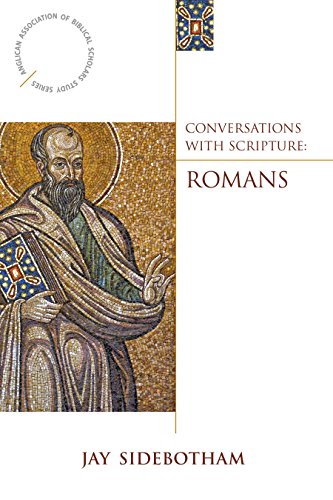
This book guides readers into conversation with Paul’s letter to the Romans.
The author helps readers listen to what that letter said to the people to whom it was written and to hear what it says to us today. Readers will bring their own reflections, personal concerns, and questions to the table as we let this letter challenge us with meaning―letting it read the reader.
The thesis of this book is that the letter has demonstrated transforming power to renew lives and the church through a focus on worship; a rigorous assessment of the human condition, especially the failure of human religiosity; a claim of transforming power in the ongoing life of Christ; an expansive vision of who is included in God’s life and love; a call to practical application and proclamation of the gospel.
Die Inhaltsangabe kann sich auf eine andere Ausgabe dieses Titels beziehen.
Über die Autorin bzw. den Autor
Jay Sidebotham serves as Director of RenewalWorks, a ministry of Forward Movement. A graduate of Union Seminary, New York, and ordained to the priesthood in 1990, he has served in parishes in New York, Washington, North Carolina, Rhode Island, and Illinois. Throughout his ministry, he has had a deep commitment to making the Bible accessible to people of all ages, and cartoons have been one of the primary ways he has accomplished that.
Auszug. © Genehmigter Nachdruck. Alle Rechte vorbehalten.
Conversations with Scripture: Romans
By Jay SidebothamChurch Publishing Incorporated
Copyright © 2015 Jay Sidebotham
All rights reserved.
ISBN: 978-0-8192-2991-5All rights reserved.
Contents
Introduction to the Series,
Autobiographical Note,
CHAPTER ONE Welcome to the Conversation,
CHAPTER TWO How Paul Introduces His Letter (Romans 1:1–17),
CHAPTER THREE What's the Problem? (Romans 1:18–3:20),
CHAPTER FOUR Christ Addresses the Human Condition (Romans 3:21–4:25),
CHAPTER FIVE New Life Available (Romans 5:1–8:39),
CHAPTER SIX God on Trial: The Mystery of the Plan for Salvation for All (Romans 9–11),
CHAPTER SEVEN The So-What Factor (Romans 12–16),
CHAPTER EIGHT Conclusion,
Acknowledgments,
Study Questions,
Notes,
Suggested Reading,
CHAPTER 1
Welcome to the Conversation
God does not love us if we change. God loves us so that we can change. —RICHARD ROHR, BREATHING UNDER WATER: SPIRITUALITY AND THE TWELVE STEPS
I do not understand the mystery of grace—only that it meets us where we are and does not leave us where it found us. —ANNIE LAMOTT, TRAVELING MERCIES: SOME THOUGHTS ON FAITH
I appeal to you therefore, brothers and sisters, by the mercies of God, to present your bodies as a living sacrifice, holy and acceptable to God, which is your spiritual worship. Do not be conformed to this world, but be transformed by the renewing of your minds, so that you may discern what is the will of God—what is good and acceptable and perfect. —ROMANS 12:1–2
Give us such an awareness of your mercies that with truly thankful hearts we may show forth your praise, not only with our lips, but in our lives. —GENERAL THANKSGIVING IN THE DAILY OFFICE, BOOK OF COMMON PRAYER
How is it that we change? How is it that we grow? Or to use the language of St. Paul, who wrote a letter to "all God's beloved in Rome," how can we be transformed? Think about your own spiritual journey, about moments when you experienced change, growth, transformation, or renewal. What contributed to those experiences? What got in the way?
Think about the faith community to which you belong. Perhaps review in your mind those communities that have shaped you over the years. They may be communities in which you were profoundly formed. They may be communities you left, perhaps even fled. You may be in recovery from such places. Then ask the same kinds of questions. How do congregations change and grow? What brings about transformation? What brings about renewal and new life in communities of faith?
In the letter that Paul wrote to the Christians assembled in Rome, we get a case study in change, as he holds out the possibility of transformation for members of a congregation he had never met, an assembly meeting in the city at the center of the empire. He wrote with an invitation, perhaps even a challenge, to experience transformation. His Letter to the Romans, widely considered to be authentic in authorship, sets the stage for a long-anticipated visit he hopes to make as he moves westward in his mission.
In this letter, he builds a case that change and transformation are real possibilities, effected not so much by human intention or endeavor, but as a result of God's gracious activity in their lives. There is no doubt that this letter, across the generations, merits attention as an exploration of the transforming power of God's love. We enter into conversation with this letter in the hope, indeed the confidence, that transformation can still take place in our individual lives and in the lives of the communities to which we belong.
In the organization of the New Testament, the twenty-seven books that comprise the Christian Scriptures, we begin with the work of the evangelists: four gospels and the Acts of the Apostles. We then come to a series of letters attributed to Paul, written either to congregations or to individuals. The Letter to the Romans comes first in that collection.
Perhaps it was placed first in the canon simply because of its length. But perhaps there's more to it than that. It offers the longest presentation of Paul's theology, a defense of the faithfulness of God, fidelity to the promises God has made, an argument extended over eleven chapters (with a few Pauline detours), leading into a discussion of the ethical implications of this theology in five final chapters. In some respects, this letter becomes a lens through which the other letters can be read. From start to finish, the letter argues for the transforming power of the proclamation of God's grace. Paul knew that dynamic at work in his own life. While in this letter he cannot be accused of oversharing as far as his own spiritual autobiography is concerned, he nevertheless expresses confidence that this same power can unfold in the lives of the members of this community addressed in this letter. This power can change not only individuals, not only this congregation, but can change the world.
This Letter in the History of the Church
Any introduction to this letter must note its impact on the history of the church over the centuries, as this letter has had extraordinary influence at critical moments. Century after century, it has been a catalyst, active in the renewal and reformation of the church.
As described in his Confessions, Augustine's conversion came in the fourth century, a convergence of influences (as most conversion experiences are) when he recognized a need for personal transformation. Perhaps today we would say he hit bottom. A key catalyst for change had to do with his conversation with Scripture. Specifically, he was led to Paul's Letter to the Romans, the effect of his conversation with Scripture noted in The Confessions, written in 397:
But when a profound reflection had, from the secret depths of my soul, drawn together and heaped all my misery from the secret depths of my heart, there arose a mighty storm, accompanied by as mighty a shower of tears.... I flung myself down, how, I know not, under a certain fig tree, giving free course to my tears and the streams of my eyes gushed out, an acceptable sacrifice unto Thee. And, not indeed in these words, but to this effect, spake I much unto Thee: But Thou, O Lord, how long? How long, Lord, wilt Thou be angry forever? ... Why is there not this hour an end to my uncleanness? I was saying these things and weeping in the most bitter contrition of my heart, when, lo, I heard the voice as of a boy or a girl, I know not which, coming from a neighboring house, chanting and often repeating, "Tolle lege! Tolle lege!" (Latin—"Take up and read!").... So quickly I returned to the place where Alypius was sitting, for there I had put down the volume of the apostles, when I rose thence. I grasped, opened, and in silence read that paragraph on which my eyes first fell—"Not in rioting and drunkeness, not in chambering and wantonness, not in strife and envying; but put ye on the Lord Jesus Christ, and make not provision for the flesh, to fulfill the lusts thereof" (Rom. 13:13–14). No further would I read, nor did I need; for instantly, as the sentence ended, by a light, as it were, of security into my heart, all the gloom of doubt vanished away.
Conversation with Scripture changed the course of Augustine's life. It led him to a theology that asserted that the grace and love of God redirects human affection. Augustine's theology in turn redirected the course of the church. His...
„Über diesen Titel“ kann sich auf eine andere Ausgabe dieses Titels beziehen.
Suchergebnisse für Conversations with Scripture: Romans (Anglican Association...

Beispielbild für diese ISBN
Conversations with Scripture: Romans (Anglican Association of Biblical Scholars)
Anbieter: Your Online Bookstore, Houston, TX, USA
Verkäuferbewertung 5 von 5 Sternen

Paperback. Zustand: Fair. Bestandsnummer des Verkäufers 0819229911-4-24115740
Gebraucht kaufen
EUR 7,46
Versand gratis
Versand innerhalb von USA
Versand innerhalb von USA
Anzahl: 1 verfügbar
Beispielbild für diese ISBN
Conversations with Scripture: Romans
Anbieter: World of Books (was SecondSale), Montgomery, IL, USA
Verkäuferbewertung 5 von 5 Sternen
Paperback. Zustand: Very Good. This book guides readers into conversation with Paul?s letter to the Romans. The author helps readers listen to what that letter said to the people to whom it was written and to hear what it says to us today. Readers will bring their own reflections, personal concerns, and questions to the table as we let this letter challenge us with meaning?letting it read the reader. The thesis of this book is that the letter has demonstrated transforming power to renew lives and the church through a focus on worship; a rigorous assessment of the human condition, especially the failure of human religiosity; a claim of transforming power in the ongoing life of Christ; an expansive vision of who is included in God?s life and love; a call to practical application and proclamation of the gospel. Bestandsnummer des Verkäufers 00106656212
Gebraucht kaufen
EUR 7,46
Versand gratis
Versand innerhalb von USA
Versand innerhalb von USA
Anzahl: 1 verfügbar
Foto des Verkäufers
Conversations with Scripture: Romans (Anglican Association of Biblical Scholars)
Anbieter: Zoom Books East, Glendale Heights, IL, USA
Verkäuferbewertung 5 von 5 Sternen
Zustand: very_good. Book is in very good condition and may include minimal underlining highlighting. The book can also include "From the library of" labels. May not contain miscellaneous items toys, dvds, etc. . We offer 100% money back guarantee and 24 7 customer service. Bestandsnummer des Verkäufers ZEV.0819229911.VG
Gebraucht kaufen
EUR 9,19
Versand gratis
Versand innerhalb von USA
Versand innerhalb von USA
Anzahl: 1 verfügbar
Beispielbild für diese ISBN
Conversations with Scripture: Romans
Anbieter: World of Books Inc, Montgomery, IL, USA
Verkäuferbewertung 4 von 5 Sternen

Paperback. Zustand: Very Good. This book guides readers into conversation with Paul?s letter to the Romans. The author helps readers listen to what that letter said to the people to whom it was written and to hear what it says to us today. Readers will bring their own reflections, personal concerns, and questions to the table as we let this letter challenge us with meaning?letting it read the reader. The thesis of this book is that the letter has demonstrated transforming power to renew lives and the church through a focus on worship; a rigorous assessment of the human condition, especially the failure of human religiosity; a claim of transforming power in the ongoing life of Christ; an expansive vision of who is included in God?s life and love; a call to practical application and proclamation of the gospel. Bestandsnummer des Verkäufers CIN0819229911VG
Gebraucht kaufen
EUR 9,30
Versand gratis
Versand innerhalb von USA
Versand innerhalb von USA
Anzahl: 1 verfügbar
Beispielbild für diese ISBN
Conversations with Scripture: Romans (Anglican Association of Biblical Scholars)
Anbieter: GoldBooks, Denver, CO, USA
Verkäuferbewertung 5 von 5 Sternen
Paperback. Zustand: new. New Copy. Customer Service Guaranteed. Bestandsnummer des Verkäufers 32F24_10_0819229911
Beispielbild für diese ISBN
Conversations with Scripture: Romans (Anglican Association of Biblical Scholars)
Anbieter: HPB Inc., Dallas, TX, USA
Verkäuferbewertung 5 von 5 Sternen
paperback. Zustand: Very Good. Connecting readers with great books since 1972! Used books may not include companion materials, and may have some shelf wear or limited writing. We ship orders daily and Customer Service is our top priority! Bestandsnummer des Verkäufers S_480492035
Gebraucht kaufen
EUR 6,91
EUR 3,35 Versand
Versand innerhalb von USA
Versand innerhalb von USA
Anzahl: 1 verfügbar
Beispielbild für diese ISBN
Conversations with Scripture: Romans (Anglican Association of Biblical Scholars)
Anbieter: Lakeside Books, Benton Harbor, MI, USA
Verkäuferbewertung 5 von 5 Sternen
Zustand: New. Brand New! Not Overstocks or Low Quality Book Club Editions! Direct From the Publisher! We're not a giant, faceless warehouse organization! We're a small town bookstore that loves books and loves it's customers! Buy from Lakeside Books! Bestandsnummer des Verkäufers OTF-S-9780819229915
Neu kaufen
EUR 13,61
EUR 3,56 Versand
Versand innerhalb von USA
Versand innerhalb von USA
Anzahl: Mehr als 20 verfügbar
Foto des Verkäufers
Conversations With Scripture : Romans
Anbieter: GreatBookPrices, Columbia, MD, USA
Verkäuferbewertung 5 von 5 Sternen
Zustand: New. Bestandsnummer des Verkäufers 22200795-n
Neu kaufen
EUR 14,84
EUR 2,36 Versand
Versand innerhalb von USA
Versand innerhalb von USA
Anzahl: Mehr als 20 verfügbar
Foto des Verkäufers
Conversations with Scripture
Anbieter: Rarewaves.com USA, London, LONDO, Vereinigtes Königreich
Verkäuferbewertung 5 von 5 Sternen
Paperback. Zustand: New. This book guides readers into conversation with Paul's letter to the Romans. The author helps readers listen to what that letter said to the people to whom it was written and to hear what it says to us today. Readers will bring their own reflections, personal concerns, and questions to the table as we let this letter challenge us with meaning-letting it read the reader. The thesis of this book is that the letter has demonstrated transforming power to renew lives and the church through a focus on worship; a rigorous assessment of the human condition, especially the failure of human religiosity; a claim of transforming power in the ongoing life of Christ; an expansive vision of who is included in God's life and love; a call to practical application and proclamation of the gospel. Bestandsnummer des Verkäufers LU-9780819229915
Neu kaufen
EUR 17,93
Versand gratis
Versand von Vereinigtes Königreich nach USA
Versand von Vereinigtes Königreich nach USA
Anzahl: Mehr als 20 verfügbar
Foto des Verkäufers
Conversations with Scripture: Romans (Paperback or Softback)
Verlag:
Morehouse Publishing 3/1/2015, 2015
ISBN 10: 0819229911
ISBN 13: 9780819229915
Neu
Paperback or Softback
Anbieter: BargainBookStores, Grand Rapids, MI, USA
Verkäuferbewertung 5 von 5 Sternen
Paperback or Softback. Zustand: New. Conversations with Scripture: Romans. Book. Bestandsnummer des Verkäufers BBS-9780819229915