
Verwandte Artikel zu World Development Report 2014: Risk and Opportunity:...
World Development Report 2014: Risk and Opportunity: Managing Risk for Development - Softcover
Buch 7 von 16: World Development Report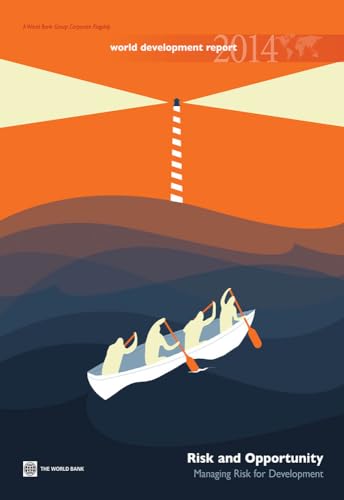
Inhaltsangabe
The past 25 years have witnessed unprecedented changes around the world—many of them for the better. Across the continents, many countries have embarked on a path of international integration, economic reform, technological modernization, and democratic participation. As a result, economies that had been stagnant for decades are growing, people whose families had suffered deprivation for generations are escaping poverty, and hundreds of millions are enjoying the benefits of improved living standards and scientific and cultural sharing across nations. As the world changes, a host of opportunities arise constantly. With them, however, appear old and new risks, from the possibility of job loss and disease to the potential for social unrest and environmental damage. If ignored, these risks can turn into crises that reverse hard-won gains and endanger the social and economic reforms that produced these gains. The World Development Report 2014 (WDR 2014), Risk and Opportunity: Managing Risk for Development, contends that the solution is not to reject change in order to avoid risk but to prepare for the opportunities and risks that change entails. Managing risks responsibly and effectively has the potential to bring about security and a means of progress for people in developing countries and beyond. Although individuals’ own efforts, initiative, and responsibility are essential for managing risk, their success will be limited without a supportive social environment—especially when risks are large or systemic in nature. The WDR 2014 argues that people can successfully confront risks that are beyond their means by sharing their risk management with others. This can be done through naturally occurring social and economic systems that enable people to overcome the obstacles that individuals and groups face, including lack of resources and information, cognitive and behavioral failures, missing markets and public goods, and social externalities and exclusion. These systems—from the household and the community to the state and the international community—have the potential to support people’s risk management in different yet complementary ways. The Report focuses on some of the most pressing questions policy makers are asking. What role should the state take in helping people manage risks? When should this role consist of direct interventions, and when should it consist of providing an enabling environment? How can governments improve their own risk management, and what happens when they fail or lack capacity, as in many fragile and conflict-affected states? Through what mechanisms can risk management be mainstreamed into the development agenda? And how can collective action failures to manage systemic risks be addressed, especially those with irreversible consequences? The WDR 2014 provides policy makers with insights and recommendations to address these difficult questions. It should serve to guide the dialogue, operations, and contributions from key development actors—from civil society and national governments to the donor community and international development organizations.
Die Inhaltsangabe kann sich auf eine andere Ausgabe dieses Titels beziehen.
Über die Autorin bzw. den Autor
The World Bank came into formal existence in 1945 following the international ratification of the Bretton Woods agreements. It is a vital source of financial and technical assistance to developing countries around the world. The organization's activities are focused on education, health, agriculture and rural development, environmental protection, establishing and enforcing regulations, infrastructure development, governance and legal institutions development. The World Bank is made up of two unique development institutions owned by its 185 Member Countries. The International Bank for Reconstruction and Development (IBRD) focuses on middle income and creditworthy poor countries and the International Development Association (IDA), which focuses on the poorest countries in the world.
„Über diesen Titel“ kann sich auf eine andere Ausgabe dieses Titels beziehen.
Suchergebnisse für World Development Report 2014: Risk and Opportunity:...

Beispielbild für diese ISBN
World Development Report 2014: Risk and Opportunity - Managing Risk for Development
Verlag:
World Bank Publications, 2013
ISBN 10: 0821399039
ISBN 13: 9780821399033
Gebraucht
Softcover
Anbieter: Ammareal, Morangis, Frankreich
Verkäuferbewertung 5 von 5 Sternen

Softcover. Zustand: Très bon. Ancien livre de bibliothèque avec équipements. Ammareal reverse jusqu'à 15% du prix net de cet article à des organisations caritatives. ENGLISH DESCRIPTION Book Condition: Used, Very good. Former library book. Ammareal gives back up to 15% of this item's net price to charity organizations. Bestandsnummer des Verkäufers I-400-894
Gebraucht kaufen
EUR 19,53
EUR 16,50 Versand
Versand von Frankreich nach USA
Versand von Frankreich nach USA
Anzahl: 1 verfügbar
Beispielbild für diese ISBN
World Development Report 2014 - Risk and Opportunity - Managing Risk for Development (eng)
Anbieter: Brook Bookstore On Demand, Napoli, NA, Italien
Verkäuferbewertung 5 von 5 Sternen
Zustand: new. Bestandsnummer des Verkäufers 96c1ec3a4bad844bf9d5c71423acd647
Neu kaufen
EUR 32,30
EUR 8,00 Versand
Versand von Italien nach USA
Versand von Italien nach USA
Anzahl: Mehr als 20 verfügbar
Beispielbild für diese ISBN
World Development Report 2014
Anbieter: PBShop.store UK, Fairford, GLOS, Vereinigtes Königreich
Verkäuferbewertung 5 von 5 Sternen
PAP. Zustand: New. New Book. Shipped from UK. Established seller since 2000. Bestandsnummer des Verkäufers FW-9780821399033
Neu kaufen
EUR 33,77
EUR 6,95 Versand
Versand von Vereinigtes Königreich nach USA
Versand von Vereinigtes Königreich nach USA
Anzahl: 15 verfügbar
Foto des Verkäufers
World Development Report 2014 : Risk and Opportunity: Managing Risk for Development
Anbieter: GreatBookPrices, Columbia, MD, USA
Verkäuferbewertung 5 von 5 Sternen
Zustand: New. Bestandsnummer des Verkäufers 19800034-n
Neu kaufen
EUR 39,62
EUR 2,37 Versand
Versand innerhalb von USA
Versand innerhalb von USA
Anzahl: Mehr als 20 verfügbar
Foto des Verkäufers
World Development Report 2014
Anbieter: Rarewaves.com USA, London, LONDO, Vereinigtes Königreich
Verkäuferbewertung 5 von 5 Sternen
Paperback. Zustand: New. The last 25 years have witnessed unprecedented changes around the world-many of them for the better. In all continents, numerous countries have embarked on a path of international integration, economic reform, technological modernization, and democratic participation. As result, economies that had been stagnant for decades are growing, people who had suffered deprivation for generations are escaping poverty, and hundreds of millions are enjoying the benefits of improved living standards and scientific and cultural sharing across nations.As the world changes, a host of opportunities arise constantly. With them, however, old and new risks appear, from the possibility of job loss and disease to the potential for social unrest and environmental damage. If ignored, these risks can turn into crises that reverse hard-fought gains and endanger the social and economic reforms that produced these gains.The World Development Report 2014, Managing Risk for Development, contends that the solution is not to reject the changes that bring about opportunities along with risks, but to prepare for them in a proactive and holistic way. Thus, managing risks responsibly and effectively has the potential to bring about a sense of security and means of progress to people in developing countries and beyond.Although individuals' initiative and responsibility are essential for managing risk, their success can only be limited without a supportive social environment, especially when risks are large or systemic in nature. The WDR 2014 argues that a way in which people can successfully confront risks and opportunities that are beyond their means is to share their risk management with others. This can be done through naturally occurring social and economic systems that enable people to overcome the obstacles that individuals and groups suffer from, including lack of resources and information, cognitive and behavioral failures, missing markets and public goods, and social externalities and exclusion. These systems -from the household and the community to the state and the international community-have the potential to support people's risk management in different yet complementary ways.The WDR 2014 presents a detailed approach and specific advice to improve resilience. For policy makers in developing (and developed) countries, the Report also provides strategic recommendations that cut across risks and social systems in an integrated framework. They attempt to provide both innovative solutions to long-standing problems in poor and emerging economies and ways to mainstream risk management into the development agenda. These recommendations should serve to guide the dialogue, operations, and contributions from key development actors -from civil society and national governments to the donor community and international development organizations. Bestandsnummer des Verkäufers LU-9780821399033
Neu kaufen
EUR 43,52
Versand gratis
Versand von Vereinigtes Königreich nach USA
Versand von Vereinigtes Königreich nach USA
Anzahl: 15 verfügbar
Beispielbild für diese ISBN
World Development Report 2014
Anbieter: Kennys Bookshop and Art Galleries Ltd., Galway, GY, Irland
Verkäuferbewertung 5 von 5 Sternen
Zustand: New. Num Pages: 360 pages. BIC Classification: KCM. Category: (G) General (US: Trade). Dimension: 264 x 207 x 22. Weight in Grams: 926. . 2013. Paperback. . . . . Bestandsnummer des Verkäufers V9780821399033
Neu kaufen
EUR 35,96
EUR 9,50 Versand
Versand von Irland nach USA
Versand von Irland nach USA
Anzahl: Mehr als 20 verfügbar
Foto des Verkäufers
World Development Report 2014 : Risk and Opportunity: Managing Risk for Development
Verlag:
World Bank Publications, 2013
ISBN 10: 0821399039
ISBN 13: 9780821399033
Gebraucht
Softcover
Anbieter: GreatBookPrices, Columbia, MD, USA
Verkäuferbewertung 5 von 5 Sternen
Zustand: As New. Unread book in perfect condition. Bestandsnummer des Verkäufers 19800034
Gebraucht kaufen
EUR 43,86
EUR 2,37 Versand
Versand innerhalb von USA
Versand innerhalb von USA
Anzahl: Mehr als 20 verfügbar
Beispielbild für diese ISBN
World Development Report 2014 (Paperback)
Verlag:
World Bank Publications, Washington, 2013
ISBN 10: 0821399039
ISBN 13: 9780821399033
Neu
Paperback
Anbieter: Grand Eagle Retail, Bensenville, IL, USA
Verkäuferbewertung 5 von 5 Sternen
Paperback. Zustand: new. Paperback. The last 25 years have witnessed unprecedented changes around the world - many of them for the better. In all continents, numerous countries have embarked on a path of international integration, economic reform, technological modernisation, and democratic participation. As result, economies that had been stagnant for decades are growing, people who had suffered deprivation for generations are escaping poverty, and hundreds of millions are enjoying the benefits of improved living standards and scientific and cultural sharing across nations. As the world changes, a host of opportunities arise constantly. With them, however, old and new risks appear, from the possibility of job loss and disease to the potential for social unrest and environmental damage. If ignored, these risks can turn into crises that reverse hard-fought gains and endanger the social and economic reforms that produced these gains. World Development Report (WDR) 2014: Managing Risk for Development, contends that the solution is not to reject the changes that bring about opportunities along with risks, but to prepare for them in a proactive and holistic way.Thus, managing risks responsibly and effectively has the potential to bring about a sense of security and means of progress to people in developing countries and beyond. Although individuals' initiative and responsibility are essential for managing risk, their success can only be limited without a supportive social environment, especially when risks are large or systemic in nature. The WDR 2014 argues that a way in which people can successfully confront risks and opportunities that are beyond their means is to share their risk management with others. This can be done through naturally occurring social and economic systems that enable people to overcome the obstacles that individuals and groups suffer from, including lack of resources and information, cognitive and behavioural failures, missing markets and public goods, and social externalities and exclusion. These systems - from the household and the community to the state and the international community - have the potential to support people's risk management in different yet complementary ways. WDR 2014 presents a detailed approach and specific advice to improve resilience.For policy makers in developing (and developed) countries, the Report also provides strategic recommendations that cut across risks and social systems in an integrated framework. They attempt to provide both innovative solutions to long-standing problems in poor and emerging economies and ways to mainstream risk management into the development agenda. These recommendations should serve to guide the dialogue, operations, and contributions from key development actors - from civil society and national governments to the donor community and international development organisations. The World Development Report 2014 examines how improving risk management can lead to larger gains in development and poverty reduction. It argues that improving risk management is crucial to reduce the negative impacts of shocks and hazards, but also to enable people to pursue new opportunities for growth and prosperity. Shipping may be from multiple locations in the US or from the UK, depending on stock availability. Bestandsnummer des Verkäufers 9780821399033
Beispielbild für diese ISBN
World Development Report 2014 Risk and Opportunity Managing Risk for Development
Anbieter: Revaluation Books, Exeter, Vereinigtes Königreich
Verkäuferbewertung 5 von 5 Sternen
Paperback. Zustand: Brand New. 343 pages. 10.25x8.00x1.00 inches. In Stock. Bestandsnummer des Verkäufers __0821399039
Neu kaufen
EUR 34,91
EUR 14,80 Versand
Versand von Vereinigtes Königreich nach USA
Versand von Vereinigtes Königreich nach USA
Anzahl: 2 verfügbar
Beispielbild für diese ISBN
World Development Report 2014
Anbieter: Majestic Books, Hounslow, Vereinigtes Königreich
Verkäuferbewertung 4 von 5 Sternen

Zustand: New. pp. 320. Bestandsnummer des Verkäufers 96420716
Neu kaufen
EUR 43,50
EUR 7,69 Versand
Versand von Vereinigtes Königreich nach USA
Versand von Vereinigtes Königreich nach USA
Anzahl: 3 verfügbar