
Verwandte Artikel zu White Men Challenging Racism: 35 Personal Stories
Inhaltsangabe
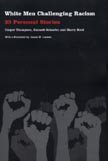
White Men Challenging Racism is a collection of first-person narratives chronicling the compelling experiences of thirty-five white men whose efforts to combat racism and fight for social justice are central to their lives. Based on interviews conducted by Cooper Thompson, Emmett Schaefer, and Harry Brod, these engaging oral histories tell the stories of the men's antiracist work. While these men discuss their accomplishments with pride, they also talk about their mistakes and regrets, their shortcomings and strategic blunders. A foreword by James W. Loewen, author of Lies My Teacher Told Me, provides historical context, describing antiracist efforts undertaken by white men in America during past centuries.
Ranging in age from twenty-six to eighty-six, the men whose stories are presented here include some of the elder statesmen of antiracism work as well as members of the newest generation of activists. They come from across the United States--from Denver, Nashville, and San Jose; rural North Carolina, Detroit, and Seattle. Some are straight; some are gay. A few--such as historian Herbert Aptheker, singer/songwriter Si Kahn, Stetson Kennedy (a Klan infiltrator in the 1940s), and Richard Lapchick (active in organizing the sports community against apartheid)--are relatively well known; most are not. Among them are academics, ministers, police officers, firefighters, teachers, journalists, union leaders, and full-time community organizers. They work with Latinos and African-, Asian-, and Native-Americans. Many ground their work in spiritual commitments. Their inspiring personal narratives--whether about researching right-wing groups, organizing Central American immigrants, or serving as pastor of an interracial congregation--connect these men with one another and with their allies in the fight against racism in the United States.
All authors' royalties go directly to fund antiracist work. To read excerpts from the book, please visit http: //www.whitemenchallengingracism.com/
Die Inhaltsangabe kann sich auf eine andere Ausgabe dieses Titels beziehen.
Über die Autorin bzw. den Autor
Cooper Thompson is a senior consultant at visions, a multicultural consulting organization.
Emmett Schaefer is Adjunct Assistant Professor of Sociology at the University of Massachusetts, Boston.
Harry Brod is Professor of Philosophy and Humanities at the University of Northern Iowa. He is the editor of The Making of Masculinities.
Von der hinteren Coverseite
"With range, depth, and integrity, the narratives in this collection flesh out both the 'promise and the way of life' of white people who have taken on racism as central to their life work. "White Men Challenging Racism" is a valuable contradiction to the construct of 'angry white men' that has fueled racial backlash over the past twenty years."--Mab Segrest, author of "Memoirs of a Race Traitor"
Auszug. © Genehmigter Nachdruck. Alle Rechte vorbehalten.
White Men Challenging Racism
35 Personal Stories By Cooper ThompsonDuke University Press
Copyright © 2003 Cooper ThompsonAll right reserved.
ISBN: 9780822330844
Introduction
Just Living
This is a book about the personal experiences of thirty-five white men who are trying to live a just life, sometimes successfully, sometimes not. To varying degrees, the white men in this book all think of what they do as simply what they must do, as if it is no longer a choice; they are just living their lives. And the task of challenging racism and other forms of oppression is integrated into their day-to-day existence in such a way that their lives are permeated with questions of justice, personally and politically. Challenging racism is, for these men, just living. This book is an attempt to provide some space for the reflections of a group of white men who we believe are living just lives in many different ways.
The narratives include incidents from and comments about complex and rich lives and reflections on antiracist activity. Some of the narratives speak about critical events that led to a life of activism; some of them speak about blind spots when it comes to racism or another form of oppression; some of them speak about offenses in relationships and mistakes in strategy; some of them speak about regrets of actions not taken. And there are expressions of pride in describing accomplishments and victories.
These narratives are like photographs. It is as if each of these white men were momentarily presenting himself to us and you. These narratives are not comprehensive life histories. The white men profiled in this book made decisions about what they wanted to reveal about themselves and what they didn't want to reveal. We encouraged them and sometimes challenged them to reveal more about their most favorite and least favorite sides of themselves.
Why Another Book about White Men?
Given the critical role that people of color have played in the lives of white men who challenge racism and given the fact that it is largely people of color (and to a lesser extent white women) who have given their lives to fight racism, you may wonder why we are writing a book exclusively about white men. In fact, we were occasionally asked, "Why are you focusing on white men? Aren't people of color the true heroes? Why are you ignoring them? Don't white men already get more attention than they deserve? And what about the work of white women in challenging racism?"
We spent many hours talking about these questions with people of color and other white people. Afiya Madzimoyo, a friend and colleague who lives in Atlanta, Georgia, and other women of color consistently told us that there is a desperate need at this point in history for white men to love themselves as white men; Wekesa Madzimoyo, her husband and another friend and colleague, supported us in our learning to love our white male brothers. Afiya and Wekesa emphasized the importance of our being with other white men, praising them for their accomplishments, and challenging them when they didn't "get it."
Wekesa is also emphatic that people of color need to break the centuries-old pattern of taking care of white people; we know from experience that we and other white men have fallen into patterns of looking to people of color-and white women-for encouragement and affirmation as we take on the task of challenging racism. In our worst moments, we have depended on people of color to acknowledge our good efforts, and if they didn't thank us profusely, we decided that they weren't grateful. Or we have avoided contact with other white men, believing that there is little chance of getting support from them. We believe that it is our responsibility as white men to give ourselves the "strokes" we want and need.
We are certainly not the first white people to decide that our work is with other white people. This is what Malcolm X and many other people of color said when asked by white people what their role might be in securing civil rights for African Americans. After reading many of these narratives and giving us feedback, Curdina Hill told us, "White people aren't really doing antiracism work unless they're working with other white people." In a variation on this theme, Winona LaDuke told Rick Whaley, one of the white men interviewed for this book, "You need to know prayers in your own people's language."
We believe that the narratives in this book do what Afiya and Wekesa and other people of color have encouraged us to do. By holding up these white men who challenge racism, we are celebrating their lives. By asking them to be vulnerable about their mistakes and shortcomings and by asking questions that push their understanding of themselves and oppression, we are challenging them. By supporting them and getting support from them, we are encouraging white men to use their white male privilege fully. It does nothing for racial justice if we are meek and shrink into a corner, abandoning people of color and white women to fight racism on their own. The struggle for racial justice needs all of us in the center of the room.
Just as we hoped our questions were challenging to the men we were interviewing, so we also hope that their answers prove challenging to our readers. In particular, we hope what they say challenges the images that usually arise when people begin to speak of men in connection with the issue of racism. All too often, in our view, introducing the topic "men and racism" into a conversation quickly narrows it down to a discussion solely of the problem of "angry white men." But there are other men, other white men, other than these "angry white men." These other white men have anger and many other feelings, as their words show, not toward people of color or women (against whom the anger of the "angry white men" is said to be directed), but against racism and sexism and injustice generally. And they act on those feelings not in hostile acts of rage against other, marginalized people, but in acts of solidarity with those other people and acts of compassionate confrontation toward other white men.
Why, then, yet another book on white men-and this time, irony of ironies, one that even claims to be in opposition to racism and sexism? Because the widely held gendered image of racism-it's "angry white men," not "angry white people"-needs an equally gendered counterimage of antiracism-antiracist white men, not antiracist white people. Because groups of people, even dominant groups of people, are not monolithic. And it's important to know this. To really know it, not just in the abstract, but in the concrete details of these people's lives, as they themselves speak about them. We need to have some personal knowledge of men who have crossed racial lines in pursuit of racial justice, against the dominant stand of their own dominant group. Such knowledge empowers all, whether dominant or subordinate, because it opens the horizon and raises the bar of the possible in pursuit of justice and may even help to empower and inspire others to do likewise.
It is not that we believe that white women don't have much to teach us. They have taught us much, and we hope to keep learning from them. In fact, our personal experience tells us that there are many more white women than white men who actively challenge racism, and we suspect that there is more...
„Über diesen Titel“ kann sich auf eine andere Ausgabe dieses Titels beziehen.
Suchergebnisse für White Men Challenging Racism: 35 Personal Stories

Beispielbild für diese ISBN
White Men Challenging Racism: 35 Personal Stories
Anbieter: THE SAINT BOOKSTORE, Southport, Vereinigtes Königreich
Verkäuferbewertung 5 von 5 Sternen

Hardback. Zustand: Good. Used copy in good condition - Usually dispatched within 3 working days. Bestandsnummer des Verkäufers D9780822330844
Gebraucht kaufen
EUR 139,20
EUR 24,19 Versand
Versand von Vereinigtes Königreich nach USA
Versand von Vereinigtes Königreich nach USA
Anzahl: 2 verfügbar