
Verwandte Artikel zu Imitation of Life
Inhaltsangabe
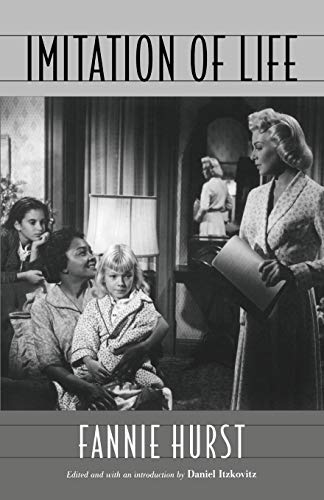
A bestseller in 1933, and subsequently adapted into two beloved and controversial films, Imitation of Life has played a vital role in ongoing conversations about race, femininity, and the American Dream. Bea Pullman, a white single mother, and her African American maid, Delilah Johnston, also a single mother, rear their daughters together and become business partners. Combining Bea's business savvy with Delilah's irresistible southern recipes, they build an Aunt Jemima-like waffle business and an international restaurant empire. Yet their public success brings them little happiness. Bea is torn between her responsibilities as a businesswoman and those of a mother; Delilah is devastated when her light-skinned daughter, Peola, moves away to pass as white. Imitation of Life struck a chord in the 1930s, and it continues to resonate powerfully today.
The author of numerous bestselling novels, a masterful short story writer, and an outspoken social activist, Fannie Hurst was a major celebrity in the first half of the twentieth century. Daniel Itzkovitz's introduction situates Imitation of Life in its literary, biographical, and cultural contexts, addressing such topics as the debates over the novel and films, the role of Hurst's one-time secretary and great friend Zora Neale Hurston in the novel's development, and the response to the novel by Hurst's friend Langston Hughes, whose one-act satire, "Limitations of Life" (which reverses the races of Bea and Delilah), played to a raucous Harlem crowd in the late 1930s. This edition brings a classic of popular American literature back into print.
Die Inhaltsangabe kann sich auf eine andere Ausgabe dieses Titels beziehen.
Über die Autorin bzw. den Autor
Fannie Hurst (1889-1968) was a popular writer of many novels and short stories. Among her best-known works are Back Street (1930) and Lummox (1923).
Daniel Itzkovitz is Associate Professor of English and Director of American Studies at Stonehill College in North Easton, Massachusetts. He is a coeditor of Queer Theory and the Jewish Question.
Von der hinteren Coverseite
"This new edition of an influential American classic--one of the first books in twentieth-century popular literature to grapple with issues of gender and race--is reason enough to celebrate, but Daniel Itzkovitz's splendid and insightful introduction reclaims for Fannie Hurst a preeminent position as an essential American literary figure whose work matters today more than ever."--Michael Bronski, author of "The Pleasure Principle: Sex, Backlash, and the Struggle for Gay Freedom"
Auszug. © Genehmigter Nachdruck. Alle Rechte vorbehalten.
IMITATION OF LIFE
By FANNIE HURSTDuke University Press
Copyright © 2004 Duke University PressAll right reserved.
ISBN: 978-0-8223-3324-1
Contents
Introduction Daniel Itzkovitz.....................viiImitation of Life.................................1Notes.............................................293
Chapter One
It struck Bea, and for the moment diverted her from grief, that quite the most physical thing she had ever connected with her mother was the fact of her having died.She found herself, crying there beside the bier, thinking of her mother's legs. Such willing ones. They were locked now, as they lay stretched horizontally down the center of the parlor, in the rigidity of death. The bengaline dress, for which only four dreamlike weeks ago they had shopped together on Atlantic Avenue, now lay decently over those dear legs. Dreadful counterpane to the physical fact that Adelaide Chipley's breasts and loins and femurs lay dead.
There had been so little evidence, during her lifetime, of any aspect of her physical life, other than just the automatic processes of locomotion and eating and sleeping. Mother had never been the one to profess hunger, or fatigue, or warmth, or cold, but how those estates of being in others could concern her! Her legs had just carried her about through being wife to Evans Chipley, and mother to Beatrice Fay Chipley, and all things to the monotonous mosaic of little days in the little household.
True, it had repeatedly occurred to Bea to ask herself, following that day shortly after her fourteenth birthday when the physical fact of her coming of menstrual age had frightened her so terribly that she had sobbed all through her mother's clumsy attempt at explanation, how on earth it was possible to even imagine two such people as her parents ever coming together in a way to conceive her, their child.
Why, it was even difficult to visualize Mother as a young girl (how pretty she was on the old tintype) sitting in the parlor of her little home in Burlington, New Jersey, past which the railroad train thundered, awaiting Father on his Saturday night visits from Philadelphia.
They had always seemed too little acquainted even for that. Too— too remote, for the suggestion of passion. How could those two have begot child! They never even touched, except for the peck of the lips when Father departed and arrived, and Bea came in for that too, of precisely the same quality.
How then ...?
Following her mother's shockingly inadequate explanation shortly after her fourteenth year, she had fleetingly dared to ask herself that question over and over again.
How ...?
What secret and mysterious transformation could come over two such unintimate-appearing people as her father and mother, after they had closed the door of their bedroom nights? How account for their matter-of-fact exit from the quite inexorable matter-of-factness of life as it was lived on Arctic Avenue, between Georgia and Mississippi Avenues, into realms which begot progeny.
It was all immensely reasonable in the stuff of which the books she borrowed from the public library were made. Janice Meredith. When Knighthood Was in Flower. Richard Carvel. Mill on the Floss. But Mother and Father—how? Neither could it have been a matter between them that had solely to do with the first night, or the first months, of marriage. After her fourteenth year, Bea came to recognize, with her logic, that her mother's illness, the year before, had been due to miscarriage.
Almost equally strange was a high-school mate, Ferdie Leigh, getting a baby sister.
The Leighs lived on Mississippi Avenue, and Mr. Leigh, who had a bathing-suit concession on the Boardwalk, was elder in the Presbyterian Church. The Leigh children were not allowed to ride in street cars on Sunday.... Mrs. Leigh was quite old and ugly and narrow ...
How ...?
How in the world did two people like Mr. and Mrs. Leigh, and more especially like her mother and father, ever become sufficiently well acquainted with one another....
Life in the Chipley household was so crammed with just the daylight facts. Setting yeast. Stretching lace curtains. Fancy-work. Pickling. Carpet-beating. Ironing. Nice meals planned by Mother, around everyone's likes and dislikes, except her dear own. "The chicken liver at the end of the platter is for you, Mr. Pullman, knowing you don't eat rabbit." "Take plenty of floating island Bea; it's your favorite dessert." "Mr. Chipley, that is your kind of sweet butter." Life all cluttered like that, with littlenesses. Coming. Going. Sleeping, too, of course, but Mother and Father straight beside one another in bed, like her, Bea, in her own little room. And Mr. Pullman in his.
For a while, after she was fourteen, it had been difficult to keep her mind from sliding around to this mystifying riddle of the intimacies, that must, by very virtue of her own existence, have transpired between her father and mother.
Jeanette Clabby, another schoolmate, and who was a Catholic, would undoubtedly carry such thoughts to confession. If they possessed her. Did they? Nice girls would no more have discussed such things!
But the riddle of her parents would persist, privately.
Goodness! if she so much as entered the bedroom where her mother was dressing, she hastily threw a towel or a wrapper across her breasts. Her father, even in the years before they had moved to Atlantic City, from Philadelphia, and when the asthma was thick upon him, had not liked to appear before the small girl, Bea, in his undershirt.
What mysterious transformation was it could come over two such unintimate people ...?
And now in death, there was at last something physical about her mother.
The awfulness of thinking that thought smote her with something that hurt even more than her grief. How confusing to find ideas that bordered on the forbidden, mingling with the aroma of God which seemed to emanate from a face dead and dear.
How private she had been about her illness, delicate and secretive as she had been about everything else pertaining to what touched her most closely. And what a frightening, hurting illness! ... And now God had folded those mysterious limbs into the sanctuary and still further privacy of death.
And to think that out of those dead loins had sprung life, hers—Beatrice Chipley's! They had been warm, yielding loins, and that crumpled figure over there in the corner of the darkened parlor, his back retching as he cried, had actually committed the act of sex. It made mother's deadness somehow seem so young and inexpressibly heartbreaking.
All mixed up with this death of a mother from whom she had never been separated one full day in her life, was a kind of splendid grief she had experienced once, fleetingly, while reading from a high-school platform:
"I weep for Adonais, he is dead."
The words, as she recited them, had felt like wine, fizzing down into, and exciting and hurting her.
"I weep for Adonais, he is dead ..."
I weep for mamma, she is dead ... her arms and legs and breasts and her loins there, under the bengaline dress, are stiff and dead——
Chapter Two
It was strange that in all the years of living in that small gray board house on Arctic Avenue, with the exterior staircase running down its flank like a ladder, in fact ever since she was six and they had moved from Philadelphia the year of the climax of her father's asthma, the things she, Bea, had taken for granted.Things such as an...
„Über diesen Titel“ kann sich auf eine andere Ausgabe dieses Titels beziehen.
Suchergebnisse für Imitation of Life

Beispielbild für diese ISBN
Imitation of Life
Anbieter: World of Books (was SecondSale), Montgomery, IL, USA
Verkäuferbewertung 5 von 5 Sternen

Paperback. Zustand: Good. A reprint of the 1933 classic novel, the basis for two film versions, with a new introduciton. Bestandsnummer des Verkäufers CIN0822333244G
Gebraucht kaufen
EUR 12,21
Versand gratis
Versand innerhalb von USA
Versand innerhalb von USA
Anzahl: 1 verfügbar
Beispielbild für diese ISBN
Imitation of Life
Anbieter: World of Books (was SecondSale), Montgomery, IL, USA
Verkäuferbewertung 5 von 5 Sternen
Paperback. Zustand: Very Good. A reprint of the 1933 classic novel, the basis for two film versions, with a new introduciton. Bestandsnummer des Verkäufers 00109958230
Gebraucht kaufen
EUR 12,21
Versand gratis
Versand innerhalb von USA
Versand innerhalb von USA
Anzahl: 2 verfügbar
Beispielbild für diese ISBN
Imitation of Life
Verlag:
Duke University Press (edition ), 2004
ISBN 10: 0822333244
ISBN 13: 9780822333241
Gebraucht
Paperback
Anbieter: BooksRun, Philadelphia, PA, USA
Verkäuferbewertung 5 von 5 Sternen
Paperback. Zustand: Very Good. It's a well-cared-for item that has seen limited use. The item may show minor signs of wear. All the text is legible, with all pages included. It may have slight markings and/or highlighting. Bestandsnummer des Verkäufers 0822333244-8-1
Gebraucht kaufen
EUR 12,22
Versand gratis
Versand innerhalb von USA
Versand innerhalb von USA
Anzahl: 1 verfügbar
Foto des Verkäufers
Imitation of Life
Anbieter: -OnTimeBooks-, Phoenix, AZ, USA
Verkäuferbewertung 5 von 5 Sternen
Zustand: good. A copy that has been read, remains in good condition. All pages are intact, and the cover is intact. The spine and cover show signs of wear. Pages can include notes and highlighting and show signs of wear, and the copy can include "From the library of" labels or previous owner inscriptions. 100% GUARANTEE! Shipped with delivery confirmation, if you're not satisfied with purchase please return item! Ships via media mail. Bestandsnummer des Verkäufers OTV.0822333244.G
Gebraucht kaufen
EUR 12,38
Versand gratis
Versand innerhalb von USA
Versand innerhalb von USA
Anzahl: 1 verfügbar
Foto des Verkäufers
Imitation of Life
Anbieter: clickgoodwillbooks, Indianapolis, IN, USA
Verkäuferbewertung 4 von 5 Sternen

Zustand: acceptable. Used - Acceptable: All pages and the cover are intact, but shrink wrap, dust covers, or boxed set case may be missing. Pages may include limited notes, highlighting, or minor water damage but the text is readable. Item may be missing bundled media. Bestandsnummer des Verkäufers 3O6QYV000PT7_ns
Gebraucht kaufen
EUR 9,66
EUR 3,58 Versand
Versand innerhalb von USA
Versand innerhalb von USA
Anzahl: 1 verfügbar
Beispielbild für diese ISBN
Imitation of Life
Anbieter: World of Books Inc, Montgomery, IL, USA
Verkäuferbewertung 4 von 5 Sternen
Paperback. Zustand: Very Good. A reprint of the 1933 classic novel, the basis for two film versions, with a new introduciton. Bestandsnummer des Verkäufers CIN0822333244VG
Gebraucht kaufen
EUR 14,06
Versand gratis
Versand innerhalb von USA
Versand innerhalb von USA
Anzahl: 2 verfügbar
Beispielbild für diese ISBN
Imitation of Life
Anbieter: World of Books Inc, Montgomery, IL, USA
Verkäuferbewertung 4 von 5 Sternen
Paperback. Zustand: Good. A reprint of the 1933 classic novel, the basis for two film versions, with a new introduciton. Bestandsnummer des Verkäufers CIN0822333244G
Gebraucht kaufen
EUR 14,06
Versand gratis
Versand innerhalb von USA
Versand innerhalb von USA
Anzahl: 1 verfügbar
Beispielbild für diese ISBN
Imitation of Life
Anbieter: Better World Books: West, Reno, NV, USA
Verkäuferbewertung 5 von 5 Sternen
Zustand: Very Good. Pages intact with possible writing/highlighting. Binding strong with minor wear. Dust jackets/supplements may not be included. Stock photo provided. Product includes identifying sticker. Better World Books: Buy Books. Do Good. Bestandsnummer des Verkäufers 16311841-6
Gebraucht kaufen
EUR 14,50
Versand gratis
Versand innerhalb von USA
Versand innerhalb von USA
Anzahl: 1 verfügbar
Beispielbild für diese ISBN
Imitation of Life
Verlag:
Duke University Press (edition ), 2004
ISBN 10: 0822333244
ISBN 13: 9780822333241
Gebraucht
Paperback
Anbieter: BooksRun, Philadelphia, PA, USA
Verkäuferbewertung 5 von 5 Sternen
Paperback. Zustand: Fair. The item might be beaten up but readable. May contain markings or highlighting, as well as stains, bent corners, or any other major defect, but the text is not obscured in any way. Ex-Library. Bestandsnummer des Verkäufers 0822333244-7-1-12
Gebraucht kaufen
EUR 15,19
Versand gratis
Versand innerhalb von USA
Versand innerhalb von USA
Anzahl: 1 verfügbar
Beispielbild für diese ISBN
Imitation of Life
Anbieter: Lakeside Books, Benton Harbor, MI, USA
Verkäuferbewertung 5 von 5 Sternen
Zustand: New. Brand New! Not Overstocks or Low Quality Book Club Editions! Direct From the Publisher! We're not a giant, faceless warehouse organization! We're a small town bookstore that loves books and loves it's customers! Buy from Lakeside Books! Bestandsnummer des Verkäufers OTF-S-9780822333241
Neu kaufen
EUR 18,22
EUR 3,58 Versand
Versand innerhalb von USA
Versand innerhalb von USA
Anzahl: Mehr als 20 verfügbar