
Verwandte Artikel zu Beautiful Data: A History of Vision and Reason since...
Beautiful Data: A History of Vision and Reason since 1945 (Experimental Futures) - Softcover
Buch 16 von 33: Experimental Futures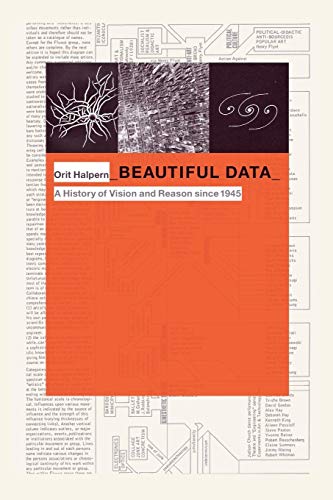
Inhaltsangabe
Beautiful Data is both a history of big data and interactivity, and a sophisticated meditation on ideas about vision and cognition in the second half of the twentieth century. Contending that our forms of attention, observation, and truth are contingent and contested, Orit Halpern historicizes the ways that we are trained, and train ourselves, to observe and analyze the world. Tracing the postwar impact of cybernetics and the communication sciences on the social and human sciences, design, arts, and urban planning, she finds a radical shift in attitudes toward recording and displaying information. These changed attitudes produced what she calls communicative objectivity: new forms of observation, rationality, and economy based on the management and analysis of data. Halpern complicates assumptions about the value of data and visualization, arguing that changes in how we manage and train perception, and define reason and intelligence, are also transformations in governmentality. She also challenges the paradoxical belief that we are experiencing a crisis of attention caused by digital media, a crisis that can be resolved only through intensified media consumption.
Die Inhaltsangabe kann sich auf eine andere Ausgabe dieses Titels beziehen.
Über die Autorin bzw. den Autor
Orit Halpern is Assistant Professor of History at the New School for Social Research and Eugene Lang College.
Auszug. © Genehmigter Nachdruck. Alle Rechte vorbehalten.
Beautiful Data
A History of Vision and Reason since 1945
By Orit HalpernDuke University Press
Copyright © 2014 Duke University Press
All rights reserved.
ISBN: 978-0-8223-5744-5All rights reserved.
Contents
ACKNOWLEDGMENTS,
PROLOGUE. Speculating on Sense,
INTRODUCTION. Dreams for Our Perceptual Present,
1 - ARCHIVING. Temporality, Storage, and Interactivity in Cybernetics,
2 - VISUALIZING. Design, Communicative Objectivity, and the Interface,
3 - RATIONALIZING. Cognition, Time, and Logic in the Social and Behavioral Sciences,
4 - GOVERNING. Designing Information and Reconfiguring Population circa 1959,
CONCLUSION,
EPILOGUE,
NOTES,
BIBLIOGRAPHY,
INDEX,
CHAPTER 1
ARCHIVING
Temporality, Storage, and Interactivity in Cybernetics
Few figures are more prominent in the histories of digital media then the MIT-based mathematician Norbert Wiener. From 1950 until the late 1970s, his work was prominently featured across multiple fields from architecture to sociobiology. For almost thirty years after World War II, before the term "digital" gained prominence, cybernetics, a word he coined, was the language used to describe a transformation in life and a new technical condition related to, but not reducible to, digital computers. In the late 1990s with the advent of the Internet, his name returned in the effort to historically situate the rise of digital networks and the interactive interface.
Wiener almost appeared to anticipate his future popularity. His archive at MIT is a fascinating exemplar of a life turned into data. Carefully curated, every letter mimeographed and saved, it is as though Wiener was already preparing his life for transmission, assuming a seamless translation between personal experience and historical analysis. Fastidiously cataloguing his many failures in natural history and the sciences of empiricism and experiment, he turned to reformulating these experiences in service of another form of knowledge. Rather than speak of the value of personal experience or the specificity of his character, he sought to make that element of his innermost psychology—his character—the substrate for legitimating computation.
I wish to take up this turn away from an "external" world and the devolution inward, in this case to the very self, as a starting point to consider the relationship between the archive and the interface in digital systems. What might we make of this move from a concern with recording an external, perhaps "natural," world in its entirety to an obsession with processing the already recorded traces of memory? How do we wish to frame this shift to forms of representation whose reference is reflexive rather than indexical? Wiener was not naïvely recounting his failures in finding adventure, his inability to excel in the life sciences; rather he was articulating an aspiration for forms of technology—both of thought and machine, or perhaps of thought as a machine—that had not yet come into being when he spoke. In his work, and that of his many compatriots in the arts and sciences of the time, we hear similar statements that voiced a not-yet-realized aspiration to transform a world of ontology, description, and materiality to one of communication, prediction, and virtuality. A world that, perhaps, speaks to our contemporary fantasies of a data-filled space where every screen is an interface, every diagram a process.
But if Wiener attempted to propagate the "new," it only came into being through the memory traces of the old. It was by way of Freud, the exemplar of a previous century's sciences, that Wiener implied the impossibility of describing a world in its totality, of ever rendering "reality" legible. Instead, he argued, we are faced with an "incomplete determinism," an operative lack that cannot enter description but can produce something else—a self-referential and probabilistic form of thought:
one interesting change that has taken place is that in a probabilistic world we no longer deal with quantities and statements which concern a specific, real universe as a whole but ask instead questions which may find their answers in a large number of similar universes.... This recognition of an element of incomplete determinism, almost an irrationality in the world, is in a certain way parallel to Freud's admission of a deep irrational component in human conduct and thought.
This form of probabilistic thought that emerged at the turn of the last century would now, in Wiener's work and that of his compatriots in the information sciences, be connected with theories of messages. Wiener was comfortable with acceding that the universe in its plurality might never be known. This accession, however, was only made to allow for the possibility that within far more localized situations, the future—chance—might yet be contained by way of technology.
But Wiener's invocation of Freud also complicated his own vision for technology and science. His statements posed the possibility that the contemporary systems he hoped to bring into being were not absolutely amnesic to their history. His statements would be, and still are, haunted by the residual problems of recording, translating, and transmitting information and associated concerns with indexicality, signification, and representation. Unconsciously, perhaps, even Wiener acceded to the possibility that not all forms of information could be similarly recorded and transmitted without loss, transformation, or change. It is precisely at this site, where the traces of older histories mark the desire for the production of the new, that I will excavate in this chapter.
Wiener's texts, and the work of his compatriots in cybernetics and the neurosciences, serve as useful vehicles, therefore, to begin investigating this historic attachment and displacement of older technical questions of documentation, inscription, and perception into terms of information and communication. The relationship, explicitly detailed in the work of many early cyberneticians, between the record, the diagram, and communication forms a bridge between our contemporary discourses about archiving, screens, and interactivity and historical concerns with memory, temporality, and representation. At this pivotal moment, demarcated by a catastrophic world war, these sciences were part of producing an aspiration for a new world constituted of information; but not without producing a novel set of conflicts, desires, and problems. I turn, then, to outlining what the conflicted relations between the archive and the screen might still have to say to our desire for "interaction" and communication with and through our machines.
Cybernetics: Communication and Control
The very definition of cybernetics already assumes a complex relationship to temporality and history—bridging the past with an obsessive interest in prediction, the future, and the virtual. As the etymology of the word suggests, cybernetics is a science of control or prediction of future action. In further adjoining control with communication, it is an endeavor that hopes to tame these futures events through the sending of messages.
These rather abstract ideas of communication as the source of control consolidated themselves within the milieu of military research and development in antiaircraft defense systems during World War II. While scientific research has long been part of war, World War II is now widely heralded as marking a critical turning point in the organization of science both in scale...
„Über diesen Titel“ kann sich auf eine andere Ausgabe dieses Titels beziehen.
Suchergebnisse für Beautiful Data: A History of Vision and Reason since...

Beispielbild für diese ISBN
Beautiful Data: A History of Vision and Reason since 1945 (Experimental Futures)
Verlag:
Duke University Press Books, 2015
ISBN 10: 0822357445
ISBN 13: 9780822357445
Gebraucht
Softcover
Anbieter: World of Books (was SecondSale), Montgomery, IL, USA
Verkäuferbewertung 5 von 5 Sternen

Zustand: Good. Item in good condition. Textbooks may not include supplemental items i.e. CDs, access codes etc. Bestandsnummer des Verkäufers 00110447594
Gebraucht kaufen
EUR 21,72
Versand gratis
Versand innerhalb von USA
Versand innerhalb von USA
Anzahl: 1 verfügbar
Beispielbild für diese ISBN
Beautiful Data: A History of Vision and Reason since 1945 (Experimental Futures)
Anbieter: WorldofBooks, Goring-By-Sea, WS, Vereinigtes Königreich
Verkäuferbewertung 5 von 5 Sternen
Paperback. Zustand: Very Good. The book has been read, but is in excellent condition. Pages are intact and not marred by notes or highlighting. The spine remains undamaged. Bestandsnummer des Verkäufers GOR009947527
Gebraucht kaufen
EUR 22,44
EUR 6,50 Versand
Versand von Vereinigtes Königreich nach USA
Versand von Vereinigtes Königreich nach USA
Anzahl: 1 verfügbar
Foto des Verkäufers
Beautiful Data : A History of Vision and Reason Since 1945
Anbieter: GreatBookPrices, Columbia, MD, USA
Verkäuferbewertung 5 von 5 Sternen
Zustand: As New. Unread book in perfect condition. Bestandsnummer des Verkäufers 21575703
Gebraucht kaufen
EUR 30,61
EUR 2,32 Versand
Versand innerhalb von USA
Versand innerhalb von USA
Anzahl: Mehr als 20 verfügbar
Beispielbild für diese ISBN
Beautiful Data
Anbieter: PBShop.store UK, Fairford, GLOS, Vereinigtes Königreich
Verkäuferbewertung 5 von 5 Sternen
PAP. Zustand: New. New Book. Shipped from UK. Established seller since 2000. Bestandsnummer des Verkäufers FW-9780822357445
Neu kaufen
EUR 27,61
EUR 5,83 Versand
Versand von Vereinigtes Königreich nach USA
Versand von Vereinigtes Königreich nach USA
Anzahl: 15 verfügbar
Foto des Verkäufers
Beautiful Data : A History of Vision and Reason Since 1945
Anbieter: GreatBookPrices, Columbia, MD, USA
Verkäuferbewertung 5 von 5 Sternen
Zustand: New. Bestandsnummer des Verkäufers 21575703-n
Neu kaufen
EUR 31,92
EUR 2,32 Versand
Versand innerhalb von USA
Versand innerhalb von USA
Anzahl: Mehr als 20 verfügbar
Foto des Verkäufers
Beautiful Data: A History of Vision and Reason Since 1945 (Paperback or Softback)
Verlag:
Duke University Press 1/9/2015, 2015
ISBN 10: 0822357445
ISBN 13: 9780822357445
Neu
Paperback or Softback
Anbieter: BargainBookStores, Grand Rapids, MI, USA
Verkäuferbewertung 5 von 5 Sternen
Paperback or Softback. Zustand: New. Beautiful Data: A History of Vision and Reason Since 1945. Book. Bestandsnummer des Verkäufers BBS-9780822357445
Beispielbild für diese ISBN
Beautiful Data: A History of Vision and Reason since 1945 (Experimental Futures)
Anbieter: California Books, Miami, FL, USA
Verkäuferbewertung 4 von 5 Sternen

Zustand: New. Bestandsnummer des Verkäufers I-9780822357445
Neu kaufen
EUR 34,41
Versand gratis
Versand innerhalb von USA
Versand innerhalb von USA
Anzahl: Mehr als 20 verfügbar
Beispielbild für diese ISBN
Beautiful Data: A History of Vision and Reason Since 1945 (Experimental Futures)
Anbieter: medimops, Berlin, Deutschland
Verkäuferbewertung 5 von 5 Sternen
Zustand: good. Befriedigend/Good: Durchschnittlich erhaltenes Buch bzw. Schutzumschlag mit Gebrauchsspuren, aber vollständigen Seiten. / Describes the average WORN book or dust jacket that has all the pages present. Bestandsnummer des Verkäufers M00822357445-G
Gebraucht kaufen
EUR 26,83
EUR 10,00 Versand
Versand von Deutschland nach USA
Versand von Deutschland nach USA
Anzahl: 1 verfügbar
Beispielbild für diese ISBN
Beautiful Data: A History of Vision and Reason since 1945 (eng)
Anbieter: Brook Bookstore On Demand, Napoli, NA, Italien
Verkäuferbewertung 5 von 5 Sternen
Zustand: new. Bestandsnummer des Verkäufers d81113865711b2fddd46575bb278d505
Neu kaufen
EUR 31,20
EUR 6,80 Versand
Versand von Italien nach USA
Versand von Italien nach USA
Anzahl: Mehr als 20 verfügbar
Foto des Verkäufers
Beautiful Data
Anbieter: Rarewaves.com USA, London, LONDO, Vereinigtes Königreich
Verkäuferbewertung 5 von 5 Sternen
Paperback. Zustand: New. Beautiful Data is both a history of big data and interactivity, and a sophisticated meditation on ideas about vision and cognition in the second half of the twentieth century. Contending that our forms of attention, observation, and truth are contingent and contested, Orit Halpern historicizes the ways that we are trained, and train ourselves, to observe and analyze the world. Tracing the postwar impact of cybernetics and the communication sciences on the social and human sciences, design, arts, and urban planning, she finds a radical shift in attitudes toward recording and displaying information. These changed attitudes produced what she calls communicative objectivity: new forms of observation, rationality, and economy based on the management and analysis of data. Halpern complicates assumptions about the value of data and visualization, arguing that changes in how we manage and train perception, and define reason and intelligence, are also transformations in governmentality. She also challenges the paradoxical belief that we are experiencing a crisis of attention caused by digital media, a crisis that can be resolved only through intensified media consumption. Bestandsnummer des Verkäufers LU-9780822357445
Neu kaufen
EUR 38,14
Versand gratis
Versand von Vereinigtes Königreich nach USA
Versand von Vereinigtes Königreich nach USA
Anzahl: 1 verfügbar