
Verwandte Artikel zu Fields of Play: Sport, Race, and Memory in the Steel...
Inhaltsangabe
A Pittsburgh Sports History Centering Issues of Race and Economic Disparity
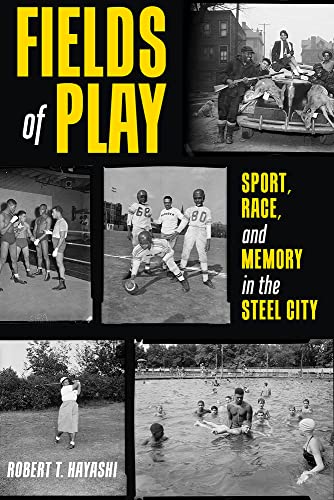
Americans love sports, from neighborhood pickup basketball to the National Football League, and everything in between. While no city better demonstrates the connection between athletic games and community than Pittsburgh, Pennsylvania, the common association of the city’s professional sports teams with its blue-collar industrial past illustrates a white nostalgic perspective that excludes the voices of many who labored in the mines and mills and played on local fields. In this original and lyrical history, Robert T. Hayashi addresses this gap by uncovering and sharing overlooked tales of the region’s less famous athletes: Chinese baseball players, Black women hunters, Jewish summer campers, and coal miner soccer stars. These athletes created separate spaces of play while demanding equal access to the region’s opportunities on and off the field. Weaving together personal narrative with accounts from media, popular culture, legal cases, and archival sources, Fields of Play details how powerful individuals and organizations used recreation to promote their interests and shape public memory. Combining this rigorous archival research with a poet’s voice, Hayashi vividly portrays how coal towns, settlement houses, municipal swimming pools, state game lands, stadia, and the city’s landmark rivers were all sites of struggle over inclusion and the meaning of play in the Steel City.
Die Inhaltsangabe kann sich auf eine andere Ausgabe dieses Titels beziehen.
Über die Autorin bzw. den Autor
Robert T. Hayashi is associate professor of American Studies at Amherst College. He was raised in Pittsburgh, Pennsylvania, and is the author of Haunted by Waters: A Journey through Race and Place in the American West.
Auszug. © Genehmigter Nachdruck. Alle Rechte vorbehalten.
Excerpt from Fields of Play Chapter 5: “Terrible Towels and Sixty-Minute Men: The Pittsburgh Steelers and Forgetting a Black (and Yellow) Past”
When I see someone in a Steelers T-shirt or cap, I have to say something. “Hey, nice shirt! Go, Steelers!” Gas station, shopping mall, airport terminal, it does not matter. I have joined group cheers in public spaces at the least encouragement. I guess what I most hope to hear in reply is, “Where’d yinz live at?” And I feel a little betrayed, even annoyed otherwise. Please, don’t ever tell me you just liked the look of the shirt! Professional teams provide fans with a collective set of symbols around which we unite and signify community: “In rallying around the home team, people identify more closely with a broader civic framework in the spatially, socially, and politically fragmented metropolis.” NFL broadcasters typically note the presence of Steelers fans at contests across the country, “How well Steelers fans travel.” I have been to games in Green Bay and Atlanta where thousands and thousands of men and women dressed in black and gold have filled the seats. Cities across the US and even overseas—Zurich, Bangkok, Rio—have bars where Steeler fans gather to watch the games, cheer, suffer, and reminisce. What the TV talking heads fail to acknowledge is how many of these fans at away games are part of that exodus of workers and families who left the city when industry crashed. The Steeler Nation is a diaspora.
The early years of pro football and of the Steelers certainly did not suggest that the team would function as any collective symbol. Professional football was a relatively minor sport in the first part of the twentieth century, college football being much more popular; and it was not until the mid-twentieth century that pro football began to attract mass audiences, especially with the rise of television, its sports-specific programming, and the clever marketing of the NFL. The dramatic NFL Films, accompanied by a propulsive soundtrack, slow motion shots, and John Facenda’s godlike narration made a simple screen pass appear a distillation of epic tragedy. As noted earlier, the Steelers were perennial losers for decades. Their role in conveying local identity was due to more than their turnaround on the field—dramatic as it was—or to the growth of professional football and the mass media that has catalyzed its explosive growth. A combination of social, cultural, and economic forces during the 1970s coincided with the Steelers’ rise to become the most dominant team in the history of the NFL and provided Pittsburghers with a powerful impulse to paint their faces black and gold.
It is impossible to discuss the Steelers organization without analyzing the influence of the team’s majority owners, the Rooney family of Pittsburgh. As Dave Anderson observed, writing in the New York Times, “In any sport, a team’s character usually reflects, for better or for worse, the franchise’s dominant personality.” Although many NFL teams have experienced a slew of owners, the Steelers have remained a family business, controlled and defined by the Rooneys. The patriarch, Art Rooney, who died in 1988, was the son of Irish Catholic immigrants and grew up on the city’s North Side district, where he lived all his life. The neighborhood had once been an independent town, Allegheny City, which Pittsburgh annexed and reconfigured. . . .
The local sports historian Rob Ruck summarizes well the legendary status and influence of Art Rooney: “In the somewhat mythic but still essentially accurate saga Pittsburghers have woven out of the strands of Art Rooney’s life, sport is a product of hardworking people and tight-knit communities.” Art’s son Dan continued this legacy, even moving into his father’s former home on the North Side. Like his dad, Dan Rooney’s community was also the touchstone of his character, as he described, “I know this sounds impossible but in those days growing up on the North Side, we didn’t think about your skin color, or your accent, or what church you went to. What mattered was that you lived up to your word, pulled your own weight, and looked out for your friends.”
One of Dan Rooney’s most important decisions upon assuming operational control of the organization was the hiring of a new head coach, a young assistant coach of the Miami Dolphins and former high school star from a working-class Cleveland family. Chuck Noll immediately instilled an attitude of professionalism and commitment that echoed across the roster. The longtime kicker Gary Anderson recalls, “I really responded to a guy like that. . . . If you showed up for work in the morning, he assumed you were professional enough to get the job done.” The Steelers also displayed the toughness embodied in Art Rooney, who is famously quoted as saying, “Don’t ever let anyone mistake kindness for weakness.” The former Steeler middle linebacker Jack Lambert, a Steeler legend for his violent play and missing front teeth, which commonly elicited comparisons to Dracula, defined the Steelers’ style as a “culture of hard-hitting, hard-drinking, blue collar masculinity.” And it sold as well as Big Irons—the sixteen-ounce version of the local brew, Iron City. Opponents may have expected to win against Pittsburgh, but victory would come with its lumps. The former NFL quarterback Len Dawson recalled, “They intimidated. It began with their defense.” With Noll at the helm and a new group of exceptionally talented players, the team reached legendary prominence, just as the town’s defining economic base collapsed. Yet the Steelers, through their name, their symbols, and physical style of play, keep the memory of those hulking mills, smokestacks, and once thriving towns like Braddock alive on Sundays.
„Über diesen Titel“ kann sich auf eine andere Ausgabe dieses Titels beziehen.
Suchergebnisse für Fields of Play: Sport, Race, and Memory in the Steel...

Beispielbild für diese ISBN
Fields of Play: Sport, Race, and Memory in the Steel City (Regional)
Verlag:
University of Pittsburgh Press, 2023
ISBN 10: 0822947846
ISBN 13: 9780822947844
Gebraucht
Hardcover
Anbieter: Midtown Scholar Bookstore, Harrisburg, PA, USA
Verkäuferbewertung 5 von 5 Sternen

hardcover. Zustand: Very Good. HARDCOVER Very Good - Crisp, clean, unread book with some shelfwear/edgewear, may have a remainder mark - NICE Standard-sized. Bestandsnummer des Verkäufers M0822947846Z2
Gebraucht kaufen
EUR 6,28
EUR 5,39 Versand
Versand innerhalb von USA
Versand innerhalb von USA
Anzahl: 8 verfügbar
Beispielbild für diese ISBN
Fields of Play: Sport, Race, and Memory in the Steel City (Regional)
Verlag:
University of Pittsburgh Press, 2023
ISBN 10: 0822947846
ISBN 13: 9780822947844
Gebraucht
Hardcover
Anbieter: Midtown Scholar Bookstore, Harrisburg, PA, USA
Verkäuferbewertung 5 von 5 Sternen
hardcover. Zustand: Good. HARDCOVER Good - Bumped and creased book with tears to the extremities, but not affecting the text block, may have remainder mark or previous owner's name - GOOD Standard-sized. Bestandsnummer des Verkäufers M0822947846Z3
Gebraucht kaufen
EUR 6,53
EUR 5,39 Versand
Versand innerhalb von USA
Versand innerhalb von USA
Anzahl: 2 verfügbar
Beispielbild für diese ISBN
Fields of Play: Sport, Race, and Memory in the Steel City (Regional)
Verlag:
University of Pittsburgh Press, 2023
ISBN 10: 0822947846
ISBN 13: 9780822947844
Gebraucht
Hardcover
Anbieter: Books From California, Simi Valley, CA, USA
Verkäuferbewertung 4 von 5 Sternen

hardcover. Zustand: Fine. Bestandsnummer des Verkäufers mon0004233939
Gebraucht kaufen
EUR 8,12
EUR 4,48 Versand
Versand innerhalb von USA
Versand innerhalb von USA
Anzahl: 1 verfügbar
Beispielbild für diese ISBN
Fields of Play: Sport, Race, and Memory in the Steel City (Regional)
Verlag:
University of Pittsburgh Press, 2023
ISBN 10: 0822947846
ISBN 13: 9780822947844
Gebraucht
Hardcover
Anbieter: Books From California, Simi Valley, CA, USA
Verkäuferbewertung 4 von 5 Sternen
hardcover. Zustand: Good. Cover boards are slightly bowing/bending. In otherwise great condition with minimal/no other wear, crisp & clean interiors showing unmarked text, and firm binding of the text block. A good reading copy! Bestandsnummer des Verkäufers mon0004234123
Gebraucht kaufen
EUR 8,12
EUR 4,48 Versand
Versand innerhalb von USA
Versand innerhalb von USA
Anzahl: 1 verfügbar
Beispielbild für diese ISBN
Fields of Play: Sport, Race, and Memory in the Steel City
Verlag:
University of Pittsburgh Press, 2023
ISBN 10: 0822947846
ISBN 13: 9780822947844
Gebraucht
Hardcover
Anbieter: Wonder Book, Frederick, MD, USA
Verkäuferbewertung 5 von 5 Sternen
Zustand: Very Good. Very Good condition. Acceptable dust jacket. (sports, pennsylvania, pittsburgh, history, social condition, racism, white supremacy movements ) A copy that may have a few cosmetic defects. May also contain light spine creasing or a few markings such as an owner's name, short gifter's inscription or light stamp. Bestandsnummer des Verkäufers L04OS-00121
Gebraucht kaufen
EUR 14,21
Versand gratis
Versand innerhalb von USA
Versand innerhalb von USA
Anzahl: 1 verfügbar
Beispielbild für diese ISBN
Fields of Play: Sport, Race, and Memory in the Steel City [Hardcover] Hayashi, Robert
Verlag:
University of Pittsburgh Press, 2023
ISBN 10: 0822947846
ISBN 13: 9780822947844
Neu
Hardcover
Anbieter: Lakeside Books, Benton Harbor, MI, USA
Verkäuferbewertung 5 von 5 Sternen
Zustand: New. Brand New! Not Overstocks or Low Quality Book Club Editions! Direct From the Publisher! We're not a giant, faceless warehouse organization! We're a small town bookstore that loves books and loves it's customers! Buy from Lakeside Books! Bestandsnummer des Verkäufers OTF-S-9780822947844
Neu kaufen
EUR 17,80
EUR 3,59 Versand
Versand innerhalb von USA
Versand innerhalb von USA
Anzahl: Mehr als 20 verfügbar
Beispielbild für diese ISBN
FieldsofPlay Format: Hardback
Anbieter: INDOO, Avenel, NJ, USA
Verkäuferbewertung 5 von 5 Sternen
Zustand: New. Brand New. Bestandsnummer des Verkäufers 9780822947844
Neu kaufen
EUR 22,28
Versand gratis
Versand innerhalb von USA
Versand innerhalb von USA
Anzahl: Mehr als 20 verfügbar
Beispielbild für diese ISBN
Fields of Play (Hardcover)
Verlag:
University of Pittsburgh Press, Pittsburgh PA, 2024
ISBN 10: 0822947846
ISBN 13: 9780822947844
Neu
Hardcover
Anbieter: Grand Eagle Retail, Bensenville, IL, USA
Verkäuferbewertung 5 von 5 Sternen
Hardcover. Zustand: new. Hardcover. Americans love sports, from neighborhood pickup basketball to the National Football League, and everything in between. While no city better demonstrates the connection between athletic games and community than Pittsburgh, Pennsylvania, the common association of the citys professional sports teams with its blue-collar industrial past illustrates a white nostalgic perspective that excludes the voices of many who labored in the mines and mills and played on local fields. In this original and lyrical history, Robert T. Hayashi addresses this gap by uncovering and sharing overlooked tales of the regions less famous athletes: Chinese baseball players, Black women hunters, Jewish summer campers, and coal miner soccer stars. These athletes created separate spaces of play while demanding equal access to the regions opportunities on and off the field. Weaving together personal narrative with accounts from media, popular culture, legal cases, and archival sources, Fields of Play details how powerful individuals and organizations used recreation to promote their interests and shape public memory. Combining this rigorous archival research with a poets voice, Hayashi vividly portrays how coal towns, settlement houses, municipal swimming pools, state game lands, stadia, and the citys landmark rivers were all sites of struggle over inclusion and the meaning of play in the Steel City. Combining this rigorous archival research with a poets voice, Hayashi vividly portrays how coal towns, settlement houses, municipal swimming pools, state game lands, stadia, and the citys landmark rivers were all sites of struggle over inclusion and the meaning of play in the Steel City. Shipping may be from multiple locations in the US or from the UK, depending on stock availability. Bestandsnummer des Verkäufers 9780822947844
Beispielbild für diese ISBN
Fields of Play: Sport, Race, and Memory in the Steel City (Regional)
Verlag:
University of Pittsburgh Press, 2023
ISBN 10: 0822947846
ISBN 13: 9780822947844
Neu
Hardcover
Anbieter: California Books, Miami, FL, USA
Verkäuferbewertung 5 von 5 Sternen
Zustand: New. Bestandsnummer des Verkäufers I-9780822947844
Neu kaufen
EUR 24,07
EUR 2,70 Versand
Versand innerhalb von USA
Versand innerhalb von USA
Anzahl: Mehr als 20 verfügbar
Beispielbild für diese ISBN
Fields of Play: Sport, Race, and Memory in the Steel City
Verlag:
University of Pittsburgh Press, 2023
ISBN 10: 0822947846
ISBN 13: 9780822947844
Neu
Hardcover
Anbieter: Kennys Bookshop and Art Galleries Ltd., Galway, GY, Irland
Verkäuferbewertung 5 von 5 Sternen
Zustand: New. 2023. hardcover. . . . . . Bestandsnummer des Verkäufers V9780822947844
Neu kaufen
EUR 30,41
EUR 9,50 Versand
Versand von Irland nach USA
Versand von Irland nach USA
Anzahl: Mehr als 20 verfügbar