
Verwandte Artikel zu Etruscans: -->0500510334
Inhaltsangabe
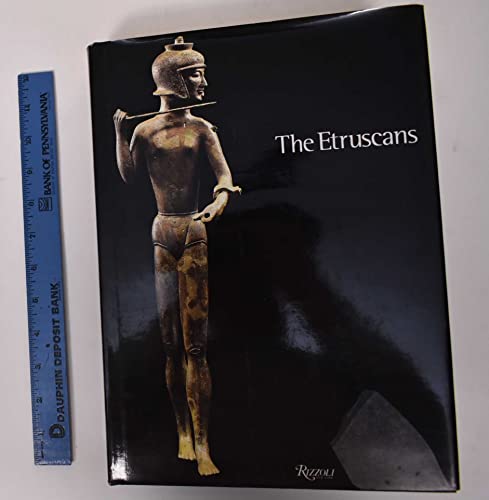
The Etruscans have long been a rich source of research and intellectual inquiry as the most significant ethnic group who resided in ancient Etruria, current-day Tuscany and Umbria in Italy. A well-defined polity, the Etruscans were an advanced people whose presence on the Italian peninsula from the 8th to 4th century B.C. had an enormous impact on Roman culture, whose rise of power saw the collapse of Etruscan civilization.
This book is extensive in its scope; it traces the rise of the Etruscans at the end of the Bronze Age; examines the economic structure of the society; explores the emergence of a powerful aristocracy in the period from 750-650 B.C.; and considers the religious and cultural life of the group. This knowledge has largely been gleaned from a wealth of monuments and material culture which the Etruscans left behind including architecture (the various forms of which indicate familial structure and socio-economic standing, not to mention the larger social structure of Etruscan society) and applied arts, such as bronze objects for both ceremonial use and everyday life, which were produced by an artisan class for a wealthy and demanding aristocracy.
Etruscan contributions to the history of art are also of immense importance and are explored in depth in this volume. Etruscan wall painting was exceptional in that it is one of the few examples of pre-Roman artistic production of this genre. Sculpture was also a relatively highly developed form of art, and the Etruscans are known for their important experiments with form.
Noted scholar Mario Torelli, editor of the book, gathers here an illuminating collection of essays reflective of the most current research on the Etruscans. As a professor of classical archaeology for nearly three decades who has directed archeological digs at some of the most significant Etruscan sites, Torelli offers a unique insight into the scholarly terrain of Etruscan studies. Torelli also contributes a substantive essay on Etruscan religion, exploring the rather exceptional character of this important aspect of Etruscan life.
Lavishly illustrated with beautiful reproductions of Etruscan art and culture, this impressive catalogue explores every aspect of the Etruscan people and their artistic and cultural legacy in the most expansive consideration of their enormous contribution to Western culture to date. The exhibition of the same name, organized by the world-renowned Palazzo Grassi, Venice, and this volume are destined to be landmarks in Etruscan studies.
This book is extensive in its scope; it traces the rise of the Etruscans at the end of the Bronze Age; examines the economic structure of the society; explores the emergence of a powerful aristocracy in the period from 750-650 B.C.; and considers the religious and cultural life of the group. This knowledge has largely been gleaned from a wealth of monuments and material culture which the Etruscans left behind including architecture (the various forms of which indicate familial structure and socio-economic standing, not to mention the larger social structure of Etruscan society) and applied arts, such as bronze objects for both ceremonial use and everyday life, which were produced by an artisan class for a wealthy and demanding aristocracy.
Etruscan contributions to the history of art are also of immense importance and are explored in depth in this volume. Etruscan wall painting was exceptional in that it is one of the few examples of pre-Roman artistic production of this genre. Sculpture was also a relatively highly developed form of art, and the Etruscans are known for their important experiments with form.
Noted scholar Mario Torelli, editor of the book, gathers here an illuminating collection of essays reflective of the most current research on the Etruscans. As a professor of classical archaeology for nearly three decades who has directed archeological digs at some of the most significant Etruscan sites, Torelli offers a unique insight into the scholarly terrain of Etruscan studies. Torelli also contributes a substantive essay on Etruscan religion, exploring the rather exceptional character of this important aspect of Etruscan life.
Lavishly illustrated with beautiful reproductions of Etruscan art and culture, this impressive catalogue explores every aspect of the Etruscan people and their artistic and cultural legacy in the most expansive consideration of their enormous contribution to Western culture to date. The exhibition of the same name, organized by the world-renowned Palazzo Grassi, Venice, and this volume are destined to be landmarks in Etruscan studies.
Die Inhaltsangabe kann sich auf eine andere Ausgabe dieses Titels beziehen.
Über die Autorin bzw. den Autor
Mario Torelli is currently Professor of Classical Archaeology at the University of Perugia in Italy. After completing his doctorate at the University of Rome in 1960, Torelli has had numerous academic appointments at such institutions as the University of Cagliari, and held visiting professorships at University of Paris, University of Michigan, and Princeton University, among others. In addition to his academic endeavors, he has directed archaeological digs at numerous Etruscan sites.
„Über diesen Titel“ kann sich auf eine andere Ausgabe dieses Titels beziehen.
Suchergebnisse für Etruscans: -->0500510334

Beispielbild für diese ISBN
Etruscans
Verlag:
Rizzoli International Publications, 2001
ISBN 10: 0847823911
ISBN 13: 9780847823918
Gebraucht
Hardcover
Anbieter: World of Books (was SecondSale), Montgomery, IL, USA
Verkäuferbewertung 5 von 5 Sternen

Hardback. Zustand: Fair. This workbook focuses on developing a thorough understanding of nonfiction texts. The book contains a wide range of nonfiction passages organized by type. Each passage is followed by a complete full-length question set. This workbook will ensure that students have strong reading comprehension skills and can respond to challenging passages. Students will also be fully prepared for the nonfiction reading tasks on the SOL Reading tests.Focuses on Understanding and Analyzing Nonfiction d104s- Includes 18 practice sets containing a wide range of texts- Includes science and history articles, reviews, interviews, speeches, flyers, advertisements, biographies, opinion pieces, and how-to articles- Each passage is followed by a full set of 15 questions with a range of formats- Complete reading comprehension question sets provide extensive practice responding to and analyzing texts>Advanced Skill Development- Covers all the skills listed in the reading nonfiction texts section of Virginia's English Standards of Learning (SOL)- Provides focused practice with a wide range of passage types- Challenging passages build strong reading comprehension skills- Encourages close reading and using evidence from texts- Provides experience with a wide range of question types>Preparation for the SOL Reading Assessments- Provides experience with a wide range of nonfiction text types- Develops the student's ability to respond to and analyze challenging texts- Ensures that students are able to use close reading skills and analyze texts critically- Gives students experience with multiple choice, multi-select, open response, graphic organizer, and technology-enhanced questions- Includes practice writing short answers and essays based on texts. Bestandsnummer des Verkäufers 00107878219
Gebraucht kaufen
EUR 23,59
Versand gratis
Versand innerhalb von USA
Versand innerhalb von USA
Anzahl: 1 verfügbar
Beispielbild für diese ISBN
Etruscans
Anbieter: Orion Tech, Kingwood, TX, USA
Verkäuferbewertung 5 von 5 Sternen
hardcover. Zustand: Good. Bestandsnummer des Verkäufers 0847823911-3-37834040
Gebraucht kaufen
EUR 23,60
Versand gratis
Versand innerhalb von USA
Versand innerhalb von USA
Anzahl: 1 verfügbar
Beispielbild für diese ISBN
Etruscans
Verlag:
Rizzoli International Publications, 2001
ISBN 10: 0847823911
ISBN 13: 9780847823918
Gebraucht
Hardcover
Anbieter: World of Books Inc, Montgomery, IL, USA
Verkäuferbewertung 4 von 5 Sternen

Hardback. Zustand: Fair. This workbook focuses on developing a thorough understanding of nonfiction texts. The book contains a wide range of nonfiction passages organized by type. Each passage is followed by a complete full-length question set. This workbook will ensure that students have strong reading comprehension skills and can respond to challenging passages. Students will also be fully prepared for the nonfiction reading tasks on the SOL Reading tests.Focuses on Understanding and Analyzing Nonfiction d104s- Includes 18 practice sets containing a wide range of texts- Includes science and history articles, reviews, interviews, speeches, flyers, advertisements, biographies, opinion pieces, and how-to articles- Each passage is followed by a full set of 15 questions with a range of formats- Complete reading comprehension question sets provide extensive practice responding to and analyzing texts>Advanced Skill Development- Covers all the skills listed in the reading nonfiction texts section of Virginia's English Standards of Learning (SOL)- Provides focused practice with a wide range of passage types- Challenging passages build strong reading comprehension skills- Encourages close reading and using evidence from texts- Provides experience with a wide range of question types>Preparation for the SOL Reading Assessments- Provides experience with a wide range of nonfiction text types- Develops the student's ability to respond to and analyze challenging texts- Ensures that students are able to use close reading skills and analyze texts critically- Gives students experience with multiple choice, multi-select, open response, graphic organizer, and technology-enhanced questions- Includes practice writing short answers and essays based on texts. Bestandsnummer des Verkäufers CIN0847823911A
Gebraucht kaufen
EUR 25,43
Versand gratis
Versand innerhalb von USA
Versand innerhalb von USA
Anzahl: 1 verfügbar
Foto des Verkäufers
Etruscans
Anbieter: 1984to2001, Louisville, KY, USA
Verkäuferbewertung 5 von 5 Sternen
Hardcover. Zustand: Near Fine. Zustand des Schutzumschlags: Near Fine. 1st Edition. Rizzoli International, 2001. A near fine book and a near fine dust jacket. The book is absolutely clean unmarked and appears very carefully browsed if at all. The dust jacket is intact free of any sunny or soiling There is a slight amount of shelf where along the top edge only. A large, profusely illustrated and impressive presentation from Rizzoli. Bestandsnummer des Verkäufers ABE-1774630042074
Gebraucht kaufen
EUR 18,35
EUR 7,95 Versand
Versand innerhalb von USA
Versand innerhalb von USA
Anzahl: 1 verfügbar
Beispielbild für diese ISBN
The Etruscans
Verlag:
Rizzoli International Publications, Incorporated, 2001
ISBN 10: 0847823911
ISBN 13: 9780847823918
Gebraucht
Hardcover
Anbieter: Better World Books, Mishawaka, IN, USA
Verkäuferbewertung 5 von 5 Sternen
Zustand: Good. Former library copy. Pages intact with minimal writing/highlighting. The binding may be loose and creased. Dust jackets/supplements are not included. Includes library markings. Stock photo provided. Product includes identifying sticker. Better World Books: Buy Books. Do Good. Bestandsnummer des Verkäufers 1058202-6
Gebraucht kaufen
EUR 28,60
Versand gratis
Versand innerhalb von USA
Versand innerhalb von USA
Anzahl: 1 verfügbar
Beispielbild für diese ISBN
Etruscans
Anbieter: Light Bookstall, Langley, BC, Kanada
Verkäuferbewertung 3 von 5 Sternen

Hardcover. Zustand: Fine. Zustand des Schutzumschlags: Fine. Bestandsnummer des Verkäufers 52
Gebraucht kaufen
EUR 25,74
EUR 3,56 Versand
Versand von Kanada nach USA
Versand von Kanada nach USA
Anzahl: 1 verfügbar
Beispielbild für diese ISBN
The Etruscans
Verlag:
Rizzoli Publications, 2001
ISBN 10: 0847823911
ISBN 13: 9780847823918
Gebraucht
Hardcover
Erstausgabe
Anbieter: Mainly Books, Silverdale, PA, USA
Verkäuferbewertung 5 von 5 Sternen
Hardcover. Zustand: Fine. Zustand des Schutzumschlags: Very Good. 1st American Edition; 1st Printing. Large format, massive hardcover with dustjacket, first printing as stated on copyright page, book is in excellent condition, no remarkable flaws, the black jacket has rubbing to the surface which is common with most glossy jackets, no other significant flaws are present and a professional (removable) mylar cover is included, "Lavishly illustrated with beautiful reproductions of Etruscan art and culture, this impressive catalogue explores every aspect of the Etruscan people and their artistic and cultural legacy in the most expansive consideration of their enormous contribution to Western culture to date; 672 pages. Bestandsnummer des Verkäufers 058345
Gebraucht kaufen
EUR 45,06
EUR 6,24 Versand
Versand innerhalb von USA
Versand innerhalb von USA
Anzahl: 1 verfügbar
Foto des Verkäufers
The Etruscans
Anbieter: Argosy Book Store, ABAA, ILAB, New York, NY, USA
Verkäuferbewertung 5 von 5 Sternen
hardcover. Zustand: fine. Zustand des Schutzumschlags: very good(+). Profusely illustrated in color. 671 pages. Very thick 4to, black cloth, pictorial d.w. (scuffed, top edge lightly curled). New York: Rizzoli, (2000). A fine copy in a very good(+) dust wrapper. Bestandsnummer des Verkäufers 334454
Gebraucht kaufen
EUR 45,98
EUR 5,36 Versand
Versand innerhalb von USA
Versand innerhalb von USA
Anzahl: 1 verfügbar
Beispielbild für diese ISBN
Etruscans
Anbieter: Newsboy Books, Ontario, CA, USA
Verkäuferbewertung 4 von 5 Sternen
Hardcover. Zustand: Very Good. 0847823911 Dust jacket shows a small 1/2 inch tear at bottom near spine (repaired). The inside flap has a 2 inch publisher flaw at the top when glued to the hard cover. Does not deter from this beautiful book. Actually this book is close to new condition. The pages are new. Too big and heavy for expedited or international sale. Bestandsnummer des Verkäufers 0847823911NOEPX13
Gebraucht kaufen
EUR 46,90
EUR 4,45 Versand
Versand innerhalb von USA
Versand innerhalb von USA
Anzahl: 1 verfügbar
Beispielbild für diese ISBN
Etruscans
Anbieter: Powell's Bookstores Chicago, ABAA, Chicago, IL, USA
Verkäuferbewertung 5 von 5 Sternen
hardcover. Zustand: Used-Very Good. Zustand des Schutzumschlags: dj. First Edition. Cloth, dj. Minor scuffing and edge wear to dj. Minor shelf wear to boards. Else a bright, clean copy. Bestandsnummer des Verkäufers 1983577
Gebraucht kaufen
EUR 48,74
EUR 4,46 Versand
Versand innerhalb von USA
Versand innerhalb von USA
Anzahl: 1 verfügbar