
Verwandte Artikel zu Trace Analysis: A Structured Approach to Obtaining...
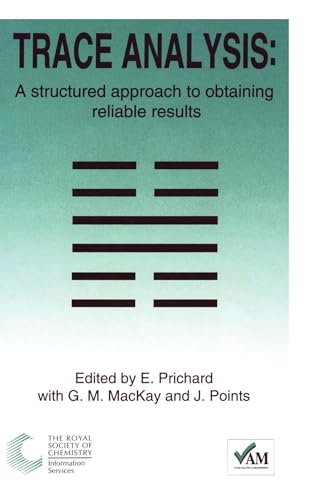
Trace Analysis: A Structured Approach to Obtaining Reliable Results (Valid Analytical Measurement) - Hardcover
Inhaltsangabe
Trace Analysis is a highly practical book which deals with the science rather than the paperwork of quality assurance systems. Produced as part of the UK Valid Analytical Measurement (VAM) initiative, it provides the analyst with a systematic approach across the broad spectrum of trace analysis, offering practical advice and guidance on methodology and techniques. The book is structured to take the analyst step-by-step through the stages of any trace analysis. The approach is general, being broken down only into types of analyte. Additional chapters explain the application of groups of techniques to each analyte type. Each section contains references to published material which will allow the analyst to obtain further information on specific topics. Throughout the book, the analyst is reminded of pitfalls which lead to unreliable results. This new book therefore offers invaluable advice to analysts in all areas and at all levels, providing practical 'expert' advice on methodology. It will prove indispensable as a single, comprehensive bench guide for analysts in university, college and industrial laboratories.
Die Inhaltsangabe kann sich auf eine andere Ausgabe dieses Titels beziehen.
Über die Autorin bzw. den Autor
Middle East Technical University, Retired Turkish Academy of Sciences, Member Ankara, Turkey
Auszug. © Genehmigter Nachdruck. Alle Rechte vorbehalten.
Trace Analysis
A Structured Approach to Obtaining Reliable Results
By E. Prichard, G. M. MacKay, J. PointsThe Royal Society of Chemistry
Copyright © 1996 Crown Copyright
All rights reserved.
ISBN: 978-0-85404-417-7All rights reserved.
Contents
Chapter 1 Achieving Valid Trace Analysis, 1,
Chapter 2 Sample Handling, 40,
Chapter 3 Inorganic Analytes: Sample Preparation, 61,
Chapter 4 Inorganic Analytes: Determination, 95,
Chapter 5 Organic Analytes: Sample Preparation, 153,
Chapter 6 Organic Analytes: Determination, 207,
Chapter 7 The Analysis of Speciated Elements, 294,
Chapter 8 Techniques Suitable for Both Inorganic and Organic Analytes, 312,
Chapter 9 From Signal Processing to Reporting, 371,
Appendix 1: Some Frequently Used Acronyms and Technical Abbreviations, 392,
Appendix 2: Some Sources of Reference Materials, 395,
Subject Index, 398,
CHAPTER 1
Achieving Valid Trace Analysis
1.1 Introduction
1.1.1 What is Trace Analysis?
The term 'trace analysis' is widely used to describe the application of analytical chemistry (the measurement of amount of substance) under circumstances where the amount of analyte is very small. As such, its scope is as broad as that of analytical chemistry. The range of inorganic analytes is relatively small and comprises around 100 elements together with organometallic compounds and the common anions. However, in the field of organic chemistry several million compounds are known to exist and many are of interest at trace levels. Furthermore, materials presented for analysis of inorganic or organic species span an enormous range of composition and properties.
In the past, almost all analysis was undertaken using the so-called 'classical' techniques which involved dissolution of the sample, removal of any interfering species by precipitation and/or complexing agents, followed by determination using titrimetry, gravimetry or colorimetry. Such procedures required good manipulative skills and a deep understanding of the basic chemistry involved, even when used to determine relatively high concentrations or amounts of analytes. Many of these 'classical' techniques are capable of trace analysis but each analysis is generally time consuming and difficult. Hence in the heyday of 'classical' analysis the number of routine trace analysis measurements was quite small. However, from around the 1930s a range of physico-chemical tools was developed and applied to the solution of analytical problems. Techniques based on spectroscopy gained quite wide acceptance from the 1930s, particularly for trace element analysis in fields such as metallurgy, and were further developed in the 1950s and 1960s. Similarly, the chromatographic separation of organic compounds was developed in the 1950s and allowed sensitive determination of many important species using spectroscopic, electrochemical, or other detectors.
These developments in instrumental analysis enabled the analyst to routinely determine lower and lower concentrations of analytes and to resolve or separate very complex mixtures. This ability stimulated demands for trace analysis from industry and from those interested in applications such as environmental and consumer protection, forensic science, and clinical analysis. It is probably fair to say that the apparant ease with which these instrumental techniques could detect and measure analytes at ever lower concentrations led to an unwarranted confidence in the ability of the analyst to produce trace analysis data cheaply and reliably. Only as experience with each new or improved technique accumulated was it realized that many such trace analysis applications are reliable only if the instrumental determination is preceded by quite elaborate chemical manipulations to overcome interference effects. This need increases the cost, time, and expertise required and introduces the problems of contamination and loss.
In spite of the fact that the term 'trace analysis' is widely used by analytical chemists and their clients it does not actually have a clear or unambiguous definition. Many analysts would apply the term to determinations made at or below the part per million level, i.e. 1 ppm [equivalent to] 1 µg g-1 [equivalent to] 0.0001%, or 1 mg 1-1 for liquids. Other analysts would define the term more generally as applying to an analysis where the concentration of the analyte is low enough to cause difficulty in obtaining reliable results. This may be caused solely by the low concentration of analyte in the matrix but other factors may also be important. Factors such as analyte losses, contamination, or interference may influence the perceived difficulty of analysis at lower concentrations and it may not be possible, or useful, to assign a numerical limit to trace analysis. Generally, the amount of sample available for analysis is plentiful but in applications such as clinical or forensic analysis there may be only small portions for use. This in turn will limit the mass of analyte presented to the detector, even though the initial concentration might be quite high. All such applications requiring special precautions to be taken are considered to fall within the scope of trace analysis and will be included in this book.
1.1.2 The Importance of Trace Analysis in Today's World
Measurements based on analytical chemistry are important to almost every aspect of daily life. They are critical to the success of many business sectors, the effectiveness of many public services depends on them, and everyone benefits from the use of such measurements to safeguard health, safety, and the quality of the products consumed or used. Some examples of the applications of analytical chemistry are given in Table 1.1.1. Such applications cover an enormous range of concentrations, from major constituents of materials down to contaminants present at parts per billion or below. Nevertheless, it is true to say that an ever increasing proportion of all analytical measurements can be described as trace analysis.
Trace analysis measurements play a key role in many areas of interest to industry and commerce, to governments, and to individuals. For example, the development and production of many new materials, of microelectronic devices, and of safe pesticides has been dependent on the availability of specific trace analysis techniques. Similarly, trace analysis is used in the first instance by governments to set many regulatory limits for purposes such as protection of the environment, or protection of the consumer, or to protect the health and safety of the workforce. Subsequently, trace analysis must be used by both industry and government to monitor or enforce these limits. Trace analysis is also essential to ensure the smooth flow of trade between companies or countries. For example, a manufacturing company purchasing materials or components will need to know that its suppliers are meeting an agreed specification. Obviously, checking such specifications may require a wide variety of physical or chemical measurements but trace analysis data are often vital, particularly with high technology products or materials intended for human consumption or application. Similarly, international trade is subject to extensive controls and regulations, many of which depend on trace analysis data.
1.1.3 Difficulty of Achieving Reliable Trace Analysis
In general, trace analysis is an extremely demanding activity requiring extensive knowledge, skill, and experience. The particular problems presented by trace analysis can be...
„Über diesen Titel“ kann sich auf eine andere Ausgabe dieses Titels beziehen.
Suchergebnisse für Trace Analysis: A Structured Approach to Obtaining...

Beispielbild für diese ISBN
Trace Analysis: A Structured Approach to Obtaining Reliable Results
Verlag:
Royal Society of Chemistry, 1996
ISBN 10: 0854044175
ISBN 13: 9780854044177
Gebraucht
Hardcover
Anbieter: AwesomeBooks, Wallingford, Vereinigtes Königreich
Verkäuferbewertung 5 von 5 Sternen

Hardcover. Zustand: Very Good. Trace Analysis: A Structured Approach to Obtaining Reliable Results This book is in very good condition and will be shipped within 24 hours of ordering. The cover may have some limited signs of wear but the pages are clean, intact and the spine remains undamaged. This book has clearly been well maintained and looked after thus far. Money back guarantee if you are not satisfied. See all our books here, order more than 1 book and get discounted shipping. . Bestandsnummer des Verkäufers 7719-9780854044177
Gebraucht kaufen
EUR 20,98
EUR 4,78 Versand
Versand von Vereinigtes Königreich nach USA
Versand von Vereinigtes Königreich nach USA
Anzahl: 1 verfügbar
Beispielbild für diese ISBN
Trace Analysis: A Structured Approach to Obtaining Reliable Results
Verlag:
Royal Society of Chemistry 08/05/1996, 1996
ISBN 10: 0854044175
ISBN 13: 9780854044177
Gebraucht
Hardcover
Anbieter: Bahamut Media, Reading, Vereinigtes Königreich
Verkäuferbewertung 4 von 5 Sternen

Hardcover. Zustand: Very Good. Shipped within 24 hours from our UK warehouse. Clean, undamaged book with no damage to pages and minimal wear to the cover. Spine still tight, in very good condition. Remember if you are not happy, you are covered by our 100% money back guarantee. Bestandsnummer des Verkäufers 6545-9780854044177
Gebraucht kaufen
EUR 20,98
EUR 8,11 Versand
Versand von Vereinigtes Königreich nach USA
Versand von Vereinigtes Königreich nach USA
Anzahl: 1 verfügbar
Beispielbild für diese ISBN
Trace Analysis: A Structured Approach to Obtaining Reliable Results (Valid Analytical Measurement)
Verlag:
Royal Society of Chemistry, 1996
ISBN 10: 0854044175
ISBN 13: 9780854044177
Gebraucht
Hardcover
Anbieter: Phatpocket Limited, Waltham Abbey, HERTS, Vereinigtes Königreich
Verkäuferbewertung 5 von 5 Sternen
Zustand: Acceptable. Used - Acceptable. Your purchase helps support Sri Lankan Children's Charity 'The Rainbow Centre'. Ex-library with wear and barcode page may have been removed. Our donations to The Rainbow Centre have helped provide an education and a safe haven to hundreds of children who live in appalling conditions. Bestandsnummer des Verkäufers Z1-H-011-02036
Gebraucht kaufen
EUR 18,06
EUR 12,36 Versand
Versand von Vereinigtes Königreich nach USA
Versand von Vereinigtes Königreich nach USA
Anzahl: 1 verfügbar
Beispielbild für diese ISBN
Trace Analysis: A Structured Approach to Obtaining Reliable Results (Valid Analytical Measurement)
Anbieter: BennettBooksLtd, Los Angeles, CA, USA
Verkäuferbewertung 5 von 5 Sternen
Hardcover. Zustand: New. In shrink wrap. Looks like an interesting title! Bestandsnummer des Verkäufers Q-0854044175
Neu kaufen
EUR 93,94
EUR 6,11 Versand
Versand innerhalb von USA
Versand innerhalb von USA
Anzahl: 1 verfügbar
Foto des Verkäufers
Trace Analysis
Verlag:
Royal Society of Chemistry, GB, 1996
ISBN 10: 0854044175
ISBN 13: 9780854044177
Neu
Hardcover
Anbieter: Rarewaves USA, HEBRON, KY, USA
Verkäuferbewertung 5 von 5 Sternen
Hardback. Zustand: New. Trace Analysis is a highly practical book which deals with the science rather than the paperwork of quality assurance systems. Produced as part of the UK Valid Analytical Measurement (VAM) initiative, it provides the analyst with a systematic approach across the broad spectrum of trace analysis, offering practical advice and guidance on methodology and techniques. The book is structured to take the analyst step-by-step through the stages of any trace analysis. The approach is general, being broken down only into types of analyte. Additional chapters explain the application of groups of techniques to each analyte type. Each section contains references to published material which will allow the analyst to obtain further information on specific topics. Throughout the book, the analyst is reminded of pitfalls which lead to unreliable results. This new book therefore offers invaluable advice to analysts in all areas and at all levels, providing practical 'expert' advice on methodology. It will prove indispensable as a single, comprehensive bench guide for analysts in university, college and industrial laboratories. Bestandsnummer des Verkäufers LU-9780854044177
Neu kaufen
EUR 104,42
Versand gratis
Versand innerhalb von USA
Versand innerhalb von USA
Anzahl: Mehr als 20 verfügbar
Foto des Verkäufers
Trace Analysis : A Structured Approach to Obtaining Reliable Results
Anbieter: GreatBookPrices, Columbia, MD, USA
Verkäuferbewertung 5 von 5 Sternen
Zustand: New. Bestandsnummer des Verkäufers 1809408-n
Neu kaufen
EUR 108,57
EUR 2,32 Versand
Versand innerhalb von USA
Versand innerhalb von USA
Anzahl: Mehr als 20 verfügbar
Beispielbild für diese ISBN
Trace Analysis
Anbieter: PBShop.store US, Wood Dale, IL, USA
Verkäuferbewertung 5 von 5 Sternen
HRD. Zustand: New. New Book. Shipped from UK. Established seller since 2000. Bestandsnummer des Verkäufers CX-9780854044177
Neu kaufen
EUR 110,98
Versand gratis
Versand innerhalb von USA
Versand innerhalb von USA
Anzahl: 15 verfügbar
Beispielbild für diese ISBN
Trace Analysis
Anbieter: PBShop.store UK, Fairford, GLOS, Vereinigtes Königreich
Verkäuferbewertung 5 von 5 Sternen
HRD. Zustand: New. New Book. Shipped from UK. Established seller since 2000. Bestandsnummer des Verkäufers CX-9780854044177
Neu kaufen
EUR 105,18
EUR 6,82 Versand
Versand von Vereinigtes Königreich nach USA
Versand von Vereinigtes Königreich nach USA
Anzahl: 15 verfügbar
Foto des Verkäufers
Trace Analysis : A Structured Approach to Obtaining Reliable Results
Verlag:
Royal Society of Chemistry, 1996
ISBN 10: 0854044175
ISBN 13: 9780854044177
Gebraucht
Hardcover
Anbieter: GreatBookPrices, Columbia, MD, USA
Verkäuferbewertung 5 von 5 Sternen
Zustand: As New. Unread book in perfect condition. Bestandsnummer des Verkäufers 1809408
Gebraucht kaufen
EUR 123,33
EUR 2,32 Versand
Versand innerhalb von USA
Versand innerhalb von USA
Anzahl: Mehr als 20 verfügbar
Beispielbild für diese ISBN
Trace Analysis: A Structured Approach to Obtaining Reliable Results
Anbieter: THE SAINT BOOKSTORE, Southport, Vereinigtes Königreich
Verkäuferbewertung 5 von 5 Sternen
Hardback. Zustand: New. New copy - Usually dispatched within 4 working days. Bestandsnummer des Verkäufers B9780854044177
Neu kaufen
EUR 105,18
EUR 21,70 Versand
Versand von Vereinigtes Königreich nach USA
Versand von Vereinigtes Königreich nach USA
Anzahl: Mehr als 20 verfügbar