
Verwandte Artikel zu Fullerenes: Principles and Applications (Rsc Nanoscience...
Inhaltsangabe
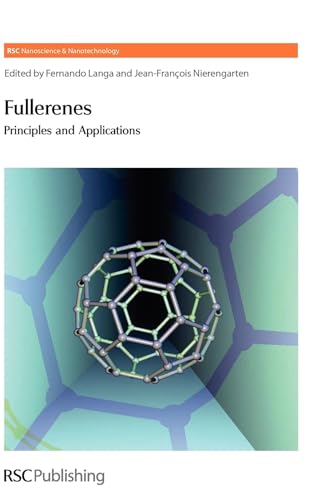
The discovery of caged carbon structures, in 1985, established a whole new field of carbon chemistry. Unlike graphite and diamond, these structures known as fullerenes are finite in structure and are relevant to a wide variety of fields including supramolecular assemblies, nanostructures, optoelectronic devices and a whole range of biological activities.
Fullerenes: Principles and Applications discusses all aspects of this exciting field. Sections include: the basic principles for the chemical reactivity of fullerenes, electrochemistry, light induced processes, fullerenes for material sciences, fullerenes and solar cells, biological applications and multifunctional carbon nanotube materials. Written by leading experts in the field the book summarises the basic principles of fullerene chemistry but also highlights some of the most remarkable advances that have occurred in recent years.
Fullerenes: Principles and Applications will appeal to researchers in both academia and industry.
Die Inhaltsangabe kann sich auf eine andere Ausgabe dieses Titels beziehen.
Über die Autorin bzw. den Autor
The Editors
Fernando Langa is a Professor of Organic Chemistry, University of Castilla-La Mancha, Toledo, SPAIN. His primary research interest are in the areas of chemistry of fullerenes, nanotubes, functionalization and solar energy conversion.
Jean-François Nierengarten works at the CNRS Researcher, Toulouse, France.
His current scientific interests range from covalent chemistry of fullerenes to dendrimers and Pi-conjugated systems with unusual electronic and optical properties.
Von der hinteren Coverseite
The discovery of caged carbon structures, in 1985, established a whole new field of carbon chemistry. Unlike graphite and diamond, these structures known as fullerenes are finite in structure and are relevant to a wide variety of fields including supramolecular assemblies, nanostructures, optoelectronic devices and a whole range of biological activities.
Fullerenes: Principles and Applications discusses all aspects of this exciting field. Sections include: the basic principles for the chemical reactivity of fullerenes, electrochemistry, light induced processes, fullerenes for material sciences, fullerenes and solar cells, biological applications and multifunctional carbon nanotube materials. Written by leading experts in the field the book summarises the basic principles of fullerene chemistry but also highlights some of the most remarkable advances that have occurred in recent years.
Fullerenes: Principles and Applications will appeal to researchers in both academia and industry.
Auszug. © Genehmigter Nachdruck. Alle Rechte vorbehalten.
Fullerenes
Principles and Applications
By Fernando Langa, Jean-Francois NierengartenThe Royal Society of Chemistry
Copyright © 2007 The Royal Society of Chemistry
All rights reserved.
ISBN: 978-0-85404-551-8All rights reserved.
Contents
Chapter 1 Production, Isolation and Purification of Fullerenes Roger Taylor, Glenn A. Burley, 1,
Chapter 2 Basic Principles of the Chemical Reactivity of Fullerness Fernando Langa, Pilar de la Cruz, 15,
Chapter 3 Three Electrodes and a Cage: An Account of Electrochemical Research on C60, C70 and their Derivatives Maurizio Carano, Massimo Marcaccio, Francesco Paolucci, 51,
Chapter 4 Light-Induced Processes in Fullerene Multicomponent Systems Nicola Armaroli, Gianluca Accorsi, 79,
Chapter 5 Encapsulation of [60]Fullerne into Dendritic Materials to Facilitate their Nanoscopic Organization Jean-François Nierengarten, Nathalie Solladie, Robert Deschenaux, 127,
Chapter 6 Hydrogen Bonding Donor–Acceptor Carbon Nanostructures M. Ángeles Herranz, Francesco Giacalone, Luis Sánchez, Nazario Martín]TC1, 152,
Chapter 7 Fullerenes for Material Science Stéphane Campidelli, Aurelio Mateo-Alonso, Maurizio Prato, 191,
Chapter 8 Plastic Solar Cells Using Fullerene Derivatives in the Photoactive Layer Piétrick Hudhomme, Jack Cousseau, 221,
Chapter 9 Fullerene Modified Electrodes and Solar Cells Hiroshi Imahori, Tomokazu Umeyama, 266,
Chapter 10 Biological Applications of Fullerenes Alberto Bianco, Tatiana Da Ros, 301,
Chapter 11 Covalent and Non-Covalent Approaches Toward Multifunctional Carbon Nanotube Materials Vito Sgobba, G.M. Aminur Rahman, Christian Ehli, Dirk M. Guldi, 329,
Subject Index, 152,
CHAPTER 1
Production, Isolation and Purification of Fullerenes
ROGER TAYLOR AND GLENN A. BURLEY
Faculty of Chemistry and Pharmacy, Ludwig-Maximilians University, Munich, Germany
1.1 Introduction
Eight fullerenes have been obtained in significant quantities. These are [60-Ih]-, [70-D5h]-, [76-D2]-, [78-D3]-, [78-C2v(I)]-, [78-C2v(II)]-, [84-D2(IV)]-, [84-D2d(II)]-fullerenes and are depicted in Figure 1. Of the fullerene family, [60]fullerene and [70]fullerene are the major isomers obtained in 75 and 24%, respectively, via the arc-discharge method of Hufmann and Krätschmer. The remaining 1% constitutes a variety of higher order fullerenes ranging from C74 to beyond C100. The colours of the fullerene family vary according to their molecular weight and symmetry. Their colours in solution are magenta (C60), port-wine red (C70), brown (C76 and C78), and yellow-green (C84). A major obstacle in higher order fullerene research is confronted when investigating these fullerenes [Figure 1(c)–(h)]. A gradual increase in the size of fullerenes is accompanied by an increase in the number of isomers of the same symmetry, therefore making definitive assignment of the fullerene structure difficult. Coupled with the difficulty of separation and decreasing solubility of higher order fullerenes with increasing size, makes further studies of these larger fullerenes unattractive.
The numbering system adopted for fullerene assignment in this review is the IUPAC system that has been in place for over a decade. The Roman numerals used for subdividing fullerenes exhibiting the same symmetry are those given by Fowler and Manolopoulos.
1.2 Production
Three methods have been used to make fullerenes. These are
(i) The Hufmann–Krätschmer procedure involving arc-discharge between graphite rods in an atmosphere of helium.
(ii) Combustion of benzene in a deficiency of oxygen.
(iii) Condensation of polycyclic aromatic hydrocarbons through pyrolytic dehydrogenation or dehydrohalogenation.
1.2.1 The Hufmann–Krätschmer Method
Hitherto this has been the most important method for fullerene production, and its introduction marked the real beginning of fullerene science. It is the preferred method because the only by-product is graphite, which if necessary, can be reformed into rods and recycled. The Hufmann–Krätschmer method involves arc-discharge between high-purity carbons rods of ca. 6 mm diameter in an atmosphere of 100–200 torr helium. Argon may also be used but is less effective. The temperature required for fullerene formation is ca. 2000°C, and obviously a small gap between the rods is necessary to prevent a fall in temperature. The need for this gap was shown at an early stage and was confirmed subsequently. The yield of fullerenes in the soot produced is approximately 5% and is higher when taken from the reactor at greater distances from the arc source, which implies that the initially formed fullerenes are subsequently degraded by UV irradiation.
Numerous ingenious variations in reactor design were introduced at an early stage, including, for example, a carousel and one with an autoloading device (Figure 2). The latter method, designed by Bezmelnitsyn and Eletskii is especially notable, using carbon strips 7x3.5x400 mm cut from a reactor moderator block. A stack of 24 of these (anode) are housed in a 450 mm long by 280 mm diameter water-cooled chamber equipped with a hinged door fitted with a O-ring seal. The cathode consists of slowly rotating 70 mm-diameter carbon wheel which passes a scraper to remove accumulated slag. The strips are gravity fed and the lowest strip is slowly wheel-driven into the cathode. When consumed it drops away exposing the next strip, and the process continues during 24 h to yield 100–200 g of fullerene-containing soot, accessed by opening the end door of the reactor.
1.2.2 The Combustion Process
Howard and co-workers discovered that combustion of benzene in a deficiency of oxygen resulted in the formation of both [60]- and [70]fullerenes. This continuous method has been developed to the extent that a purpose-built factory has been erected in Japan, capable of producing 5000 ton of fullerenes per year, but currently running at about one-tenth of that capacity. One envisages that this investment must be driven by the expectation or knowledge that large-scale applications of fullerene lie ahead.
1.2.3 Condensation of Polycyclic Aromatic Hydrocarbons through Pyrolytic Dehydrogenation or Dehydrohalogenation
These methods produce fullerenes but not in sufficient quantities for practical applications. Rather, they provide a means of deducing the mechanisms of fullerene synthesis. For example, C60 consists of six dehydronaphthalene moieties located at the octahedral sites, and pyrolysis of naphthalene does indeed produce C60, as does corannulene, (which has been detected as a precursor in the combustion process), 7,10-bis(2,20-dibromovinyl)fluoranthene, and 11,12- benzofluoranthene. The dehydrogenation involved is a high-energy process and dehydrohalogenation of precursors is more successful, a feature made use of in formation of C60 from a chloroaromatic precursor (Scheme 1). No other fullerene has yet been made in this way.
1.3 Isolation and Purification of Fullerenes
The fullerene-containing soot is extracted using a Soxhlet apparatus with either chloroform (slowest), toluene, or 1,2-dichlorobenzene (fastest, but removal of traces of solvent requires high vacuum). If carbon disulfide is used at any stage during the extraction/concentration, then it must be vigorously removed under vacuum, otherwise the fullerene will be contaminated with sulfur.
Purification of...
„Über diesen Titel“ kann sich auf eine andere Ausgabe dieses Titels beziehen.
Suchergebnisse für Fullerenes: Principles and Applications (Rsc Nanoscience...

Beispielbild für diese ISBN
Fullerenes: Principles and Applications (RSC Nanoscience and Nanotechnology).
Anbieter: Antiquariat Thomas Haker GmbH & Co. KG, Berlin, Deutschland
Verkäuferbewertung 5 von 5 Sternen

Hardcover. Zustand: Wie neu. 300 S., Like new. Shrink wrapped. / Wie neu. In Folie verschweißt. Sprache: Englisch Gewicht in Gramm: 930. Bestandsnummer des Verkäufers 816304
Gebraucht kaufen
EUR 8,80
EUR 20,00 Versand
Versand von Deutschland nach USA
Versand von Deutschland nach USA
Anzahl: 1 verfügbar
Beispielbild für diese ISBN
Fullerenes
Anbieter: Majestic Books, Hounslow, Vereinigtes Königreich
Verkäuferbewertung 4 von 5 Sternen

Zustand: New. pp. 412 Illus. Bestandsnummer des Verkäufers 7349557
Neu kaufen
EUR 43,08
EUR 7,71 Versand
Versand von Vereinigtes Königreich nach USA
Versand von Vereinigtes Königreich nach USA
Anzahl: 4 verfügbar
Beispielbild für diese ISBN
Fullerenes
Verlag:
Royal Society of Chemistry RSC, 2007
ISBN 10: 0854045511
ISBN 13: 9780854045518
Neu
Hardcover
Anbieter: Books Puddle, Woodside, NY, USA
Verkäuferbewertung 4 von 5 Sternen
Zustand: New. pp. 412. Bestandsnummer des Verkäufers 26498410
Neu kaufen
EUR 48,00
EUR 3,55 Versand
Versand innerhalb von USA
Versand innerhalb von USA
Anzahl: 4 verfügbar
Beispielbild für diese ISBN
Fullerenes
Anbieter: Biblios, Frankfurt am main, HESSE, Deutschland
Verkäuferbewertung 4 von 5 Sternen
Zustand: New. pp. 412. Bestandsnummer des Verkäufers 18498400
Neu kaufen
EUR 42,15
EUR 9,95 Versand
Versand von Deutschland nach USA
Versand von Deutschland nach USA
Anzahl: 4 verfügbar
Beispielbild für diese ISBN
Fullerenes :Principles And Applications
Anbieter: Basi6 International, Irving, TX, USA
Verkäuferbewertung 5 von 5 Sternen
Zustand: Brand New. New. US edition. Expediting shipping for all USA and Europe orders excluding PO Box. Excellent Customer Service. Bestandsnummer des Verkäufers ABEOCT25-129636
Beispielbild für diese ISBN
Fullerenes Principles and Applications
Anbieter: Romtrade Corp., STERLING HEIGHTS, MI, USA
Verkäuferbewertung 5 von 5 Sternen
Zustand: New. This is a Brand-new US Edition. This Item may be shipped from US or any other country as we have multiple locations worldwide. Bestandsnummer des Verkäufers ABBB-3890
Beispielbild für diese ISBN
Fullerenes: Principles And Applications (Hb 2007)
Anbieter: Basi6 International, Irving, TX, USA
Verkäuferbewertung 5 von 5 Sternen
Zustand: Brand New. New. US edition. Expediting shipping for all USA and Europe orders excluding PO Box. Excellent Customer Service. Bestandsnummer des Verkäufers ABEOCT25-129635
Beispielbild für diese ISBN
Fullerenes: Principles And Applications (Hb 2007)
Anbieter: Romtrade Corp., STERLING HEIGHTS, MI, USA
Verkäuferbewertung 5 von 5 Sternen
Zustand: New. This is a Brand-new US Edition. This Item may be shipped from US or any other country as we have multiple locations worldwide. Bestandsnummer des Verkäufers ABBB-67462
Foto des Verkäufers
Fullerenes; Principles and Applications
ISBN 10: 0854045511
ISBN 13: 9780854045518
Gebraucht
Hardcover
Anbieter: Burton Lysecki Books, ABAC/ILAB, Winnipeg, MB, Kanada
Verkäuferbewertung 5 von 5 Sternen
[978-0-85404-551-8] 2007. (Hardcover) Fine, no dust jacket. 398pp. Illustrations, tables, formulas, references, index. (Science, Fullerenes, Nano Science, Physics, Science). Bestandsnummer des Verkäufers 159992
Gebraucht kaufen
EUR 48,12
EUR 22,24 Versand
Versand von Kanada nach USA
Versand von Kanada nach USA
Anzahl: 1 verfügbar
Beispielbild für diese ISBN
Fullerenes: Principles And Applications
Anbieter: Basi6 International, Irving, TX, USA
Verkäuferbewertung 5 von 5 Sternen
Zustand: Brand New. New. US edition. Expediting shipping for all USA and Europe orders excluding PO Box. Excellent Customer Service. Bestandsnummer des Verkäufers ABEOCT25-129637