
Verwandte Artikel zu The Queen of All Crows: The First Book in the Map of...
The Queen of All Crows: The First Book in the Map of Unknown Things - Softcover
Buch 1 von 3: The Map of Unknown Things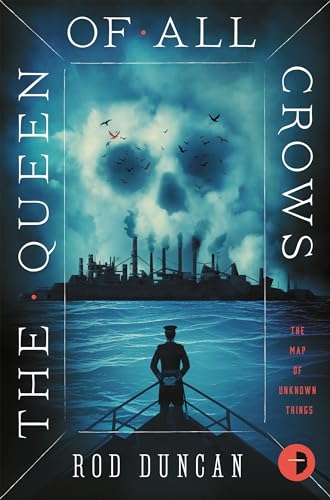
Inhaltsangabe
Only one woman can stop the world from descending into endless war in this thrilling steampunk alternative history set in the world of the Gas-Lit Empire
The year is 2012. The nations of the world are bound together in an alliance of collective security, overseen by the International Patent Office, and its ruthless stranglehold on technology.
When airships start disappearing in the middle of the Atlantic, the Patent Office is desperate to discover what has happened. Forbidden to operate beyond the territorial waters of member nations, they send spies to investigate in secret.
One of those spies is Elizabeth Barnabus. She must overcome her dislike of the controlling Patent Office, disguise herself as a man, and take to the sea in search of the floating nation of pirates who threaten the world order.
Die Inhaltsangabe kann sich auf eine andere Ausgabe dieses Titels beziehen.
Über die Autorin bzw. den Autor
Rod Duncan writes alternate history, fantasy and contemporary crime. His novels have been shortlisted for the Philip K. Dick Award, the East Midlands Book Award and the John Creasey Dagger of the Crime Writers’ Association. A dyslexic with a background in scientific research, he now lectures in creative writing at DeMontfort University.
Some might say that he is obsessed with boundary markers, naive 18th Century gravestones and forming friendships with crows. But he says he is interested in the way things change.
gaslitempire.co.uk
twitter.com/rodduncan
Author hometown: Leicester, UK
Auszug. © Genehmigter Nachdruck. Alle Rechte vorbehalten.
The Airship American Frontier
For passengers on the AS American Frontier, at a cruising altitude of eight thousand feet, the moment the world changed was preceded by a vision of beauty: the shadow of their airship fleeting over moonlit cloud. Here and there the dark surface of the Atlantic was revealed in breaks between the white. From one such break came flashes like distant lightning. Passengers looked down in wonder through the cabin windows as bright streaks lanced up towards them. It was only when they heard the scream of bullets that panic set in. Impacts clattered against the engine and rear compartment. Then came the thuds of fatter, slower projectiles ripping into the canopy.
The great machine tilted back and began to fall. Every loose thing slid or tumbled toward the rear of the carriages. Smoke poured from the engines as they battled the inevitable pull of gravity. From a distance the end seemed slow, dreadfully slow, yet magnificent.
In the vast span of the civilised world, no gun existed that could have brought down an airship from such a height. And it was inconceivable that one could have been manufactured in the chaos beyond. Yet it happened. And the world changed.
Some would later argue that the downing of the American Frontier proved history to be a tide that no one could hold back. Others would cite it as evidence that change comes chaotically through the sparking genius of great minds.
Afterwards.
Part One
Chapter 1
Afternoon sun rendered every colour dazzling: the green and black of the Company flag, limp at the masthead; streaks of orange rust on the white-painted deck housing; the calm ocean, a teal blue; blood blossoming from the carcass of the whale.
A gantry of planks and rope had been swung out over the dead beast. Fires burned under try pots on the main deck. Gaffs, pikes and bone spades lay ready. And the crew waited.
“Get on with it, why not!”
The anonymous shout had come from among a knot of sailors gathered next to the starboard paddlewheel. The first mate shot them a warning glance, but no more. The slight figure edging out from the safety of the deck was the young scientific officer. Any sign of respect would have been transparent pretence.
The captain glowered down from the quarterdeck with ill-disguised impatience. He may have chosen the crew of the whaling ship Pembroke, but it was the Company that placed the scientific officer. All were subject to a captain’s command, but only that one had a direct line of communication back to the board of directors in New York. Perhaps even to the International Patent Office. On such reports, the ship could be ordered to stop killing one type or another of whale, or be moved on to a different hunting ground.
This scientific officer was even less popular than the one the Company had called home so abruptly the previous year. This one carried a singular aloofness and had no stomach for the job, sins made flesh in the form of an ugly wine-stain birthmark. Ill-fortune is a contagion no sailor would willingly be near.
“Take your time, sir,” the captain shouted.
Some of the sailors laughed.
The scientific officer wobbled and grabbed a rope for support, then began shuffling further out over the dead beast. Below, another wave washed the gash that had been left by the killing lance. More blood swilled into the ocean.
Such a creature. Such a death.
The sperm whale had rolled somewhat on its side, revealing the edge of a belly patterned with barnacles. At fifty foot, she wasn’t large. But it had taken three harpoons to stop her. Somewhere in the fury of dragged boats and thrashing water, her calf had been left behind.
“Mr Barnabus?” called the captain.
The scientific officer turned, unsteadily on the plank. “Yes, sir?”
“Are your observations quite done?”
“They are, sir.” It was a reedy voice.
“Then may I suggest you return to the quarterdeck to make report!”
Grinning, the men picked up their tools. Sunlight flashed from the surface of a blade.
Then a shout came from the lookout. “Steamer ho!”
The captain looked up, shielding his eyes against the brilliant sky. “Bearing?”
“Two points abaft the port beam. Heading straight at us, sir. And she’s signalling.”
They moved as one, the crew, to the other bow to stare at the approaching ship. All but the young scientific officer, who clambered back to the safety of the deck, then silently opened the hatch and slipped unseen below.
Privacy was another reason for the crew’s resentment. Scientific officers did no real work. They looked on, risking no danger, distant from the stink of blood and oil. They hindered rather than helped. Yet, despite all this, they enjoyed the unique dispensation of a cabin to themselves.
But privacy was the very thing. Without privacy it would have been quite impossible.
Scientific officer Barnabus bolted the cabin door, top and bottom, then, hands shaking, stripped off tunic and shirt and began to unwind the cloth that gave her the illusion of a masculine figure.
There comes a moment when deception is unbearable.
It had been the calf, not the mother, that had unsettled Elizabeth Barnabus. The thought of it had come to her unexpectedly as she stood out at the edge of the gantry. Under the gaze of the crew and unable to show a reaction, she’d felt acid rising in her throat. If the other ship hadn’t been seen, she could still have done her job; climbed the steps to formally report the species, sex and size of the animal to a man who would have surely known all those things from a quarter mile out.
With the ritual complete, she would have been obliged to stand beside him on the quarterdeck and keep tally as blanket strips of blubber were minced and rendered. All that, she could have done, as she had many times before. She could have maintained the voice, gait and bearing of a man. But this unexpected release from duty had cracked the mask.
She lowered herself onto the narrow cot and closed her eyes, feeling the skin of her breasts pinching tight against the cold air.
The calf had escaped the harpoons but wouldn’t survive. Orcas would find it. Or sharks. It was the way of things. The knowledge shouldn’t have disturbed her. She didn’t want to consider why it had.
Picking up a hand glass, she inspected the false birthmark on the side of her face. It would do for another couple of days before she needed to apply the indigo dye and deepen the colours again.
A tin mug on the cabin shelf rattled against the wall. Elizabeth’s eyes snapped to it. She’d not noticed the change, but the Pembroke’s engines were no longer idling. They were moving. The ship tilted with the start of a turn. She grabbed the binding cloth and began to wind it around her chest.
Other sounds she heard now; orders barked and feet running on the deck. And closer, booted feet marching towards her cabin along the narrow passageway outside. They stopped next to the door.
“Mr Barnabus?”
It was the first mate.
“Yes, sir?”
“You’re wanted on deck. Quick now!”
She tucked the end of the cloth tight and reached for her clothes. “I’m coming.”
“Captain’s burning to know what business you have with the fleet.”
“Business?”
“We’re ordered to get you back. And in such haste we must cast off the whale.”
Elizabeth returned to the deck, uniformed once more and steeled for trouble. Captain Locklight had a reputation for competence and measured judgement. But early in...
„Über diesen Titel“ kann sich auf eine andere Ausgabe dieses Titels beziehen.
Suchergebnisse für The Queen of All Crows: The First Book in the Map of...

Beispielbild für diese ISBN
The Queen of All Crows (Map of Unknown Things)
Verlag:
Angry Robot, 2018
ISBN 10: 0857667009
ISBN 13: 9780857667007
Gebraucht
Soft cover
Erstausgabe
Anbieter: Hot from the Toaster, Portland, OR, USA
Verkäuferbewertung 5 von 5 Sternen

Soft cover. Zustand: Very Good. 1st Edition. Bestandsnummer des Verkäufers ABE-1788293098748
Gebraucht kaufen
EUR 4,60
Versand gratis
Versand innerhalb von USA
Versand innerhalb von USA
Anzahl: 1 verfügbar
Beispielbild für diese ISBN
The Queen of All Crows (Map of Unknown Things)
Verlag:
Angry Robot (edition First Edition), 2018
ISBN 10: 0857667009
ISBN 13: 9780857667007
Gebraucht
Paperback
Erstausgabe
Anbieter: BooksRun, Philadelphia, PA, USA
Verkäuferbewertung 5 von 5 Sternen
Paperback. Zustand: Very Good. First Edition. It's a well-cared-for item that has seen limited use. The item may show minor signs of wear. All the text is legible, with all pages included. It may have slight markings and/or highlighting. Bestandsnummer des Verkäufers 0857667009-11-1
Gebraucht kaufen
EUR 4,98
Versand gratis
Versand innerhalb von USA
Versand innerhalb von USA
Anzahl: 1 verfügbar
Beispielbild für diese ISBN
The Queen of All Crows (Map of Unknown Things)
Anbieter: Bellwetherbooks, McKeesport, PA, USA
Verkäuferbewertung 4 von 5 Sternen

paperback. Zustand: Very Good. Very Good Condition - May show some limited signs of wear and may have a remainder mark. Pages and dust cover are intact and not marred by notes or highlighting. Bestandsnummer des Verkäufers mon0000028383
Gebraucht kaufen
EUR 2,02
EUR 3,53 Versand
Versand innerhalb von USA
Versand innerhalb von USA
Anzahl: 2 verfügbar
Beispielbild für diese ISBN
The Queen of All Crows
Anbieter: ThriftBooks-Dallas, Dallas, TX, USA
Verkäuferbewertung 5 von 5 Sternen
Paperback. Zustand: Very Good. No Jacket. May have limited writing in cover pages. Pages are unmarked. ~ ThriftBooks: Read More, Spend Less. Bestandsnummer des Verkäufers G0857667009I4N00
Gebraucht kaufen
EUR 5,98
Versand gratis
Versand innerhalb von USA
Versand innerhalb von USA
Anzahl: 1 verfügbar
Beispielbild für diese ISBN
The Queen of All Crows
Anbieter: ThriftBooks-Atlanta, AUSTELL, GA, USA
Verkäuferbewertung 5 von 5 Sternen
Paperback. Zustand: Very Good. No Jacket. May have limited writing in cover pages. Pages are unmarked. ~ ThriftBooks: Read More, Spend Less. Bestandsnummer des Verkäufers G0857667009I4N00
Gebraucht kaufen
EUR 5,98
Versand gratis
Versand innerhalb von USA
Versand innerhalb von USA
Anzahl: 1 verfügbar
Beispielbild für diese ISBN
The Queen of All Crows
Anbieter: ThriftBooks-Dallas, Dallas, TX, USA
Verkäuferbewertung 5 von 5 Sternen
Paperback. Zustand: Fair. No Jacket. Readable copy. Pages may have considerable notes/highlighting. ~ ThriftBooks: Read More, Spend Less. Bestandsnummer des Verkäufers G0857667009I5N00
Gebraucht kaufen
EUR 5,98
Versand gratis
Versand innerhalb von USA
Versand innerhalb von USA
Anzahl: 1 verfügbar
Beispielbild für diese ISBN
The Queen of All Crows
Anbieter: Half Price Books Inc., Dallas, TX, USA
Verkäuferbewertung 5 von 5 Sternen
paperback. Zustand: Very Good. Connecting readers with great books since 1972! Used books may not include companion materials, and may have some shelf wear or limited writing. We ship orders daily and Customer Service is our top priority! Bestandsnummer des Verkäufers S_478190814
Gebraucht kaufen
EUR 2,98
EUR 3,35 Versand
Versand innerhalb von USA
Versand innerhalb von USA
Anzahl: 1 verfügbar
Beispielbild für diese ISBN
The Queen of All Crows
Anbieter: Better World Books, Mishawaka, IN, USA
Verkäuferbewertung 5 von 5 Sternen
Zustand: Very Good. Former library copy. Pages intact with possible writing/highlighting. Binding strong with minor wear. Dust jackets/supplements may not be included. Includes library markings. Stock photo provided. Product includes identifying sticker. Better World Books: Buy Books. Do Good. Bestandsnummer des Verkäufers 18412705-6
Gebraucht kaufen
EUR 6,57
Versand gratis
Versand innerhalb von USA
Versand innerhalb von USA
Anzahl: 1 verfügbar
Beispielbild für diese ISBN
The Queen of All Crows
Anbieter: Better World Books, Mishawaka, IN, USA
Verkäuferbewertung 5 von 5 Sternen
Zustand: Good. Former library copy. Pages intact with minimal writing/highlighting. The binding may be loose and creased. Dust jackets/supplements are not included. Includes library markings. Stock photo provided. Product includes identifying sticker. Better World Books: Buy Books. Do Good. Bestandsnummer des Verkäufers 21397664-6
Gebraucht kaufen
EUR 6,57
Versand gratis
Versand innerhalb von USA
Versand innerhalb von USA
Anzahl: 1 verfügbar
Beispielbild für diese ISBN
The Queen of All Crows
Anbieter: Better World Books, Mishawaka, IN, USA
Verkäuferbewertung 5 von 5 Sternen
Zustand: Very Good. Pages intact with possible writing/highlighting. Binding strong with minor wear. Dust jackets/supplements may not be included. Stock photo provided. Product includes identifying sticker. Better World Books: Buy Books. Do Good. Bestandsnummer des Verkäufers 16500822-6
Gebraucht kaufen
EUR 6,57
Versand gratis
Versand innerhalb von USA
Versand innerhalb von USA
Anzahl: 1 verfügbar