
Verwandte Artikel zu Skippy Dies
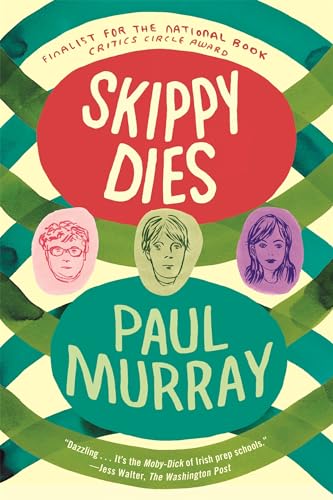
Inhaltsangabe
From the author of THE BEE STING, a New York Times Top 10 Best Books of the Year and shortlisted for the 2023 Booker Prize.
The bestselling and critically acclaimed novel from Paul Murray, Skippy Dies, shortlisted for the 2010 Costa Book Awards, longlisted for the 2010 Booker Prize, and a finalist for the National Book Critics Circle Award.
Why does Skippy, a fourteen-year-old boy at Dublin's venerable Seabrook College, end up dead on the floor of the local doughnut shop?
Could it have something to do with his friend Ruprecht Van Doren, an overweight genius who is determined to open a portal into a parallel universe using ten-dimensional string theory?
Could it involve Carl, the teenage drug dealer and borderline psychotic who is Skippy's rival in love?
Or could "the Automator"—the ruthless, smooth-talking headmaster intent on modernizing the school—have something to hide?
Why Skippy dies and what happens next is the subject of this dazzling and uproarious novel, unraveling a mystery that links the boys of Seabrook College to their parents and teachers in ways nobody could have imagined. With a cast of characters that ranges from hip-hop-loving fourteen-year-old Eoin "MC Sexecutioner" Flynn to basketball playing midget Philip Kilfether, packed with questions and answers on everything from Ritalin, to M-theory, to bungee jumping, to the hidden meaning of the poetry of Robert Frost, Skippy Dies is a heartfelt, hilarious portrait of the pain, joy, and occasional beauty of adolescence, and a tragic depiction of a world always happy to sacrifice its weakest members. As the twenty-first century enters its teenage years, this is a breathtaking novel from a young writer who will come to define his generation.
Die Inhaltsangabe kann sich auf eine andere Ausgabe dieses Titels beziehen.
Über die Autorin bzw. den Autor
Paul Murray was born in 1975. He studied English literature at Trinity College in Dublin and creative writing at the University of East Anglia. His first novel, An Evening of Long Goodbyes, was short-listed for the Whitbread Prize in 2003 and was nominated for the Kerry Irish Fiction Award. Skippy Dies, his second novel, was long-listed for the Booker prize and was a finalist for the National Book Critics Circle Award.
Auszug. © Genehmigter Nachdruck. Alle Rechte vorbehalten.
Skippy Dies
A NovelBy Paul MurrayFaber & Faber
Copyright © 2011 Paul MurrayAll right reserved.
ISBN: 9780865478619
In winter months, from his seat in the middle desk of the middle row, Howard used to look out the window of the History Room and watch the whole school go up in flames. The rugby pitches, the basketball court, the car park and the trees beyond – for one beautiful instant everything would be engulfed; and though the spell was quickly broken – the light deepening and reddening and flattening out, leaving the school and its environs intact – you would know at least that the day was almost over.
Today he stands at the head of the class: the wrong angle and the wrong time of year to view the sunset. He knows, however, that fifteen minutes remain on the clock, and so, pinching his nose, sighing imperceptibly, he tries again. ‘Come on, now. The main protagonists. Just the main ones. Anybody?’
The torpid silence remains undisturbed. The radiators are blazing, though it is not particularly cold outside: the heating system is elderly and erratic, like most things at this end of the school, and over the course of the day the heat builds to a swampy, malarial fug. Howard complains, of course, like the other teachers, but he is secretly not ungrateful; combined with the powerful soporific effects of history itself, it means the disorder levels of his later classes rarely extend beyond a low drone of chatter and the occasional paper aeroplane.
‘Anyone?’ he repeats, looking over the class, deliberately ignoring Ruprecht Van Doren’s upstretched hand, beneath which the rest of Ruprecht strains breathlessly. The rest of the boys blink back at Howard as if to reproach him for disturbing their peace. In Howard’s old seat, Daniel ‘Skippy’ Juster stares catatonically into space, for all the world as if he’s been drugged; in the back-row suntrap, Henry Lafayette has made a little nest of his arms in which to lay his head. Even the clock sounds like it’s half asleep.
‘We’ve been talking about this for the last two days. Are you telling me no one can name a single one of the countries involved? Come on, you’re not getting out of here till you’ve shown me that you know this.’
‘Uruguay?’ Bob Shambles incants vaguely, as if summoning the answer from magical vapours.
‘No,’ Howard says, glancing down at the book spread open on his lectern just to make sure. ‘Known at the time as “the war to end all wars”,’ the caption reads, below a picture of a vast, water-logged moonscape from which all signs of life, natural or man-made, have been comprehensively removed.
‘The Jews?’ Ultan O’Dowd says.
‘The Jews are not a country. Mario?’
‘What?’ Mario Bianchi’s head snaps up from whatever he is attending to, probably his phone, under the desk. ‘Oh, it was … it was – ow, stop – sir, Dennis is feeling my leg! Stop feeling me, feeler!’
‘Stop feeling his leg, Dennis.’
‘I wasn’t, sir!’ Dennis Hoey, all wounded innocence.
On the blackboard, ‘MAIN’ – Militarism, Alliances, Industrialization, Nationalism – copied out of the textbook at the start of class, is slowly bleached out by the lowering sun. ‘Yes, Mario?’
‘Uh …’ Mario prevaricates. ‘Well, Italy …’
‘Italy was in charge of the catering,’ Niall Henaghan suggests.
‘Hey,’ Mario warns.
‘Sir, Mario calls his wang Il Duce,’ says Dennis.
‘Sir!’
‘Dennis.’
‘But he does – you do, I’ve heard you. “Time to rise, Duce,” you say. “Your people await you, Duce.”’
‘At least I have a wang, and am not a boy with … Instead of a wang, he has just a blank piece of …’
‘I feel we’re straying off the point here,’ Howard intervenes. ‘Come on, guys. The protagonists of the First World War. I’ll give you a clue. Germany. Germany was involved. Who were Germany’s allies – yes, Henry?’ as Henry Lafayette, whatever he is dreaming of, emits a loud snort. Hearing his name, he raises his head and gazes at Howard with dizzy, bewildered eyes.
‘Elves?’ he ventures.
The classroom explodes into hysterics.
‘Well, what was the question?’ Henry asks, somewhat woundedly.
Howard is on the brink of accepting defeat and beginning the class all over again. A glance at the clock, however, absolves him from any further effort today, so instead he directs them back to the textbook, and has Geoff Sproke read out the poem reproduced there.
‘“In Flanders Fields”,’ Geoff obliges. ‘By Lieutenant John McCrae.’
‘John McGay,’ glosses John Reidy.
‘That’s enough.’
‘“In Flanders fields,”’ Geoff reads, ‘“the poppies blow”:
‘Between the crosses, row on row,
That mark our place; and in the sky
The larks, still bravely singing, fly
Scarce heard amid the guns below.
We are the Dead. Short days ago
We lived –’
At this point the bell rings. In a single motion the daydreaming and somnolent snap awake, grab their bags, stow their books and move as one for the door. ‘For tomorrow, read the end of the chapter,’ Howard calls over the melee. ‘And while you’re at it, read the stuff you were supposed to read for today.’ But the class has already fizzed away, and Howard is left as he always is, wondering if anyone has been listening to a single thing he’s said; he can practically see his words crumpled up on the floor. He packs away his own book, wipes clean the board and sets off to fight his way through the home-time throng to the staff room.
In Our Lady’s Hall, hormonal surges have made giants and midgets of the crowd. The tang of adolescence, impervious to deodorant or opened windows, hangs heavy, and the air tintinnabulates with bleeps, chimes and trebly shards of music as two hundred mobile phones, banned during the school day, are switched back on with the urgency of divers reconnecting to their oxygen supply. From her alcove a safe elevation above it, the plaster Madonna with the starred halo and the peaches-and-cream complexion pouts coquettishly at the rampaging maleness below.
‘Hey, Flubber!’ Dennis Hoey scampers across Howard’s path to waylay William ‘Flubber’ Cooke. ‘Hey, I just wanted to ask you a question?’
‘What?’ Flubber immediately suspicious.
‘Uh, I was just wondering – are you a bummer tied to a tree?’
Brows creasing, Flubber – fourteen stone and on his third trip through second year – turns this over.
‘It’s not a trick or anything,’ promises Dennis. ‘I just wanted to know, you know, if you’re a bummer tied to a tree.’
‘No,’ Flubber resolves, at which Dennis takes flight, declaring exuberantly, ‘Bummer on the loose! Bummer on the loose!’ Flubber lets out a roar and prepares to give chase, then stops abruptly and ducks off in the other direction as the crowd parts and a tall, cadaverous...
Today he stands at the head of the class: the wrong angle and the wrong time of year to view the sunset. He knows, however, that fifteen minutes remain on the clock, and so, pinching his nose, sighing imperceptibly, he tries again. ‘Come on, now. The main protagonists. Just the main ones. Anybody?’
The torpid silence remains undisturbed. The radiators are blazing, though it is not particularly cold outside: the heating system is elderly and erratic, like most things at this end of the school, and over the course of the day the heat builds to a swampy, malarial fug. Howard complains, of course, like the other teachers, but he is secretly not ungrateful; combined with the powerful soporific effects of history itself, it means the disorder levels of his later classes rarely extend beyond a low drone of chatter and the occasional paper aeroplane.
‘Anyone?’ he repeats, looking over the class, deliberately ignoring Ruprecht Van Doren’s upstretched hand, beneath which the rest of Ruprecht strains breathlessly. The rest of the boys blink back at Howard as if to reproach him for disturbing their peace. In Howard’s old seat, Daniel ‘Skippy’ Juster stares catatonically into space, for all the world as if he’s been drugged; in the back-row suntrap, Henry Lafayette has made a little nest of his arms in which to lay his head. Even the clock sounds like it’s half asleep.
‘We’ve been talking about this for the last two days. Are you telling me no one can name a single one of the countries involved? Come on, you’re not getting out of here till you’ve shown me that you know this.’
‘Uruguay?’ Bob Shambles incants vaguely, as if summoning the answer from magical vapours.
‘No,’ Howard says, glancing down at the book spread open on his lectern just to make sure. ‘Known at the time as “the war to end all wars”,’ the caption reads, below a picture of a vast, water-logged moonscape from which all signs of life, natural or man-made, have been comprehensively removed.
‘The Jews?’ Ultan O’Dowd says.
‘The Jews are not a country. Mario?’
‘What?’ Mario Bianchi’s head snaps up from whatever he is attending to, probably his phone, under the desk. ‘Oh, it was … it was – ow, stop – sir, Dennis is feeling my leg! Stop feeling me, feeler!’
‘Stop feeling his leg, Dennis.’
‘I wasn’t, sir!’ Dennis Hoey, all wounded innocence.
On the blackboard, ‘MAIN’ – Militarism, Alliances, Industrialization, Nationalism – copied out of the textbook at the start of class, is slowly bleached out by the lowering sun. ‘Yes, Mario?’
‘Uh …’ Mario prevaricates. ‘Well, Italy …’
‘Italy was in charge of the catering,’ Niall Henaghan suggests.
‘Hey,’ Mario warns.
‘Sir, Mario calls his wang Il Duce,’ says Dennis.
‘Sir!’
‘Dennis.’
‘But he does – you do, I’ve heard you. “Time to rise, Duce,” you say. “Your people await you, Duce.”’
‘At least I have a wang, and am not a boy with … Instead of a wang, he has just a blank piece of …’
‘I feel we’re straying off the point here,’ Howard intervenes. ‘Come on, guys. The protagonists of the First World War. I’ll give you a clue. Germany. Germany was involved. Who were Germany’s allies – yes, Henry?’ as Henry Lafayette, whatever he is dreaming of, emits a loud snort. Hearing his name, he raises his head and gazes at Howard with dizzy, bewildered eyes.
‘Elves?’ he ventures.
The classroom explodes into hysterics.
‘Well, what was the question?’ Henry asks, somewhat woundedly.
Howard is on the brink of accepting defeat and beginning the class all over again. A glance at the clock, however, absolves him from any further effort today, so instead he directs them back to the textbook, and has Geoff Sproke read out the poem reproduced there.
‘“In Flanders Fields”,’ Geoff obliges. ‘By Lieutenant John McCrae.’
‘John McGay,’ glosses John Reidy.
‘That’s enough.’
‘“In Flanders fields,”’ Geoff reads, ‘“the poppies blow”:
‘Between the crosses, row on row,
That mark our place; and in the sky
The larks, still bravely singing, fly
Scarce heard amid the guns below.
We are the Dead. Short days ago
We lived –’
At this point the bell rings. In a single motion the daydreaming and somnolent snap awake, grab their bags, stow their books and move as one for the door. ‘For tomorrow, read the end of the chapter,’ Howard calls over the melee. ‘And while you’re at it, read the stuff you were supposed to read for today.’ But the class has already fizzed away, and Howard is left as he always is, wondering if anyone has been listening to a single thing he’s said; he can practically see his words crumpled up on the floor. He packs away his own book, wipes clean the board and sets off to fight his way through the home-time throng to the staff room.
In Our Lady’s Hall, hormonal surges have made giants and midgets of the crowd. The tang of adolescence, impervious to deodorant or opened windows, hangs heavy, and the air tintinnabulates with bleeps, chimes and trebly shards of music as two hundred mobile phones, banned during the school day, are switched back on with the urgency of divers reconnecting to their oxygen supply. From her alcove a safe elevation above it, the plaster Madonna with the starred halo and the peaches-and-cream complexion pouts coquettishly at the rampaging maleness below.
‘Hey, Flubber!’ Dennis Hoey scampers across Howard’s path to waylay William ‘Flubber’ Cooke. ‘Hey, I just wanted to ask you a question?’
‘What?’ Flubber immediately suspicious.
‘Uh, I was just wondering – are you a bummer tied to a tree?’
Brows creasing, Flubber – fourteen stone and on his third trip through second year – turns this over.
‘It’s not a trick or anything,’ promises Dennis. ‘I just wanted to know, you know, if you’re a bummer tied to a tree.’
‘No,’ Flubber resolves, at which Dennis takes flight, declaring exuberantly, ‘Bummer on the loose! Bummer on the loose!’ Flubber lets out a roar and prepares to give chase, then stops abruptly and ducks off in the other direction as the crowd parts and a tall, cadaverous...
„Über diesen Titel“ kann sich auf eine andere Ausgabe dieses Titels beziehen.
Suchergebnisse für Skippy Dies

Beispielbild für diese ISBN
Skippy Dies
Verlag:
Farrar, Straus and Giroux, 2011
ISBN 10: 0865478619
ISBN 13: 9780865478619
Gebraucht
Softcover
Anbieter: World of Books (was SecondSale), Montgomery, IL, USA
Verkäuferbewertung 5 von 5 Sternen

Zustand: Good. Item in good condition. Textbooks may not include supplemental items i.e. CDs, access codes etc. Bestandsnummer des Verkäufers 00104938569
Gebraucht kaufen
EUR 5,11
Versand gratis
Versand innerhalb von USA
Versand innerhalb von USA
Anzahl: 10 verfügbar
Foto des Verkäufers
Skippy Dies: A Novel
Verlag:
Farrar, Straus and Giroux, 2011
ISBN 10: 0865478619
ISBN 13: 9780865478619
Gebraucht
Softcover
Anbieter: Zoom Books East, Glendale Heights, IL, USA
Verkäuferbewertung 5 von 5 Sternen
Zustand: good. Book is in good condition and may include underlining highlighting and minimal wear. The book can also include "From the library of" labels. May not contain miscellaneous items toys, dvds, etc. . We offer 100% money back guarantee and 24 7 customer service. Bestandsnummer des Verkäufers ZEV.0865478619.G
Gebraucht kaufen
EUR 5,12
Versand gratis
Versand innerhalb von USA
Versand innerhalb von USA
Anzahl: 2 verfügbar
Foto des Verkäufers
Skippy Dies: A Novel
Verlag:
Farrar, Straus and Giroux, 2011
ISBN 10: 0865478619
ISBN 13: 9780865478619
Gebraucht
Softcover
Anbieter: -OnTimeBooks-, Phoenix, AZ, USA
Verkäuferbewertung 5 von 5 Sternen
Zustand: good. A copy that has been read, remains in good condition. All pages are intact, and the cover is intact. The spine and cover show signs of wear. Pages can include notes and highlighting and show signs of wear, and the copy can include "From the library of" labels or previous owner inscriptions. 100% GUARANTEE! Shipped with delivery confirmation, if you're not satisfied with purchase please return item! Ships via media mail. Bestandsnummer des Verkäufers OTV.0865478619.G
Gebraucht kaufen
EUR 6,06
Versand gratis
Versand innerhalb von USA
Versand innerhalb von USA
Anzahl: 1 verfügbar
Beispielbild für diese ISBN
Skippy Dies: A Novel
Verlag:
Farrar, Straus and Giroux (edition Reprint), 2011
ISBN 10: 0865478619
ISBN 13: 9780865478619
Gebraucht
Paperback
Anbieter: BooksRun, Philadelphia, PA, USA
Verkäuferbewertung 5 von 5 Sternen
Paperback. Zustand: Fair. Reprint. The item might be beaten up but readable. May contain markings or highlighting, as well as stains, bent corners, or any other major defect, but the text is not obscured in any way. Bestandsnummer des Verkäufers 0865478619-7-1
Gebraucht kaufen
EUR 6,12
Versand gratis
Versand innerhalb von USA
Versand innerhalb von USA
Anzahl: 1 verfügbar
Beispielbild für diese ISBN
Skippy Dies
Verlag:
Farrar, Straus and Giroux, 2011
ISBN 10: 0865478619
ISBN 13: 9780865478619
Gebraucht
Softcover
Anbieter: World of Books (was SecondSale), Montgomery, IL, USA
Verkäuferbewertung 5 von 5 Sternen
Zustand: Good. Item in good condition and has highlighting/writing on text. Used texts may not contain supplemental items such as CDs, info-trac etc. Bestandsnummer des Verkäufers 00104218280
Gebraucht kaufen
EUR 6,30
Versand gratis
Versand innerhalb von USA
Versand innerhalb von USA
Anzahl: 1 verfügbar
Beispielbild für diese ISBN
Skippy Dies: A Novel
Verlag:
Farrar, Straus and Giroux (edition Reprint), 2011
ISBN 10: 0865478619
ISBN 13: 9780865478619
Gebraucht
Paperback
Anbieter: BooksRun, Philadelphia, PA, USA
Verkäuferbewertung 5 von 5 Sternen
Paperback. Zustand: Very Good. Reprint. It's a well-cared-for item that has seen limited use. The item may show minor signs of wear. All the text is legible, with all pages included. It may have slight markings and/or highlighting. Bestandsnummer des Verkäufers 0865478619-11-1
Gebraucht kaufen
EUR 6,32
Versand gratis
Versand innerhalb von USA
Versand innerhalb von USA
Anzahl: 1 verfügbar
Foto des Verkäufers
Skippy Dies: A Novel
Verlag:
Farrar, Straus and Giroux, 2011
ISBN 10: 0865478619
ISBN 13: 9780865478619
Gebraucht
Softcover
Anbieter: MERS Goodwill-Kansas City, Blue Springs, MO, USA
Verkäuferbewertung 5 von 5 Sternen
Zustand: good. The book has been read but is in good condition. It has very minimal damage to the cover, including scuff marks, but no holes or tears. The dust jacket for hard covers may not be included. The binding has minimal wear. The majority of pages are undamaged with minimal creasing or tearing, minimal pencil underlining of text, no highlighting of text, and no writing in the margins. There are no missing pages. See the seller's listing for full details and a description of any imperfections. Bestandsnummer des Verkäufers WMEKV.0865478619.G
Gebraucht kaufen
EUR 2,89
EUR 3,44 Versand
Versand innerhalb von USA
Versand innerhalb von USA
Anzahl: 1 verfügbar
Beispielbild für diese ISBN
Skippy Dies
Verlag:
Farrar, Straus and Giroux, 2011
ISBN 10: 0865478619
ISBN 13: 9780865478619
Gebraucht
Paperback
Anbieter: World of Books Inc, Montgomery, IL, USA
Verkäuferbewertung 2 von 5 Sternen

Paperback. Zustand: Good. Why does Skippy, a fourteen-year-old boy at Dublin's venerable Seabrook College, end up dead on the floor of the local doughnut shop? Could it have something to do with his friend Ruprecht Van Doren, an overweight genius who is determined to open a portal into a parallel universe using ten-dimensional string theory? Could it involve Carl, the teenage drug dealer and borderline psychotic who is Skippy's rival in love? Or could the Automator--the ruthless, smooth-talking headmaster intent on modernizing the school--have something to hide? Why Skippy dies and what happens next is the subject of this dazzling and uproarious novel, unraveling a mystery that links the boys of Seabrook College to their parents and teachers in ways nobody could have imagined. With a cast of characters that ranges from hip-hop-loving fourteen-year-old Eoin MC Sexecutioner Flynn to basketball playing midget Philip Kilfether, packed with questions and answers on everything from Ritalin, to M-theory, to bungee jumping, to the hidden meaning of the poetry of Robert Frost, Skippy Dies is a heartfelt, hilarious portrait of the pain, joy, and occasional beauty of adolescence, and a tragic depiction of a world always happy to sacrifice its weakest members. As the twenty-first century enters its teenage years, this is a breathtaking novel from a young writer who will come to define his generation. Bestandsnummer des Verkäufers CIN0865478619G
Gebraucht kaufen
EUR 6,88
Versand gratis
Versand innerhalb von USA
Versand innerhalb von USA
Anzahl: 10 verfügbar
Beispielbild für diese ISBN
Skippy Dies
Verlag:
Farrar, Straus and Giroux, 2011
ISBN 10: 0865478619
ISBN 13: 9780865478619
Gebraucht
Paperback
Anbieter: ThriftBooks-Atlanta, AUSTELL, GA, USA
Verkäuferbewertung 5 von 5 Sternen
Paperback. Zustand: Fair. No Jacket. Readable copy. Pages may have considerable notes/highlighting. ~ ThriftBooks: Read More, Spend Less. Bestandsnummer des Verkäufers G0865478619I5N00
Gebraucht kaufen
EUR 6,91
Versand gratis
Versand innerhalb von USA
Versand innerhalb von USA
Anzahl: 1 verfügbar
Beispielbild für diese ISBN
Skippy Dies
Verlag:
Farrar, Straus and Giroux, 2011
ISBN 10: 0865478619
ISBN 13: 9780865478619
Gebraucht
Paperback
Anbieter: ThriftBooks-Dallas, Dallas, TX, USA
Verkäuferbewertung 5 von 5 Sternen
Paperback. Zustand: Good. No Jacket. Former library book; Pages can have notes/highlighting. Spine may show signs of wear. ~ ThriftBooks: Read More, Spend Less. Bestandsnummer des Verkäufers G0865478619I3N10
Gebraucht kaufen
EUR 6,91
Versand gratis
Versand innerhalb von USA
Versand innerhalb von USA
Anzahl: 1 verfügbar