
Verwandte Artikel zu Tell This Silence: Asian American Women Writers and...
Inhaltsangabe
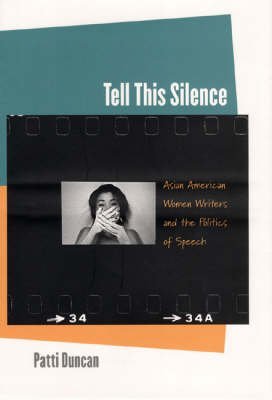
Tell This Silence by Patti Duncan explores multiple meanings of speech and silence in Asian American women's writings in order to explore relationships among race, gender, sexuality, and national identity. Duncan argues that contemporary definitions of U.S. feminism must be expanded to recognize the ways in which Asian American women have resisted and continue to challenge the various forms of oppression in their lives. There has not yet been adequate discussion of the multiple meanings of silence and speech, especially in relation to activism and social-justice movements in the United States. In particular, the very notion of silence continues to invoke assumptions of passivity, submissiveness, and avoidance, while speech is equated with action and empowerment.
Die Inhaltsangabe kann sich auf eine andere Ausgabe dieses Titels beziehen.
Über die Autorin bzw. den Autor
Patti Duncan is an Assistant Professor of Women's Studies at Portland State University, where she specializes in Asian American women's studies, women of color feminist theories, and intersections of race, gender, class, sexuality, and national belonging.
Auszug. © Genehmigter Nachdruck. Alle Rechte vorbehalten.
Tell This Silence
Asian American Women Writers and the Politics of SpeechBy Patti DuncanUniversity of Iowa Press
Copyright © 2004 University of Iowa PressAll right reserved.
ISBN: 978-0-87745-856-2
Contents
Preface........................................................................................................................................................................viiAcknowledgments................................................................................................................................................................xiii1 Introduction. The Uses of Silence and the Will to Unsay......................................................................................................................12 What Makes an American? Histories of Immigration and Exclusion of Asians in the United States in Maxine Hong Kingston's China Men............................................313 White Sound and Silences from Stone: Discursive Silences in the Internment Writings of Mitsuye Yamada and Joy Kogawa.........................................................754 Cartographies of Silence: Language and Nation in Theresa Hak Kyung Cha's Dicte..............................................................................................1295 Silence and Public Discourse: Interventions into Dominant National and Sexual Narratives in Nora Okja Keller's Comfort Woman and Anchee Min's Red Azalea.....................1736 Conclusion. Tell This Silence: Asian American Women's Narratives, Gender, Nation, and History................................................................................215Notes..........................................................................................................................................................................227Bibliography...................................................................................................................................................................255Index..........................................................................................................................................................................267
Chapter One
Introduction. The Uses of Silence and the Will to Unsay
By calling this introductory chapter "The Uses of Silence," I invoke Audre Lorde's essay "The Uses of Anger: Women Responding to Racism," in which she discusses anger as an appropriate, viable, and useful response to racism. Anger, she writes, when "expressed and translated in the service of our vision and our future is a liberating and strengthening act of clarification.... [It] is loaded with information and energy" (127). Lorde compares anger to other, less useful responses to racism, such as reactionary defensiveness, hatred, and guilt. She suggests that guilt "is not a response to anger; it is a response to one's own actions or lack of action.... It becomes a device to protect ignorance and the continuation of things the way they are, the ultimate protection for changelessness" (130). Thus, Lorde effectively reclaims an emotion previously regarded as negative, even harmful. She examines the ways in which anger, within specific contexts, is "loaded with information and energy" and, when used as a means of social and personal transformation, can liberate and clarify.
Lorde's analysis of anger in relation to racism also serves to expand and complicate definitions and understandings of both race and racism. Her focus on women's racism links race to gender, suggesting the ways in which such categories of identity are inextricably intertwined and must be examined synchronously. In Tell This Silence, I recognize and acknowledge the many complex ways in which race and gender are structured in our culture, as well as the different forms that racism and sexism enact at various societal levels, from interpersonal interactions to larger sociostructural relationships. Also, I seek to expand the very concept of racism, as contemporary understandings of racism in the United States commonly fail to account for the cultural discrimination faced by Asian Americans, as well as other people of color and immigrants. Upon careful review, however, there seem to be multiple silences at work in relation to race, gender, sexuality, and national identity. Such silences are suggestive of the various social and political possibilities and processes inherent to discussions of the critical intersections of categories of identity. Hence, I look to the silences within writings by Asian American women in order to interrogate their meanings to contemporary discourse about the relationships among race, gender, sexuality, and national belonging.
An examination of silence, in relation to Asian American women's experiences in the United States, opens questions regarding history, authenticity, and resistance to subjugation. As a critical reconceptualization and, at times, reclamation of silence, Tell This Silence attempts to reinscribe its potential as a strategy of resistance. I suggest that an exploration of the uses of silence offers new insights into the ways in which silence operates as a form of discourse and as a means of resistance to hegemonic power, particularly the forms of power structuring the lives of contemporary Asian American women. Interrogating and historicizing representations of silence within feminist and postcolonial writings and theories provide one significant site for reconsidering notions of language, translation, memory, and history-processes that remain crucial to political and social-justice agendas. Thus, I analyze the notion of silence within several Asian American women's narratives. I focus on this particular group for numerous reasons, not the least of which are the negative stereotypes (e.g., silence, passivity, deceptiveness, and inscrutability) often associated with women, with women of color in the United States, and with Asian American women in particular.
Along with silence, I also explore the cultural meanings of speech in the United States, often conceptualized as the opposite of silence. In fact the two are not binarily opposed but have most often been understood through such a framework within Western culture. Tell This Silence suggests that both speech and silence must be examined for their implicit meanings, the assumptions that underlie our understandings of them, and the complicated associations they have for and with marginalized groups of people in the United States. To demonstrate these points, I include in this introductory chapter a discussion of the multiple implications of speech and silence in Maxine Hong Kingston's The Woman Warrior.
The Politics of Naming and Terminology
I use the terms "Asian American" and "Asian Pacific American" cautiously and rather self-consciously. While I use these terms interchangeably in some instances, I also recognize the specificity implied by each term. Like Chandra Talpade Mohanty's statements about her decision to use the problematic term "Third World woman," I recognize that while "[this] is the only terminology available to us at the moment," we must continue to question such designations. Mohanty suggests that she employs the term in order to designate a common context of struggle and to link women from various social and geographical locations (52-54). In fact, and most notably, she pushes the term beyond geography to demarcate a space that is social and political. Thus, "Third World," in this context, suggests those women often defined outside of current mainstream notions of feminism-women of "developing"...
„Über diesen Titel“ kann sich auf eine andere Ausgabe dieses Titels beziehen.
Suchergebnisse für Tell This Silence: Asian American Women Writers and...

Beispielbild für diese ISBN
Tell This Silence : Asian American Women Writers and the Politics of Speech
Verlag:
University of Iowa Press, 2004
ISBN 10: 0877458561
ISBN 13: 9780877458562
Gebraucht
Hardcover
Anbieter: Better World Books: West, Reno, NV, USA
Verkäuferbewertung 5 von 5 Sternen

Zustand: Very Good. Former library copy. Pages intact with possible writing/highlighting. Binding strong with minor wear. Dust jackets/supplements may not be included. Includes library markings. Stock photo provided. Product includes identifying sticker. Better World Books: Buy Books. Do Good. Bestandsnummer des Verkäufers 12353702-6
Gebraucht kaufen
EUR 26,80
Versand gratis
Versand innerhalb von USA
Versand innerhalb von USA
Anzahl: 1 verfügbar