
Verwandte Artikel zu The Path of the Soul After Death: The Community of...
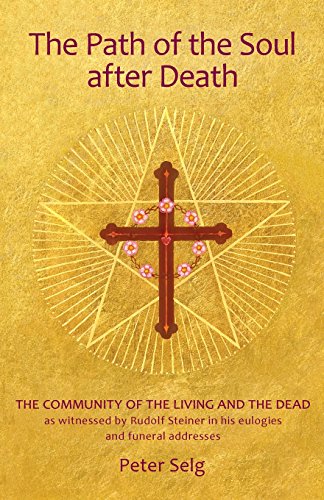
The Path of the Soul After Death: The Community of the Living and the Dead As Witnessed by Rudolf Steiner in His Eulogies and Farewell Addresses - Softcover
Inhaltsangabe
Rudolf Steiner spoke frequently about the soul's continued existence beyond death, and about the importance of establishing a new kind of community that unites spiritually active souls and endures beyond death.
Peter Selg shows how Steiner commemorated the dead, the words he chose to use and his descriptions-sometimes in great detail-of the inner processes involved. He makes clear both how Steiner's own connections to the deceased shaped what he said and how his words were intimately related to their new stage of existence. Thus he not only recapitulated a particular soul's biography, but also assisted that soul on its path after death.
Realizing that the true depth and meaning of Steiner's words about those who have died cannot be understood except against the background of what happens to the soul after death, Dr. Selg dedicates the second part of his book to a stunningly clear and detailed account of anthroposophical research into the process of dying and the soul's path after death. "The moment of having died," for Rudolf Steiner, as for the poet Rilke, is the "consummate event" of a human life. It is held constantly in view by the soul after death and filled with beauty, grandeur, and a sunny-bright warmth related to Christ.
Die Inhaltsangabe kann sich auf eine andere Ausgabe dieses Titels beziehen.
Über die Autorin bzw. den Autor
Peter Selg was born in 1963 in Stuttgart and studied medicine in Witten-Herdecke, Zurich and Berlin. Until 2000, he worked as the head physician of the juvenile psychiatry department of Herdecke Hospital in Germany. Peter Selg is now director of the Ita Wegman Institute for Basic Research into Anthroposophy (Arlesheim, Switzerland) and professor of medicine at the Alanus University of Arts and Social Science (Germany). He lectures extensively and is the author of numerous books.
„Über diesen Titel“ kann sich auf eine andere Ausgabe dieses Titels beziehen.
Suchergebnisse für The Path of the Soul After Death: The Community of...

Beispielbild für diese ISBN
The Path of the Soul after Death: The Community of the Living and the Dead as Witnessed by Rudolf Steiner in his Eulogies and Farewell Addresses
Anbieter: Books From California, Simi Valley, CA, USA
Verkäuferbewertung 4 von 5 Sternen

Paperback. Zustand: Fine. Bestandsnummer des Verkäufers mon0003970387
Gebraucht kaufen
EUR 8,64
EUR 4,47 Versand
Versand innerhalb von USA
Versand innerhalb von USA
Anzahl: 4 verfügbar
Foto des Verkäufers
The Path of the Soul after Death: The Community of the Living and the Dead as Witnessed by Rudolf Steiner in his Eulogies and Farewell Addresses
Anbieter: Goodwill of Greater Milwaukee and Chicago, Racine, WI, USA
Verkäuferbewertung 5 von 5 Sternen

Zustand: acceptable. Book is considered to be in acceptable condition. The actual cover image may not match the stock photo. Book may have one or more of the following defects: noticeable wear on the cover dust jacket or spine; curved, dog eared or creased page s ; writing or highlighting inside or on the edges; sticker s or other adhesive on cover; CD DVD may not be included; and book may be a former library copy. Bestandsnummer des Verkäufers SEWV.0880107243.A
Gebraucht kaufen
EUR 12,67
EUR 2,69 Versand
Versand innerhalb von USA
Versand innerhalb von USA
Anzahl: 1 verfügbar
Beispielbild für diese ISBN
The Path of the Soul after Death: The Community of the Living and the Dead as Witnessed by Rudolf Steiner in his Eulogies and Farewell Addresses
Anbieter: Lakeside Books, Benton Harbor, MI, USA
Verkäuferbewertung 5 von 5 Sternen
Zustand: New. Brand New! Not Overstocks or Low Quality Book Club Editions! Direct From the Publisher! We're not a giant, faceless warehouse organization! We're a small town bookstore that loves books and loves it's customers! Buy from Lakeside Books! Bestandsnummer des Verkäufers OTF-S-9780880107242
Neu kaufen
EUR 14,01
EUR 3,58 Versand
Versand innerhalb von USA
Versand innerhalb von USA
Anzahl: Mehr als 20 verfügbar
Foto des Verkäufers
Path of the Soul After Death : The Community of the Living and the Dead As Witnessed by Rudolf Steiner in His Eulogies and Farewell Addresses
Anbieter: GreatBookPrices, Columbia, MD, USA
Verkäuferbewertung 5 von 5 Sternen
Zustand: New. Bestandsnummer des Verkäufers 10250328-n
Neu kaufen
EUR 15,24
EUR 2,37 Versand
Versand innerhalb von USA
Versand innerhalb von USA
Anzahl: Mehr als 20 verfügbar
Foto des Verkäufers
The Path of the Soul After Death: The Community of the Living and the Dead as Witnessed by Rudolf Steiner in His Eulogies and Funeral Addresses (Paperback or Softback)
Verlag:
Steiner Books 10/1/2010, 2010
ISBN 10: 0880107243
ISBN 13: 9780880107242
Neu
Paperback or Softback
Anbieter: BargainBookStores, Grand Rapids, MI, USA
Verkäuferbewertung 5 von 5 Sternen
Paperback or Softback. Zustand: New. The Path of the Soul After Death: The Community of the Living and the Dead as Witnessed by Rudolf Steiner in His Eulogies and Funeral Addresses. Book. Bestandsnummer des Verkäufers BBS-9780880107242
Foto des Verkäufers
The Path of the Soul After Death
Anbieter: Rarewaves USA, HEBRON, KY, USA
Verkäuferbewertung 5 von 5 Sternen
Paperback. Zustand: New. Bestandsnummer des Verkäufers LU-9780880107242
Neu kaufen
EUR 19,30
Versand gratis
Versand innerhalb von USA
Versand innerhalb von USA
Anzahl: Mehr als 20 verfügbar
Foto des Verkäufers
Path of the Soul After Death : The Community of the Living and the Dead As Witnessed by Rudolf Steiner in His Eulogies and Farewell Addresses
Anbieter: GreatBookPrices, Columbia, MD, USA
Verkäuferbewertung 5 von 5 Sternen
Zustand: As New. Unread book in perfect condition. Bestandsnummer des Verkäufers 10250328
Gebraucht kaufen
EUR 17,18
EUR 2,37 Versand
Versand innerhalb von USA
Versand innerhalb von USA
Anzahl: Mehr als 20 verfügbar
Beispielbild für diese ISBN
The Path of the Soul after Death: The Community of the Living and the Dead as Witnessed by Rudolf Steiner in his Eulogies and Farewell Addresses
Anbieter: California Books, Miami, FL, USA
Verkäuferbewertung 5 von 5 Sternen
Zustand: New. Bestandsnummer des Verkäufers I-9780880107242
Neu kaufen
EUR 20,31
Versand gratis
Versand innerhalb von USA
Versand innerhalb von USA
Anzahl: Mehr als 20 verfügbar
Foto des Verkäufers
The Path of the Soul After Death
Anbieter: Rarewaves.com USA, London, LONDO, Vereinigtes Königreich
Verkäuferbewertung 5 von 5 Sternen
Paperback. Zustand: New. Bestandsnummer des Verkäufers LU-9780880107242
Neu kaufen
EUR 23,41
Versand gratis
Versand von Vereinigtes Königreich nach USA
Versand von Vereinigtes Königreich nach USA
Anzahl: Mehr als 20 verfügbar
Foto des Verkäufers
The Path of the Soul After Death (Paperback)
Verlag:
Anthroposophic Press Inc, New York, 2010
ISBN 10: 0880107243
ISBN 13: 9780880107242
Neu
Paperback
Anbieter: Grand Eagle Retail, Bensenville, IL, USA
Verkäuferbewertung 5 von 5 Sternen
Paperback. Zustand: new. Paperback. "We are separated from the spiritual worlds only by states of consciousness, not by spatial circumstances. States of consciousness are what separate us." --Rudolf SteinerRudolf Steiner saw relationships with the dead as the "religious attitude of the future" in the highest sense. Becoming comfortable with thinking and speaking of the dead as concretely as we speak of the living will profoundly affect human activity. To Steiner, the "enlivening" and even the "sanctification" of earthly existence are not merely connected directly with our relationship to death and to the deceased; in fact, that relationship deepens these qualities and makes them possible. Steiner spoke frequently about death and the human soul's continued existence, as well as about the importance of establishing a new kind of community that unites spiritually active human souls that endure beyond death. The Path of the Soul after Death shows how Rudolf Steiner commemorated the dead, the words he chose to use, and his descriptions--sometimes in great detail--of the inner processes involved.What becomes clear is the extent to which his connections to the deceased shaped his addresses and related to their new stage of existence. Inasmuch as his words were in harmony with human soul development after death, they not only recapitulated a biography but also assisted the deceased individual along the path after death.We cannot understand the true depth and meaning of Steiner's words about those who have died except against the background of an anthropological study of the period immediately after death. The second part of the book, therefore, is a stunningly clear and detailed account of anthroposophic research into the process of dying and the soul's path after death. He tells us: "The phenomenon of death sets in like this: In the moment of death, the connection of the etheric and astral bodies to the physical bodies dissolves--specifically, in the heart. The heart is illuminated, so to speak, and then the ether body, astral body, and 'I' rise above the head."Rudolf Steiner described this "moment of having died" as the "consummate event." During the individual's time away from Earth, this moment is constantly in view.It is filled with beauty, grandeur, and sunny-bright warmth related to Christ. It is essential to developing and dynamically maintain self-awareness adapted specifically to the spiritual world. In this connection, Rudolf Steiner said: "Throughout human life between death and a new birth, it is possible to look back on the moment of death, and therefore that moment provides our consciousness after death. We know that we have laid aside our physical body. Knowing this and having it constantly before us gives us our self-awareness after death, just as we derive self-awareness here in the physical world from actually having a physical body. "When we are outside of the physical body with our astral body and I, between falling asleep and waking up again, we have no consciousness of the physical world. When awakening, we must re-occupy these bodies so that I-consciousness can blossom again. After death, whenever we look back on the moment of dying, whenever that whole event--which is so grand and beautiful from the perspective of the other side--stands before our soul, consciousness is rekindled. Consciousness after death depends entirely on repeated viewing of this moment."(Kassel, February 18, 1916) The Path of the Soul after Death is an important addition to the body of anthroposophic literature on our relationship on Earth to those who have died. Peter Selg does a great service in gathering and amplifying much of what Steiner had to say on the subject. This book is a translation from German of Rudolf Steiners Toten-Gedenken: Die Verstorbenen, der Dornacher Bau und die Anthroposophische Gesellschaft (Verlag Ita Wegman Institut, 2009). Shipping may be from multiple locations in the US or from the UK, depending on stock availability. Bestandsnummer des Verkäufers 9780880107242