
Verwandte Artikel zu The Once and Future Ocean: Notes Toward a New Hydraulic...
Inhaltsangabe
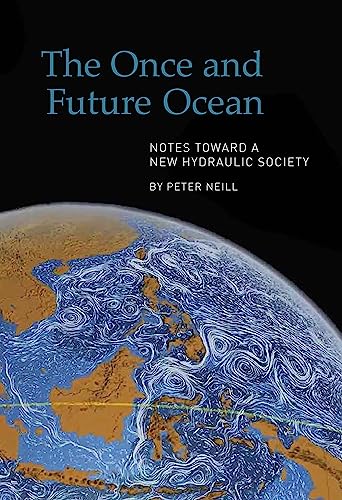
Peter Neill's The Once and Future Ocean aspires to do nothing less than transform our relationship with the world's most promising and imperiled natural element: the ocean and the inter-connected cycles of water, essential for all aspects of human survival in the 21st century. A successor to the work of Rachael Carson, Aldo Leopold, and Jonathan Schell, The Once and Future Ocean is ambitious in scope yet grounded in actionable, specific ideas and solutions for preserving the health of the world ocean. It explores the ocean's impact on climate, fresh water, food, energy, health, security, sustainable development, community living, and cultural traditions. Neill proposes a new paradigm for value and social behavior around which to build a new post-industrial, post-consumption global community. This fundamental shift is directed toward the creation of a 'new hydraulic society' wherein water in all its cycles and conveyances will determine how we live ' from our buildings and cities to the structures of governance in an increasingly populated world. Neill calls for a new ocean ethic and offers concrete examples of technologies and applications that already exist but have been suppressed by vested interests. The Once and Future Ocean argues for invention and new solutions, for new answers to fundamental questions, and for a new relationship built around the ocean as a source for new modes of living that are within our grasp if only we have the courage to take hold.
Die Inhaltsangabe kann sich auf eine andere Ausgabe dieses Titels beziehen.
Über die Autorin bzw. den Autor
Peter Neill is Founder and Director of the World Ocean Observatory, a web-based place of exchange about the ocean and its relation to climate, fresh water, food, energy, health, security, economic development, policy, governance, and cultural traditions. He is the past Director of the Connecticut Marine Science Consortium, the Maritime Preservation Program at the US National Trust for Historic Preservation, and the South Street Seaport Museum (New York). He is the author of three novels, numerous books on maritime art, history, and literature, and the ongoing audio feature, World Ocean Radio, available as a blog, podcast, and in distribution in the US and around the world in six languages.
Auszug. © Genehmigter Nachdruck. Alle Rechte vorbehalten.
The Once and Future Ocean
Notes Toward a New Hydraulic Society
By Peter NeillLeete's Island Books
Copyright © 2015 Robert Neill III
All rights reserved.
ISBN: 978-0-918172-57-0All rights reserved.
Contents
ACKNOWLEDGMENTS,
FOREWORD by DR. PAUL A. MAYEWSKI,
I. Introduction,
II. Where to Begin,
FROM THE HORIZON,
III. Why the Ocean Matters,
WHO WE ARE,
CLIMATE,
FRESH WATER,
A GLOBAL HYDRAULIC SYSTEM,
FOOD,
HEALTH,
SECURITY,
ENERGY,
ECONOMY,
RENEWAL,
IV. Why We Need a New Way of Thinking,
IN PURSUIT OF CHANGE,
V. Toward Solutions,
THE RIGHT OF PASSAGE,
VALUE SHIFTS AND NEW PREMISES,
AN OCEAN ETHOS,
HYDRAULIC SOCIETY,
EXEMPLARY BEGINNINGS,
SOME OF US ARE DREAMERS,
VI. A New Hydraulic Society,
GETTING THERE,
NATURE'S TRUST,
WHAT NEXT?,
WATERMARKS,
VII. The Once and Future Ocean,
THE NEW PARADIGM,
REFERENCES,
FURTHER READING,
CHAPTER 1
Introduction
THE SEA AROUND US
In 1951 — more than half a century ago — Rachael Carson published The Sea Around Us, a classic compendium of the ocean's history, its workings, and its central role in the health of our world and those who live in it. The book is short, concise, informative, and eloquent. It is not a polemic, although its reputation as a classic of environmental literature might suggest that purpose. The text clearly struck a chord, won the National Book Award, has progressed through multiple reprintings, and remains a seminal work, indeed the impetus for subsequent awareness, expanded ocean research, and greater public interest and engagement in the surrounding ocean.
Carson worked at John Hopkins University and the Marine Biological Institute at Woods Hole, Massachusetts, and went on to serve as marine biologist at the US Fish and Wildlife Service and to write additional books to include Under the Sea Wind, The Edge of the Sea, and of course, Silent Spring, that was a polemic and sounded the alarm over the harmful effect of chemical pesticides in agriculture.
Carson, and subsequently Jacques Cousteau, brought the ocean into our classrooms and living rooms. Cousteau's popular, long-running television series took us into the ocean, under the sea, to explore the underwater topography, the brilliance of coral reefs and biodiversity, and the physical workings of marine systems — tides, winds and currents, vast cycles of underwater movement and exchange, earthquake and tectonic shifts, and the life cycles of creatures heretofore beyond our imagination. Carson and Cousteau introduced us to the rewards and dangers of ocean observation and exploration, and their influence shaped more than one generation to become environmental scientists, marine biologists, oceanographers, and conservationists.
This legacy has driven decades of new investigation. New research institutions and programs have been founded in the United States and around the world. Governments have created and funded agencies and projects that have extended our observations by expedition, satellite, and arrays of drifting, fixed, and submerged monitors — a powerful network for the assemblage of data, experiment, and reports that have established an informed baseline of ocean conditions against which future study can be compared. Carson and Cousteau inspired an exponential increase in ocean observation and set in motion the first efforts to transform that information into conservation action.
The period that followed added the ocean to the scrutiny and mission of land-focused conservation groups — World Wildlife Fund, The Nature Conservancy, and the Natural Resources Defense Council — as well as motivated the creation of new organizations such as Conservation International, Oceana, The Ocean Conservancy, and Mission Blue that both extended their advocacy and programs worldwide and applied their resources more directly to ocean issues. Their work, and that by numerous other global organizations and government initiatives, has raised ocean knowledge, consciousness, and planning to its highest level.
But is it enough? Recently, I listened to a radio interview with a well-known and very well-informed ocean advocate and philanthropist who was describing the world ocean crisis in its many forms. He painted a dour picture indeed. It was a call-in show, and so I dialed in with the question, "Now that we know the problem, what do you suggest we do about it?" He indicated that that was the essential question, and then proceeded to give a very disappointing answer — don't use plastic bags, don't eat fish, don't drive your car, hope for the best! With all due respect, that's just not good enough.
If the second phase of the Carson/Cousteau legacy was observation and information that has defined the questions, then the next phase must be invention: the definition of new ideas and application of different answers. We are all seeking. I hear it again and again, at ocean conferences, in speeches and books by ocean experts: presentation of the overwhelming problem followed by silence, not solutions. It is as if we are sailing along the edge of an abyss; we have the skill perhaps to keep going, to extend our way for a time, until we fall off into darkness, or we can apply that skill to our ship and change course, away in a new direction. It is dangerous and uncertain, but I submit that we have no choice but to set forth.
CHAPTER 2Where to Begin
FROM THE HORIZON
The Exhausted Land We Live In
To understand the crises affecting the world ocean, we must first understand the condition of the land around us. For decades, alarms have been sounded to alert us to the exhaustion of the Earth. We have experienced a continuing increase in population; in demand for energy, food, and fresh water; and in the pollutants derived from our physical, chemical, and biological responses to those requirements. We have come to expect an annual raise, ever increasing quality of life, and sustained returns on our investments unrealizable without undisciplined personal credit, under-collateralized debt, and unregulated consumption of natural and human resources. Like any ponzi scheme, we have borrowed against assets once tangible, now increasingly limited, even ephemeral, and can no longer rationalize, postpone, or deny the consequences.
For me, pollution is excess: too much chocolate, too much alcohol, too much fertilizer, too many chemicals, too much waste, too much unregulated gain indifferent to the needs of an evergrowing community. That we have become divided over money, land, resources, and power, locally, regionally, nationally, and internationally, by disputes over all of these is surely no surprise.
We can measure that excess now: in diminished wells and corrupted waterways, in the acidified air, in the price of fuel, in the exploitation of labor, and in the failed economic and social aspirations now impacting the entire world.
But what about the ocean? I submit that the ocean begins at the mountaintop, and descends to the abyssal plain; that is, everything that occurs on land — be it development, manufacturing, agriculture, or financial enterprise — descends to the sea. It passes in, on, and above the earth in fluid streams of decision, action, and transaction, behaviors that reveal our system of values, be they economic, personal, social, political, or moral.
Thus, specifically, those...
„Über diesen Titel“ kann sich auf eine andere Ausgabe dieses Titels beziehen.
Suchergebnisse für The Once and Future Ocean: Notes Toward a New Hydraulic...

Beispielbild für diese ISBN
The Once and Future Ocean : Notes Toward a New Hydraulic Society
Anbieter: Better World Books, Mishawaka, IN, USA
Verkäuferbewertung 5 von 5 Sternen

Zustand: Very Good. Former library copy. Pages intact with possible writing/highlighting. Binding strong with minor wear. Dust jackets/supplements may not be included. Includes library markings. Stock photo provided. Product includes identifying sticker. Better World Books: Buy Books. Do Good. Bestandsnummer des Verkäufers 10008493-6
Gebraucht kaufen
EUR 14,90
Versand gratis
Versand innerhalb von USA
Versand innerhalb von USA
Anzahl: 1 verfügbar
Beispielbild für diese ISBN
The Once and Future Ocean: Notes Toward a New Hydraulic Society
Anbieter: ThriftBooks-Atlanta, AUSTELL, GA, USA
Verkäuferbewertung 5 von 5 Sternen
Hardcover. Zustand: Very Good. No Jacket. May have limited writing in cover pages. Pages are unmarked. ~ ThriftBooks: Read More, Spend Less. Bestandsnummer des Verkäufers G0918172578I4N00
Gebraucht kaufen
EUR 14,90
Versand gratis
Versand innerhalb von USA
Versand innerhalb von USA
Anzahl: 1 verfügbar
Foto des Verkäufers
Once and Future Ocean, The: Notes Toward a New Hydraulic Society
Verlag:
Leete's Island Books, Maine, 2016
ISBN 10: 0918172578
ISBN 13: 9780918172570
Gebraucht
Hardcover
Erstausgabe
Signiert
Anbieter: Monroe Street Books, Middlebury, VT, USA
Verkäuferbewertung 4 von 5 Sternen

Zustand: Very Good. Zustand des Schutzumschlags: Very Good. 256 pages. Hardcover with dust jacket. INSCRIBED AND SIGNED BY AUTHOR. Clean, tight copy with only minor wear to dust jacket. Record # 469206. Bestandsnummer des Verkäufers 469206
Gebraucht kaufen
EUR 13,23
EUR 4,28 Versand
Versand innerhalb von USA
Versand innerhalb von USA
Anzahl: 1 verfügbar
Foto des Verkäufers
Once and Future Ocean : Notes Toward a New Hydraulic Society
Anbieter: GreatBookPrices, Columbia, MD, USA
Verkäuferbewertung 5 von 5 Sternen
Zustand: New. Bestandsnummer des Verkäufers 25941110-n
Neu kaufen
EUR 17,55
EUR 2,26 Versand
Versand innerhalb von USA
Versand innerhalb von USA
Anzahl: Mehr als 20 verfügbar
Beispielbild für diese ISBN
The Once and Future Ocean Format: Hardcover
Anbieter: INDOO, Avenel, NJ, USA
Verkäuferbewertung 5 von 5 Sternen
Zustand: New. Brand New. Bestandsnummer des Verkäufers 9780918172570
Neu kaufen
EUR 19,88
Versand gratis
Versand innerhalb von USA
Versand innerhalb von USA
Anzahl: Mehr als 20 verfügbar
Foto des Verkäufers
Once and Future Ocean : Notes Toward a New Hydraulic Society
Anbieter: GreatBookPrices, Columbia, MD, USA
Verkäuferbewertung 5 von 5 Sternen
Zustand: As New. Unread book in perfect condition. Bestandsnummer des Verkäufers 25941110
Gebraucht kaufen
EUR 19,93
EUR 2,26 Versand
Versand innerhalb von USA
Versand innerhalb von USA
Anzahl: Mehr als 20 verfügbar
Foto des Verkäufers
The Once and Future Ocean
Verlag:
Leete's Island Books,U.S., US, 2016
ISBN 10: 0918172578
ISBN 13: 9780918172570
Neu
Hardcover
Anbieter: Rarewaves USA, HEBRON, KY, USA
Verkäuferbewertung 5 von 5 Sternen
Hardback. Zustand: New. Peter Neill's The Once and Future Ocean aspires to do nothing less than transform our relationship with the world's most promising and imperiled natural element: the ocean and the inter-connected cycles of water, essential for all aspects of human survival in the 21st century. A successor to the work of Rachael Carson, Aldo Leopold, and Jonathan Schell, The Once and Future Ocean is ambitious in scope yet grounded in actionable, specific ideas and solutions for preserving the health of the world ocean. It explores the ocean's impact on climate, fresh water, food, energy, health, security, sustainable development, community living, and cultural traditions. Neill proposes a new paradigm for value and social behavior around which to build a new post-industrial, post-consumption global community. This fundamental shift is directed toward the creation of a "new hydraulic society" wherein water in all its cycles and conveyances will determine how we live - from our buildings and cities to the structures of governance in an increasingly populated world. Neill calls for a new ocean ethic and offers concrete examples of technologies and applications that already exist but have been suppressed by vested interests. The Once and Future Ocean argues for invention and new solutions, for new answers to fundamental questions, and for a new relationship built around the ocean as a source for new modes of living that are within our grasp if only we have the courage to take hold. Bestandsnummer des Verkäufers LU-9780918172570
Neu kaufen
EUR 22,35
Versand gratis
Versand innerhalb von USA
Versand innerhalb von USA
Anzahl: Mehr als 20 verfügbar
Beispielbild für diese ISBN
The Once and Future Ocean (Hardcover)
Verlag:
Leete's Island Books,U.S., Bramford, CT, 2016
ISBN 10: 0918172578
ISBN 13: 9780918172570
Neu
Hardcover
Anbieter: Grand Eagle Retail, Bensenville, IL, USA
Verkäuferbewertung 5 von 5 Sternen
Hardcover. Zustand: new. Hardcover. Peter Neills The Once and Future Ocean aspires to do nothing less than transform our relationship with the worlds most promising and imperiled natural element: the ocean and the inter-connected cycles of water, essential for all aspects of human survival in the 21st century. A successor to the work of Rachael Carson, Aldo Leopold, and Jonathan Schell, The Once and Future Ocean is ambitious in scope yet grounded in actionable, specific ideas and solutions for preserving the health of the world ocean. It explores the ocean's impact on climate, fresh water, food, energy, health, security, sustainable development, community living, and cultural traditions. Neill proposes a new paradigm for value and social behavior around which to build a new post-industrial, post-consumption global community. This fundamental shift is directed toward the creation of a new hydraulic society wherein water in all its cycles and conveyances will determine how we live from our buildings and cities to the structures of governance in an increasingly populated world. Neill calls for a new ocean ethic and offers concrete examples of technologies and applications that already exist but have been suppressed by vested interests. The Once and Future Ocean argues for invention and new solutions, for new answers to fundamental questions, and for a new relationship built around the ocean as a source for new modes of living that are within our grasp if only we have the courage to take hold. Shipping may be from multiple locations in the US or from the UK, depending on stock availability. Bestandsnummer des Verkäufers 9780918172570
Foto des Verkäufers
The Once and Future Ocean
Verlag:
Leete's Island Books,U.S., US, 2016
ISBN 10: 0918172578
ISBN 13: 9780918172570
Neu
Hardcover
Anbieter: Rarewaves.com USA, London, LONDO, Vereinigtes Königreich
Verkäuferbewertung 5 von 5 Sternen
Hardback. Zustand: New. Peter Neill's The Once and Future Ocean aspires to do nothing less than transform our relationship with the world's most promising and imperiled natural element: the ocean and the inter-connected cycles of water, essential for all aspects of human survival in the 21st century. A successor to the work of Rachael Carson, Aldo Leopold, and Jonathan Schell, The Once and Future Ocean is ambitious in scope yet grounded in actionable, specific ideas and solutions for preserving the health of the world ocean. It explores the ocean's impact on climate, fresh water, food, energy, health, security, sustainable development, community living, and cultural traditions. Neill proposes a new paradigm for value and social behavior around which to build a new post-industrial, post-consumption global community. This fundamental shift is directed toward the creation of a "new hydraulic society" wherein water in all its cycles and conveyances will determine how we live - from our buildings and cities to the structures of governance in an increasingly populated world. Neill calls for a new ocean ethic and offers concrete examples of technologies and applications that already exist but have been suppressed by vested interests. The Once and Future Ocean argues for invention and new solutions, for new answers to fundamental questions, and for a new relationship built around the ocean as a source for new modes of living that are within our grasp if only we have the courage to take hold. Bestandsnummer des Verkäufers LU-9780918172570
Neu kaufen
EUR 31,44
Versand gratis
Versand von Vereinigtes Königreich nach USA
Versand von Vereinigtes Königreich nach USA
Anzahl: Mehr als 20 verfügbar
Beispielbild für diese ISBN
The Once and Future Ocean: Notes Toward a New Hydraulic Society
Anbieter: Kennys Bookshop and Art Galleries Ltd., Galway, GY, Irland
Verkäuferbewertung 5 von 5 Sternen
Zustand: New. 2016. hardcover. . . . . . Bestandsnummer des Verkäufers V9780918172570
Neu kaufen
EUR 28,58
EUR 9,50 Versand
Versand von Irland nach USA
Versand von Irland nach USA
Anzahl: Mehr als 20 verfügbar