
Verwandte Artikel zu Creative Authenticity: 16 Principles To Clarify And...
Inhaltsangabe
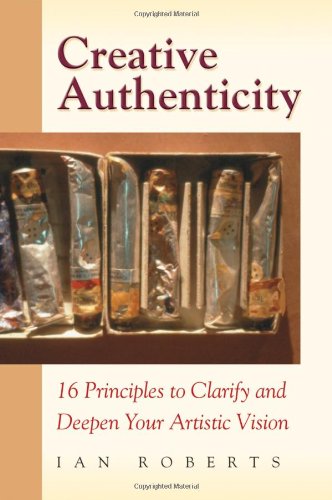
Serious working artists are the intended audience of this collection of short essays that clarify common expressive and personal problems that many artists encounter, including the fear of being clichéd, the desire to convey truth in art, and the frustration behind trying to find an authentic voice. These crippling fears are laid to rest through insightful discussions of personal experiences, the struggles of famous artists, and the rewards of producing art that comes from an authentic creative core. Providing sensitive reassurances that these struggles are normal, these essays encourage artists to focus on the development of their crafts and find inspiration to work through self-doubt.
Die Inhaltsangabe kann sich auf eine andere Ausgabe dieses Titels beziehen.
Über die Autorin bzw. den Autor
Ian Roberts is a painter and the founder of the Atelier Saint-Luc School. He is the creator of the instructional videos Mastering Composition: Techniques and Principles to Dramatically Improve Your Painting and Plein Air Painting. He lives in Soda Springs, California.
Auszug. © Genehmigter Nachdruck. Alle Rechte vorbehalten.
Creative Authenticity
16 Principles to Clarify and Deepen Your Artistic Vision
By Ian RobertsAtelier Saint-Luc Press
Copyright © 2004 Ian Roberts
All rights reserved.
ISBN: 978-0-9728723-2-4All rights reserved.
Contents
Introduction,
Principle 1: Searching for Beauty,
Principle 2: Communication,
Principle 3: Your Home Turf,
Principle 4: The van Gogh Syndrome,
Principle 5: Your Craft and Your Voice,
Principle 6: Showing Up,
Principle 7: The Dance of Avoidance,
Principle 8: Full-time or Part-time,
Principle 9: Follow Something Along,
Principle 10: Wagon Train and Scout,
Principle 11: Working Method,
Principle 12: Limits Yield Intensity,
Principle 13: Being Ready to Show,
Principle 14: You Are More Than Creative Enough,
Principle 15: Finding Poetry in the Everyday,
Principle 16: Holding the Big Picture,
Conclusion,
Notes,
CHAPTER 1
Searching for Beauty
Though we travel the world over to find the beautiful, we must carry it with us or we find it not. — Emerson
* * *
By God, when you see your beauty you'll be the idol of yourself. — Rumi
* * *
I told Beauty, take me in your arms of silence. — Aragon
* * *
Beneath our loquacious chatter, there is a silent language of our whole being which yearns for art and the beauty from which art comes. — Rollo May, My Quest for Beauty
I read some years ago that scientists had not come up with an agreed-upon definition of stress, one that from a scientific standpoint met with common approval. Yet any layman can readily define stress. The experience is clear, even for the scientists who can't formulate a definition of the word. Stress may differ from person to person in terms of cause, reaction and so on. But it is clear when we are having a stressful experience.
I find the intellectual wrangling over the definition of beauty to be similar. Over the years, I've made a study of beauty. I've read arguably the three most important writers on aesthetics — Plato, Kant and Hegel. They are not "an easy read." Rather than addressing our simple, direct response to beauty, they write "about" beauty, in a broad philosophical context. Robert Adams writes, "Philosophy can forsake too easily the details of experience." Either we have the experience of beauty or we don't. It's like someone writing about self-realization. Either they've had the experience or they haven't.
This past month as it happens I've read two books that illustrate this point: Jed McKenna's Spiritual Enlightenment, and a memoir by Balthus, Vanished Splendors. Both men have truly experienced firsthand what they are writing about. They speak from an irrefutable depth and truth. Hard won. Resonant. Masterful. If the insight doesn't come from that level, it's mere intellectual speculation — perhaps intellectually engaging but in the end, experientially useless. Utterly useless. Interestingly, we have come to the point in the contemporary art world where beauty is suspect as an aim in art. It is not considered rigorous or tough minded enough to be taken seriously. It's almost a dirty word.
Yet if we look at the artifacts of all cultures, beauty has always attracted our attention. We know when we are in its presence. We're held. Different artworks will arrest different people, and as I point out in Principle Six, some art will arrest greater numbers of people for longer periods of time. These are the works that are perhaps worthy of being called great art. We have to recognize that some people today, observing the greatest works of art or the most awesome works of nature — the Grand Canyon for instance — give these works but a minute before they're ready for something else. Insatiable for change, they are immune to deep resonance.
Art and beauty are about that inner resonance. It isn't the subject matter that holds us. Some inexplicable reaction stops us, and we find ourselves connected with something other than our self. Perhaps our "Self" might be a better term, to distinguish it from the self that is caught up in thoughts, worries and distractions. I like Ken Wilber's definition, that beauty "suspends the desire to be elsewhere." In the face of great art, we experience transcendence; we are fully in the moment.
Because of this, if we're going to discuss deeper purpose in creative expression, we have to discuss beauty. As the art historian Kenneth Clark pointed out, the idea of the beautiful is the longest standing theory of aesthetics around. And for a reason. We can't help but come back to beauty. Like a perennial philosophy of spirit, it feeds us. In his book My Quest for Beauty, Rollo May writes:
We realize now that our common human language is not Esperanto or computers or something having to do with vocal cords and speech. It is, rather, our sense of proportion, our balance, harmony and other aspects of simple and fundamental form. Our universal language, in other words, is beauty.
By beauty, I don't for a minute mean pretty or sweet. Donatello, the Renaissance sculptor, had his sculpture of Mary Magdalene paraded around the streets of Florence when it was finished. The emaciated Mary is not a pretty sight, but it is an example of uncompromising work that was deep and accessible. If you think of Goya's painting, The Third of May, 1808, you see an extraordinarily powerful, beautiful painting that is also horrifying. This figure bathed in divine light, arms outstretched like Christ on the cross, before the dark anonymous line of the firing squad. That's a beautiful painting. It's not pretty. But it is beautiful. It is moving.
Philosophically the debate goes on about beauty and the sublime. Simplistically we could say one deals with pleasure, the other, awe. Goya's painting is probably an example of the sublime, as is the Grand Canyon. I don't think the distinction concerns us much in the making of art. You make art based on your nature. What you end up with may be one or the other. The more you think about it in advance the more likely you'll end up with neither.
One thing is certain. It is difficult to produce beautiful things, particularly to do so consistently. I know. I make paintings. Some have an indefinable quality that attracts people, and I could sell those images a dozen times over. People feel it. Yet it is far from something I can produce on demand. It is a constant challenge.
I mention this because much contemporary art simply doesn't attempt that path, the path of beauty. For artists to say beauty doesn't concern them because they have more important and deeper concerns — social or environmental issues for example — is fine. But I say: Don't knock beauty and don't call it meaningless or irrelevant or superficial without consistently trying to produce beauty and discovering how difficult it is.
If the current art market will tolerate work that ignores such basic tenets of historic art making, that is understandable, given the context of the times. But I feel it's similar to the hype that went along with the "new economy," the dot-com Internet world. The old ways of looking at stock price earnings and profits were not considered important any longer. A new economic model was in place. Yet the dot-com bubble burst and now everyone finds the old model of establishing a stock's value still relevant and demanding the same discipline as always. The heady trends of the "new economy" have been found...
„Über diesen Titel“ kann sich auf eine andere Ausgabe dieses Titels beziehen.
Suchergebnisse für Creative Authenticity: 16 Principles To Clarify And...

Foto des Verkäufers
Creative Authenticity: 16 Principles to Clarify and Deepen Your Artistic Vision
Verlag:
Atelier Saint-Luc Press, 2004
ISBN 10: 0972872329
ISBN 13: 9780972872324
Gebraucht
Softcover
Anbieter: Bay State Book Company, North Smithfield, RI, USA
Verkäuferbewertung 5 von 5 Sternen

Zustand: very_good. Bestandsnummer des Verkäufers BSM.1ERTG
Gebraucht kaufen
EUR 5,66
Versand gratis
Versand innerhalb von USA
Versand innerhalb von USA
Anzahl: 1 verfügbar
Beispielbild für diese ISBN
Creative Authenticity: 16 Principles to Clarify and Deepen Your Artistic Vision
Verlag:
Atelier Saint-Luc Press, 2004
ISBN 10: 0972872329
ISBN 13: 9780972872324
Gebraucht
Paperback
Anbieter: HPB-Ruby, Dallas, TX, USA
Verkäuferbewertung 5 von 5 Sternen
Paperback. Zustand: Very Good. Connecting readers with great books since 1972! Used books may not include companion materials, and may have some shelf wear or limited writing. We ship orders daily and Customer Service is our top priority! Bestandsnummer des Verkäufers S_477566484
Gebraucht kaufen
EUR 4,46
EUR 3,33 Versand
Versand innerhalb von USA
Versand innerhalb von USA
Anzahl: 1 verfügbar
Foto des Verkäufers
Creative Authenticity: 16 Principles to Clarify and Deepen Your Artistic Vision
Verlag:
Atelier Saint-Luc Press, 2004
ISBN 10: 0972872329
ISBN 13: 9780972872324
Gebraucht
Softcover
Anbieter: Goodwill of Colorado, COLORADO SPRINGS, CO, USA
Verkäuferbewertung 5 von 5 Sternen
Zustand: good. All pages and cover are intact. Dust jacket included if applicable, though it may be missing on hardcover editions. Spine and cover may show minor signs of wear including scuff marks, curls or bends to corners as well as cosmetic blemishes including stickers. Pages may contain limited notes or highlighting. "From the library of" labels may be present. Shrink wrap, dust covers, or boxed set packaging may be missing. Bundled media e.g., CDs, DVDs, access codes may not be included. Bestandsnummer des Verkäufers COLV.0972872329.G
Gebraucht kaufen
EUR 7,96
Versand gratis
Versand innerhalb von USA
Versand innerhalb von USA
Anzahl: 1 verfügbar
Foto des Verkäufers
Creative Authenticity: 16 Principles to Clarify and Deepen Your Artistic Vision
Verlag:
Atelier Saint-Luc Press, 2004
ISBN 10: 0972872329
ISBN 13: 9780972872324
Gebraucht
Softcover
Anbieter: Goodwill of Central and Coastal Virginia, Richmond, VA, USA
Verkäuferbewertung 4 von 5 Sternen

Zustand: acceptable. Bestandsnummer des Verkäufers CCVV.0972872329.A
Gebraucht kaufen
EUR 3,38
EUR 5,10 Versand
Versand innerhalb von USA
Versand innerhalb von USA
Anzahl: 1 verfügbar
Foto des Verkäufers
Creative Authenticity: 16 Principles to Clarify and Deepen Your Artistic Vision
Verlag:
Atelier Saint-Luc Press, 2004
ISBN 10: 0972872329
ISBN 13: 9780972872324
Gebraucht
Softcover
Anbieter: ebooks Keystone, Reading, PA, USA
Verkäuferbewertung 4 von 5 Sternen
Zustand: acceptable. Bestandsnummer des Verkäufers GWKV.0972872329.A
Gebraucht kaufen
EUR 7,30
EUR 2,67 Versand
Versand innerhalb von USA
Versand innerhalb von USA
Anzahl: 1 verfügbar
Beispielbild für diese ISBN
Creative Authenticity : 16 Principles to Clarify and Deepen Your Artistic Vision
Anbieter: Better World Books, Mishawaka, IN, USA
Verkäuferbewertung 5 von 5 Sternen
Zustand: Very Good. Pages intact with possible writing/highlighting. Binding strong with minor wear. Dust jackets/supplements may not be included. Stock photo provided. Product includes identifying sticker. Better World Books: Buy Books. Do Good. Bestandsnummer des Verkäufers 4795554-6
Gebraucht kaufen
EUR 10,07
Versand gratis
Versand innerhalb von USA
Versand innerhalb von USA
Anzahl: 1 verfügbar
Foto des Verkäufers
Creative Authenticity: 16 Principles to Clarify and Deepen Your Artistic Vision
Verlag:
Atelier Saint-Luc Press, 2004
ISBN 10: 0972872329
ISBN 13: 9780972872324
Gebraucht
Softcover
Anbieter: Big River Books, Powder Springs, GA, USA
Verkäuferbewertung 5 von 5 Sternen
Zustand: good. This book is in good condition. The cover has minor creases or bends. The binding is tight and pages are intact. Some pages may have writing or highlighting. Bestandsnummer des Verkäufers BRV.0972872329.G
Gebraucht kaufen
EUR 7,30
EUR 3,55 Versand
Versand innerhalb von USA
Versand innerhalb von USA
Anzahl: 1 verfügbar
Beispielbild für diese ISBN
Creative Authenticity: 16 Principles to Clarify and Deepen Your Artistic Vision
Anbieter: World of Books (was SecondSale), Montgomery, IL, USA
Verkäuferbewertung 5 von 5 Sternen
Paperback. Zustand: Good. All Great Art is Authentic Connecting to your own authentic core will fill you and your work with strength and relevance. To those engaged in making art, an authentic voice is the most crucial yet most difficult ability to come by. Why does so much conspire to hide what is ultimately the closest, simplest thing of all? Creative Authenticity outlines 16 principles that will help you peel back the fears, misconceptions, "shoulds" and confusion around courageous creative expression. You'll discover: you are more than creative enough talent has little to do with your success the van Gogh syndrome is one of the most destructive myths of what it takes to create the dance of avoidance upon arriving in the studio is inevitable - learn to see through it and begin the necessity of finding a truthful relationship with your work so it feeds you, not torments you. Bestandsnummer des Verkäufers 00108376502
Gebraucht kaufen
EUR 10,87
Versand gratis
Versand innerhalb von USA
Versand innerhalb von USA
Anzahl: 3 verfügbar
Beispielbild für diese ISBN
Creative Authenticity: 16 Principles to Clarify and Deepen Your Artistic Vision
Verlag:
Atelier Saint-Luc Press, 2004
ISBN 10: 0972872329
ISBN 13: 9780972872324
Gebraucht
paperback
Anbieter: Books From California, Simi Valley, CA, USA
Verkäuferbewertung 4 von 5 Sternen
paperback. Zustand: Good. Bestandsnummer des Verkäufers mon0004239195
Gebraucht kaufen
EUR 8,33
EUR 4,43 Versand
Versand innerhalb von USA
Versand innerhalb von USA
Anzahl: 1 verfügbar
Beispielbild für diese ISBN
Creative Authenticity : 16 Principles To Clarify And Deepen Your Artistic Vision
Anbieter: GreatBookPrices, Columbia, MD, USA
Verkäuferbewertung 5 von 5 Sternen
Zustand: New. Bestandsnummer des Verkäufers 2581884-n
Neu kaufen
EUR 10,58
EUR 2,35 Versand
Versand innerhalb von USA
Versand innerhalb von USA
Anzahl: 6 verfügbar