
Verwandte Artikel zu Erased
Inhaltsangabe
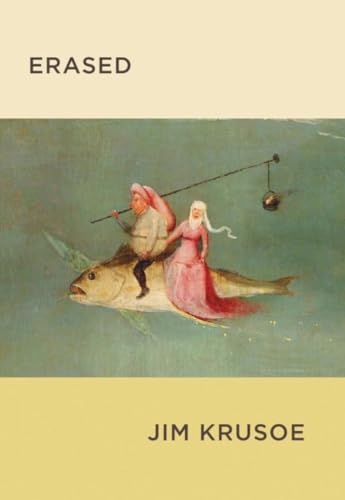
When Theodore receives a postcard from his dead mother he sets out to track her down. Erased explores abandonment, life, death, and the transition between this world and the next.
Abandonment, life, death, and, oddly, Cleveland are explored in the hilarious second installment of Jim Krusoe's trilogy about resurrection. In Erased, Krusoe takes on a dead mother who mysteriously sends notes from the beyond to her grown son, Theodore, the owner of a mail-order gardening-implement business. "I need to see you," the first card reads. Theodore does what any sensible person would: he ignores it. But when he gets a second card that's even more urgent, Theodore leaves his quiet home in St. Nils for a radiantly imagined Cleveland, Ohio, to track down his mother. There, aided by Uleene, the last remaining member of Satan's Samaritans, an all-girl biker club, he searches through the realms of women's clubs, art, rodent extermination, and sport fishing until he finds the answers he seeks.
Die Inhaltsangabe kann sich auf eine andere Ausgabe dieses Titels beziehen.
Über die Autorin bzw. den Autor
Jim Krusoe is the author of the novels Parsifal, Toward You, Erased, Girl Factory, and Iceland; two collections of stories; and five books of poetry. His stories and poems have appeared in the Antioch Review, Bomb, the Chicago Review, the Denver Quarterly, the American Poetry Review, and other publications. He is the recipient of fellowships from the National Endowment for the Arts and the Lila Wallace Reader’s Digest Fund.
Auszug. © Genehmigter Nachdruck. Alle Rechte vorbehalten.
ERASED
By JIM KRUSOETin House Books
Copyright © 2009 Jim KrusoeAll right reserved.
ISBN: 978-0-9802436-7-3
Chapter One
THE LAST TIME I SPOKE with my mother she was worried.It was late at night and she said she couldn't get to sleep. This was unusual because I had never heard my mother say she had trouble sleeping. Once she even told me she slept like a tree. "You know, Theodore, some people say that trees don't sleep, but they do. You go out some time late at night to a place where it's really dark, and you watch. You'll see. Don't argue."
"But, Mother," I said, "I'm not arguing. I'm agreeing. I can go outside right now and check if you want me to." My mother wasn't the sort of person you argued with.
But that time she gave me a break: "Don't be silly, Theodore," she said. "It's the concept I'm discussing here. And besides, I need you to listen to me for a while. Don't ask why, OK?"
My mother was transcriber; that's what she did for a living, week in and week out. This was her routine: Once or twice a week she would take the bus downtown to the transcription service and put the tapes she was finished with, together with the computer disks on which she'd transcribed them, into a medium-sized cardboard box marked "Incoming" that the transcription service kept by the front door. "No Internet for them," she used to tell me with satisfaction in her voice, though no doubt that will change soon if it hasn't already.
Next, she would pour herself a cup of coffee from the pot in the corner of the office, put her purse down on the table, flop into chair, and hang around for a few minutes to talk with Angela. Angela basically ran the place. Sometimes, if Angela was too busy to talk she would point to the phone she had pressed against her ear with her shoulder, wave good-bye, and mouth the words "next time." At least that's what my mother said. Then my mother would pick up new tapes from the box marked "Outgoing," also by the door, get back on the bus, and bring them home to her apartment. "It's real grab bag," she used say. "Sometimes you get great ones that are easy to understand and fast to finish; at others you get some real stinkers." Angela was fair, of course, but a person didn't wan tot get on her bad side, either.
On the phone that night, my mother told me that earlier in the day she'd brought some new tapes home, and as usual inserted the first untranscribed one into her foot-pedal-activated, variable-speed tape player, and put on her headphones. Then she'd listened, typing what was said and who said it into her computer. After she finished the first transcription, she checked it on the screen for spelling and copied it to a disk. She said she'd done two more right afterward, and I knew that eventually, when the whole batch was completed, in about a week, she'd get back on the bus, drop the tapes, each in a separate envelope together with its disk, into the "Incoming" box, and hear another installment in the story of Angela's tragic life. Angela had a boyfriend who was a real horse's ass, my mother said, but Angela couldn't seem to shake him. "I told her he reminds me of your father, rest his soul," my mother said. "But that didn't seem to help."
You can see why I may not have been paying as much attention to the conversation as I might have.
The tapes were of lectures or interviews, usually from radio shows, and needed to be transcribed not so much because they were especially interesting or because they were going to be printed anytime soon in a book or magazine but for legal reasons in case, as sometimes happened, the originals got lost or needed to be examined quickly. "In other words," my mother used to say, "we're not talking high drama here, Theodore, only small claims court" So instead of containing great historical interviews with world leaders, et cetera, the tapes my mother copied were mostly filled with the voices of so-called experts droning on, sometimes with a semifamous personality thrown in. The names of these latter she would repeat to me with a note of pride in her voice, but usually she limited her conversation about the tapes' contents to the odd fact she found interesting.
That night, for example, my mother told me she'd just finished transcribing an interview with a scientist who claimed that mankind was destroying about eighty species of animals and plants and insects every single day-or maybe that was only the number for animals-I was just half listening because I was in bed by then and I was tired. Then there was a catch, or something, in her voice and she added, "Erased, just like that. As if they'd never been alive at all."
"Are you all right?" I asked, because I thought I heard a different tone than I was used to.
She told me she was fine, though, yes, she was feeling distressed at that moment. I imagined her lying in her bed in the apartment where she said she preferred to live instead of moving in with me (thank goodness). "Is everything OK with your apartment and your neighbors?" I asked.
I should add here that a part of me felt guilty because the neighborhood she lived in wasn't the best. It consisted of light industrial types of shops, places that bent metal or fabricated plastic, and was home to a few marginal businesses, like the Treasure Chest, the store she lived above. But on the other hand my mother was tough, and I hadn't asked her to pack up her belongings and come out to St. Nils to be with me. It was her idea. After all, until recently she'd spent my whole life not caring anything about where her only son lived or what was happening to him. So why, I wondered, should I feel the least bit guilt? I did, though.
Through the phone I could hear a car door slam every couple of minutes. It was the sound-I knew from having watched-of some guy pulling up to the Treasure Chest and running inside. Then, after a short while, the car door would slam again and the invisible door-slammer would drive off, carrying some box, some bag, some apparatus or another. I say "guy" because about ninety-nine out of a hundred customers of the Treasure Chest were men.
Then my mother's voice was back with a kind of strange quiver to it. "Theodore, if you're interested, I'll tell you. Actually a really odd thing did happen today," she said. "Though it's probably nothing."
I sat up in my bed. "Go ahead. I'm listening."
I pictured her at that hour. She would be lying in her own bed, holding the phone with her left hand. Her window would be open because she liked to sleep that way, and she was probably dressed in one of the white cotton nightgowns she favored; maybe she was even still in her bathrobe. As my mother talked, she would be looking at her right hand with its transcriber's fingers and short nails that she liked to cover with clear polish. It was a small thing, but I knew that she really enjoyed admiring her hands-one of the few places where I could measure her vanity. They were strong, practical hands, not showy, but well-shaped and smooth. She took good care of them. The rest of her was sturdy and no nonsense-"tough" I suppose some people might call her.
But she didn't sound tough then. Instead, my mother spoke softly, as if at that very moment she herself was transcribing what had happened earlier that day, or maybe was speaking it into an invisible microphone for another, imaginary transcriber to take down. "I had just gotten up from my desk-my 'work station' you know I call it-and walked over to the window to look down at the street...
„Über diesen Titel“ kann sich auf eine andere Ausgabe dieses Titels beziehen.
Suchergebnisse für Erased

Beispielbild für diese ISBN
Erased
Anbieter: ThriftBooks-Dallas, Dallas, TX, USA
Verkäuferbewertung 5 von 5 Sternen

Paperback. Zustand: Very Good. No Jacket. Former library book; May have limited writing in cover pages. Pages are unmarked. ~ ThriftBooks: Read More, Spend Less. Bestandsnummer des Verkäufers G098024367XI4N10
Gebraucht kaufen
EUR 9,53
Versand gratis
Versand innerhalb von USA
Versand innerhalb von USA
Anzahl: 1 verfügbar
Beispielbild für diese ISBN
Erased
Anbieter: HPB-Movies, Dallas, TX, USA
Verkäuferbewertung 4 von 5 Sternen

paperback. Zustand: Very Good. Connecting readers with great books since 1972! Used books may not include companion materials, and may have some shelf wear or limited writing. We ship orders daily and Customer Service is our top priority! Bestandsnummer des Verkäufers S_485943241
Gebraucht kaufen
EUR 6,78
EUR 3,30 Versand
Versand innerhalb von USA
Versand innerhalb von USA
Anzahl: 1 verfügbar
Beispielbild für diese ISBN
Erased
Anbieter: Better World Books, Mishawaka, IN, USA
Verkäuferbewertung 5 von 5 Sternen
Zustand: Very Good. Original. Former library copy. Pages intact with possible writing/highlighting. Binding strong with minor wear. Dust jackets/supplements may not be included. Includes library markings. Stock photo provided. Product includes identifying sticker. Better World Books: Buy Books. Do Good. Bestandsnummer des Verkäufers 1270918-20
Gebraucht kaufen
EUR 10,24
Versand gratis
Versand innerhalb von USA
Versand innerhalb von USA
Anzahl: 1 verfügbar
Beispielbild für diese ISBN
Erased: A Novel
Verlag:
Tin House Books, 2009
ISBN 10: 098024367X
ISBN 13: 9780980243673
Gebraucht
Soft cover
Erstausgabe
Signiert
Anbieter: Garys Books-Log Cabin Books, Apache Junction, AZ, USA
Verkäuferbewertung 5 von 5 Sternen
Soft cover. Zustand: Fine. 1st Edition. First Printing. Author of TOWARD YOU and ICELAND. PAPERBACK ORIGINAL. Signed by Author(s). Bestandsnummer des Verkäufers 007551
Gebraucht kaufen
EUR 4,89
EUR 5,94 Versand
Versand innerhalb von USA
Versand innerhalb von USA
Anzahl: 1 verfügbar
Foto des Verkäufers
Erased
Anbieter: The Haunted Bookshop, LLC, Iowa City, IA, USA
Verkäuferbewertung 5 von 5 Sternen
Trade Paperback. Zustand: Very Good. Bestandsnummer des Verkäufers 044243
Gebraucht kaufen
EUR 6,34
EUR 4,84 Versand
Versand innerhalb von USA
Versand innerhalb von USA
Anzahl: 1 verfügbar
Beispielbild für diese ISBN
Erased
Anbieter: Book Alley, Pasadena, CA, USA
Verkäuferbewertung 4 von 5 Sternen
paperback. Zustand: Good. Good. Gently used with no markings in text. Binding is tight. Bestandsnummer des Verkäufers mon0000662374
Gebraucht kaufen
EUR 6,34
EUR 5,28 Versand
Versand innerhalb von USA
Versand innerhalb von USA
Anzahl: 1 verfügbar
Foto des Verkäufers
Erased
Anbieter: GreatBookPrices, Columbia, MD, USA
Verkäuferbewertung 5 von 5 Sternen
Zustand: New. Bestandsnummer des Verkäufers 6228981-n
Neu kaufen
EUR 11,04
EUR 2,32 Versand
Versand innerhalb von USA
Versand innerhalb von USA
Anzahl: 15 verfügbar
Beispielbild für diese ISBN
Erased (Paperback)
Anbieter: Grand Eagle Retail, Bensenville, IL, USA
Verkäuferbewertung 5 von 5 Sternen
Paperback. Zustand: new. Paperback. When Theodore receives a postcard from his dead mother he sets out to track her down. Erased explores abandonment, life, death, and the transition between this world and the next.Abandonment, life, death, and, oddly, Cleveland are explored in the hilarious second installment of Jim Krusoe's trilogy about resurrection. In Erased, Krusoe takes on a dead mother who mysteriously sends notes from the beyond to her grown son, Theodore, the owner of a mail-order gardening-implement business. "I need to see you," the first card reads. Theodore does what any sensible person would: he ignores it. But when he gets a second card that's even more urgent, Theodore leaves his quiet home in St. Nils for a radiantly imagined Cleveland, Ohio, to track down his mother. There, aided by Uleene, the last remaining member of Satan's Samaritans, an all-girl biker club, he searches through the realms of women's clubs, art, rodent extermination, and sport fishing until he finds the answers he seeks. When Theodore receives a postcard from his dead mother he sets out to track her down. Erased explores abandonment, life, death, and the transition between this world and the next. Shipping may be from multiple locations in the US or from the UK, depending on stock availability. Bestandsnummer des Verkäufers 9780980243673
Beispielbild für diese ISBN
Erased Format: Paperback
Anbieter: INDOO, Avenel, NJ, USA
Verkäuferbewertung 5 von 5 Sternen
Zustand: New. Bestandsnummer des Verkäufers 9780980243673
Neu kaufen
EUR 13,43
Versand gratis
Versand innerhalb von USA
Versand innerhalb von USA
Anzahl: Mehr als 20 verfügbar
Foto des Verkäufers
Erased
Anbieter: Rarewaves USA, HEBRON, KY, USA
Verkäuferbewertung 5 von 5 Sternen
Paperback. Zustand: New. Bestandsnummer des Verkäufers LU-9780980243673