
Verwandte Artikel zu Color of Smoke: A Novel
Inhaltsangabe
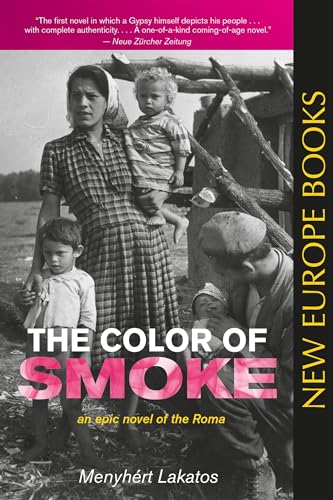
The first major novel about Eastern Europe's Roma, or Travelers (Gypsies), by a Romani author, The Color of Smoke is both a work of passion chronicling one young man's rise to manhood and an epic work that conjures up a dark era of world history. It is an undiscovered classic that has been published in several languages since its 1975 appearance in Hungary--but never before in English.
Inspired by the author's own boyhood in World War II-era Hungary, it is a beautifully written coming-of-age story of a Romani boy torn between the community of his birth and the mainstream society that both entices him and rejects him.
Die Inhaltsangabe kann sich auf eine andere Ausgabe dieses Titels beziehen.
Über die Autorin bzw. den Autor
ABOUT THE AUTHOR
Menyhért Lakatos (1926–2007) was the prizewinning author of many books. His magnum opus, The Color of Smoke⎯inspired by his own youth in a Romani settlement, and first published in Hungarian in 1975⎯has been translated into more than half a dozen languages.
ABOUT THE TRANSLATOR
Ann Major (1928–) has brought several Hungarian books to English, including Paul Lendvai's The Hungarians: A Thousand Years of Victory in Defeat (Princeton University Press), and also translates from German. The author of a memoir, A Carpet of Jacaranda (Sydney Jewish Museum, 2013), she lives in Lane Cove, Australia.
Von der hinteren Coverseite
“After appearing in various European languages, The Color of Smoke has at last been made available in English. Based loosely on Lakatos Menyhért’s own life, it skillfully and imaginatively portrays the challenges facing the journey from boyhood to manhood of its central figure. As a Romani (Gypsy) adolescent he has to deal with the cultural barriers that separate his own world from the non-Gypsy world as all Roma must do--but he does so surrounded by the terrors of the Second World War, when the Romani people in Hungary were being herded into labor camps, some destined for Auschwitz. Written by an insider, this long-overdue and realistically harsh book opens a window into Romani life at that time and adds to our growing awareness of the Romani experience in Nazi-occupied Europe.” ⎯Ian Hancock, Director of the Romani Archives and Documentation Center, University of Texas, and author of We Are the Romani People
“Hailed as the crowning achievement of the late Menyhért Lakatos, Hungary’s foremost Romani (Gypsy) author of the twentieth century, The Color of Smoke has finally appeared in an English translation. Its vivid characters and background illustrate the pathos and resilience of the Roma in Hungary during World War II, when that country was first an ally and then a victim of Nazi Germany. The author has drawn upon his boyhood experiences in this bildungsroman to show how his people, the Roma, denied their basic human rights and forced to scrounge an existence on the margins of society, were part of this society, but never fully accepted by the greater majority nor given equality of status. Finally they became the innocent victims of hatred and genocide along with the Jews when they were engulfed by the Nazi Holocaust.” ⎯Ronald Lee, LLD, Romani Canadian writer, linguist, and activist
Aus dem Klappentext
After appearing in various European languages, The Color of Smoke has at last been made available in English. Based loosely on Lakatos Menyhérts own life, it skillfully and imaginatively portrays the challenges facing the journey from boyhood to manhood of its central figure. As a Romani (Gypsy) adolescent he has to deal with the cultural barriers that separate his own world from the non-Gypsy world as all Roma must do--but he does so surrounded by the terrors of the Second World War, when the Romani people in Hungary were being herded into labor camps, some destined for Auschwitz. Written by an insider, this long-overdue and realistically harsh book opens a window into Romani life at that time and adds to our growing awareness of the Romani experience in Nazi-occupied Europe. ?Ian Hancock, Director of the Romani Archives and Documentation Center, University of Texas, and author of We Are the Romani People ??
Hailed as the crowning achievement of the late Menyhért Lakatos, Hungarys foremost Romani (Gypsy) author of the twentieth century, The Color of Smoke has finally appeared in an English translation. Its vivid characters and background illustrate the pathos and resilience of the Roma in Hungary during World War II, when that country was first an ally and then a victim of Nazi Germany. The author has drawn upon his boyhood experiences in this bildungsroman to show how his people, the Roma, denied their basic human rights and forced to scrounge an existence on the margins of society, were part of this society, but never fully accepted by the greater majority nor given equality of status. Finally they became the innocent victims of hatred and genocide along with the Jews when they were engulfed by the Nazi Holocaust. ?Ronald Lee, LLD, Romani Canadian writer, linguist, and activist ??
Auszug. © Genehmigter Nachdruck. Alle Rechte vorbehalten.
The Color of Smoke
An Epic Novel of the Roma
By Menyhért Lakatos, Ann MajorSteerforth Press
Copyright © 2015 The Estate of Menyhert Lakatos
All rights reserved.
ISBN: 978-0-9850623-4-7All rights reserved.
CHAPTER 1
One more barely noticeable sigh, then his eyes became fixed into an eternal gaze. Time froze on his stone-brown face, and Tsino Petro became but a memory — a lasting memory of which Tsino Petro's daughter, Old Liza, or Grandma, to me, told stories during seemingly endless nights. Her stories conjured up old memories when time was measured not in months and days, but in the flowers that blossomed and the leaves that fell a hundred and one times under and over her father, as she used to say.
We were the people in whose blood life had lit a fire; neither the winds nor the winters — be they ever so fierce — could extinguish its flame. I knew Grandma as a small, wizened old woman, who sat only on the floor. When talking, she rested her chin on her knees, her stemless pipe clasped between her palms. She was a perfect custodian of bygone centuries. The world we lived in was alien to her; being confined to one place was, to her, servitude. Grandma was just too old to change her ways; the twelve years she had spent among us could not dislodge those earlier times. She felt cold even on the hottest of days. With her long outer skirt thrown upward over her shoulders, and squatting with her feet tucked under her, she smoked relentlessly. In the winter she often slept on the porch, since she couldn't bear the hut's stifling air.
This embarrassed Papa, her son, but if he complained about it, she just waved her hand dismissively.
"Don't take any notice son, let those Romungros talk all they like, they've gotten used to this robiyd but I get coughing fits indoors, and the children can't sleep properly on account of me."
We never once heard Grandma coughing outside.
Sometimes she would crouch in front of the wood-fired cob oven, which, in the kitchen adjoining the main room, was topped off by an old tin can that served as the chimney. There she would feed green acacia twigs through the large opening and stare as they frothed and whistled and curled up amid the flames. The wind often blew its thick, acrid smoke right at us, stinging our eyes.
Grandma could hardly wait for spring. She swept our tiny yard each evening, picking up anything that would burn, like rags and dried horse dung. For a while we thought she did so to keep it clean.
When Papa settled down by the oven and stared into the flames, especially when the air was thick with wood smoke, his face became transfigured as if in prayer.
This feeling wasn't the same for me; all the smoke did was to make my tears mingle with my dripping nose, which Grandma kept wiping with the hem of her skirt.
Later I got used to it and, after cavorting all day, I would rest in front of the oven. Grumpy-looking old folks also gathered round, their skin shiny and dark, like May beetles, and they chased away children who disturbed their thoughts or conversations. They were always telling stories, it seemed. They conjured up their memories from such a distant past that only they could make sense of them. Their deep roots were nourished from a world that to others was by now only history.
Like yellowed sheets of parchment, they bore witness to the history of centuries past. Time did not rush past them; the youthful stories of their fathers and grandfathers lived on in them, faithfully preserving the traditions of ages long gone.
Their mute, wrinkled mouths spoke of the past as their eyes stared at the small leaping flames, flames that perhaps reminded them of the stomping of their long-gone wild horses. Their eyes, akin to the moonlight, at times became swathed in a cloud or else lit up with happy, wonderful purity when they reached a cherished memory along the muddy, dusty highways of time. Scents of forests and mountains emanated from their thoughts, blood bubbled up in their veins, and they could hear the sound of the brisk rivulets on whose banks they had rested long ago.
We went from big water to big water. Grandma didn't use the word "sea," perhaps because she didn't even know it; all she said was ban pani. I never did find out whether that passage she spoke of was from the Black Sea to the Adriatic or from the Black Sea to the Mediterranean.
Grandma burnished even the foggiest youthful memory to a luster. She reminisced about her ancestors as if they had been the personification of courage and brains. Chache Roma, she used to say about them. To her the later generations of Gypsies were too yellow-bellied, too soft, to endure danger and hardship.
"The road was hazardous in winter but our carts never broke down; the horses we used were of the best. Sure, anyone lagging behind perished. Life in Ungriko Them was like being in robiya, but that's where we found the best horses and light carts with iron axles.
"Had a hundred dragons guarded them," Grandma continued, "we still would have taken them. Tsino Petro was molded where fear was unknown. He didn't let anyone into his space, and any person doing so had to pay with his life. All could do as they pleased, but anyone trespassing on another was put on krisb Tsino Petro got his nickname, Little Peter, for his build, but he certainly wasn't a scaredy-cat, why, he'd spit right into a snake's mouth.
"Once, long ago," she said as she always did when starting one of her stories, "in late fall, we were in Serbia when a group of red-capped Gypsies showed up at our camp. Real steeds were prancing about in front of their rickety carts, but there was no sign of women and children. They helped a gray-bearded old man off one of the carts. He looked awfully sick. They asked us politely to let him sit next to our fire. 'Sit down, old man,' our people said. 'Tell us, what brought you here?' These strangers all wore dappled kerchiefs under their caps. We wondered who they were, these people who spoke our language so well.
"Well, the old man then took off his cap and his kerchief, ever so slowly. First he bent one side of his face toward the fire, and then the other. In place of both his ears were gaping wounds, and his eyes were watery, like black grapes. The others then also removed their kerchiefs; not a single one of them had ears. They couldn't get a word out for all their sobbing. Our women burned mushroom veils and spread the ashes on their wounds. It took the newcomers quite a while to tell their story.
"'A bunch of soldiers surrounded us,' the old man began. 'What could we do? We couldn't try to run off, not with the women and kids still there. The soldiers then beat the men into a group and drove them into the woods. Their commander spoke, but we didn't understand. What he was saying was that they would cut off our ears, kill the women and children, and let us go.
"'That was when God took our good sense away.' The old man tried to swallow his tears, but his lips trembled with silent sobs nonetheless. 'We thought he was saying that if we let them cut our ears off, we could leave. That if we didn't, they'd kill the children and women. What else could we do? We endured it without letting out a peep. Bloodied and ashamed we headed back toward camp. The soldiers were still there, but we found ourselves wading knee-deep in the blood of our women, children, and horses.
"'They hadn't left a single creature alive, only us without ears for everyone to see what befalls those who dare trespass on their territory. When we saw the bodies, we attacked the soldiers with...
„Über diesen Titel“ kann sich auf eine andere Ausgabe dieses Titels beziehen.
Suchergebnisse für Color of Smoke: A Novel

Beispielbild für diese ISBN
The Color Of Smoke: An Epic Novel of the Roma
Anbieter: World of Books (was SecondSale), Montgomery, IL, USA
Verkäuferbewertung 5 von 5 Sternen

Paperback. Zustand: Good. Sweeping us into the world of the Roma as fascism gathers force and the Holocaust looms on the horizon, The Color of Smoke is a thoroughly absorbing story that abounds in unforgettable characters. There is the adolescent narrator, torn between his people and a society that both entices him and rejects him. From his rise in school to his first sexual encounters, from hunger to police harassment, he treads a precarious path - one marked by moments of beauty and poignancy along with bawdiness, violence and high adventure. Bestandsnummer des Verkäufers 00100309413
Gebraucht kaufen
EUR 6,87
Versand gratis
Versand innerhalb von USA
Versand innerhalb von USA
Anzahl: 1 verfügbar
Beispielbild für diese ISBN
The Color of Smoke
Anbieter: ThriftBooks-Atlanta, AUSTELL, GA, USA
Verkäuferbewertung 5 von 5 Sternen
Paperback. Zustand: Good. No Jacket. Pages can have notes/highlighting. Spine may show signs of wear. ~ ThriftBooks: Read More, Spend Less. Bestandsnummer des Verkäufers G0985062347I3N00
Gebraucht kaufen
EUR 6,89
Versand gratis
Versand innerhalb von USA
Versand innerhalb von USA
Anzahl: 1 verfügbar
Beispielbild für diese ISBN
The Color of Smoke
Anbieter: ThriftBooks-Atlanta, AUSTELL, GA, USA
Verkäuferbewertung 5 von 5 Sternen
Paperback. Zustand: Very Good. No Jacket. May have limited writing in cover pages. Pages are unmarked. ~ ThriftBooks: Read More, Spend Less. Bestandsnummer des Verkäufers G0985062347I4N00
Gebraucht kaufen
EUR 6,89
Versand gratis
Versand innerhalb von USA
Versand innerhalb von USA
Anzahl: 1 verfügbar
Beispielbild für diese ISBN
The Color of Smoke : A Novel
Anbieter: Better World Books, Mishawaka, IN, USA
Verkäuferbewertung 5 von 5 Sternen
Zustand: Very Good. Former library copy. Pages intact with possible writing/highlighting. Binding strong with minor wear. Dust jackets/supplements may not be included. Includes library markings. Stock photo provided. Product includes identifying sticker. Better World Books: Buy Books. Do Good. Bestandsnummer des Verkäufers 13026840-6
Gebraucht kaufen
EUR 7,38
Versand gratis
Versand innerhalb von USA
Versand innerhalb von USA
Anzahl: 1 verfügbar
Beispielbild für diese ISBN
The Color of Smoke : A Novel
Anbieter: Better World Books, Mishawaka, IN, USA
Verkäuferbewertung 5 von 5 Sternen
Zustand: Good. Pages intact with minimal writing/highlighting. The binding may be loose and creased. Dust jackets/supplements are not included. Stock photo provided. Product includes identifying sticker. Better World Books: Buy Books. Do Good. Bestandsnummer des Verkäufers 8970580-20
Gebraucht kaufen
EUR 7,38
Versand gratis
Versand innerhalb von USA
Versand innerhalb von USA
Anzahl: 2 verfügbar
Beispielbild für diese ISBN
The Color of Smoke: A Novel
Anbieter: HPB-Emerald, Dallas, TX, USA
Verkäuferbewertung 5 von 5 Sternen
Paperback. Zustand: Very Good. Connecting readers with great books since 1972! Used books may not include companion materials, and may have some shelf wear or limited writing. We ship orders daily and Customer Service is our top priority! Bestandsnummer des Verkäufers S_455033819
Gebraucht kaufen
EUR 4,14
EUR 3,34 Versand
Versand innerhalb von USA
Versand innerhalb von USA
Anzahl: 1 verfügbar
Beispielbild für diese ISBN
The Color Of Smoke: An Epic Novel of the Roma
Anbieter: World of Books Inc, Montgomery, IL, USA
Verkäuferbewertung 4 von 5 Sternen

Paperback. Zustand: Good. Sweeping us into the world of the Roma as fascism gathers force and the Holocaust looms on the horizon, The Color of Smoke is a thoroughly absorbing story that abounds in unforgettable characters. There is the adolescent narrator, torn between his people and a society that both entices him and rejects him. From his rise in school to his first sexual encounters, from hunger to police harassment, he treads a precarious path - one marked by moments of beauty and poignancy along with bawdiness, violence and high adventure. Bestandsnummer des Verkäufers CIN0985062347G
Gebraucht kaufen
EUR 8,71
Versand gratis
Versand innerhalb von USA
Versand innerhalb von USA
Anzahl: 1 verfügbar
Beispielbild für diese ISBN
The Color of Smoke: A Novel
Anbieter: Half Price Books Inc., Dallas, TX, USA
Verkäuferbewertung 5 von 5 Sternen
paperback. Zustand: Very Good. Connecting readers with great books since 1972! Used books may not include companion materials, and may have some shelf wear or limited writing. We ship orders daily and Customer Service is our top priority! Bestandsnummer des Verkäufers S_485013238
Gebraucht kaufen
EUR 8,25
EUR 3,34 Versand
Versand innerhalb von USA
Versand innerhalb von USA
Anzahl: 1 verfügbar
Beispielbild für diese ISBN
The Color of Smoke Format: Paperback
Anbieter: INDOO, Avenel, NJ, USA
Verkäuferbewertung 5 von 5 Sternen
Zustand: As New. Unread copy in mint condition. Bestandsnummer des Verkäufers PG9780985062347
Gebraucht kaufen
EUR 15,29
Versand gratis
Versand innerhalb von USA
Versand innerhalb von USA
Anzahl: Mehr als 20 verfügbar
Beispielbild für diese ISBN
The Color of Smoke Format: Paperback
Anbieter: INDOO, Avenel, NJ, USA
Verkäuferbewertung 5 von 5 Sternen
Zustand: New. Brand New. Bestandsnummer des Verkäufers 9780985062347
Neu kaufen
EUR 15,38
Versand gratis
Versand innerhalb von USA
Versand innerhalb von USA
Anzahl: Mehr als 20 verfügbar